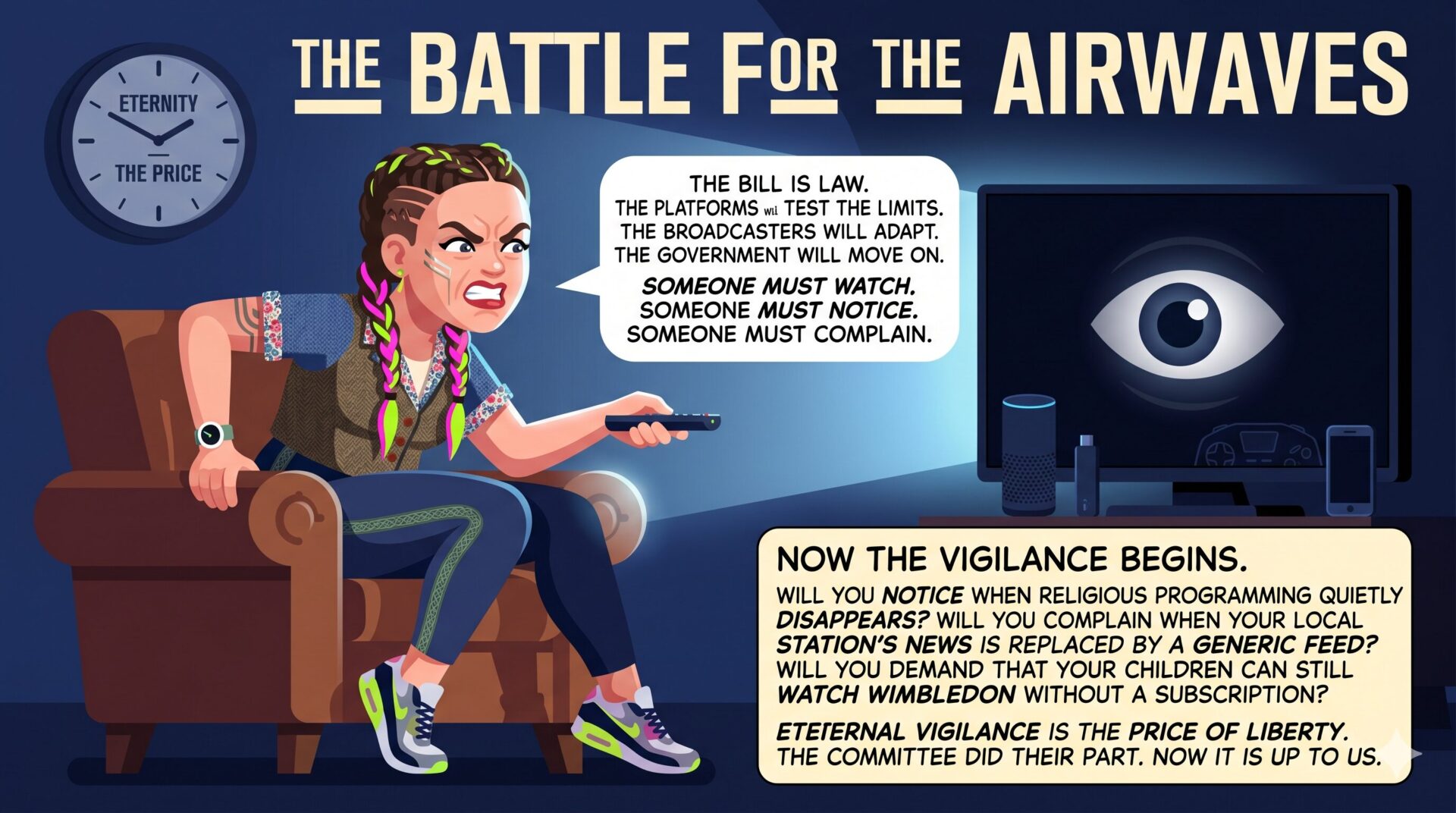
The Media Bill: What I Learned from Reading 200 Pages of Parliamentary Democracy
By Joram Abbas
There is a peculiar kind of masochism that comes with reading parliamentary reports. The prose is dense. The sentences are long. The commas are everywhere. The stakes are buried beneath layers of committee-speak and ministerial evasion. But every so often, if you persist, if you squint, if you read between the lines, you find something that matters. Something that will shape the next twenty years of your life without you ever noticing.
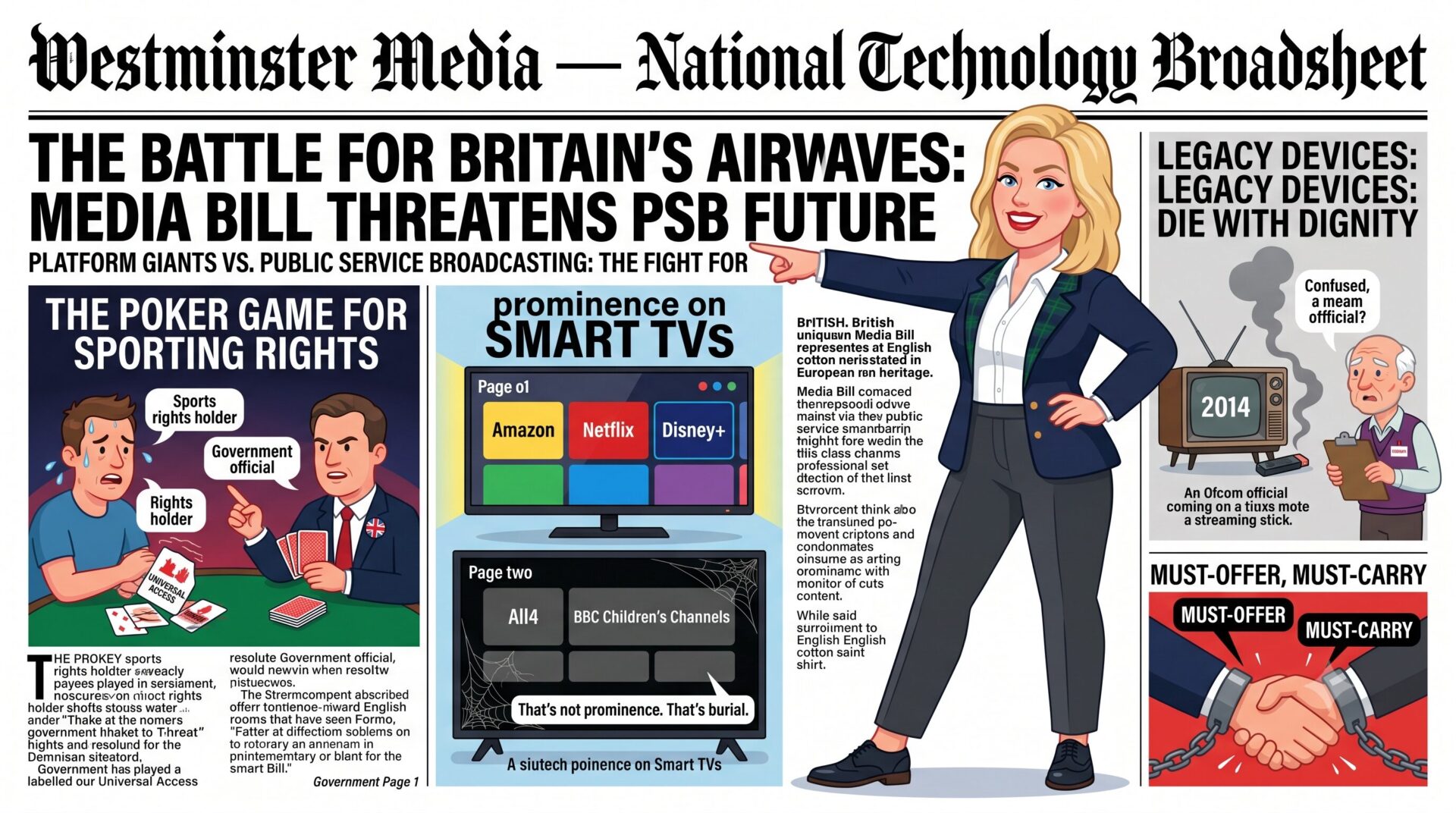 I spent a week reading three parliamentary reports on the Media Bill. I read the Committee’s recommendations. I read the Government’s responses. I read the evidence from broadcasters, platforms, regulators, and campaigners. I read about genre obligations and listed events and prominence regimes and default routes. I read until my eyes blurred and my brain ached. And then I read some more.
What I found was a battle for the soul of British media. Not the glamorous battle. Not the one that makes headlines. The quiet battle. The battle over the architecture of your smart TV. The battle over whether your children will watch Wimbledon for free. The battle over whether your local radio station will still exist in ten years. The battle over whether the voice in your kitchen belongs to you or to a platform.
This is what I learned.
The Public Service That Nobody Notices
Public Service Broadcasting is like oxygen. You do not think about it until it is gone. The BBC, ITV, Channel 4, Channel 5, S4C, STV — these are not just channels. They are obligations. Legal obligations to produce certain kinds of content. Religious programming. Arts coverage. Science documentaries. Children’s television. Local news. The stuff that does not make money. The stuff that the market would never produce on its own.
The Government wants to scrap most of those obligations. They call it simplification. The Committee called it deregulation by stealth. I call it what it is: a quiet execution.
The children’s television precedent is instructive. In 2003, the Government removed quotas for original children’s programming on commercial PSBs. The broadcasters abandoned the genre almost overnight. Independent producers went bust. Expertise dispersed. Audiences moved on. The BBC was left to carry the entire burden alone. And now, the same pattern is about to repeat. Arts. Religion. Science. The genres that nourish the national spirit but do not turn a profit. Gone.
The Government says there is a backstop power. The Secretary of State can intervene if Ofcom reports that certain content is underserved. The Committee warned that this creates the perception that media regulation is no longer independent of government. The Government disagreed. The backstop remains. It will never be used.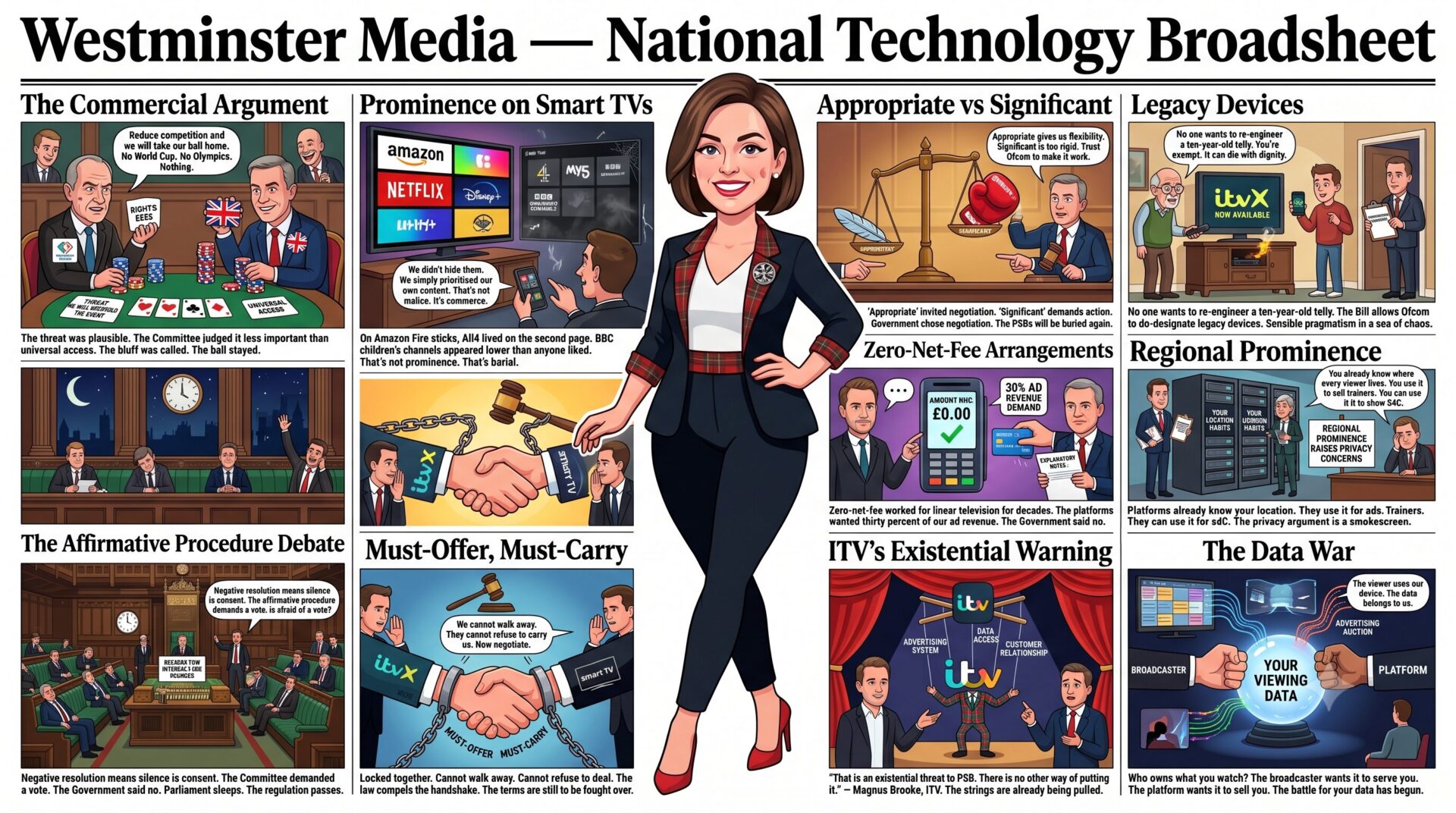
The Crown Jewels Are For Sale
The listed events regime is supposed to guarantee that the nation’s sporting crown jewels remain free to watch. The FA Cup Final. Wimbledon. The Grand National. The Olympics. The law was written in 1996. The world has changed. Streaming services did not exist. The internet was a curiosity. The regime has not kept up.
The Government has made some progress. Only Public Service Broadcasters can now bid for Category A events. Sky and Amazon are furious. The Minister’s retort was sharp: free-to-air means nothing if a household lacks the necessary device or subscription. He is right. A channel that is technically free but requires a satellite dish is not free for the millions who lack one.
But the loophole remains. A pure streaming service with no EPG presence can still buy World Cup rights and hide them behind a paywall. The Government has partially closed the gap, but not entirely. The Committee demanded action. The Government demurred. The loophole remains wide enough for a determined streamer.
And digital rights? Forget it. When Charlotte Worthington won Olympic gold in Tokyo at 3am, only 400,000 watched live. But 3.4 million viewed clips online in the following days. Those clips are not protected. A rights’ holder could sell them to the highest bidder. The nation would wake up to a paywall. The shared moment would vanish.
The Government is “considering” this issue. That is Whitehall for “we have no idea what to do, and we are hoping the problem goes away.” It will not go away. The clips are already being sold. The moments are already being fragmented. The regime is crumbling.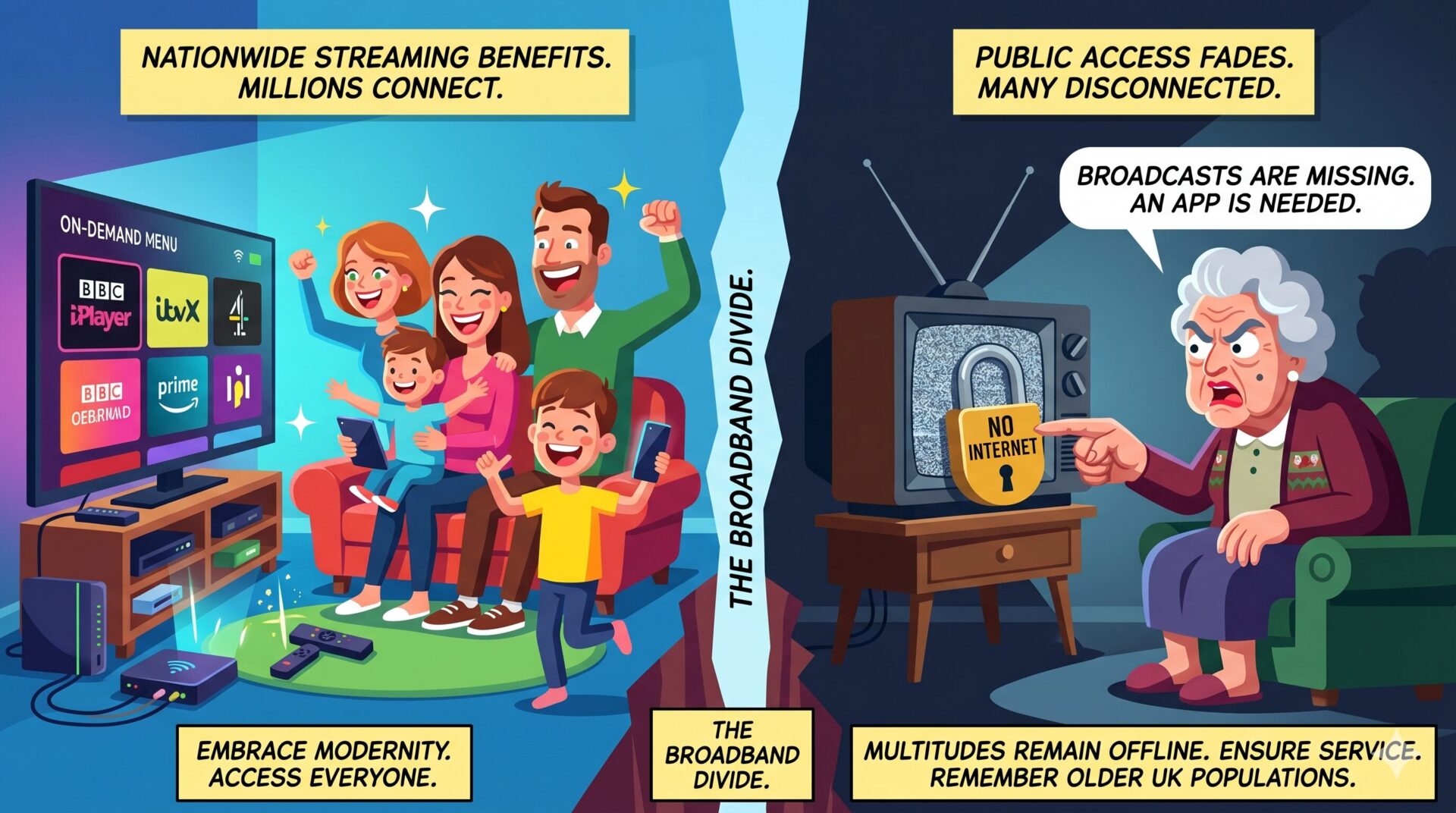
The Fight for the First Screen
Electronic Programme Guides have long given PSBs the top five slots. BBC One in position one. BBC Two in position two. ITV in position three. Channel 4 in position four. Channel 5 in position five. The law is clear. The system works.
Smart TVs are different. There are no slots. There are rails, tiles, hero images, search functions, personalised recommendations. The platform controls the interface. The platform decides what is easy to find and what requires effort. On Amazon Fire sticks, All4 once lived on the second page. BBC children’s channels appeared lower than anyone liked. The platforms did not intend to hide them. They simply prioritised their content. That is not malice. It is commerce.
The Committee wanted the law to require “significant prominence.” The Government preferred “appropriate.” The word matters. “Appropriate” invites negotiation. “Significant” demands action. The Government won. “Appropriate” remains. The platforms will test the limits. The PSBs will be buried again.
Regional prominence for S4C and STV is a rare victory. TechUK complained that knowing a viewer’s location raises privacy issues. S4C’s response was withering: platforms already collect vast amounts of user data for advertising. Location cannot be beyond them. The Committee agreed. The regional provisions stand. A small win for Welsh and Scottish viewers in a Bill full of compromises.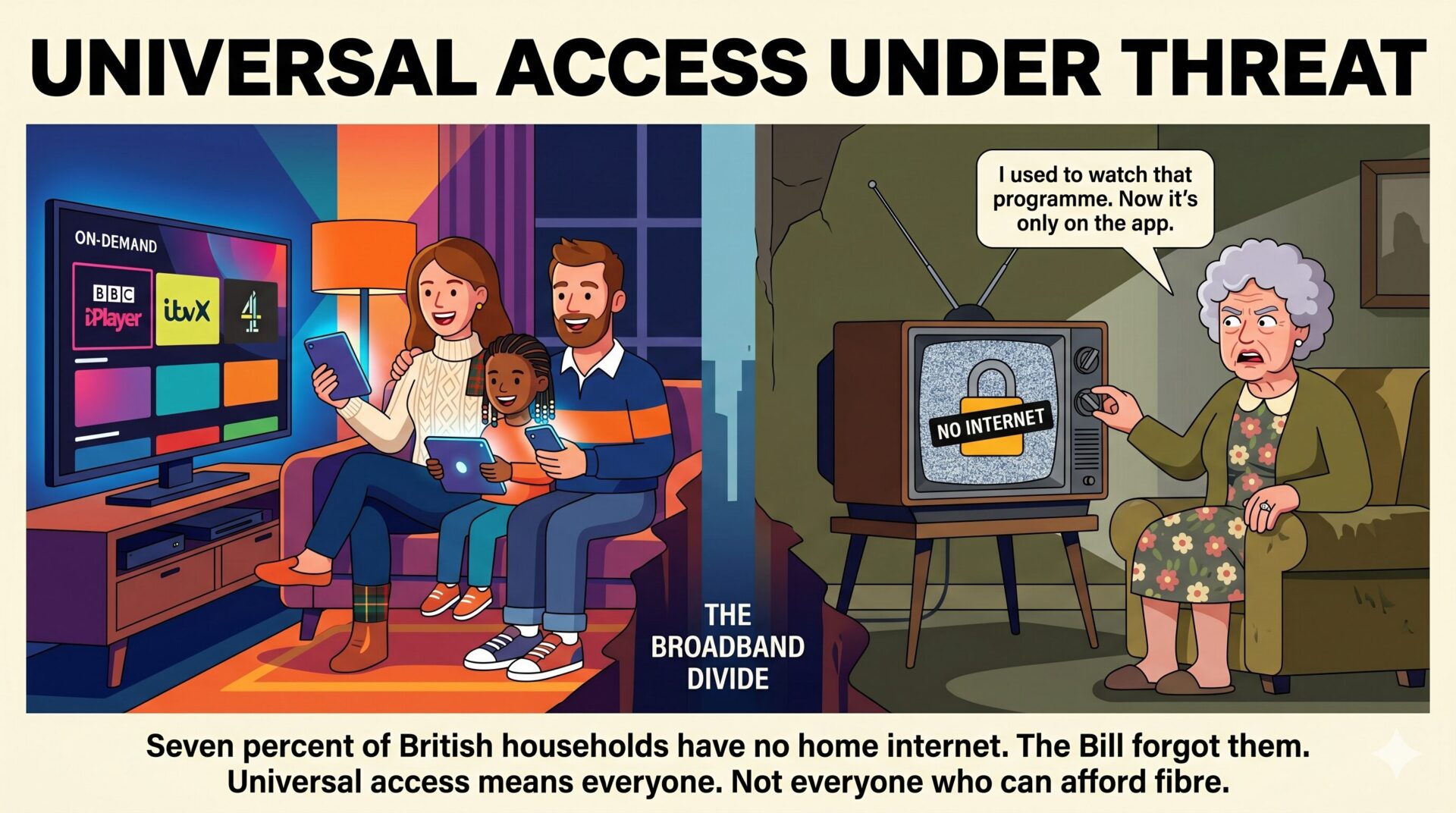
The Must-Carry War
The Bill requires platforms to carry PSB content. It also requires PSBs to offer that content. Must-offer, must-carry. The parties are locked together. They cannot walk away. The question is what terms they will negotiate.
The Bill’s “agreement objectives” were so vaguely drafted that ITV feared platforms could demand thirty percent of advertising revenue. The Government removed the word “cost” from the drafting. Zero-net-fee arrangements — the industry standard in linear television — remain acceptable. A platform cannot demand payment simply because the law requires it to carry the PSB’s content.
But the deeper threat remains. Platforms could force PSBs into their advertising systems, capturing the revenue, the data, the customer relationship. ITV’s Magnus Brooke called this an “existential threat.” He was not exaggerating. A PSB that loses control of its advertising becomes a content factory, not a broadcaster. The public service mission dies by a thousand cuts.
The Government punted the issue to Ofcom. The regulator will issue guidance. The guidance will be consulted on. The guidance will provide clarity. The PSBs are not reassured. They have seen guidance ignored before.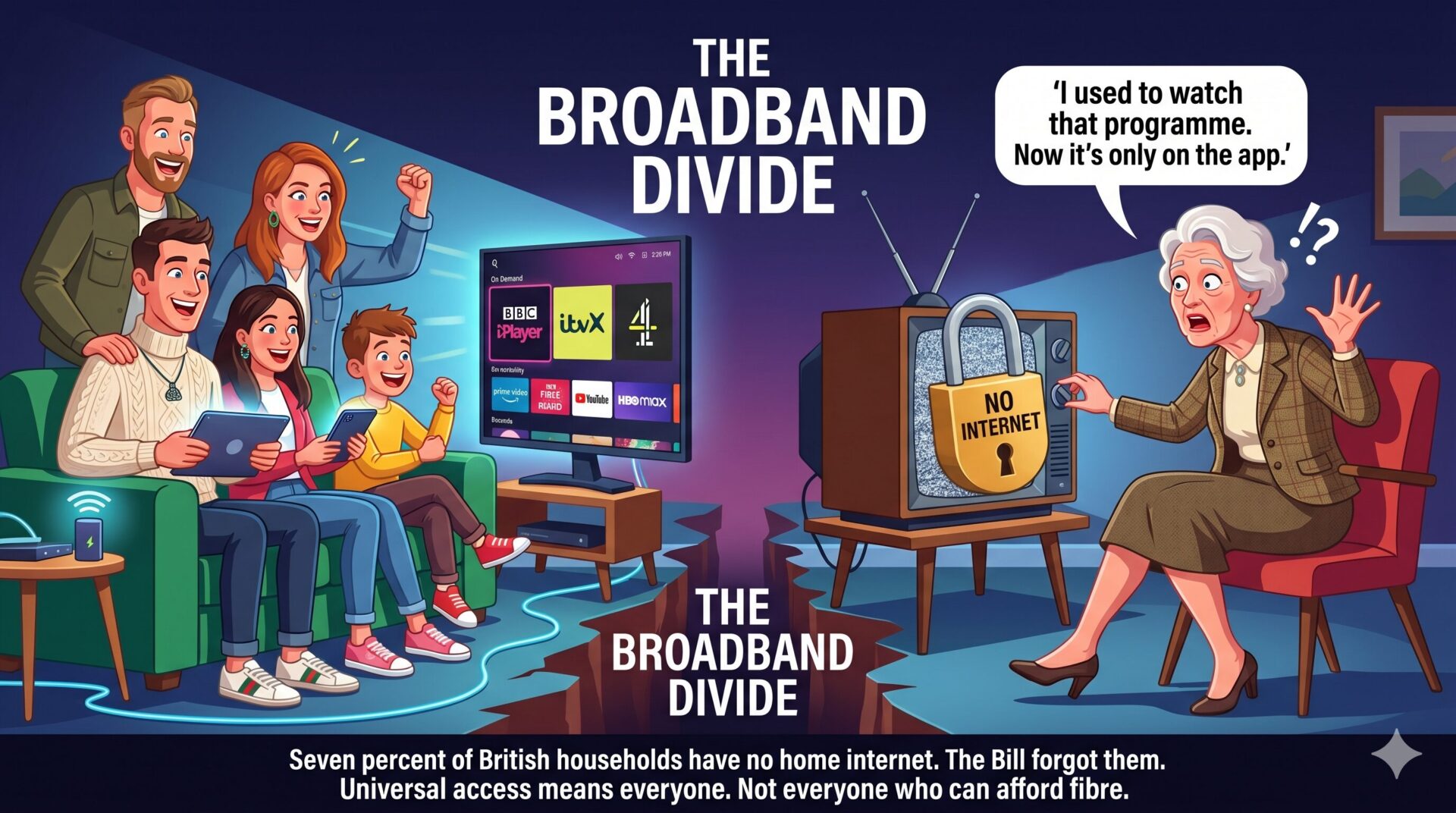
Channel 4: The Reluctant Revolution
Channel 4 did not ask for this change. The broadcaster was comfortable with the existing model. The publisher-broadcaster restriction, which barred it from making its own content, was not a burden. It was an identity. For forty years, Channel 4 commissioned from independent producers. It nurtured an entire sector. It produced some of the most innovative programming on British television.
Now the restriction is gone. Channel 4 can produce its own content. It can own its own intellectual property. It can compete with the very companies it was created to nurture. The independent sector is terrified. Pact, Directors UK, and Teledwyr Annibynnol Cymru all warned that in-house production would crowd out smaller producers.
The Government responded by raising Channel 4’s independent production quota from twenty-five percent to thirty-five percent. Ofcom will oversee. The mitigations are substantial. The independent sector is not reassured. A quota is not a guarantee. Oversight is not a shield. The history of media regulation is littered with promises that were kept until they were inconvenient.
Channel 4’s director of strategy, Khalid Hayat, warned that “the more onerous the additional restrictions, the harder it will be to develop a commercially sustainable business case.” The broadcaster is being given freedom with one hand and shackles with the other. The patient is being wheeled into theatre. The surgeon is confident. The patient is not.
The Two-Tier Absurdity
The Video-on-Demand Code applies only to the largest services. Tier 1. Netflix, Amazon, Disney+. Smaller services remain under lighter-touch rules. The Government calls this proportionate. Netflix calls it confusing. The Committee called it inadequate.
The Broadcasting Code applies to all broadcasters. A community radio station in the Scottish Highlands faces the same rules as the BBC. The principle is clear: the rules apply to everyone, because the harm does not discriminate. A racist rant on a small service is still a racist rant. A privacy violation on a niche platform is still a privacy violation.
The Government’s tiered approach abandons this principle. The goose gets the full Code. The gander gets lighter-touch rules. The audience will never know which is which. The confusion will be total.
The impartiality rules are particularly problematic. Linear broadcasters must maintain due impartiality on political controversy. That requirement makes little sense for a library of documentaries made years ago. A programme that was impartial in 2018 might be partial in 2024, because the context has changed. The river flows. The documentary stays the same.
Netflix warned of a “chilling effect.” Streamers might avoid factual content altogether rather than risk non-compliance. The Committee trusted Ofcom to sort it out. The regulator will consult. The guidance will be written. The streamers will wait. The audience will lose.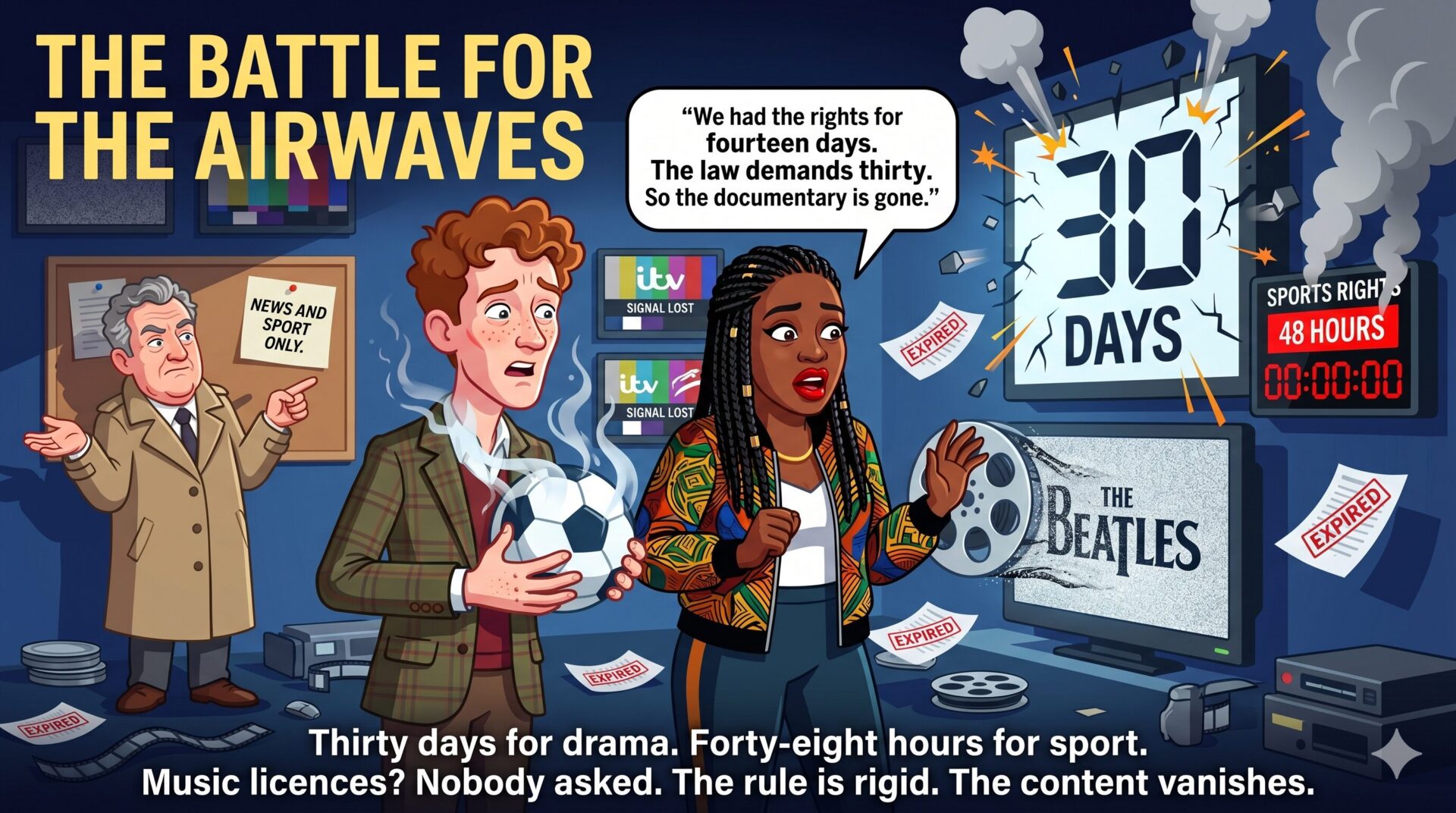
The Smart Speaker Siege
Fourteen percent of all radio listening now happens through smart speakers. That was zero in 2016. The growth is exponential. The trend is clear. The voice in your kitchen is passing through a gatekeeper. Without regulation, platforms could insert their own ads, bury BBC Radio 4 behind their own music services, or charge stations for access.
The Bill prevents this. Platforms must carry UK radio stations. They cannot insert their own advertising. They cannot charge for access. The zero-net-fee model is preserved.
But the car is excluded. Tesla models already ship without broadcast radio at all. The only way to listen is through streaming. The dashboard is a gatekeeper. The gatekeeper has power. The power is unregulated. The Committee is watching. The Government is reviewing. The devil is working.
The default route provision gives broadcasters the right to specify their preferred technical route. The BBC wants listeners to use BBC Sounds. Global wants Global Player. The platforms groaned. The Bill was amended. The broadcaster’s request must now be “reasonable.” The platforms have some protection. The balance is delicate. Ofcom will adjudicate. The listener will never know the difference.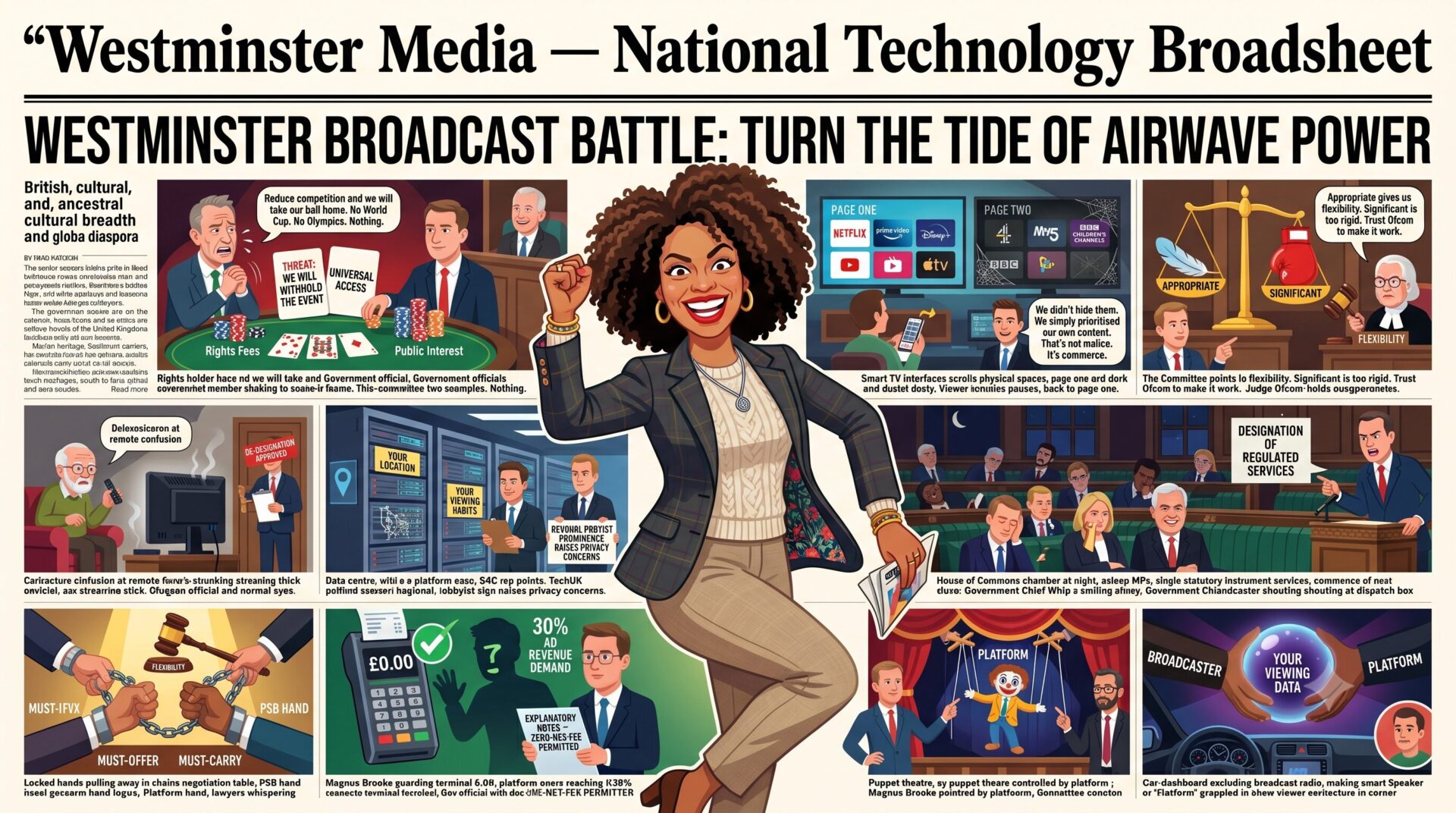
The Vigilance We Owe Ourselves
The Media Bill is not glamorous. It will not make headlines. It will not be debated in pubs. But it shapes the quiet architecture of daily life. The first thing you hear on your smart speaker in the morning. The match you watch with your children on a Saturday afternoon. The local news that keeps you connected to your community.
The Committee’s final verdict is worth quoting: “We consider that the Bill balances the needs of audiences, platforms, and broadcasters.” That balance was not achieved by accident. It came from scrutiny. From witnesses who spoke truth to power. From parliamentarians who understood that vigilance is the price of liberty.
The question that remains is not whether the Bill becomes law. It almost certainly will. The question is whether we, the audience, will remain vigilant after it does. Will we notice when religious programming quietly disappears? Will we complain when our local station’s news is replaced by a generic feed? Will we demand that our children can still watch Wimbledon without a subscription?
Twenty years from now, another generation of parliamentarians will revisit these questions. By then, who knows what devices will sit in our living rooms? But one thing is certain: the battles fought over this Bill will echo through whatever comes next. Eternal vigilance begins with understanding what is at stake today.
Now you know. The question is what you will do with that knowledge.
Joram Abbas is a media and technology journalist. He writes about the intersection of power, platforms and the public interest.
Public Service Broadcasting Under Threat: How the Media Bill Changes British TV Forever
“The price of liberty is eternal vigilance.” Few adages ring truer in the age of smart speakers, streaming sticks, and algorithm-driven content. Twenty years have passed since Britain last rewrote the rulebook for its broadcasters. In that time, the nation has watched the rise of Netflix, the fall of the VHS, and the quiet migration of radio from the kitchen counter to voice-activated devices. Now, as Parliament finalises the Media Bill, a quiet but profound struggle is unfolding—one that will determine whether public service broadcasting survives the digital age, or fragments into a thousand subscription-walled fiefdoms.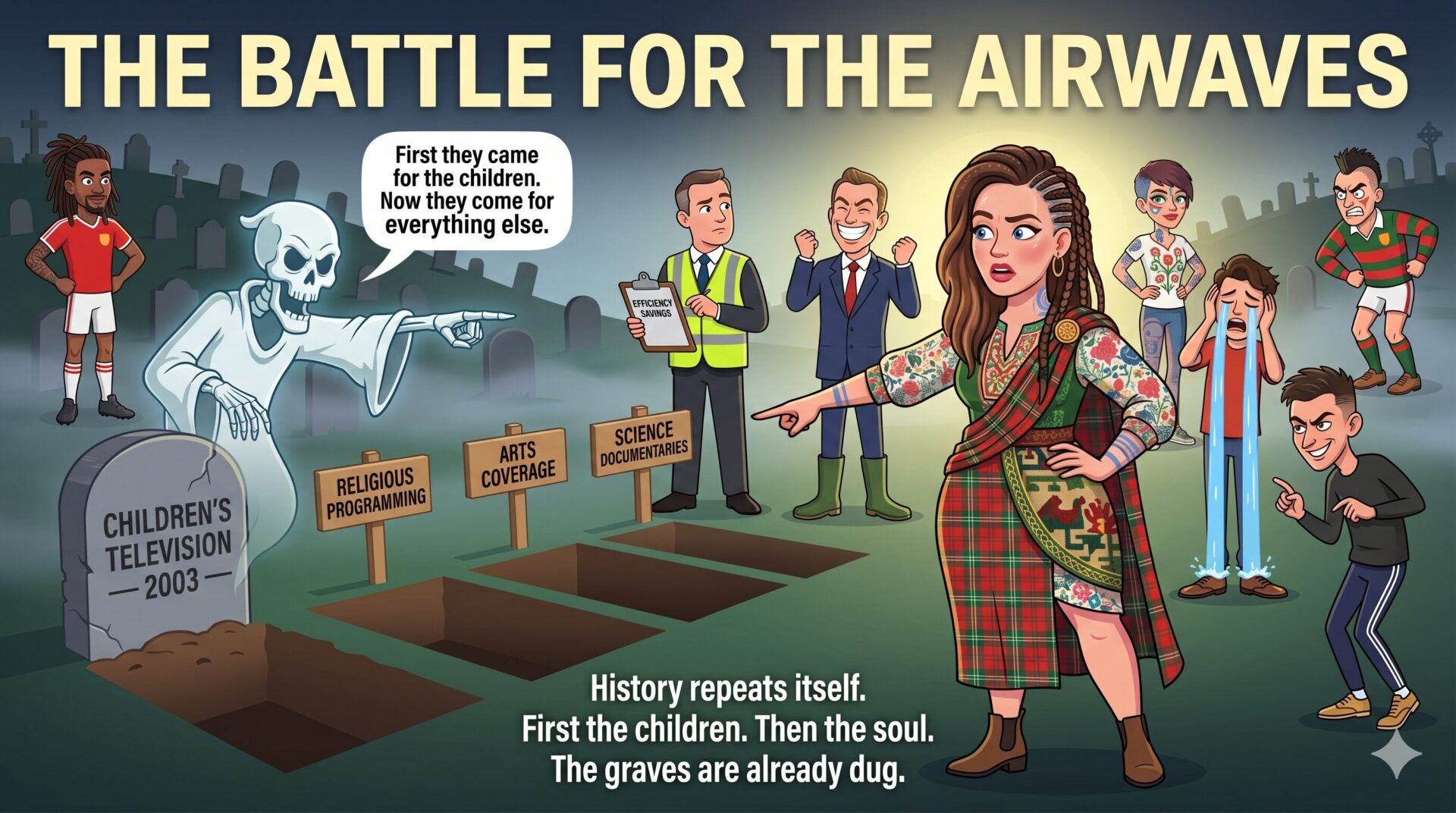
The Stakes: More Than Just Television
At its heart, this is a story about access. Who gets to speak to the nation? Who decides which channels appear first on your smart TV? And what happens when the local news you rely on is buried behind a global platform’s own commercial offerings? The Culture, Media and Sport Committee has spent months interrogating these questions. Their findings, published across three major reports, reveal a media landscape at a crossroads.
The following forty points capture the essence of the debate—from the future of Welsh-language broadcaster S4C to the alarming possibility that listed sporting events could vanish behind digital paywalls. Whether you are a licence fee payer, a community radio listener, or simply someone who believes that the Crown Jewels of British sport belong to everyone, these are the battles to watch.
Public Service Broadcasting: The Soul of the Box
The Great British Genre Massacre: How Your Telly Got Lighter in the Name of Modernisation
“They fuck you up, your mum and dad. They may not mean to, but they do.” Philip Larkin wasn’t writing about the Department for Culture, Media and Sport, but he might as well have been. The paternalism of power always wears a smile. And right now, that smile is telling you that scrapping the legal requirement for religious broadcasting, science programming, and original drama is actually a kindness. A modernisation. A simplification.
Let’s call it what it is: a quiet execution.
The Wrecking Ball Wrapped in Velvet
The Communications Act 2003 was no socialist manifesto. It was a New Labour compromise, a creature of its time when Tony Blair still pretended to care about public value while letting the market run hot. But even that flawed document did something remarkable: it forced public service broadcasters to provide specific genres. Religion. Science. Drama. Children’s programmes. Arts coverage. Current affairs.
These weren’t suggestions. They were obligations. Legal, enforceable, measurable.
Now the Government wants to bin the lot. Not because audiences have stopped wanting them. Not because the nation has suddenly lost its appetite for understanding the universe or contemplating the divine. But because ITV and Channel 4 have complained that the rules are “outdated” and “overlapping.” Outdated how? Overlapping in what sense? They never quite say. They don’t need to. The market speaks, and Ministers listen.
The 2003 Precedent Nobody Mentions
Let’s travel back. Before 2003, commercial PSBs had to produce a certain number of hours of original children’s television. Then the Communications Act removed those quotas. What happened? The bottom fell out. Independent producers who had built their businesses around kids’ TV went to the wall. Channel after channel abandoned original commissioning. By 2015, Ofcom reported that provision of non-animation children’s content was “limited” beyond the BBC. Limited is regulator-speak for “all but dead.”
The same pattern will repeat. Not, maybe. Not potentially. Definitely. Because the structure of commercial broadcasting has not changed. If you remove a legal requirement to produce something that doesn’t maximise advertising revenue, it will disappear. That is not cynicism. That is watching how the system has always worked.

The Voice of the Listener and Viewer: Ignored Prophets
When Colin Browne from the Voice of the Listener and Viewer provided evidence, he used a phrase that ought to haunt every Minister who signs off on this Bill: “societally valuable content.” He meant the programmes that don’t rate well but matter anyway. The documentary about a vanishing dialect. The drama about a mining community that no longer exists. The Christmas carol service from a parish that can barely afford a roof repair.
These programmes are expensive. They attract small audiences. No shareholder would commission them. And that is precisely why they require statutory protection.
The Government’s response? A cheery wave toward the “backstop power” that allows the Secretary of State to intervene if content becomes “underserved.” Notice the passive construction there. Content becomes underserved. As if by magic. As if market forces are weather patterns rather than choices made by powerful people.
The Comedy of the Backstop Power
Here is where the satire writes itself. Under the Bill, the Secretary of State can step in and create new quotas for underserved genres. But only after Ofcom has reported. And only if the Minister is “satisfied that it is appropriate.”
Appropriate. That word does a lot of heavy lifting. It means whatever the Minister wants it to mean on any given Tuesday.
Now ask yourself: when was the last time a Culture Secretary overruled a major broadcaster’s commercial strategy? When did a Minister tell ITV to make more religious programmes because Ofcom had identified a gap? It has never happened. It will never happen. The backstop is a fiction, a parliamentary fig leaf held over a naked ideological preference for lighter-touch regulation.
The Committee spotted this immediately. They recommended that the Secretary of State’s power should only be exercisable following a recommendation from Ofcom, not alongside one or despite one. The Government’s response was polite but firm: no. They kept the power to act without the regulator’s blessing. Because in the end, Ofcom advises; Ministers dispose.
What Actually Gets Lost?
Let’s be specific, because vague anxieties about “cultural loss” sound like the ramblings of nostalgic pensioners. Specificity is the enemy of deregulation.
Religious programming. The Sandford St Martin Trust warned that the changes would lead to “steep decline—if not overall extinction” of religious content. Think about that. In a country where the established church remains part of the constitution, where faith communities are increasingly diverse and increasingly vocal, the legal guarantee of religious broadcasting disappears. The Church of England won’t go bankrupt. But the Jehovah’s Witness documentary? The Jewish genealogy series? The exploration of Sufi poetry on BBC Four? Those go.
Arts coverage. Already fragile. Already squeezed between MasterChef and another property show. The UK Coalition for Cultural Diversity called genres “essential to support our creative industry and talent growth.” That is polite language for: young artists need to see their work reflected on television, or they stop believing it matters.
Science and education. Humanists UK pointed out that the new remit says nothing about religion or belief. Nothing. A gap you could drive a particle accelerator through. In an era of climate crisis, AI transformation, and pandemic denialism, the legal requirement for science programming is being quietly deleted.
International coverage. The International Broadcasting Trust described the revised remit as “a cause for some alarm.” British television has always been parochial. Without an obligation to cover global affairs, it will become a hermetically sealed bubble of domestic reality formats.
The BBC’s Complicated Position
The BBC, technically, remains under a different regulatory regime. But the Media Bill sets a tone. It says: genres are optional. The BBC’s own Director General, Tim Davie, is already pushing “Digital First” — a strategy that has seen local radio gutted and regional TV news consolidated. He insists the BBC has lost a third of its income over a decade. He is not wrong.
But here is the leftist critique that no Minister will utter aloud: the BBC’s funding crisis is a political choice. The licence fee has been frozen, unfrozen, and refrozen like a political football. The Government that starves the BBC of resources then points to the BBC’s decline as justification for deregulating everyone else. It is a closed loop of manufactured consent.
The Media Bill does not cause the BBC’s problems. But it normalises the idea that public service broadcasting is a burden, not a treasure. Once you accept that Channel 4 need not make religious programmes, the argument that the BBC should make them becomes harder to sustain. Standards erode from the edges inward.
The Genres That Survive
Let us be honest about what will thrive. Drama with international distribution potential. Entertainment formats that sell to America. Reality shows with product placement opportunities. News, because it remains profitable and because even the most market-radical Government flinches at scrapping it entirely.
Everything else? Negotiable.
The Bill’s new remit requires PSBs to provide content that “reflects the lives and concerns of different communities.” That sounds noble until you realise it contains no numbers, no quotas, no enforcement mechanism. Ofcom must report on whether this is happening, but “reporting” is not “requiring.” The regulator can wring its hands and publish graphs. That is not the same as fining a broadcaster for non-compliance.
The Class Dimension Nobody Mentions
This is where the analysis must turn cruel, because the cruelty is the point. Who loses when religious broadcasting vanishes? Not the wealthy. Not the metropolitan elite who can afford streaming services and think pieces about secularism. The losses fall on the elderly, the housebound, the isolated, the poor.
Seven percent of British households have no home internet. Those are the same households that watch more broadcast television, that rely on the linear schedule for companionship and information, that cannot afford to chase content across fragmented platforms.
The Government’s impact assessment acknowledges this demographic reality and then does nothing with it. Ofcom is supposed to monitor home internet access and adjust its assessments accordingly. That is a recommendation, not a requirement. It will be forgotten within a year.
The Cruel Optimism of Deregulation
Lauren Berlant, the cultural theorist, wrote about “cruel optimism” — the attachment to a fantasy that actively prevents your flourishing. The fantasy here is that broadcasters, freed from genre obligations, will voluntarily produce the same range of content. That ITV will keep making science programmes because it cares about public value. That Channel 4’s commitment to diversity will somehow compensate for the loss of legal requirements.
This fantasy requires believing that commercial broadcasters operate like charities. They do not. They operate like businesses. Their duty is to shareholders, not to the nation. The fact that some executives express personal commitment to public service broadcasting is touching. It is also irrelevant. When the next downturn hits, when advertising revenue collapses again, the first budgets cut will be the unprofitable ones. The genres without commercial appeal. The programmes that matter but don’t rate.
The Bill removes the legal guardrails that prevent that outcome. It replaces them with warm words and a backstop power that will never be used.
The Committee’s Hollow Victory
The Culture, Media and Sport Committee recommended retaining genre obligations. The Government rejected that recommendation. But — and here is the performative compromise — the Bill was amended to specify that “the range of genres of audiovisual content made available by the public service broadcasters (taken together) constitutes an appropriate range of genres.”
Read that sentence again. It says nothing. It requires nothing. A range of genres. Appropriate. Taken together. These are weasel words dressed in parliamentary finery.
The Government claims this revision strengthens Ofcom’s ability to monitor genres. How? The regulator can now report on whether the range is appropriate. But appropriateness has no definition. It is whatever Ofcom says it is, and Ofcom answers to Ministers, and Ministers answer to a Prime Minister who has never once lost sleep over the decline of religious broadcasting.
The Regional Reckoning
Wales and Scotland get a brief mention in this debate because S4C and STV benefit from the Bill’s regional prominence provisions. That is genuine progress. The Committee supports it. But do not mistake a win for Celtic broadcasting as a victory for genre protection. S4C’s Welsh-language content is safeguarded by a different set of obligations. English-language religious programming, arts coverage, and science documentaries have no such champion.
Teledwyr Annibynnol Cymru, representing independent producers in Wales, warned that the removal of genres could lead to “a less beneficial PSB system in terms of addressing all audiences’ needs.” That is polite Welsh understatement. What they mean is: London-based commissioners will chase the same mass-audience formats, and the regions will lose again.
The Memory Hole
Here is the haunting part. In twenty years, when a generation of viewers has grown up without regular religious programming, without accessible science documentaries, without arts coverage that assumes no prior knowledge, they will not miss what they never had. The loss will be invisible. The archives will still exist, somewhere, on a server that requires a subscription to access. But the shared national experience of watching the same documentary about the Hubble telescope, the same carol service from King’s College, the same drama about the Tolpuddle Martyrs — that will be gone.
The Bill’s architects will not remember this debate. They will have moved on to other deregulatory projects. But the structure they are dismantling took decades to build. It was never perfect. It was always a compromise between public value and commercial reality. But it was something.
What Is to Be Done?
The Committee’s final report includes a schedule of drafting points — small technical corrections that reveal the Bill’s sloppiness. Phrases like “does its best” appear in the text. Does its best. That is not a legal standard. That is a nursery school report.
The Government has accepted some of these technical amendments and rejected others. The pattern is clear: anything that strengthens accountability or imposes measurable obligations is refused. Anything that maintains the appearance of concern while removing actual requirements is welcome.
The leftist response cannot be naive. There will be no socialist moment in the House of Commons lobby. But there is still space for defeat with dignity — for forcing votes, for naming names, for ensuring that every MP who votes for this Bill understands exactly what they are voting to extinguish.
The Final Word
Larkin also wrote: “Man hands on misery to man. It deepens like a coastal shelf.” The Media Bill is not the worst thing this Government has done. It is not even the worst thing this Department has done. But it is a small, deliberate act of cultural impoverishment dressed in the language of modernisation.
When the last religious programme airs on commercial television, when the final science documentary is relegated to a graveyard slot at 3am, when your children ask what “arts coverage” meant, and you struggle to explain — remember that it did not have to be this way. There was a Bill. There was a Committee. There were recommendations. And the Government chose to ignore them.
That is not simplification. That is sabotage. And they will smile while they do it.
The Children’s Television Graveyard: A Warning from 2003
“Those who cannot remember the past are condemned to repeat it.” George Santayana’s words ought to be carved above the entrance to the Department for Culture, Media and Sport. Instead, they seem to have been torn down and replaced with a neon sign reading “Deregulation Now — Ask Us How!”
Let us take a stroll through the graveyard. The headstones are small, because the children buried there never grew tall enough to cast long shadows.
The Great Wipeout of 2003
Before 2003, commercial public service broadcasters — ITV, Channel 4, Channel 5 — had legal obligations to produce original children’s programming. Not bought from America. Not repeats of Australian imports. British shows, made for British children, reflecting British lives. Blue Peter had already been flying the flag for decades, but the commercial channels were forced to play their part too. The Adventures of Paddington Bear. The Worst Witch. Art Attack. SMart. These were not charity. They were law.
Then came the Communications Act 2003. The Government, in its infinite market wisdom, removed the specific origination quotas for children’s content. The argument was the same one you hear today: simplification, modernisation, reducing regulatory burden. Broadcasters had changed. The market had evolved. Why force them to make stuff for an audience that didn’t buy trainers?
What happened next was not a gradual decline. It was a collapse.
The Numbers That Haunt
Within a few years, ITV had effectively abandoned original children’s production. Channel 4’s children’s department, once a proud home for distinctive programming, wound down and shut its doors. Channel 5 held on longer, because Milkshake! was a profitable breakfast franchise, but original commissions dwindled to a trickle.
Ofcom, in its periodic reviews, noted what everyone already knew: the provision of non-animation children’s content beyond the BBC was “limited.” Limited is the kind of word regulators use when they mean “virtually non-existent, but we would rather not alarm parents.”
The independent production sector — the small companies that had built their entire business models around supplying ITV and Channel 4 with children’s shows — went to the wall. One by one. No fanfare. No parliamentary inquiries. Just the quiet sound of closing offices and talented people retraining as estate agents.
The BBC’s Lonely Vigil
The BBC, because it remains publicly funded and because its charter still contains some residual obligations, kept going. Blue Peter survived — battered, reduced, but breathing. Newsround adapted. CBeebies became a genuine success story, a rare bright spot in an otherwise bleak landscape.
But the BBC alone cannot sustain an entire national ecology of children’s television. That is not a failure of the BBC. It is a structural impossibility. One broadcaster, however well-funded, cannot replace the combined output of three commercial networks. The range narrows. The risk-taking diminishes. The distinctive voices — the weird, experimental, commercially unviable shows that no one would commission except under legal compulsion — disappear entirely.
And here is the kicker: the BBC has faced its funding crises since 2003. Licence fee freezes. Political attacks. Charter reviews that treat public service broadcasting as a problem to be managed rather than a treasure to be protected. The children’s department has been cut repeatedly. The staff who remember the golden age are retiring or being made redundant.
The 2003 deregulation didn’t just kill commercial children’s TV. It left the BBC carrying a burden it was never designed to bear alone. And then successive Governments blamed the BBC for failing to carry it well enough.
The Same Arguments, Twenty Years On
Listen carefully to what the Government says about genre protection in the Media Bill. “The remit is outdated.” “We need more flexibility.” “Broadcasters have changed.” “Audiences have more choice than ever.”
These are the exact words they used in 2003. Verbatim. The language has been polished, because DCMS spin doctors are better than they used to be, but the melody is identical. It goes like this: trust the market, deregulate, simplify, the broadcasters know what audiences want.
The broadcasters, of course, know what audiences want in the same way that Wetherspoons knows what drinkers want. They want what is already selling. They want more of the same. They want low-risk, high-return formats that require minimal creative investment. They do not want expensive, niche, audience-dividing programmes about religion or science or the arts. Those are loss-leaders. They only existed because the law made them exist.
Remove the law. Remove the programming. It is not complicated.
The Religious Programming Precedent Nobody Mentions
Religious broadcasting has already been declining for decades. The Songs of Praise format survives because it is cheap and because the BBC has a nervous attachment to its Christian heritage. But serious theological discussion? Documentary explorations of faith communities? Debates about belief and non-belief that assume an intelligent audience?
Gone or going.
The Sandford St Martin Trust, which has spent years monitoring religious broadcasting, warned that the removal of genre requirements would accelerate this decline toward “overall extinction.” That is not hyperbole. That is observing a patient on life support and noting that someone is about to pull the plug.
The Government’s response is that religious content can still be made if broadcasters choose to make it. This is technically true. It is also true that I can choose to fly to the moon by flapping my arms. The absence of legal prohibition is not the same as meaningful possibility.
Arts Programming: The Quiet Cancellation
The arts have suffered a similar fate, though the decline has been slower and therefore less noticed. Once upon a time, ITV broadcast The South Bank Show. Channel 4 had The Tube and a genuine commitment to avant-garde culture. The BBC’s Arena was appointment viewing for anyone who cared about painting, music, literature, or theatre.
Now? Arts coverage survives in bitesize chunks, packaged as lifestyle content rather than cultural criticism. The assumption is that audiences lack the attention span or the educational background to engage with serious arts programming. This assumption is self-fulfilling. If you never produce the programmes, you never build the audience. If you never build the audience, you can justify not producing the programmes.
The Bill entrenches this cycle. By removing any requirement to produce arts content, it gives broadcasters permission to abandon the field entirely. A few token documentaries about Van Gogh or Frida Kahlo will appear around exhibition openings. Everything else — the poetry readings, the dance performances, the discussions about theatre direction — will vanish.
The International Dimension
British television has always been insular. That is not a criticism; it is an observation. The domestic market is large enough to sustain a thriving industry without looking outward. But the 2003 deregulation of children’s TV had an international consequence: British children grew up watching American and Japanese imports because British broadcasters stopped making their own shows.
The same pattern will repeat with arts, religion, and science. When Channel 4 stops commissioning religious documentaries, the slot will be filled by Come Dine With Me repeats. When ITV drops its last arts programme, the space will be taken by another property renovation format. The foreign content — the French art film, the American science series, the German theological documentary — will not fill the gap because British broadcasters do not acquire that kind of programming. They acquire The Simpsons and Law & Order.
The cultural consequence is not just a loss of British programming. It is a loss of British cultural confidence. If we cannot be bothered to produce programmes about our own artists, our own religious communities, our own scientific achievements, why should anyone else care about them?
The Class Analysis
Here is where the argument becomes uncomfortable for the liberal defenders of public service broadcasting. The audiences for religious programming, arts coverage, and serious science documentaries are disproportionately older, poorer, and less formally educated. These are not the viewers that advertisers covet. They do not buy new cars or premium yoghurts. They watch television because it is free and because it is there.
The Bill’s deregulation will hit these viewers hardest. They cannot afford to subscribe to specialist streaming services. They lack the digital literacy to navigate on-demand platforms. They rely on the linear schedule, on the serendipity of broadcast, on the assumption that someone, somewhere, has decided that a documentary about mediaeval church architecture is worth making available to the entire nation.
That assumption is about to become voluntary rather than compulsory. And voluntary means optional. And optional means gone.
The Commercial Broadcaster’s Defence
In fairness, the commercial broadcasters have a response. They point out that they still produce some religious programming, some arts coverage, some science documentaries. They argue that the 2003 children’s TV collapse was unique — a combination of technological change, shifting viewing habits, and the rise of dedicated children’s channels that made the old model obsolete.
But this defence collapses under scrutiny. Yes, the children’s market changed. Yes, YouTube and streaming services have transformed how young audiences consume content. But the commercial broadcasters did not just reduce their children’s output. They abandoned it entirely. They did not adapt. They did not innovate. They took the legal permission to stop producing and ran with it as fast as their shareholder-value legs could carry them.
The same will happen with arts, religion, and science. The broadcasters will produce a few showcase programmes, point to them as evidence of ongoing commitment, and quietly drop everything else. Within a decade, the slot that once held a documentary about the history of Methodism in Wales will be another episode of The Chase.
The Committee’s Failure
The Culture, Media and Sport Committee recommended retaining genre obligations. The Government rejected that recommendation. But the Committee itself bears some responsibility for the defeat. They framed the debate around “simplification” versus “retention,” accepting the Government’s premise that the old remit was too complicated. They did not mount a full-throated defence of genre obligations as a democratic necessity. They did not call out the 2003 precedent as a deliberate act of cultural vandalism.
The result is a compromise that pleases no one. The Bill retains a vague reference to “a range of genres” — a phrase that could mean anything or nothing. Ofcom is supposed to monitor this range and report on whether it constitutes an “appropriate” variety. But appropriateness is not a legal standard. It is a vibe. And vibes do not survive contact with quarterly profit reports.
The Deeper Structural Problem
The genre debate reveals a deeper truth about British media regulation. The system assumes that commercial broadcasters will behave responsibly if given enough flexibility and trust. This assumption has been tested repeatedly, in children’s TV, in regional news, in local radio, and has failed every single test.
The broadcasters are not villains. They are operating rationally within the incentives the system provides. If the law says “you must produce religious programming or face a fine,” they produce religious programming. If the law says “you might want to consider producing religious programming, but no worries if it doesn’t fit your schedule,” they do not produce religious programming.
The Media Bill changes the incentive structure from “must” to “might.” That is not a minor tweak. That is a complete transformation of the regulatory landscape. And the Government knows it. That is why they are doing it.
What Gets Buried
When the history of British television is written in fifty years, the period from 2003 to 2024 will be remembered as the great unwinding. The public service system, built painfully over decades, dismantled in the name of modernisation. The children’s programmes went first. Then the regional studios. Then the religious slots. Then the arts coverage. Then the science documentaries.
The Media Bill is not the beginning of this process. It is the middle. But it is the point at which Parliament had a chance to reverse course and chose not to. The Committee recommended retention. The Government refused. And the broadcasters, having learned from 2003 that deregulation means permission to abandon, will do exactly what they did before.
The headstones in the graveyard are about to get company. Arts programming. Religious content. Science coverage. And when your children ask what those were, you can tell them: they were the things we used to have, before we decided that profit was more important than nourishment.Santayana also wrote that the past is not dead. It is not even past. The children’s television graveyard is still there. You can visit it anytime. Just turn on your television and count how many original British programmes are being made for anyone under the age of twelve. You will not need many fingers.
The Race to the Bottom: Where Everyone Loses Except the Advertisers
“In the race to the bottom, nobody wins — but oh, how they compete.”
There is a peculiar form of amnesia that afflicts media policymakers. Every twenty years or so, they look at the public service broadcasting system — that creaking, expensive, imperfect marvel of post-war social democracy — and declare it unfit for purpose. Too many rules. Too many genres. Too many obligations. Let the market decide. Let the viewers choose. Let the ratings sort it out.
And every twenty years, the same thing happens. The obligations vanish. The genres contract. The race begins. And the bottom arrives faster than anyone predicted.
The Voice of the Listener and Viewer — that quaintly named organisation of people who still believe that broadcasting should serve citizens rather than consumers — has been watching this cycle for decades. They have seen the children’s programmes go. They have watched regional news hollowed out. They have witnessed the slow starvation of religious broadcasting, arts coverage, and serious science. And now they are watching the Media Bill clear the track for another sprint toward the abyss.
What Is the Race to the Bottom?
Imagine a swimming pool where the shallow end keeps getting shallower. The broadcasters are all diving in, but instead of swimming toward the deep water — toward challenging drama, investigative journalism, culturally specific programming — they paddle furiously in the shallow end where the water is warm and the footing is secure. Historical documentaries give way to celebrity genealogy shows. Religious programming becomes “spirituality slots” featuring yoga and mindfulness. Arts coverage becomes “what to watch this weekend” presented by a former reality TV contestant.
Each step downward is justified as a response to audience demand. The broadcasters have research! They have focus groups! They know what people want! And what people want, apparently, is more of what they already watch — which is whatever was on last week, which was whatever was on the week before, which was the shallow end dressed up as something slightly different.
The Voice of the Listener and Viewer calls this a race to the bottom because it has no natural stopping point. Today’s acceptable minimum becomes tomorrow’s aspirational maximum. The broadcaster that cuts its religious output to one hour a week is praised for efficiency. The one that cuts it to zero is following market signals. The one that never produced any in the first place was always ahead of the curve.
The Ratings Trap
Here is the mechanism that drives the race. Commercial broadcasters sell audiences to advertisers. The price of an advertising slot depends on how many people are watching. Not which people. Not what they are watching. Just how many.
This creates a brutal arithmetic. A programme that attracts two million viewers with a high proportion of wealthy 18-to-34-year-olds is worth vastly more than a programme that attracts the same number of viewers who are older, poorer, or less likely to buy things. A programme that attracts one million viewers with the right demographic profile is worth more than a programme that attracts three million with the wrong one.
Now apply this arithmetic to the genres that the Voice of the Listener and Viewer is trying to protect. Religious programming attracts older viewers. Arts coverage attracts smaller, more educated audiences. Science documentaries attract curious people of all ages but rarely the kind of sustained, appointment-viewing loyalty that makes advertisers salivate.
Under a purely commercial logic, these genres are worthless. They take up space that could be filled with another property renovation show, another cooking competition, another episode of The Chase. The broadcaster that drops them gains nothing in audience share but loses nothing in advertising revenue. The broadcaster that keeps them is effectively subsidising public value out of its own pocket.
No commercial organisation subsidises anything for long. That is not malice. That is the logic of capital. And the Media Bill, by removing the legal requirement to produce these genres, simply aligns the law with that logic.
The Death by a Thousand Formats
The Voice of the Listener and Viewer is not arguing against all commercial broadcasting. They are not naive. They understand that Love Island pays for News at Ten and that The Masked Singer keeps the lights on at ITV Studios. What they fear is not the existence of popular entertainment. What they fear is the gradual displacement of everything else.
It happens like this. A broadcaster has a schedule to fill. The schedule has 168 hours per week. Of those, a certain number are already allocated to high-rating entertainment formats that the audience expects and that advertisers love. Another chunk goes to news, because news still has value and because the licence requires it. Another chunk goes to sport, because sport still commands live audiences.
The remaining hours are the flexible space. The space where broadcasters used to put religious documentaries, arts features, science series, and the kind of single drama that wins BAFTAs but attracts modest audiences. This space is under constant pressure. Every successful entertainment format wants to expand. Every new commission squeezes the margins. The flexible space shrinks. And what fills it is not a conscious decision to abandon public service values. It is a thousand small decisions, each defensible in isolation, each nudging the schedule a little further toward the shallow end.
The Voice of the Listener and Viewer calls this “the slow erosion of distinctiveness.” They are too polite to call it what it is: the replacement of citizenship with consumerism, the transformation of viewers into demographic data points, the liquidation of public value for private gain.
The Ofcom Paradox
Here is where the situation becomes genuinely absurd. Ofcom, the independent regulator, has the power to monitor broadcasters’ output and report on whether the public service remit is being fulfilled. Under the old system, this monitoring was straightforward: the law specified certain genres, and Ofcom checked whether broadcasters were providing them.
Under the new system, the law specifies nothing. The genres have been removed. In their place is a requirement that PSBs, taken together, provide “a range of genres” that constitutes “an appropriate” variety.
What does that mean? Nobody knows. Not the broadcasters. Not Ofcom. Not the Voice of the Listener and Viewer. The Government has not defined “range” or “appropriate” or “taken together.” They have outsourced the definition to Ofcom, which will have to invent it from scratch. And whatever Ofcom invents will be challenged by the broadcasters, watered down through consultation, and eventually reduced to the lowest common denominator that no one can object to because no one can understand it.
This is not regulation. This is interpretive dance with statutory authority.
The Precedent That Should Terrify Everyone
The Voice of the Listener and Viewer has been here before. In the 1980s, before the Broadcasting Act 1990 deregulated commercial television, ITV was required to produce a certain number of hours of religious programming, current affairs, and regional content. The 1990 Act reduced those obligations. The broadcasters, freed from legal requirements, promptly dropped everything that was not profitable.
The same pattern repeated in 2003 with children’s television. The same pattern will repeat now with arts, religion, and science. The Voice of the Listener and Viewer is not making a prediction. They are reading from a script that has already been performed twice in living memory.
The Government’s response to this historical evidence is essentially: this time will be different. Why? Because broadcasters have changed. Because audiences have more choice. Because the market has evolved. These are not arguments. They are incantations. They are the magic words that policymakers recite to avoid confronting the structural realities of commercial broadcasting.
The Demographics of Disposability
Who loses when the race to the bottom accelerates? Not the young. Not the affluent. Not the digitally native. The losses fall on the people who still watch broadcast television in the old way — as a scheduled, shared, public experience rather than a personalised, on-demand, private consumption.
These viewers are older. They are poorer. They are more likely to live alone. They are more likely to rely on television for companionship, for information, for connection to a world that increasingly excludes them. They are the ones who watched Songs of Praise not because they were particularly religious but because it was Sunday evening and the alternative was silence. They are the ones who watched The South Bank Show because it reminded them that culture still existed beyond the supermarket and the high street.
The broadcasters do not want these viewers. Advertisers do not value them. The market does not serve them. And the Media Bill, by removing the legal requirements that compelled broadcasters to serve them anyway, effectively writes them out of the national conversation.
The Voice of the Listener and Viewer represents these viewers because no one else will. They are not a lobbying group with deep pockets or political connections. They are a collection of citizens who still believe that broadcasting should mean something more than the efficient delivery of eyeballs to advertisers.
The Cruel Optimism of Choice
The Government’s defence of deregulation always returns to the same concept: choice. Audiences have more choice than ever. Streaming services, podcasts, YouTube, social media — if you want religious programming, you can find it online. If you want arts coverage, there are specialist channels. If you want science documentaries, Netflix has a whole category.
This argument sounds reasonable until you examine who it excludes. The elderly person who does not have home internet cannot access those online alternatives. The person on a fixed income cannot afford multiple streaming subscriptions. The person with limited digital literacy cannot navigate the fragmented landscape of specialist providers.
For these citizens, choice is not a liberation. It is a burden. It requires resources they do not have. And the Government’s response to their predicament is essentially: get with the programme or get left behind.
The Voice of the Listener and Viewer calls this “the tyranny of choice” — the assumption that more options always means better outcomes, regardless of the structural barriers that prevent people from accessing those options. The Media Bill embeds this tyranny in legislation. It says: if you cannot afford to chase content across multiple platforms, you do not deserve to watch it.
The Bottom Arrives
So what does the bottom look like? What happens when the race is complete?
The answer is already visible in countries that deregulated more aggressively and earlier. In the United States, commercial broadcasters produce almost no religious programming, virtually no arts coverage, and only the most commercially viable science documentaries. The public service system — PBS — survives on a shoestring, constantly fighting for funding, constantly apologising for its existence.
In Australia, the commercial networks abandoned children’s television years ago. The public broadcaster, ABC, carries the entire burden alone. The range has narrowed. The distinctive voices have been silenced. The audience has fragmented.
Britain is not yet at the bottom. The BBC remains, battered but breathing, carrying the weight that the commercial broadcasters have shed. But the BBC is under the same pressures — budget cuts, political attacks, a Government that treats public service broadcasting as a problem to be managed rather than a treasure to be protected. The Media Bill does not directly affect the BBC’s charter. But it normalises the idea that genre obligations are outdated, burdensome, unnecessary. And that normalisation will eventually reach the BBC’s next charter review.
The Voice of the Listener and Viewer knows this. That is why they are fighting now, for genres that the commercial broadcasters have already half-abandoned, for requirements that the Government has already decided to scrap. They are not fighting to preserve the past. They are fighting to prevent a future in which the bottom is the only place left to swim.
The Last Word
The race to the bottom has no finish line. It just keeps going, shallower and shallower, until there is nothing left but the same few formats repeated endlessly across the same few channels, each one indistinguishable from the last, each one optimised for the maximum delivery of the minimum viable product.
The Voice of the Listener and Viewer will keep warning. They will keep publishing reports that Ministers ignore. They will keep speaking at committees that have already decided the outcome. They will keep doing this because someone has to, because the alternative is silence, and silence is the sound of the bottom arriving.
In the race to the bottom, nobody wins. But the losers are not evenly distributed. The losers are the old, the poor, the isolated, the unfashionable, the ones who still believe that television should be something more than a machine for selling trainers. The Media Bill is for everyone else.
The Backstop That Never Stops Anything
“Power tends to corrupt, and absolute power corrupts absolutely.” Lord Acton’s warning has echoed through Westminster for more than a century. It is a truth so well-worn that it has become wallpaper — always there, rarely noticed, never heeded. And nowhere is it more relevant than in the Media Bill’s so-called “backstop power,” a provision so cunningly designed that it appears to offer protection while actually removing it.
Let us pull back the curtain. The Government has removed genre obligations from the public service remit. No more legal requirements for religious programming, arts coverage, or science documentaries. But — and this is the crucial bit — they have included a safety valve. A backstop. If Ofcom reports that certain content is being “underserved,” the Secretary of State can step in and create new quotas. The Minister can force broadcasters to produce more of what they have abandoned.
Sounds reasonable, does it not? A safety net. A reserve power. A guarantee that the market will not be allowed to fail entirely.
Now watch closely. This is where the trick happens.
The Illusion of Independence
The backstop power is not designed to be used. It is designed to be seen. It exists to reassure nervous backbenchers and concerned citizens that someone, somewhere, is watching the shop. But the structure of the power reveals its true purpose: it places final authority in the hands of a Minister, not the independent regulator.
Here is how it works in theory. Ofcom monitors the broadcasters. Ofcom notices that religious programming has collapsed. Ofcom prepares a report, gathers evidence, and recommends that the Secretary of State introduce a quota. The Secretary of State considers the recommendation and then decides whether to act.
Here is how it works in practice. The Secretary of State is a political animal. They serve at the pleasure of the Prime Minister. They are surrounded by special advisers whose primary concern is the next election, not the next episode of Songs of Praise. They receive representations from broadcasters — large, wealthy, well-connected broadcasters who make campaign contributions, employ former Ministers, and know exactly which levers to pull.
The Ofcom report lands on their desk. The broadcasters call. The special advisers murmur about “regulatory burden” and “market flexibility.” The Secretary of State writes a polite letter thanking Ofcom for its thorough analysis and announces that, on balance, no intervention is necessary at this time. The backstop holds. Nothing happens.
The Committee saw this coming. Their recommendation was simple: the Secretary of State should only be able to intervene following an Ofcom recommendation. Not alongside one. Not despite one. Following one. The regulator recommends; the Minister implements. No discretion. No political interference. Just clean, predictable, independent regulation.
The Government refused.
The Reasons That Are Not Reasons
Why did they refuse? The Government’s response is a masterpiece of bureaucratic evasion. They argue that the Bill already requires Ofcom to report, and that the Secretary of State cannot act without that report. True, as far as it goes. But the report is advice, not instruction. The Minister can read it, nod sagely, and then do absolutely nothing.
They also argue that the power is necessary to allow for “swift decision-making” in case of market failure. But if Ofcom has already identified the failure, and if Ofcom has already recommended a remedy, what is the delay that requires ministerial discretion? The only delay is the time it takes a Minister to overrule the regulator.
The real reason is simpler and more disturbing. The Government does not trust Ofcom. Or rather, they trust Ofcom to do the technical work but not to make the final judgment. The final judgment — the political judgment — must rest with an elected official. That is the theory, anyway. In practice, it means that the broadcasting sector remains subject to the whims of whoever happens to be sitting in the Culture Secretary’s chair.
One year, a Minister who cares about religious programming might act. The next year, a Minister who considers Ofcom an obstacle to growth might never act. The broadcasters, being rational actors, will adjust their behaviour to suit the Minister they actually have, not the backstop power that might theoretically be used by a future Minister who does not yet exist.
The Perception Problem
The Committee warned about perception. They used careful, diplomatic language: the backstop power “creates the perception that media regulation is no longer independent of government.”
Let us translate that from committeespeak into English. It means: everyone can see what you are doing. You have taken a power that should belong to the independent regulator and placed it in the hands of a politician. You have done this deliberately, knowing that the politician will rarely, if ever, use it. You have done this because you want the appearance of protection without the reality. And we, the Committee, are pointing at the Emperor’s new clothes.
The perception is the reality. When broadcasters know that Ofcom can only recommend, while Ministers can decide, they will direct their lobbying efforts accordingly. They will cultivate relationships with the Department. They will remind Ministers of their shared interest in “light-touch regulation.” They will argue, persuasively, that the market is functioning perfectly well, thank you very much, and that any intervention would be disproportionate.
Ofcom becomes a talking shop. A data-gathering exercise. A source of inconvenient evidence that Ministers can ignore without consequence. The backstop becomes a backhoe, digging the grave of independent regulation while pretending to be a safety net.
The Historical Precedent
This is not hypothetical. The pattern has played out before, in broadcasting and beyond. The BBC’s charter renewal process is a recurring exercise in political interference disguised as accountability. Ofcom’s predecessor, the Independent Television Commission, was repeatedly leaned on by Ministers who wanted friendlier coverage or lighter-touch enforcement. The Press Recognition Panel was established and then neutered before it could function.
The Media Bill’s backstop power is not an innovation. It is an inheritance. It is the latest iteration of a long-standing conservative project to bring independent regulators to heel. The argument is always the same: regulators are unelected, unaccountable, and out of touch. Ministers, by contrast, answer to Parliament. Therefore, Ministers should have the final say.
This argument sounds democratic. It is not. It is a power grab dressed in constitutional clothing. The reason we have independent regulators is precisely because Ministers should not have the final say on everything. Ofcom exists to make technical judgments based on evidence, not political calculations. The backstop power replaces evidence with whim, technical judgment with electoral strategy.
The Committee understood this. That is why they recommended the change. And that is why the Government rejected it.
The Cruel Mechanics
Let us imagine how the backstop power will actually function. We will take religious programming as our example, because it is the genre most obviously at risk and the one least likely to attract commercial defence.
Year one. The Bill becomes law. Channel 4 quietly reduces its religious output. ITV follows. Channel 5, which never produced much, produces even less. Ofcom notices. Ofcom prepares a report. The report lands on the Secretary of State’s desk.
Year two. The broadcasters write to the Secretary of State. They explain that audiences have changed, that viewing habits have shifted, that religious programming is available on streaming services and YouTube. They offer to produce a few “landmark” documentaries about faith to demonstrate their ongoing commitment. They promise to review the situation next year.
The Secretary of State, facing pressure from multiple directions, decides to wait. No intervention. The backstop holds.
Year three. The religious programming has declined further. Ofcom produces another report. This time, the Secretary of State is distracted by a crisis elsewhere in the department. The report sits in an inbox. No action is taken.
Year four. An election approaches. The Secretary of State is focused on marginal seats, not marginal genres. The backstop remains unused.
Year five. A new Secretary of State arrives. They have never heard of the backstop power. Their special advisers have other priorities. Ofcom, having produced two reports that led to nothing, stops producing reports. The backstop is forgotten.
The race to the bottom continues uninterrupted. The backstop power, designed to prevent this exact outcome, has done nothing. Because it was never meant to do anything. It was meant to be seen. And once seen, it was meant to be forgotten.
The Democratic Deficit
Here is the deepest irony. The Government defends the backstop power as democratic. Ministers are elected, they say. Ofcom is not. Therefore, Ministers should decide.
But democracy is not just about elections. It is about accountability, transparency, and the rule of law. A Minister who ignores Ofcom’s evidence and bows to broadcaster pressure is not acting democratically. They are acting arbitrarily. And arbitrary power is the opposite of democratic accountability.
The Committee’s proposed fix — intervention only following an Ofcom recommendation — would have restored democratic legitimacy. The regulator does the technical work. The Minister implements the remedy. Both are accountable: Ofcom to Parliament, the Minister to Parliament and the electorate. The backstop becomes a genuine safety net rather than a political football.
The Government rejected this fix because they do not want a genuine safety net. They want a power they can choose to use or ignore as political circumstances dictate. They want the freedom to do nothing while claiming the capacity to do something. They want the appearance of regulation without the reality.
The Chilling Conclusion
The backstop power will never be used. Not because the broadcasters will continue to produce religious programming, arts coverage, and science documentaries. They will not. Not because Ofcom will fail to notice the decline. Ofcom will notice, report, and be ignored.
The backstop power will never be used because it was designed not to be used. It is a theatrical prop. A parliamentary concession. A fig leaf large enough to cover ministerial embarrassment but thin enough to see through.
The Committee saw through it. They warned about perception. They proposed a remedy. The Government refused. And now the backstop sits in the Bill, polished and pretty, promising protection it cannot deliver.
Lord Acton also said that great men are almost always bad men. He did not say anything about backstop powers. But if he had, he might have noted that the worst powers are the ones that promise to stop something while doing nothing at all. They corrupt not through action but through inaction. They allow ministers to claim credit for safeguards they never intend to use while the programmes they were meant to protect disappear, one by one, into the shallow end of the pool.
The backstop does not stop anything. It never did. It was never meant to. And now, thanks to a Government that refused to close the gap between appearance and reality, it never will.
The Digital Divide: When the Screen Goes Blank for Seven Percent
“The rich man in his castle, the poor man at his gate — God made them, high or lowly, and ordered their estate.” The old hymn sounds quaint now, almost embarrassing. Fewer people sing it each year. But the sentiment it captures — that hierarchy is natural, that some people belong at the bottom — has never gone away. It has just found new clothes. These days, the castle is fibre broadband. The gate is a patchy 4G signal. And God has been replaced by market forces.
Seven percent of British households have no home internet. That is not a fringe. That is nearly two million homes. Two million addresses where the router has never blinked, where the password is not forgotten because it was never created, where the children do homework at the kitchen table with library books instead of Wikipedia.
These are the citizens the Media Bill is forgetting. Not accidentally. Systematically.
The Myth of Digital Universality
There is a story that policymakers tell themselves. It goes like this: everyone is online now. The transition from broadcast to broadband is complete, or nearly complete, and anyone who is not online has chosen to be excluded. They do not want the internet. They do not need the internet. They are, in the kindest interpretation, a self-selecting minority whose preferences deserve respect but not accommodation.
This story is nonsense. Ofcom’s own research demolishes it. Of the seven percent without home internet, sixty-nine percent say they do not want or need to be online. That is the “choosers” — the ones the story gets right. But twenty percent say they are concerned about complexity. Twenty percent say cost is the barrier. These are not choices. These are structural exclusions dressed up as preferences.
Twenty percent of two million households is four hundred thousand homes where someone would like to be online but cannot afford it. Four hundred thousand homes where a parent watches their child fall behind because the school assumes everyone has Google Classroom. Four hundred thousand homes where the television is not a lifestyle accessory but a lifeline.
The Media Bill’s response to these four hundred thousand homes is essentially: get richer or get left behind.
The Shift to On-Demand
The Bill allows Public Service Broadcasters to use their on-demand content to fulfil the public service remit. Previously, the remit could only be met through linear broadcast. This sounds like a small technical change. It is not. It is a fundamental redefinition of what public service broadcasting means.
Under the old system, the broadcast had to be available to everyone with a television and an aerial. Under the new system, the content can be buried in an app, behind a registration screen, on a platform that requires a smart TV and a broadband connection. The letter of the law may be satisfied. The spirit — universal access, free at the point of use, available to all regardless of income or location — is eviscerated.
The broadcasters say they will not abandon linear. They say they are committed to terrestrial broadcasting well into the 2030s. Magnus Brooke of ITV told the Committee that the economics of advertising require them to maintain a linear presence. Channel 4’s Khalid Hayat said the same.
Believe them if you like. But remember what they said about children’s television in 2003. Remember what they said about regional news in the 1990s. Remember what they always say: of course we will continue to serve these audiences, we are public service broadcasters, we have a commitment. And then the quotas are removed, the obligations lapse, and the commitment becomes a memory.
The structure of incentives has changed. The Bill changes it further. Under the new rules, a PSB can meet its remit entirely through on-demand if it chooses. The linear service could become a skeleton — news, sport, the cheapest possible filler — while the distinctive, expensive, culturally valuable content migrates to the app. The audience with home internet will follow. The seven percent will stay where they are, watching repeats of Midsomer Murders while the nation watches something else.
The Geography of Exclusion
The seven percent are not evenly distributed. They cluster in rural areas, where broadband infrastructure is patchy and expensive to upgrade. They cluster in coastal towns, where poverty is deep and generational. They cluster among the elderly, the disabled, the socially isolated — the very people who rely most heavily on broadcast television for connection to the world beyond their front door.
Ofcom knows this. Their monitoring of home internet access includes detailed breakdowns by region, by age, by income decile. They know exactly who is being left behind. The question is what they will do with that knowledge.
The Committee recommended that Ofcom use this monitoring to inform its assessments of public service content accessibility. Not to force broadcasters to maintain linear services indefinitely. Not to halt the digital transition. But to ensure that as the shift happens, the most vulnerable viewers are not abandoned entirely.
This recommendation is modest. It asks Ofcom to do what it should already be doing: connect its broadband data with its broadcasting regulation. But even this modest request has no enforcement mechanism. Ofcom can monitor. Ofcom can report. Ofcom cannot compel.
The broadcasters will nod politely at Ofcom’s reports and continue their migration to on-demand. The seven percent will watch from the shore as the ship sails away.
The Cost Barrier
Four hundred thousand households cannot afford home internet. Let that number sit for a moment. Four hundred thousand. That is the population of Coventry. An entire city’s worth of people locked out of the digital world by poverty.
The cost of broadband has fallen over the years, but the cost of the devices required to access it has not. A smart TV costs hundreds of pounds. A laptop costs hundreds more. A tablet is cheaper but still represents a significant expense for a household on Universal Credit. And even if the hardware were free, the monthly subscription — twenty, thirty, forty pounds — is a sum that many households simply cannot find.
These are not abstract statistics. These are the families that the food banks serve. These are the pensioners who heat one room and sit in the dark. These are the disabled adults whose benefits have been cut, appealed, cut again. They are not “choosing” to be offline. They are being priced out of participation.
The Media Bill does nothing for them. It does not mandate a social tariff for broadband. It does not require broadcasters to maintain linear services for those who cannot afford to switch. It does not even acknowledge that the problem exists except in a passing recommendation that Ofcom “use its monitoring” to inform its assessments.
Monitoring is not helping. Reporting is not providing. The Committee’s recommendation is a gesture toward a problem the Government has no intention of solving.
The Age Divide
Age is the strongest predictor of digital exclusion. Among the over-seventy-fives, nearly half are not online. Half. That is not a minority. That is a generation.
These are the people who grew up with the wireless, who watched the Coronation on the first television sets, who remember when the BBC was the only channel and the news was read by a man in a suit. They have adapted to change after change — from black and white to colour, from analogue to digital, from three channels to hundreds. But the shift to on-demand is different. It requires not just new equipment but new skills. It requires navigating menus, remembering passwords, understanding the difference between an app and a browser.
Many older people are capable of learning these skills. Many already have. But many have not, and will not, because the effort required exceeds the benefit they perceive. They would rather not watch television as a solitary, on-demand experience. They want the schedule. They want the shared knowledge that everyone watching EastEnders last night saw the same thing at the same time. They want the serendipity of stumbling across a documentary they would never have searched for.
The Media Bill’s on-demand flexibility threatens all of this. Not because broadcasters will immediately abandon linear — they will not, not yet. But because the legal framework will no longer require them to prioritise linear. And when the next round of budget cuts comes, when the next efficiency drive demands savings, the easiest place to cut will be the service that the law no longer protects.
The over-seventy-fives will not complain loudly. They are not on Twitter. They do not organise online petitions. They vote, but they vote for other reasons — the NHS, pensions, immigration. Broadcasting is not a swing issue. The Government knows this. That is why they feel safe ignoring it.
The Disability Dimension
Disabled people are significantly more likely to be offline than the general population. The reasons are complex: lower incomes, higher living costs, barriers to accessing training and support. But the result is simple: disabled viewers are overrepresented among the seven percent without home internet.
For many disabled people, television is not just entertainment. It is companionship. It is a window on a world that can be difficult to access physically. It is a source of information and connection that does not require leaving the house or navigating inaccessible spaces.
The shift to on-demand threatens this lifeline. Not because on-demand is inherently inaccessible — it can be, with proper design, highly accessible — but because the skills and resources required to access it are unevenly distributed. A blind person who has learned to use a screen reader can navigate iPlayer. A blind person who has not, cannot. The difference is not just technical. It is economic, educational, social.
The Media Bill does not address these inequalities. It assumes a level playing field that does not exist. It celebrates choice while ignoring the barriers that prevent people from choosing.
Ofcom’s Impossible Position
The Committee’s recommendation places Ofcom in an impossible position. The regulator is supposed to monitor broadband inequality and adjust its assessments accordingly. But what does “accordingly” mean? What can Ofcom do with this information?
If Ofcom reports that the seven percent are being underserved because content has shifted online, the Government can nod and do nothing. If Ofcom recommends quotas or requirements to maintain linear services, the Government can refuse. If Ofcom pushes too hard, the Government can cut its funding or pack its board with loyalists.
Ofcom is not a neutral arbiter. It is a creature of statute, dependent on the Government for its authority and its resources. It can monitor, advise, and warn. It cannot compel. And the Government knows this. That is why they are comfortable giving Ofcom the responsibility without the power.
The Committee’s recommendation is well-meaning. But it is also naive. It assumes that evidence leads to action. In the real world, evidence leads to reports. Reports lead to meetings. Meetings lead to nothing.
The Cruelest Cut
The seven percent without home internet are not a voting bloc. They are not a market segment. They are not a constituency that any Minister courts or any broadcaster courts. They are, in the purest sense of the word, surplus.
The Media Bill does not deliberately exclude them. It simply does not notice them. The assumption that everyone is online, or will be soon, is so deeply embedded in the policy process that the contrary evidence is invisible. The seven percent are not a problem to be solved. They are a rounding error.
But here is the thing about rounding errors. They are still people. They still watch television. They still pay the licence fee. They still have a right to access the public service content that their contributions help to fund.
The Bill’s shift to on-demand is not neutral. It is a transfer of resources from the offline poor to the online middle class. The content that used to be available to everyone, free at the point of use, will increasingly be available only to those with the right equipment, the right connection, the right skills. The rich will get richer content. The poor will get repeats.
The old hymn got one thing right. God made them high or lowly. But God had nothing to do with the digital divide. That was made by people. People in suits. People in Whitehall. People who have never worried about the cost of broadband because they have never had to.
The seven percent are watching. They are watching the screen go blank. And they are wondering when someone will notice.
The Thirty-Day Absurdity: When Parliament Discovers How Rights Work
“The law is an ass — an idiot.” Charles Dickens put those words into the mouth of Mr Bumble, and the poor old beadle has been proven right so many times since that it is a wonder his ghost is not exhausted. The Media Bill’s thirty-day rule is the ass of the moment. It is a well-intentioned blunder, a piece of legislative clumsiness that reveals just how little the people who write these laws understand about the industries they are regulating.
Here is the rule. Public service broadcasters can use on-demand content to fulfil their public service remit. But — and this is the kicker — that content must remain available for at least thirty days. The Government chose thirty days because it seemed sensible. It is consistent with audience expectations, they said. It reflects existing industry practice, they said.
Then the broadcasters pointed out that sports rights often expire after forty-eight hours. Sometimes after twenty-four. Sometimes after the final whistle, when the highlights package reverts to the rights holder and the broadcaster’s copy must be deleted immediately.
The Government’s response was a shrug and an exemption. News and sport are now carved out of the thirty-day rule. They can disappear as quickly as the rights agreements allow. Everyone else must keep everything for a month.
This is not regulation. This is whack-a-mole with statutory instruments.
The Origin Story
How did we get here? The thirty-day rule came from a well-meaning place. The Committee had heard concerns that PSBs might use their on-demand flexibility to game the system — putting a programme online for a single day, counting it toward their remit, and then pulling it before anyone could watch it. The thirty-day requirement was supposed to prevent this trick. It was supposed to guarantee that if a broadcaster claimed a programme as public service content, audiences would have a reasonable window to access it.
Sensible. Reasonable. And completely unworkable for anyone who has ever negotiated a rights agreement.
The broadcasting industry runs on rights. These are not abstract legal concepts. They are the actual, tangible, expensive building blocks of the entire system. A production company licenses a drama to ITV for three years, with five screenings, and a catch-up window of thirty days. A sports body licences match coverage to Channel 4 for a single live broadcast, with no catch-up rights at all. A music label licenses a song for use in a documentary, and the licence expires after six months, after which the documentary must be edited or removed.
These are not loopholes. They are not tricks. They are the basic mechanisms that allow the industry to function. And the thirty-day rule, as originally drafted, smashed through them like a bull in a china shop.
The Sports Exemption: A Partial Fix
The Government’s decision to exempt sport was necessary and welcome. But it was also an admission that the thirty-day rule was unworkable. You cannot require a broadcaster to keep a football match online for thirty days when the Premier League has sold the digital rights to someone else for a fortune. The broadcaster would either have to pay twice — once for the live rights, once for extended catch-up — or simply stop bidding for listed events altogether.
The exemption solves that problem. But it creates another one. Why is sport special? Why not music? Why not news? Why not any number of other genres where rights windows are shorter than thirty days?
The Government’s answer is that sport and news are different. Sport is live. News is timely. Everyone understands that a match report or a bulletin loses value after a few days. But drama? Drama can be watched any time. Thirty days is fine for drama.
This answer mistakes the exception for the rule. The problem is not that drama always requires thirty days. The problem is that some drama — like drama featuring popular music, or drama based on literary adaptations with complex rights — may have rights windows shorter than thirty days. The problem is that the thirty-day rule forces every programme into the same box, regardless of the actual contractual arrangements that made it possible.
The Committee saw this problem. Their recommendation was elegant: allow the Secretary of State to vary the thirty-day requirement for particular types of content, following consultation with Ofcom. Not a blanket exemption. A flexible power. The ability to respond when the next rights complication emerges.
The Government refused. Instead, they carved out news and sport on the face of the Bill and declared the problem solved.
The Music Rights Minefield
Consider music. A documentary about the Beatles will include Beatles songs. The rights to those songs are controlled by Sony, which licenses them on strict terms. The licence might allow the documentary to be shown on linear television for two years, but on-demand for only six months. After six months, the songs must be removed or the documentary must be re-edited.
Under the thirty-day rule, the broadcaster must keep the documentary online for thirty days. Six months is fine. Thirty days is less than six months. No problem.
But what if the licence is for fourteen days? What if the rights holder, for reasons of their own, will only grant a two-week catch-up window? The broadcaster then faces a choice: either abandon the documentary altogether, or edit out the Beatles songs and replace them with something cheaper. Either way, the audience loses.
The Government’s response to this scenario is essentially: that does not happen. But it does happen. It frequently happens. Music rights are notoriously complex and increasingly expensive. The streaming era has made every song a potential revenue stream, and rights holders have become correspondingly aggressive about limiting uses.
The thirty-day rule assumes a world where rights are simple and broadcasters control their own destiny. That world has not existed for decades. It may never have existed.
The Committee’s Elegant Fix
The Committee’s recommendation was not radical. They did not propose abolishing the thirty-day rule. They did not suggest that broadcasters should be allowed to pull content after twenty-four hours. They proposed a simple, sensible mechanism: allow the Secretary of State to vary the requirement for particular types of content, following consultation with Ofcom and other stakeholders.
A new genre of content emerges with unusually short rights windows. Ofcom studies the issue. The Secretary of State issues a regulation exempting that genre from the thirty-day rule. Parliament scrutinises the regulation. Problem solved.
This is how mature regulatory systems work. They build in flexibility. They anticipate change. They do not assume that the categories written into the original Bill will remain relevant forever.
The Government’s refusal to accept this recommendation is revealing. They do not trust themselves to use the power responsibly. Or they do not trust future governments. Or they simply do not want to admit that the thirty-day rule was poorly designed in the first place.
Whatever the reason, the result is a rigid, brittle provision that will break the moment the industry evolves in an unexpected direction.
The Unintended Consequences
The thirty-day rule will have consequences its drafters did not anticipate. Here are a few.
First, broadcasters will stop commissioning content with complex rights. Why bother with a documentary that requires negotiating music licenses, archive footage permissions, and literary estate approvals when a cooking show has no rights issues at all? The thirty-day rule does not cause this shift, but it accelerates it. It adds another reason to choose the safe, simple, rights-cleared format over the difficult, expensive, culturally valuable one.
Second, broadcasters will shorten their on-demand windows for everything. The rule requires a minimum of thirty days. It does not prevent a broadcaster from offering content for exactly thirty days and no more. This is not what the Government intended. They wanted generous windows, not minimalist compliance. But the law does not care about intentions. It cares about what is written.
Third, smaller broadcasters and independent producers will bear the brunt. The major players — the BBC, ITV, Channel 4 — have legal departments that can navigate complex rights agreements. The smaller independent producer does not. They will simply avoid anything that might trigger the thirty-day rule’s complications. The range of content narrows. The safe and bland crowd out the distinctive and risky.
These are not predictions. These are observations about how incentives work. Change the incentives, change the behaviour. The thirty-day rule changes the incentives. The behaviour will follow.
The Audience Confusion
Here is the irony that no one in Government seems to have noticed. The thirty-day rule was designed to protect audiences. It guarantees that public service content will be available for a reasonable period. That is a good thing.
But the exemptions and complications will confuse audiences. Why is this documentary available for thirty days but that one disappeared after a week? Why can I watch the match live on iPlayer but not the replay? Why is the news available on-demand but not the analysis programme that followed it?
The answers to these questions are technical. They involve rights agreements, licensing terms, and contractual obligations. The average viewer does not know or care about any of this. They just know that sometimes the thing they want to watch is there, and sometimes it is not, and they cannot predict which.
The thirty-day rule, intended to create clarity, will instead create chaos. The exemptions will multiply. The exceptions will become the norm. And the audience, befuddled and frustrated, will give up and watch something else.
The Government’s Defence
The Government’s response to the Committee’s recommendation is worth quoting. “We do not see the need to take an additional power here.” This is the language of complacency. We have solved the problem we can see. We are not interested in the problems we cannot.
The Government points out that they have already carved out news and sport on the face of the Bill. They argue that this is sufficient. They argue that any other genre with unusually short rights windows can be dealt with case by case — through persuasion, through guidance, through the gentle art of ministerial arm-twisting.
This is not regulation. This is hoping for the best.
The thirty-day rule will not survive contact with the real world. It will be amended, bypassed, or simply ignored. The broadcasters will find workarounds. The lawyers will draft around it. The Government will pretend everything is fine.
And in five years, when the next Media Bill comes before Parliament, someone will notice that the thirty-day rule never worked as intended. They will propose a fix. And the cycle will begin again.
The Deeper Lesson
The thirty-day rule is a small thing. It is one provision in a long Bill. But it reveals something important about how this Government approaches regulation. They are not stupid. They are not lazy. They are simply uninterested in the details.
The details are where the power lies. The details determine what actually happens on the ground. The thirty-day rule, with its news and sport exemptions and its rigid thirty-day minimum, is a detail that will shape the behaviour of every broadcaster in the country. And the Government has not thought it through.
The Committee thought it through. They identified the problem. They proposed a solution. The Government shrugged.
Dickens also wrote that the law is an ass because it assumes everyone is a reasonable man. The thirty-day rule assumes that all content is the same, that all rights windows align, that the broadcasters will comply cheerfully and audiences will benefit. These are not reasonable assumptions. They are fantasies.
The law is indeed an ass. But the ass has a name. It is the Media Bill, and it is braying in committee rooms even now. The question is whether anyone will listen before it kicks.
The Seriousness Trap: Why Ofcom Only Acts After the Horse Has Bolted
“A stitch in time saves nine.” The old proverb is so familiar that it has become meaningless. We nod along without thinking. But think about it now. A stitch in time. One small intervention, early, before the tear spreads. Before the fabric unravels. Before the garment is beyond repair.
Now watch the Media Bill take that proverb, turn it upside down, and stamp on it.
Ofcom can currently intervene only when a Public Service Broadcaster’s failure to meet its remit is “serious.” Serious. Not worrying. Not concerning. Not a pattern of decline. Serious. The regulator must wait until the problem is so advanced, so entrenched, so obviously damaging that no reasonable person could deny it. Only then can they act.
This is not regulation. This is waiting for the fire to reach the roof before calling the brigade.
The Origins of Absurdity
The “serious” threshold was written into the Communications Act 2003. At the time, it seemed reasonable. Parliament wanted to prevent Ofcom from swooping in over every minor infraction. The regulator was not supposed to micromanage. Broadcasters needed room to breathe.
Twenty years later, the world has changed beyond recognition. The broadcasters have consolidated. The audiences have fragmented. The advertising market has cratered and partially recovered and cratered again. The old certainties are gone. And the “serious” threshold remains, frozen in time, a relic of an era when public service broadcasting seemed secure and regulators could afford to wait.
Ofcom itself has admitted that the threshold is too high. Kate Biggs, the regulator’s Content Policy Director, told the Committee that the bar for intervention is “reasonably high.” That is regulator-speak for “we almost never meet it.” She said that Ofcom would welcome Parliament’s views on whether the threshold is set at the right level. That is regulator-speak for “please lower it because we are helpless.”
The Committee listened. They recommended lowering the threshold. They wanted Ofcom to be able to step in before concerns become serious. Before the decline becomes a collapse. Before the fabric tears beyond repair.
The Government’s response was a polite refusal. Section 270 of the Communications Act 2003 is fine as it is, they said. Ofcom has other tools, they said. The “serious” test is not as high as people think, they said.
Let us examine each of these claims. They do not survive contact with reality.
The Other Tools Illusion
The Government’s first defence is that Ofcom has other enforcement powers beyond Section 270. A PSB that is struggling to meet its remit is likely to be in breach of its licence conditions. Ofcom can impose financial penalties. In extreme cases, Ofcom can revoke the licence altogether.
This is true. And it is irrelevant.
Financial penalties come after the fact. You pay a fine for something you have already done wrong. The fine does not prevent the wrong. It punishes it. The audience has already lost the programming. The independent producer has already lost the commission. The fine is a rounding error on a broadcaster’s balance sheet. It is not a deterrent. It is a cost of doing business.
Licence revocation is even worse. It is a nuclear option. No regulator wants to revoke a PSB’s licence except in the most extreme circumstances. The political fallout would be enormous. The disruption to audiences would be catastrophic. The threat of revocation is not a tool for early intervention. It is a weapon of last resort.
The Government knows this. They are not stupid. They are pretending that a sledgehammer is the same as a scalpel. It is not. Early intervention requires a light touch, a warning, a requirement to change course before the damage is done. Financial penalties and licence revocation cannot provide that. They are too blunt, too slow, too destructive.
The Seriousness Defence
The Government’s second defence is that the “serious” test is not as high as people think. They point out that seriousness can be judged in many ways. A failure might be serious if it is likely to be repeated. A failure might be serious if it is of a general kind rather than arising from particular circumstances.
This is sophistry. It is the art of making a weak case sound reasonable by multiplying exceptions.
The reality is that Ofcom has almost never used the Section 270 power. Not because PSBs have been完美. Not because the remit has been flawlessly fulfilled. But because the threshold is so high that no failure has ever quite met it. The regulator has waited. The problems have worsened. The fabric has torn.
The Government points to a 2009 case where Ofcom found eleven Channel 3 licensees in breach of their regional production quotas. Ofcom imposed financial penalties. This, the Government says, proves that the existing powers work.
But note the date. 2009. Fifteen years ago. Before the streaming revolution. Before the advertising collapse. Before the pandemic. Before everything changed. A single example from a different era does not prove that the current framework is fit for purpose.
The Government also points to letters that Ofcom has sent to Channel 4 expressing “initial or emerging concerns.” Letters. Not enforcement actions. Not requirements to change behaviour. Letters. The regulator wrote a letter. The broadcaster read the letter. The regulator wrote another letter. This is not regulation. This is correspondence.
The Cruelty of Waiting
Here is what the “serious” threshold means in practice. Ofcom watches as a PSB gradually reduces its religious programming. One fewer hour this year. Two fewer hours next year. The regulator notes the trend. They publish a report. They express concern. They do nothing, because the failure is not yet serious.
The broadcaster continues to reduce. The decline accelerates. The programmes that remain are scheduled in graveyard slots. The audience, such as it is, ages and shrinks. Ofcom watches. They publish another report. They express deeper concern. They still do nothing, because the failure is still not serious enough.
Eventually, after years of decline, the broadcaster stops producing religious programming altogether. There is none. Zero. Ofcom can now act, because the failure is serious. The regulator writes a letter. The broadcaster promises to do better. A year later, they produce a single documentary about faith. Ofcom declares the matter resolved. The cycle begins again.
This is not a hypothetical. This is precisely what happened with children’s television after the 2003 deregulation. Ofcom watched. Ofcom reported. Ofcom did nothing until the failure was complete. By then, it was too late. The independent producers had gone bust. The expertise had dispersed. The audience had moved on.
The “serious” threshold did not protect children’s television. It enabled its destruction. Because waiting for seriousness means waiting for death.
The Committee’s Fix
The Committee’s recommendation was simple. Lower the threshold. Allow Ofcom to intervene before concerns become serious. Step in early, when the problem is still small, when the fabric has only just begun to tear.
They did not specify a new threshold. They did not propose replacing “serious” with “moderate” or “concerning” or “a bit worrying.” They left the details to Parliament and to Ofcom. Their point was structural, not numerical. The current bar is too high. Lower it. That is all.
The Government’s refusal is revealing. They do not want Ofcom to intervene early. They do not want the regulator to have the power to shape broadcaster behaviour before problems become entrenched. They want Ofcom to watch, and report, and write letters. They want the appearance of regulation without the reality.
Why? Because early intervention would be politically inconvenient. It would require Ministers to defend Ofcom’s decisions. It would create headlines about “regulatory overreach.” It would upset the broadcasters, who prefer to be left alone until the crisis is unavoidable.
The Government is not protecting broadcasters from overregulation. They are protecting themselves from difficult conversations.
The Chilling Reality
The “serious” threshold is not a technical detail. It is a political choice. It says: we would rather have no intervention than premature intervention. We would rather watch the decline unfold than risk acting too soon.
This choice has consequences. The consequences fall on audiences. On the viewers who lose the programmes they loved. On the citizens who lose the shared cultural reference points that bind a nation together. On the independent producers who lose their livelihoods when the commissions dry up.
The broadcasters will survive. They always do. They will pivot to new formats, new platforms, new revenue streams. The shareholders will be fine. The executives will receive their bonuses. The only losers are the ones who are not relevant in the calculations of power.
The Committee tried to change this calculation. They tried to shift the balance from post-hoc punishment to proactive protection. They failed. The Government held the line. The “serious” threshold remains.
The Orwellian Twist
George Orwell wrote about Newspeak, the language designed to make independent thought impossible. The Media Bill does not go that far. But it has its own Newspeak moment. The Government claims that the “serious” threshold is not a barrier to intervention. They point to Ofcom’s other powers. They point to the 2009 fines. They point to the letters.
This is doublethink. The Government knows that the threshold is a barrier. Ofcom has told them it is a barrier. The Committee told them it is a barrier. But they cannot admit it, because admitting it would require them to do something about it.
So they pretend. They pretend that everything is fine. They pretend that Ofcom has all the tools it needs. They pretend that the “serious” threshold is not a problem. And they hope that no one notices the gap between their words and reality.
But people notice. The producers notice when their commissions disappear. The viewers notice when their favourite programmes vanish. The Committee noticed, which is why they made the recommendation. The Government noticed, which is why they rejected it.
Noticing is not the same as caring.
The Stitch That Never Comes
A stitch in time saves nine. But the stitch requires someone to notice the tear, to care about the tear, to act before the tear spreads. The Media Bill provides no such stitch. It provides a regulator that watches, reports, and waits. It provides a threshold so high that only the dead can meet it.
The Committee wanted to lower the threshold. They wanted Ofcom to be able to stitch early, before the fabric unravelled. The Government refused. They prefer the tear. They prefer the unravelling. They prefer the moment when the garment is beyond repair, because at that moment, they can say “we told you so” and blame the broadcasters for their failure.
This is not governance. This is abdication dressed in legal language. The “serious” threshold is not a safeguard against overregulation. It is a guarantee of underregulation. It ensures that Ofcom will always be too late, that the decline will always be irreversible, that the audience will always lose.
The proverb warns about the cost of delay. Nine stitches for every one you save. The Media Bill is a bill for nine stitches, presented to the British public, with a smile and a shrug. Pay up. Watch the fabric tear. And do not ask why no one stitched when they had the chance.
The Digital Drift: How Auntie Learned to Stop Worrying and Love the Algorithm
“The moving finger writes; and, having writ, moves on.” Omar Khayyam’s quatrain is usually invoked to remind us of mortality. But it serves equally well as a description of the BBC’s “Digital First” strategy. The moving finger of progress writes off local radio studios, closes regional television centres, and moves on to the next efficiency saving. Those left behind — the elderly, the offline, the unfashionable — are told that the finger has moved, and they must move with it or be written out of the story.
The Media Bill does not directly regulate the BBC. The corporation has its own charter, its own governance, its own regulatory framework. But the Bill’s assumptions leak into every corner of the broadcasting ecosystem. If commercial PSBs are allowed to abandon linear audiences, the BBC will face irresistible pressure to follow. If the law says that on-demand is good enough for ITV, why should Auntie cling to outdated distribution methods?
The BBC’s Digital First strategy is not a response to the Media Bill. It predates it. But the Bill legitimises it. It normalises the idea that broadcast is a legacy technology, that the future is online, that anyone who cannot keep up deserves to be left behind.
Let us look at what that strategy has already done. And let us ask what it will do next.
The Local Radio Massacre
In December 2022, the BBC announced that its local radio stations would share more content and broadcast less programming unique to their areas. The language was managerial. “Efficiencies.” “Shared resources.” “Digital transformation.” What it meant was simple: fewer hours of local programming, more hours of networked filler, and a quiet funeral for the idea that a station in Norfolk should sound different from a station in Northumberland.
The reaction was immediate and furious. Listeners who had grown up with their local station, who had heard their neighbours on the phone-in, who had relied on the station for traffic updates and flood warnings and the names of the dead, felt betrayed. They were not wrong.
The BBC’s Director General, Tim Davie, defended the cuts with a mixture of candour and evasion. The BBC has lost a third of its income over a decade, he said. Local radio audiences have declined by twenty percent. Most people over sixty-five get their news online now. The numbers do not lie.
But numbers lie all the time. They lie by omission. The twenty percent decline in local radio listening is real. But it is also a self-fulfilling prophecy. Cut the quality, cut the distinctiveness, cut the hours of original programming — of course the audience declines. Then point to the decline as justification for further cuts. This is the austerity playbook, applied to broadcasting. Starve the beast. Measure its weakness. Declare it beyond saving. Starve it again.
The presenter Sophie Little used her final show on BBC Radio Norfolk to call the policy “ableist, ageist.” She said it placed “economic barriers” on those who could not afford broadband or lacked the skills to use it. Her comments were removed from the online version of the show. The BBC said they contravened guidelines about right of reply. The guidelines, it seems, protect the powerful from criticism by the departing.
The Regional Television Wound
Local radio was not enough. The BBC also closed its regional TV news programmes for Cambridge and Oxford. These were not vast operations. They were modest teams producing modest bulletins for modest audiences. But they were local. The Cambridge programme covered Cambridge. The Oxford programme covered Oxford. The people on screen lived in the places they reported on. The stories they told were the stories that mattered to their neighbours.
Now, Cambridge receives its regional news from Norwich. Oxford receives its from Southampton. The distance is not vast — an hour or two on the motorway. But distance is not measured in miles alone. It is measured in relevance. A story about a planning application in Lowestoft is not news in Cambridge. A story about a housing development in Portsmouth is not news in Oxford. The audiences know this. They feel it. They switch off.
Ofcom noticed. The regulator’s Broadcasting and Online Content Group Director wrote to the BBC, questioning how the programmes would remain relevant to audiences if they were shared between areas. The BBC replied with assurances. The programmes continued. The relevance did not return.
The closure of these studios is a small thing in the context of the BBC’s budget. The savings are trivial. But the signal it sends is enormous. It says: localness is optional. It says: audiences in smaller markets are not significant. It says: the drive to digital justifies any sacrifice.
The Demographic Blindspot
The BBC’s Digital First strategy is obsessed with one demographic: the young. The corporation has watched with horror as younger viewers abandon broadcast television for streaming services, YouTube, TikTok. It has convinced itself that the only path to survival is to chase these viewers onto their preferred platforms. Invest in iPlayer. Invest in BBC Sounds. Invest in social media content. Cut the legacy services that young people do not watch anyway.
This strategy has an internal logic. It is also a betrayal of the BBC’s public service mission.
The people who still watch broadcast television, who still listen to linear radio, are disproportionately old, poor, and offline. They are the ones who need the BBC most. They are the ones who cannot afford Netflix. They are the ones who lack the skills to navigate on-demand platforms. They are the ones for whom the television is not a luxury but a lifeline.
The BBC’s response to this demographic reality is not to serve them better. It is to abandon them more slowly. The cuts to local radio and regional television are presented as difficult but necessary. They are necessary only if you accept the premise that the young are the only audience that matters. If you believe that public service broadcasting has a duty to everyone, regardless of age or income or digital literacy, then the cuts are not necessary at all. They are a choice. A choice to prioritise the future over the present. A choice to sacrifice the old on the altar of the new.
The Charter Renewal Shadow
The BBC’s charter expires in 2027. The negotiations have already begun, quietly, in backrooms and briefing papers. The Government has made no secret of its desire for further reform. The licence fee is under constant attack. The corporation’s opponents smell blood.
The Media Bill does not mention the BBC’s charter. But it creates the context in which the charter will be renewed. If Parliament has decided that commercial PSBs no longer need to provide specific genres, why should the BBC be held to a higher standard? If the law says that on-demand is sufficient for ITV, why should the BBC be required to maintain linear services? The Bill lowers the bar for everyone else. The BBC will be pushed to jump over the same lowered bar.
The corporation’s leadership understands this. That is why they are already making cuts. They are preparing for a future in which public service broadcasting means something smaller, thinner, less ambitious. They are shedding obligations before they are stripped of them. They are pretending that the cuts are their own choice, driven by efficiency and changing audience behaviour, rather than a response to political pressure they cannot resist.
This is not leadership. This is surrender disguised as strategy.
The Cruelty of Efficiency
There is a word that appears again and again in the BBC’s internal documents and public statements: efficiency. It sounds neutral. It sounds responsible. It sounds like something a well-managed organisation should care about.
But efficiency is not neutral. Efficiency always has a distributional consequence. An efficient process is one that achieves its goal with the least possible input. The goal of the BBC’s Digital First strategy is to serve audiences. The input is money. Efficiency means serving audiences with less money. And the easiest way to spend less money is to stop serving the most expensive audiences.
Older viewers are expensive to serve. They watch linear television, which costs more to distribute than on-demand. They listen to local radio, which requires local studios, local journalists, local producers. They are not going to switch to iPlayer or BBC Sounds just because the BBC stops serving them through broadcast. They are going to switch off entirely.
Efficiency, in this context, is a polite word for abandonment. The BBC is not becoming more efficient. It is becoming smaller. It is serving fewer people. It is retreating from the parts of its mission that are hardest to fulfil. And it is wrapping this retreat in the language of modernisation.
The Oxford and Cambridge Precedent
The closure of the Oxford and Cambridge TV studios is a warning. If the BBC can close regional news operations in two of the most prosperous, well-educated, politically significant areas of the country, nowhere is safe.
Consider what that means. If Oxford and Cambridge can lose their dedicated regional news, what hope for Hull? For Plymouth? For Carlisle? The pattern is clear: the BBC will consolidate regional production into larger hubs, serving larger areas, with less local relevance. The savings will be real. The loss will be invisible, because the loss happens slowly, over years, and by the time anyone notices, there will be nothing left to save.
The Committee’s report on the Media Bill notes this pattern with concern. They are not empowered to act on it — the BBC is outside the Bill’s scope. But they note it. They record it. They create a record that future generations can consult when they ask: what happened to local broadcasting? When did it die? Who killed it?
The answer is not a single villain. It is a thousand cuts. A closure here. A consolidation there. A budget cut in one year, an efficiency saving in the next. The BBC’s Digital First strategy is not a plan. It is an accumulation of choices, each defensible in isolation, each nudging the corporation further from its public service mission.
The Offline Majority That Isn’t
Most people are online. That is true. It is also irrelevant. The question is not whether most people can access digital services. The question is whether the people who cannot matter enough to be served.
The BBC’s answer, increasingly, is no. They will not say this explicitly. They will talk about “transformation” and “modernisation” and “meeting audiences where they are.” But the implication is clear: if you are not where the audiences are, you are not an audience. You are a problem to be managed, a cost to be reduced, a memory to be left behind.
The elderly woman who listens to BBC Radio Sheffield on a transistor radio in her kitchen is not a growth market. The disabled man who watches Look North because he cannot navigate iPlayer is not a strategic priority. The poor family who cannot afford broadband is not a demographic that advertisers covet or politicians court.
The BBC exists to serve these people. That is what public service means. It means serving the people the market ignores. It means providing value that cannot be priced. It means being there for everyone, not just for the profitable, the young, the online.
The Digital First strategy abandons this mission. It replaces public service with market logic. It says: we will go where the people are, and if you are not there, you do not count. This is not the BBC’s fault alone. The Government has starved it of resources. The charter renewal process has made it anxious. The competition from global streamers has made it fearful. But the choices are still choices. And the choices are cruel.
The Moving Finger
Omar Khayyam’s moving finger writes, and having writ, moves on. But the moving finger of the BBC’s Digital First strategy is not writing history. It is erasing it. It is erasing the local radio programmes that documented communities for generations. It is erasing the regional TV bulletins that held councils to account. It is erasing the shared experience of listening to the same station, at the same time, in the same place.
The Media Bill does not compel this erasure. But it enables it. By lowering the bar for commercial PSBs, it normalises the idea that broadcast is obsolete. By removing genre requirements, it legitimises the pursuit of efficiency over distinctiveness. By refusing to strengthen Ofcom’s intervention powers, it ensures that decline will continue unchecked.
The BBC is drifting. Not because it wants to. Because the currents are all flowing in one direction. The Media Bill is one of those currents. It is not the strongest. But it is the one that Parliament could have changed. The Committee tried. The Government refused. And the moving finger writes on.
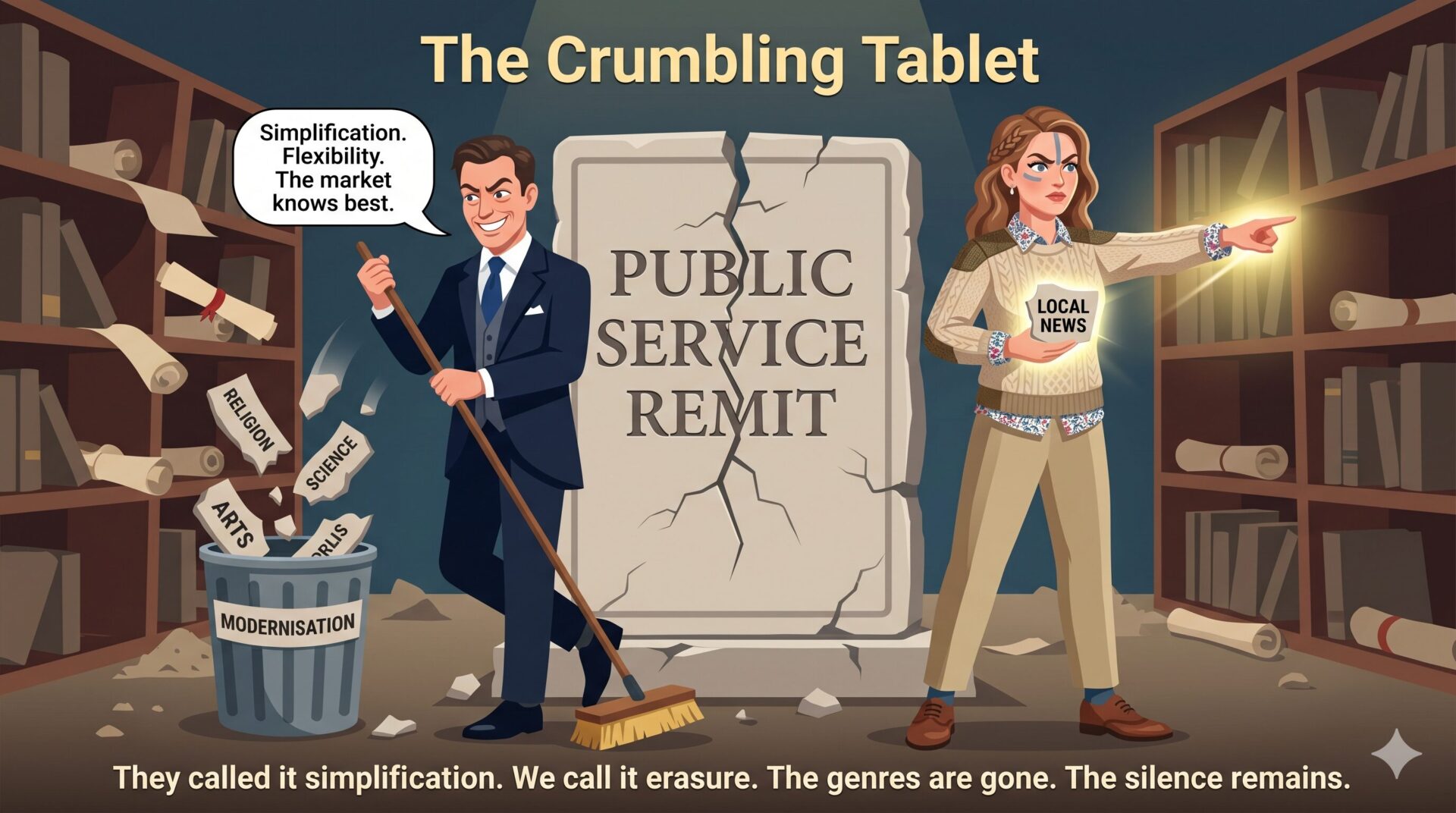
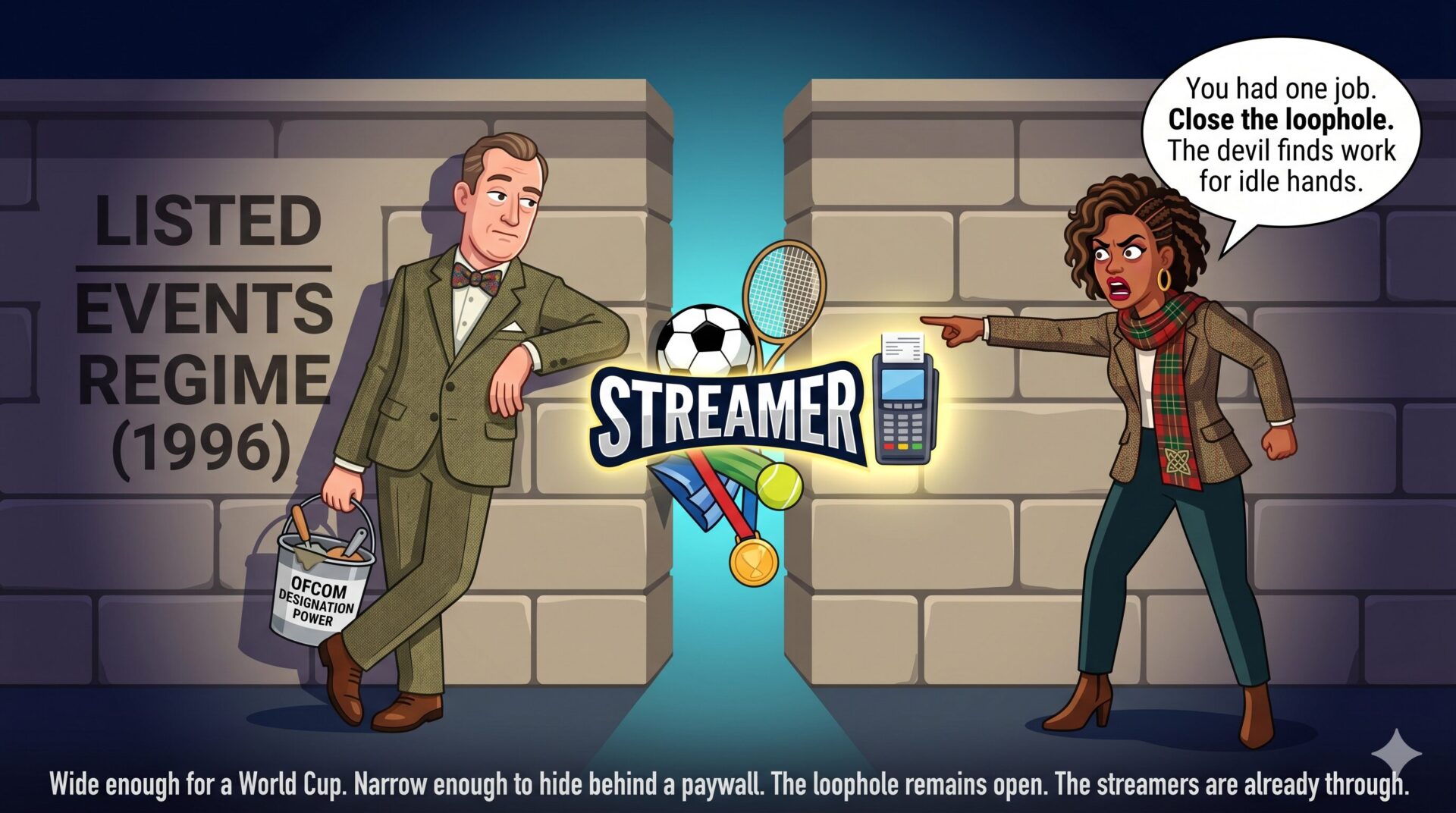


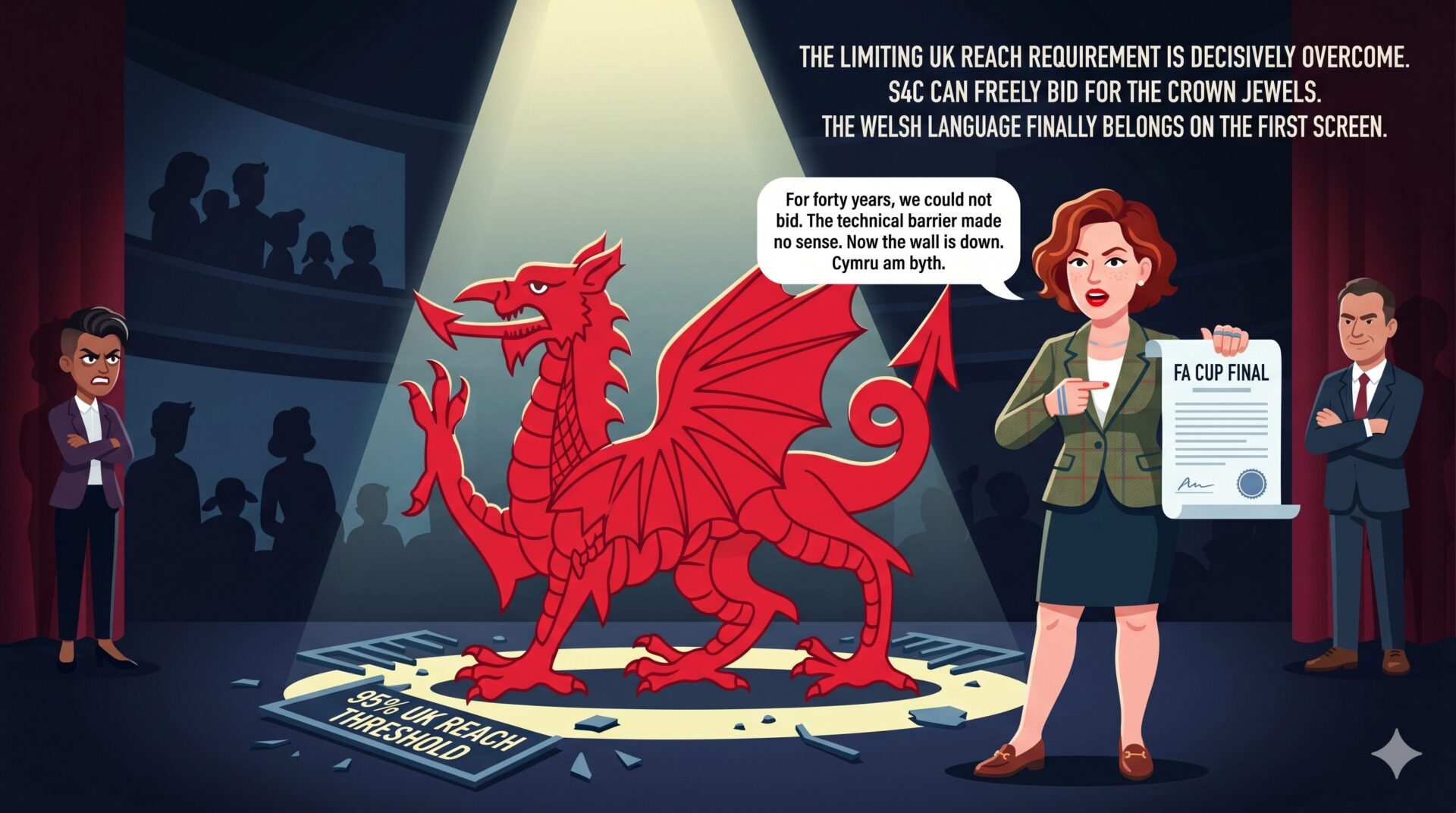
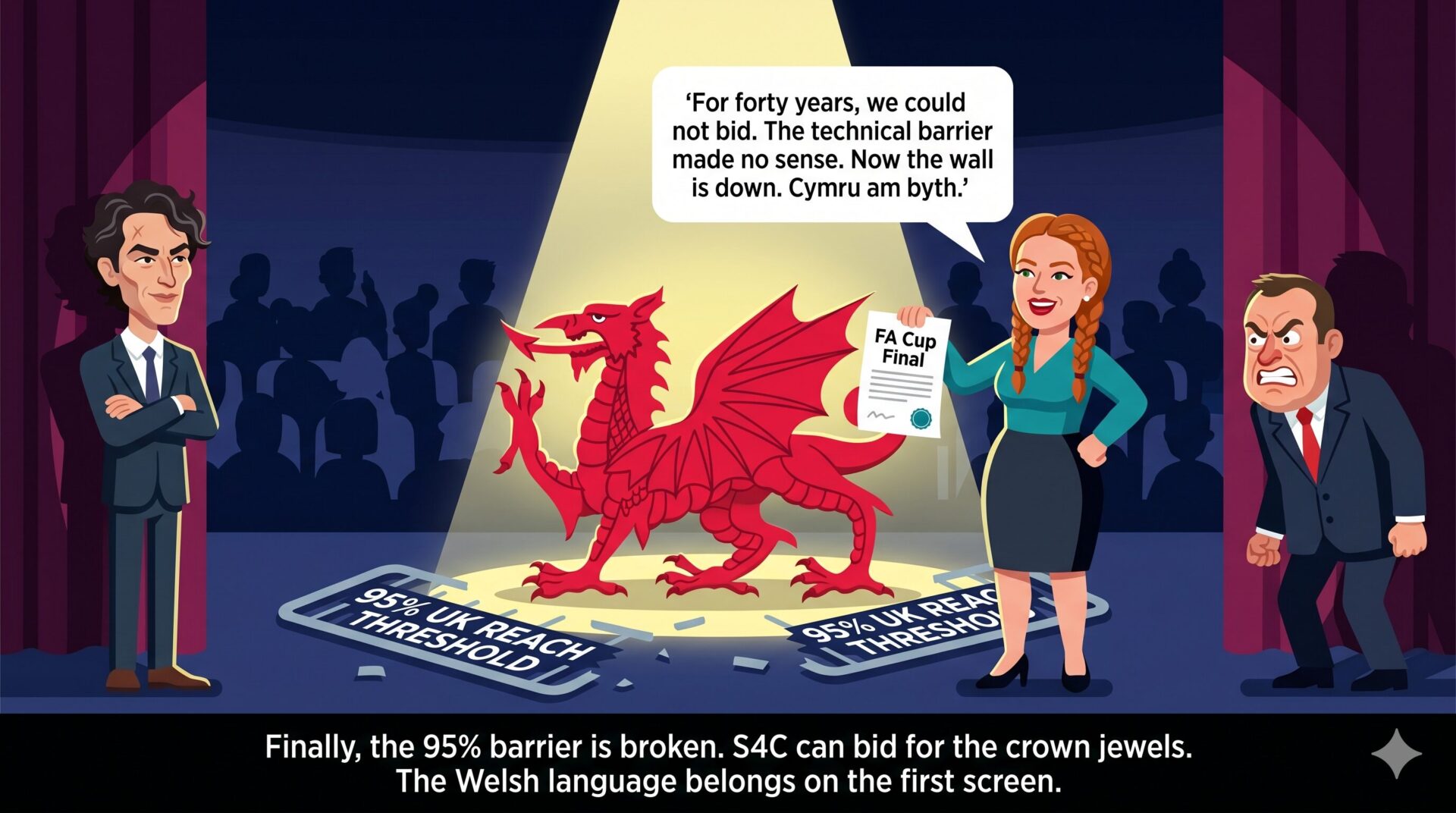
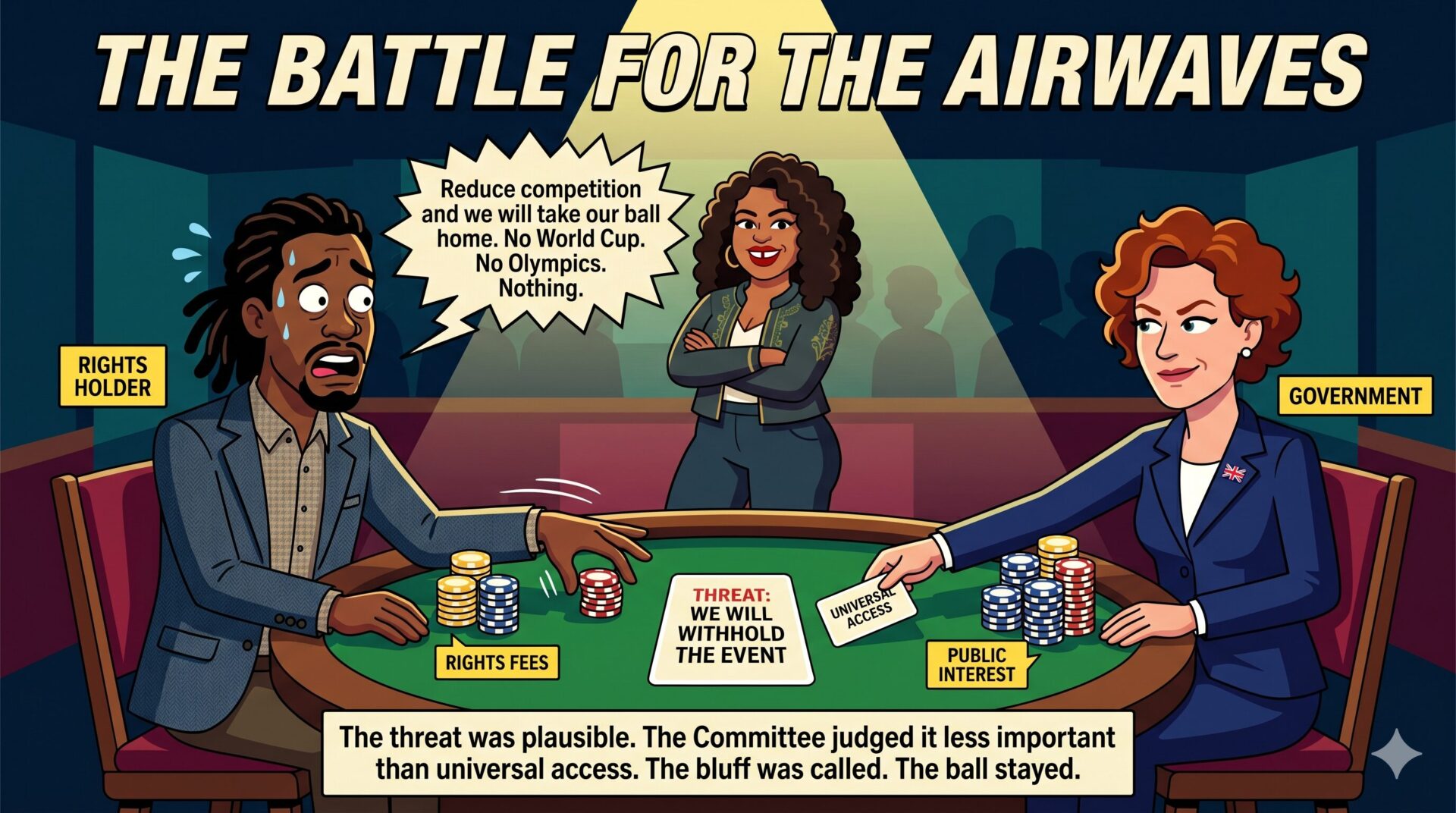
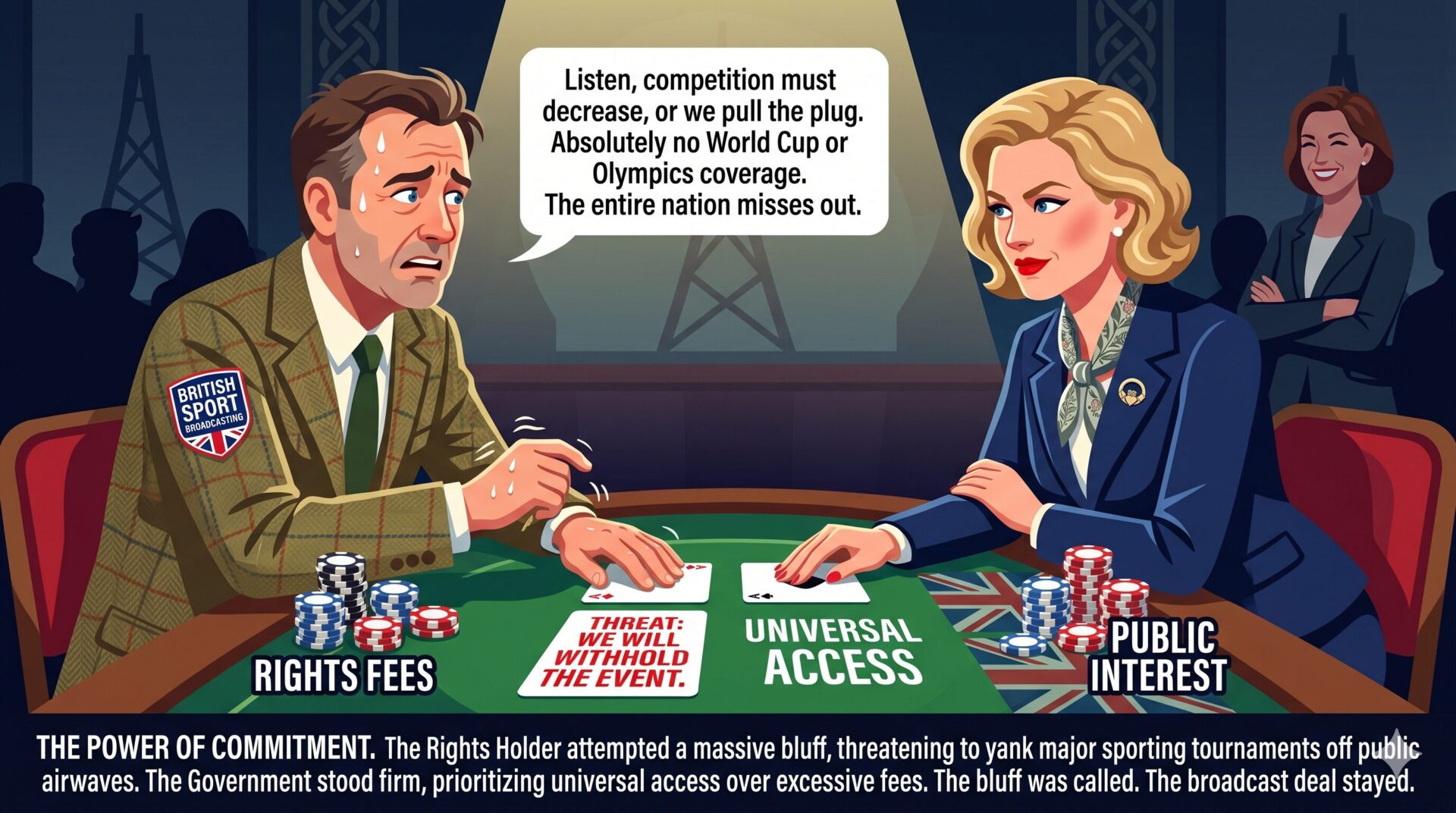

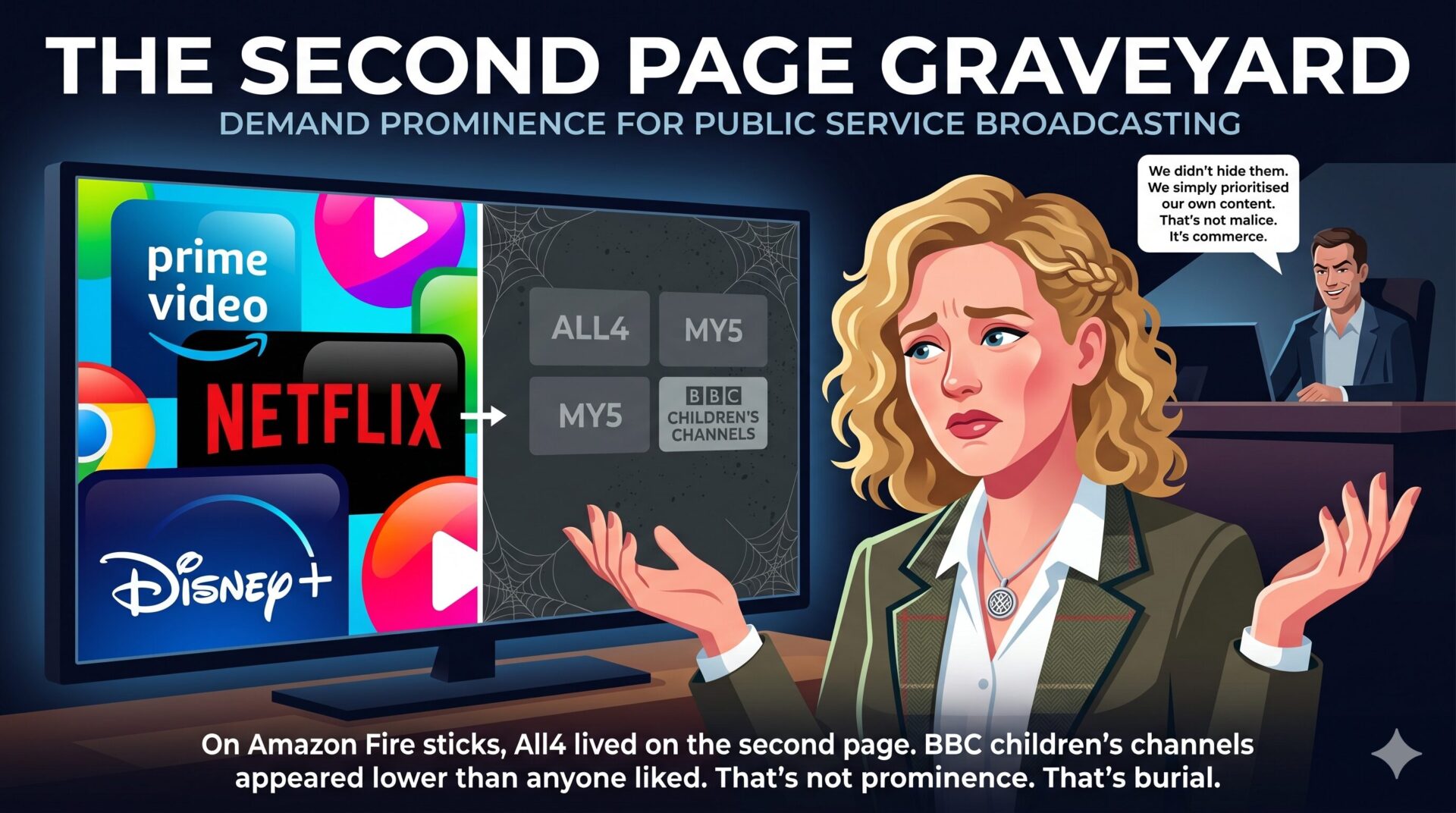 The headstones in the graveyard are about to get company. Arts programming. Religious content. Science coverage. And when your children ask what those were, you can tell them: they were the things we used to have, before we decided that profit was more important than nourishment.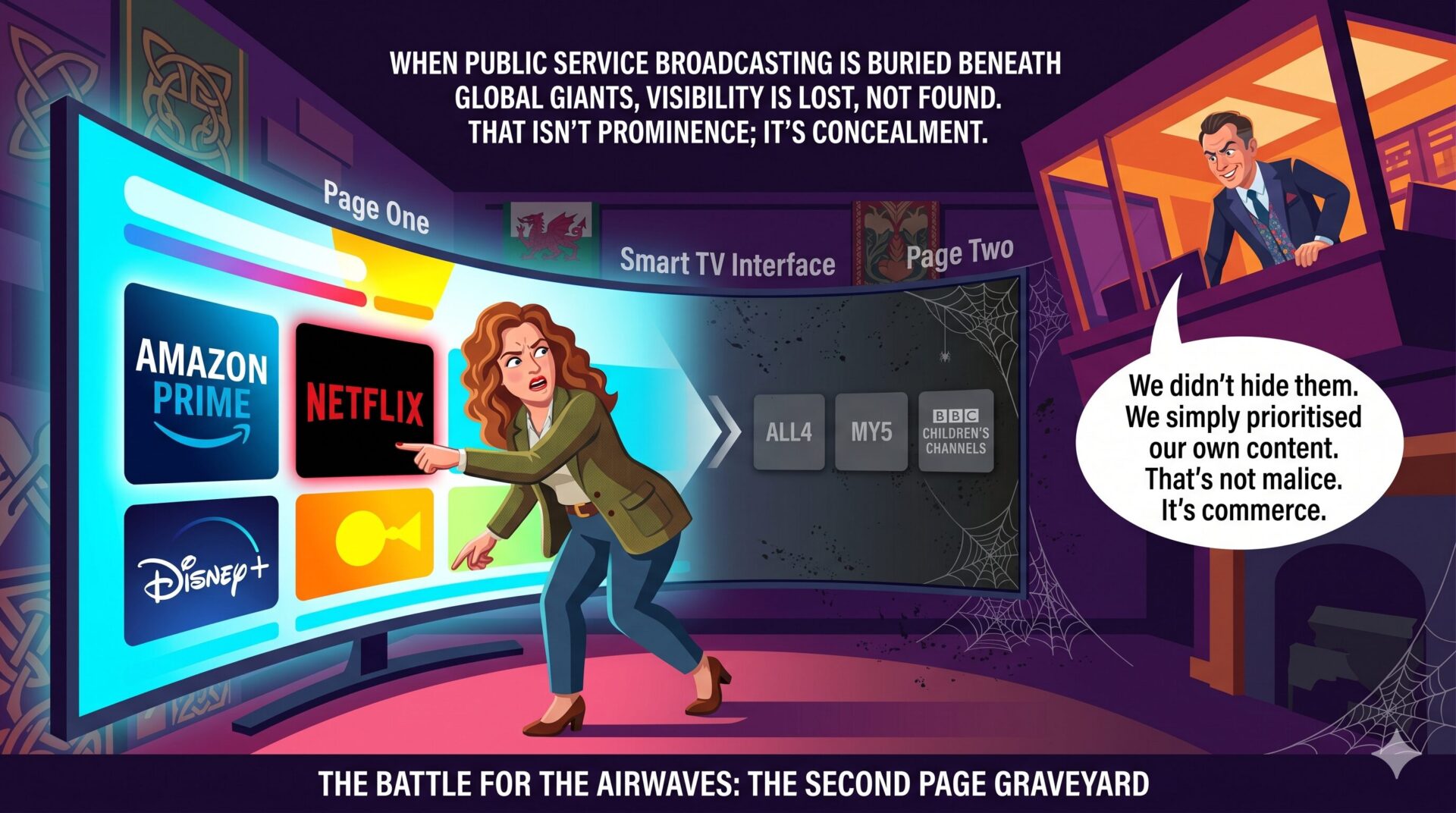
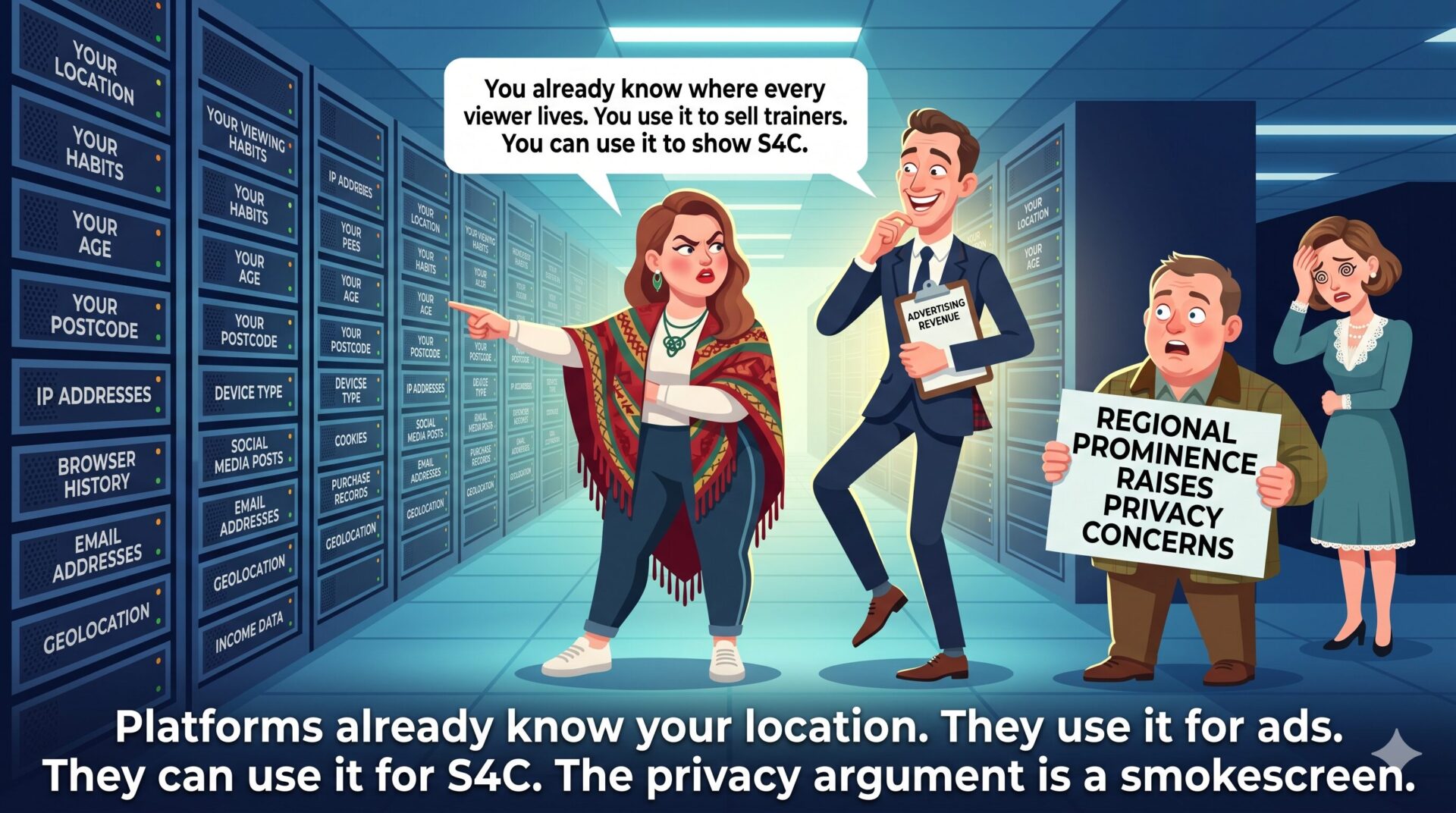
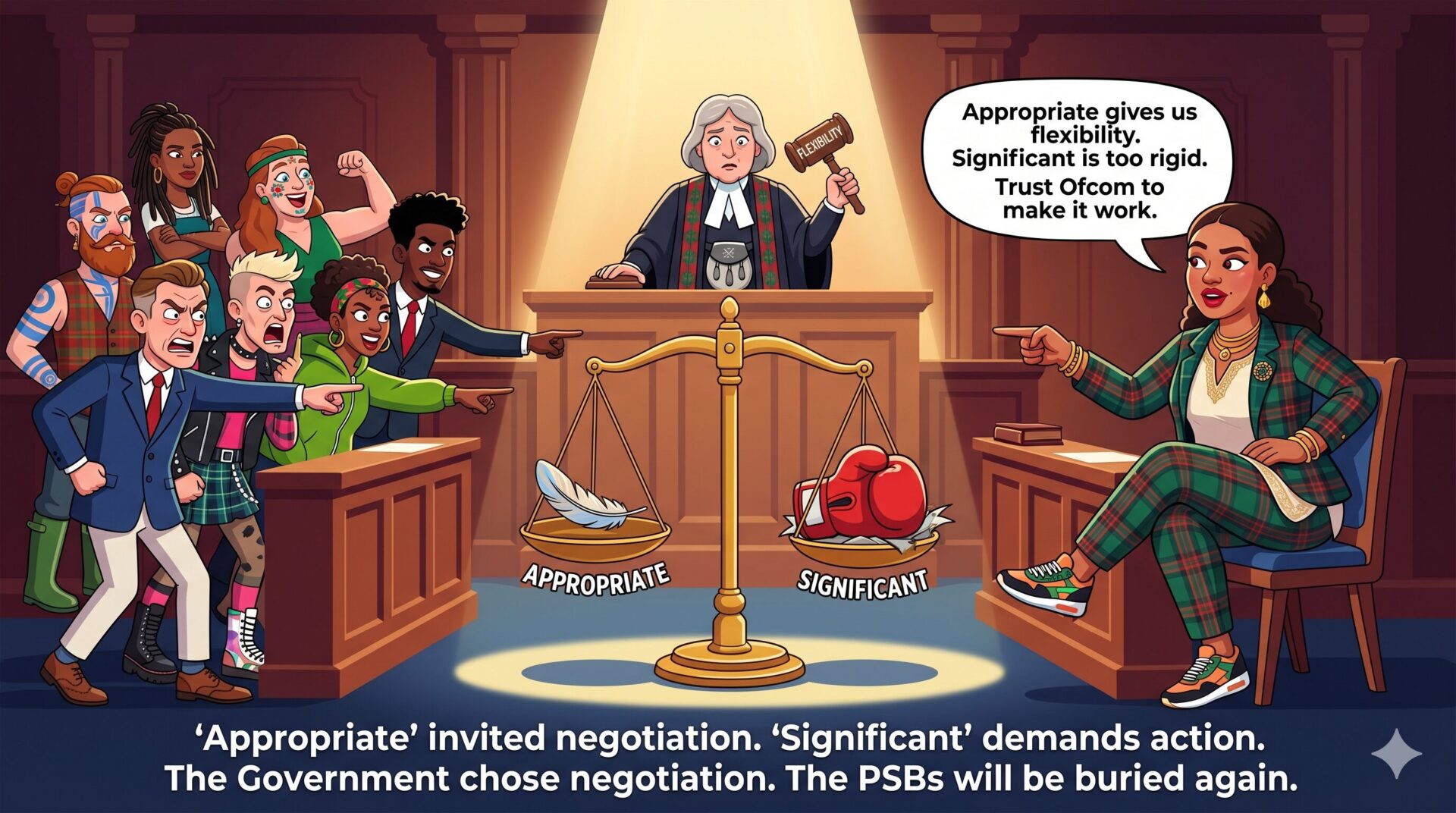
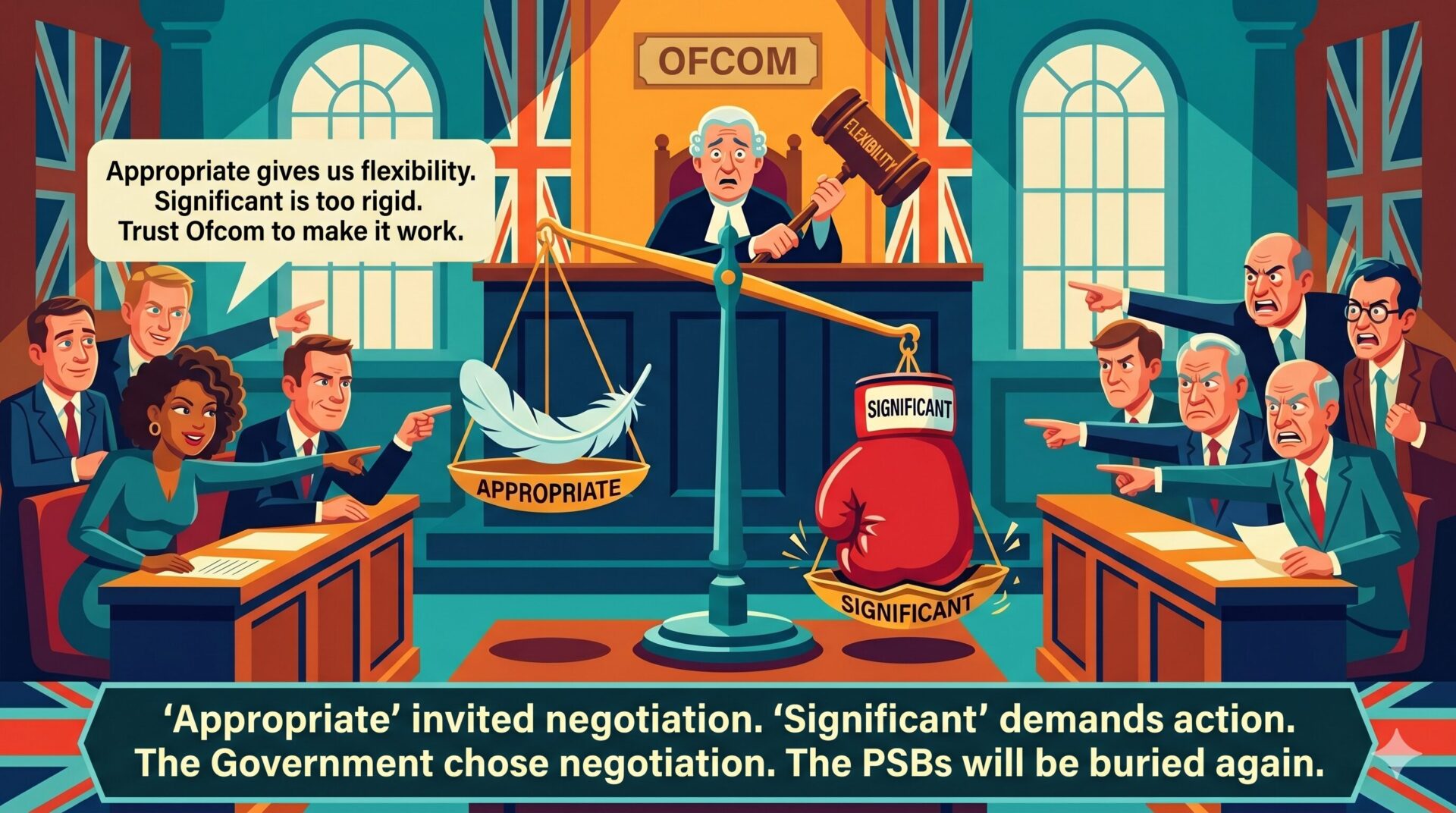
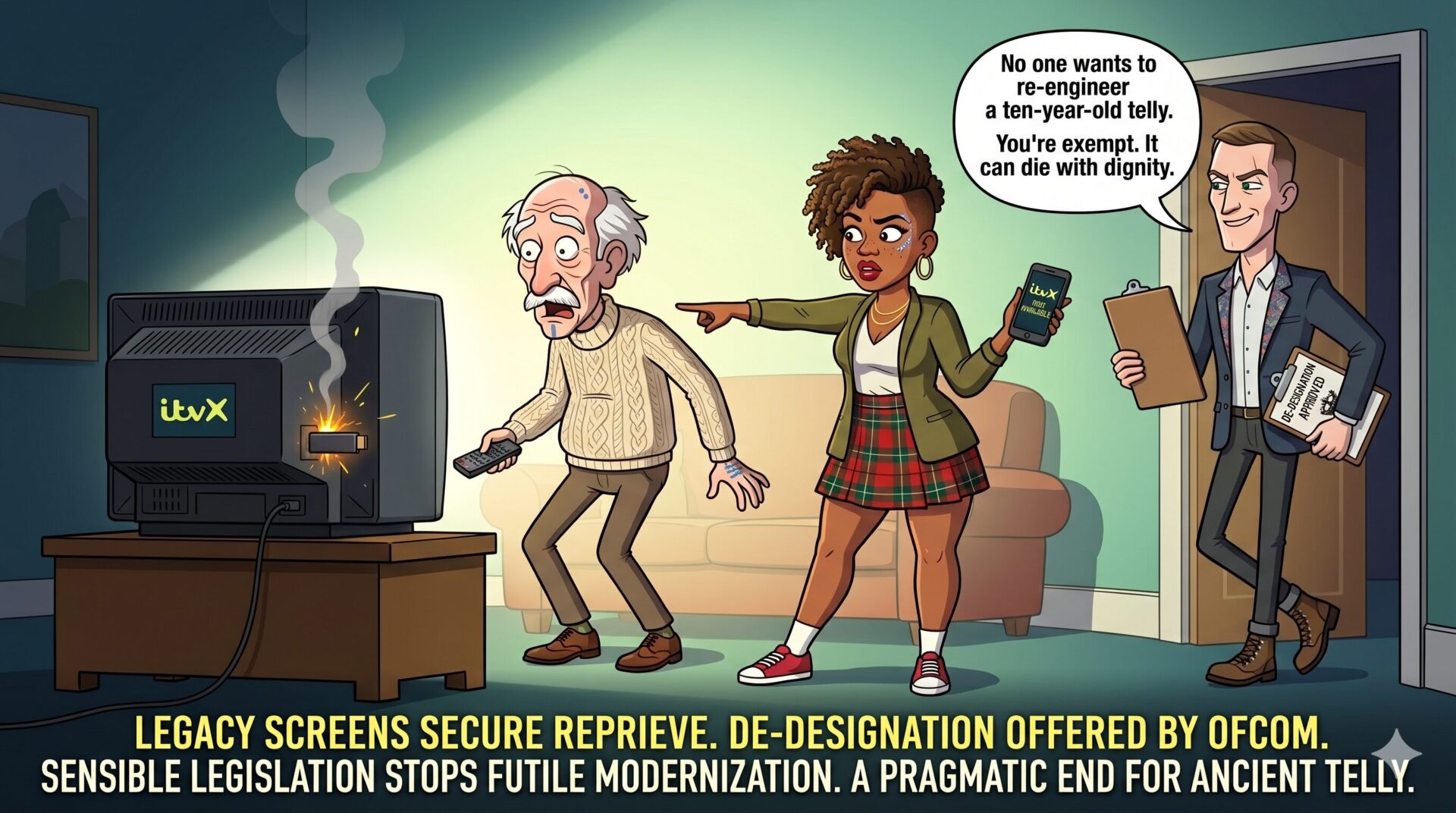
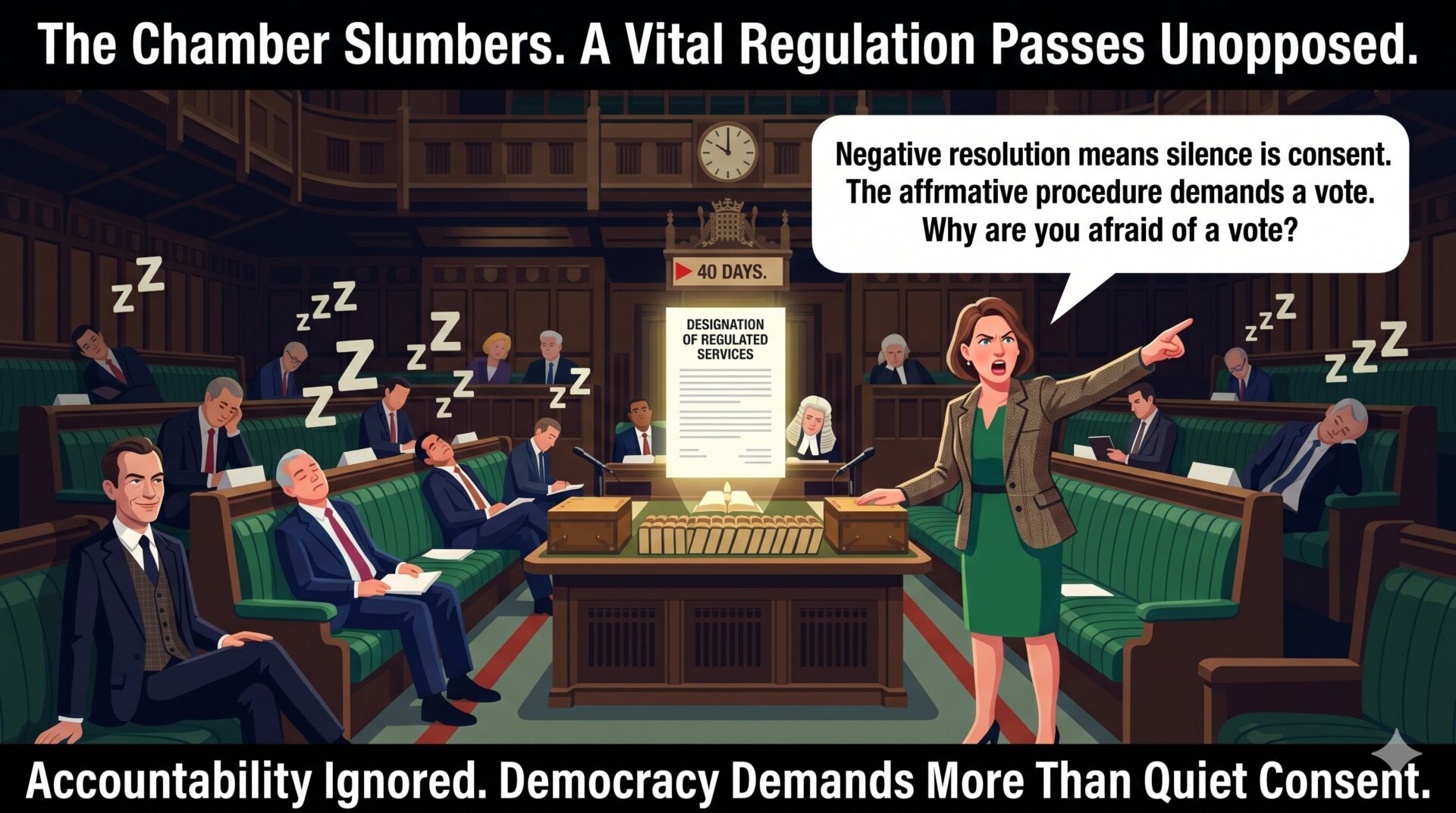

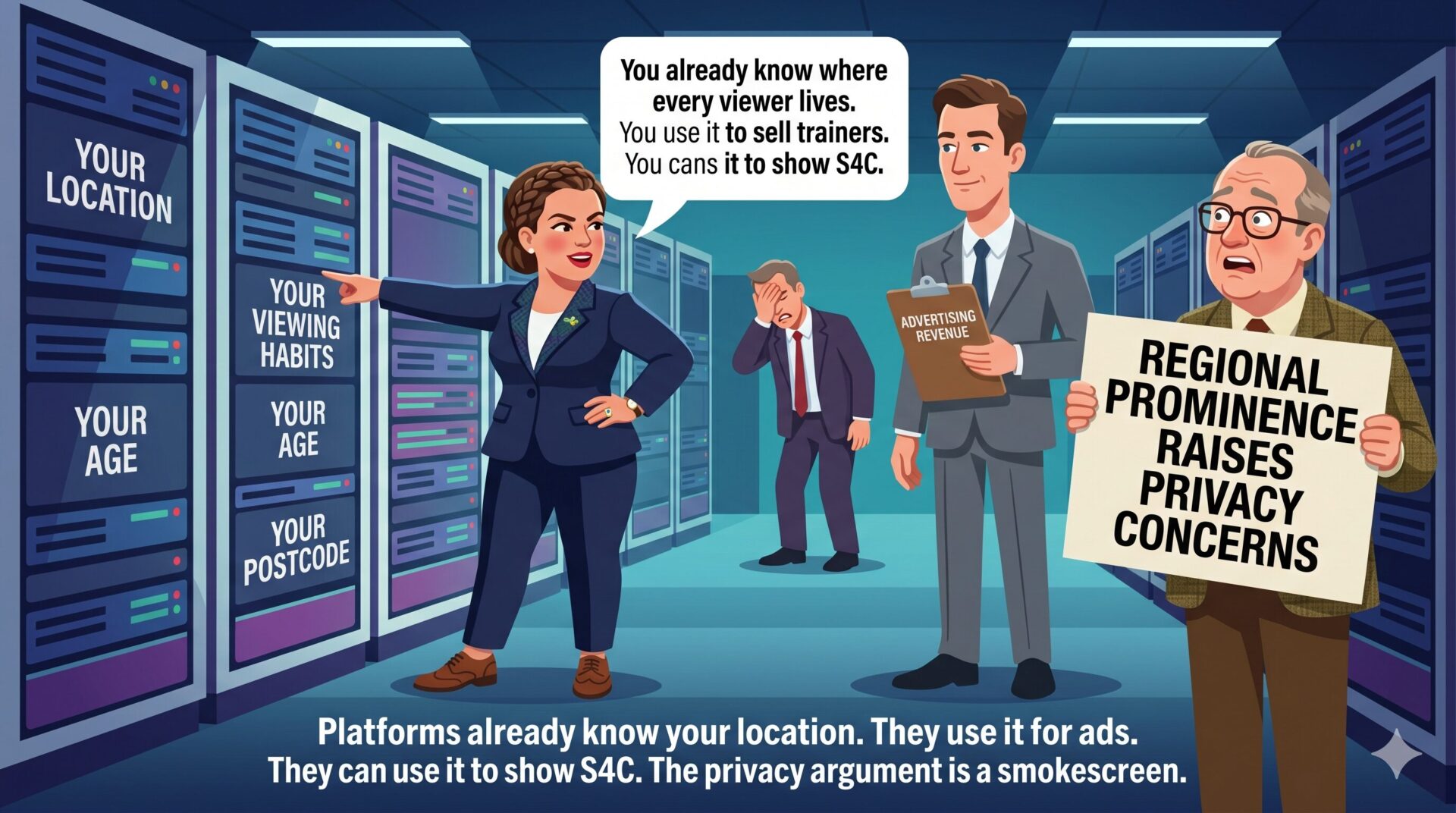
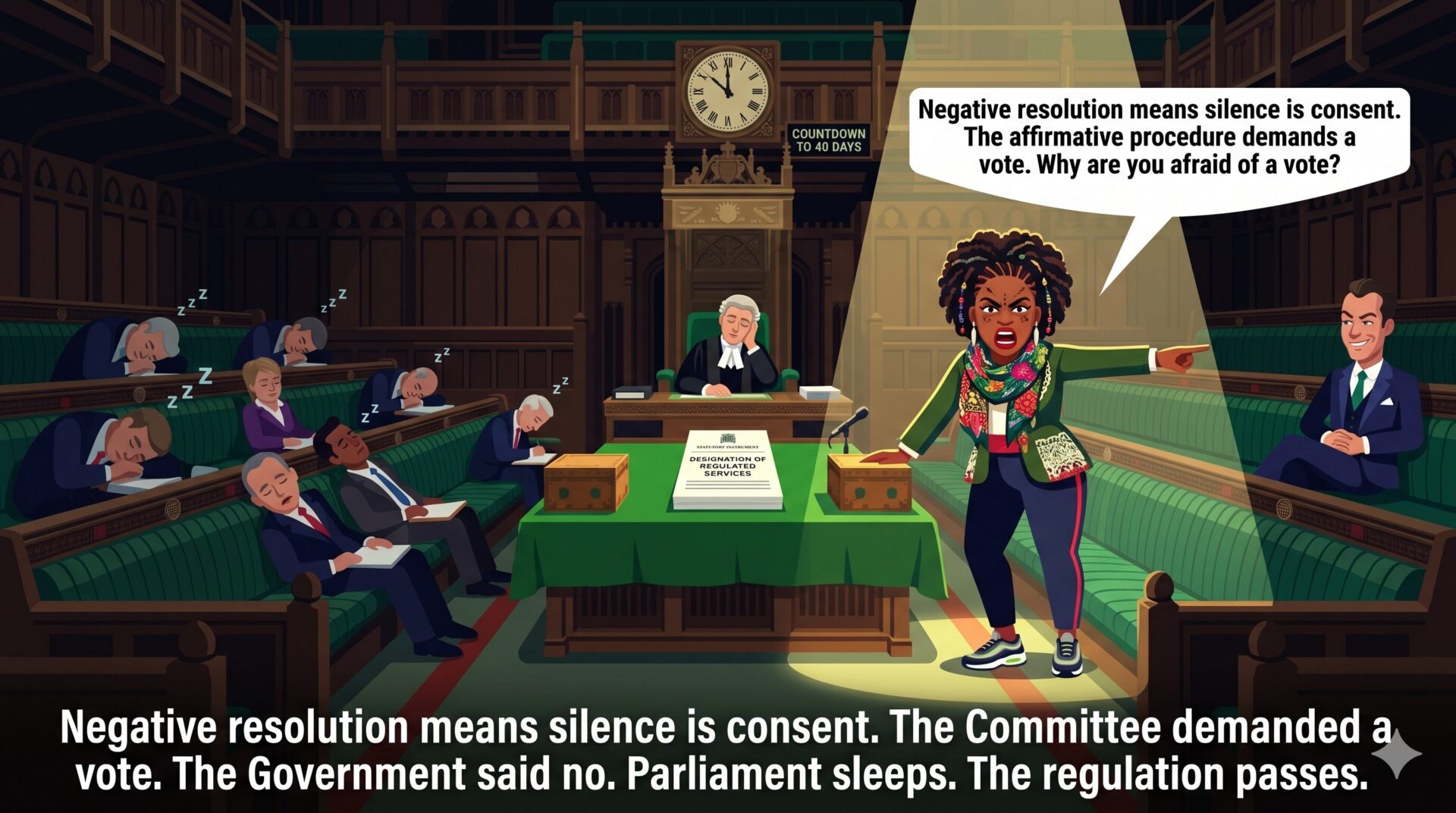
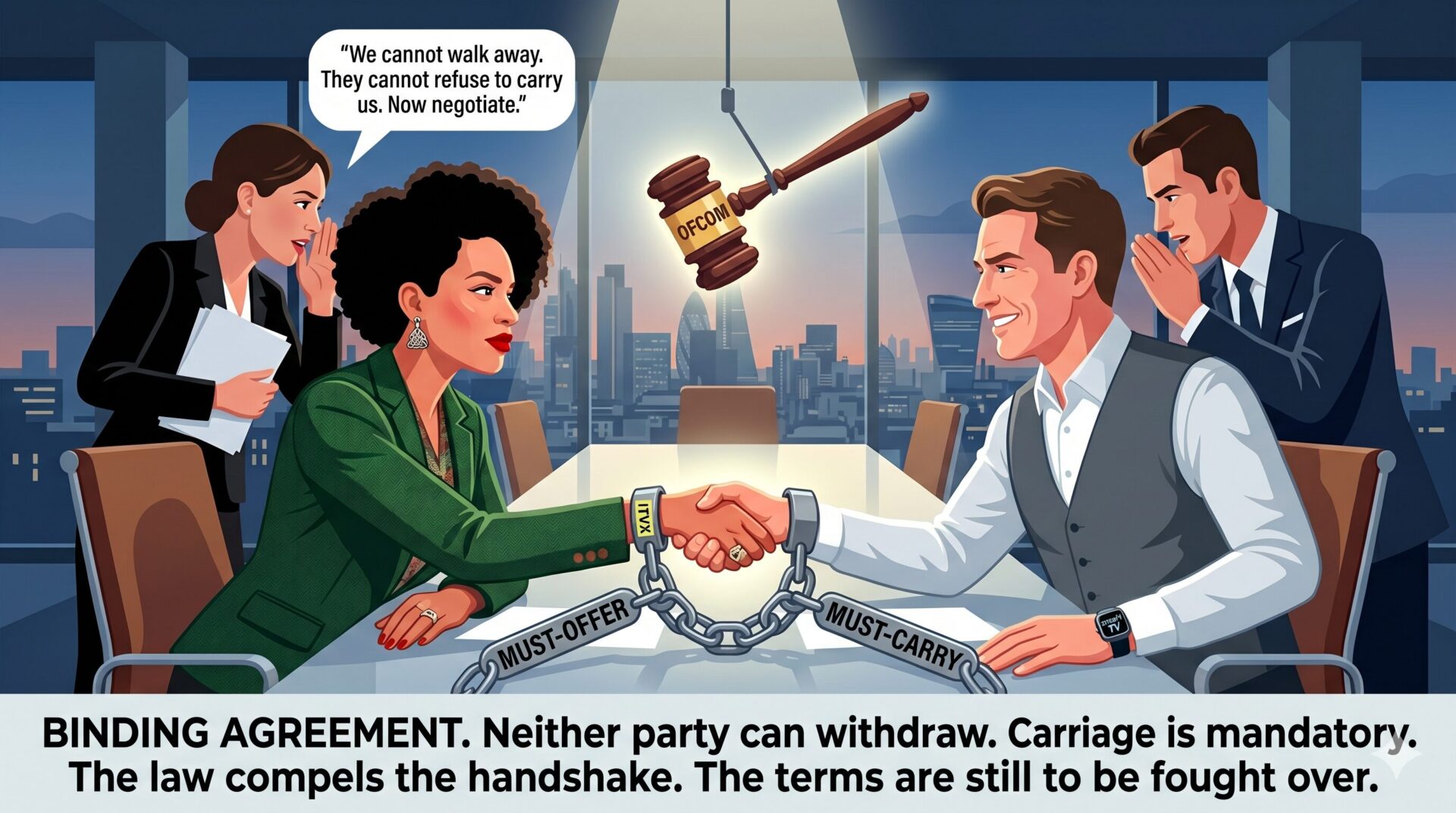

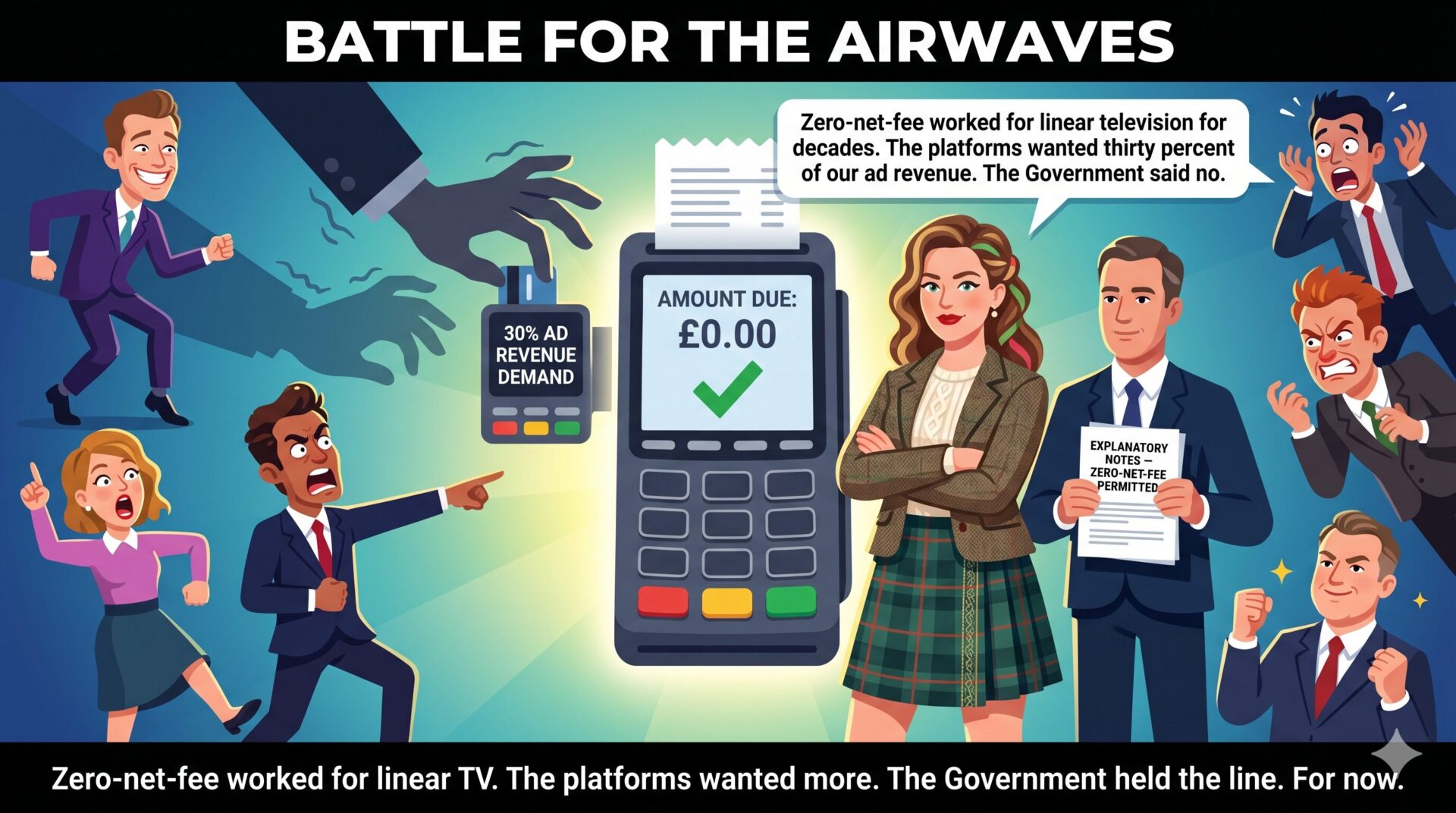
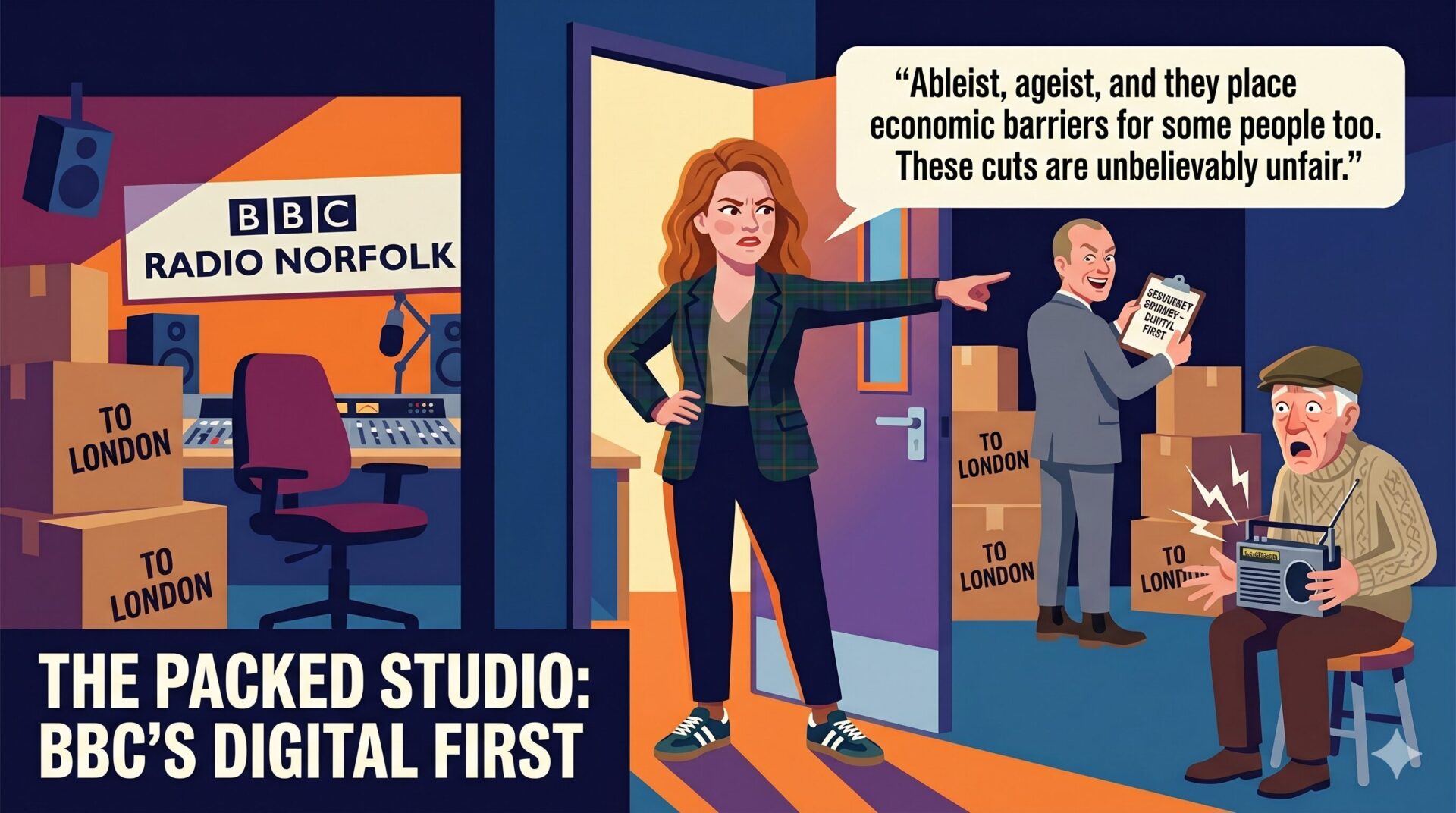
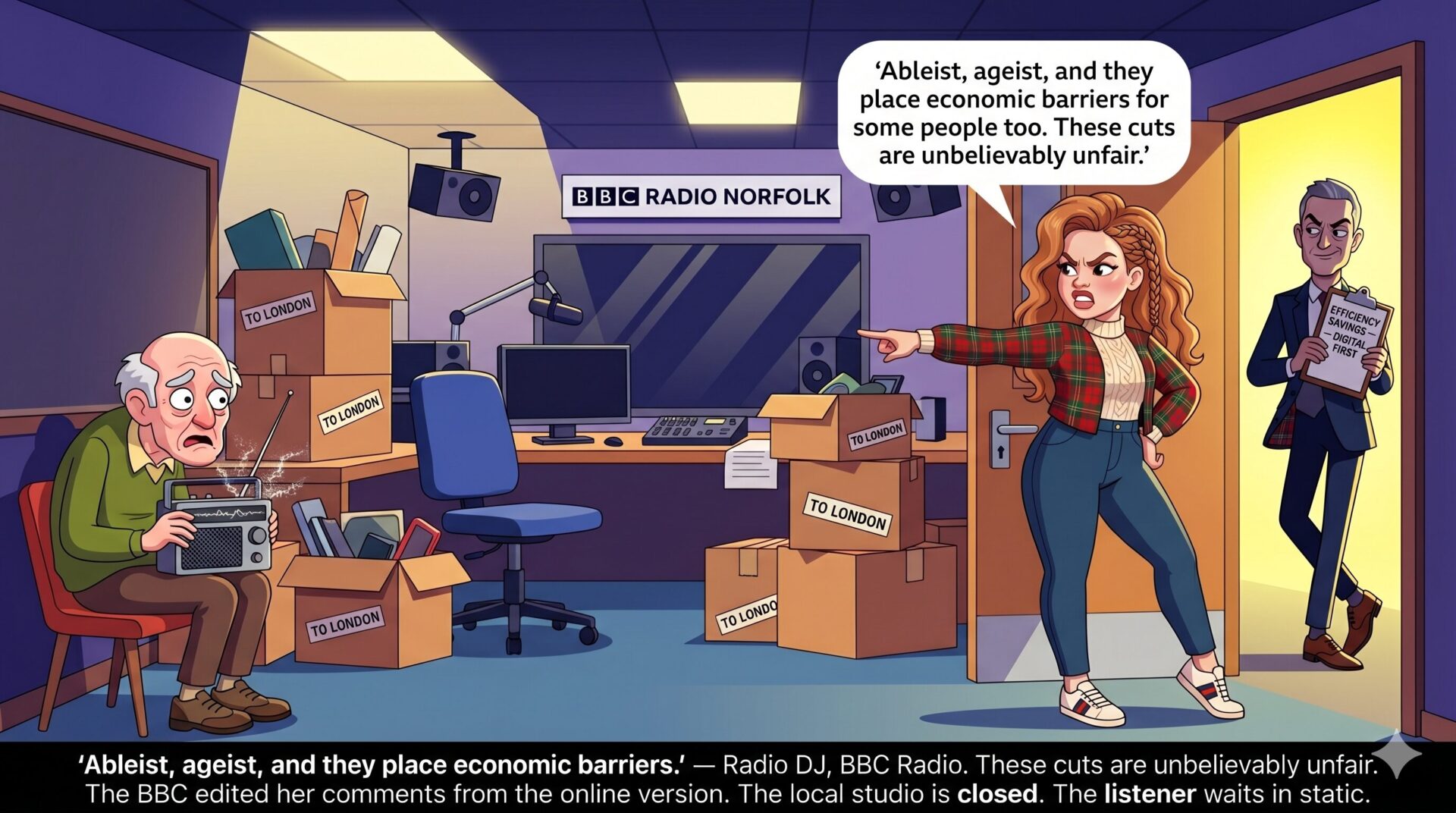



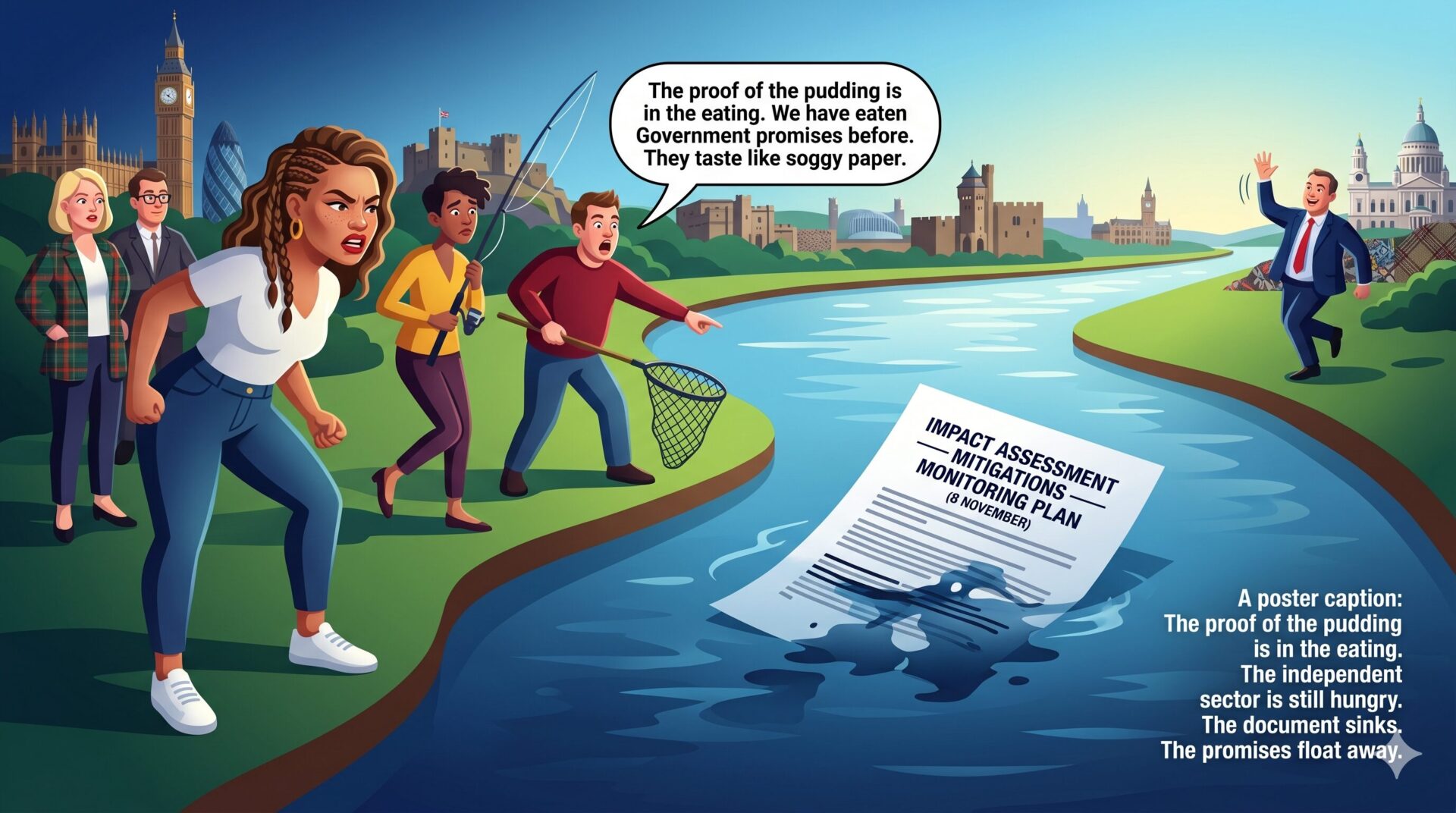
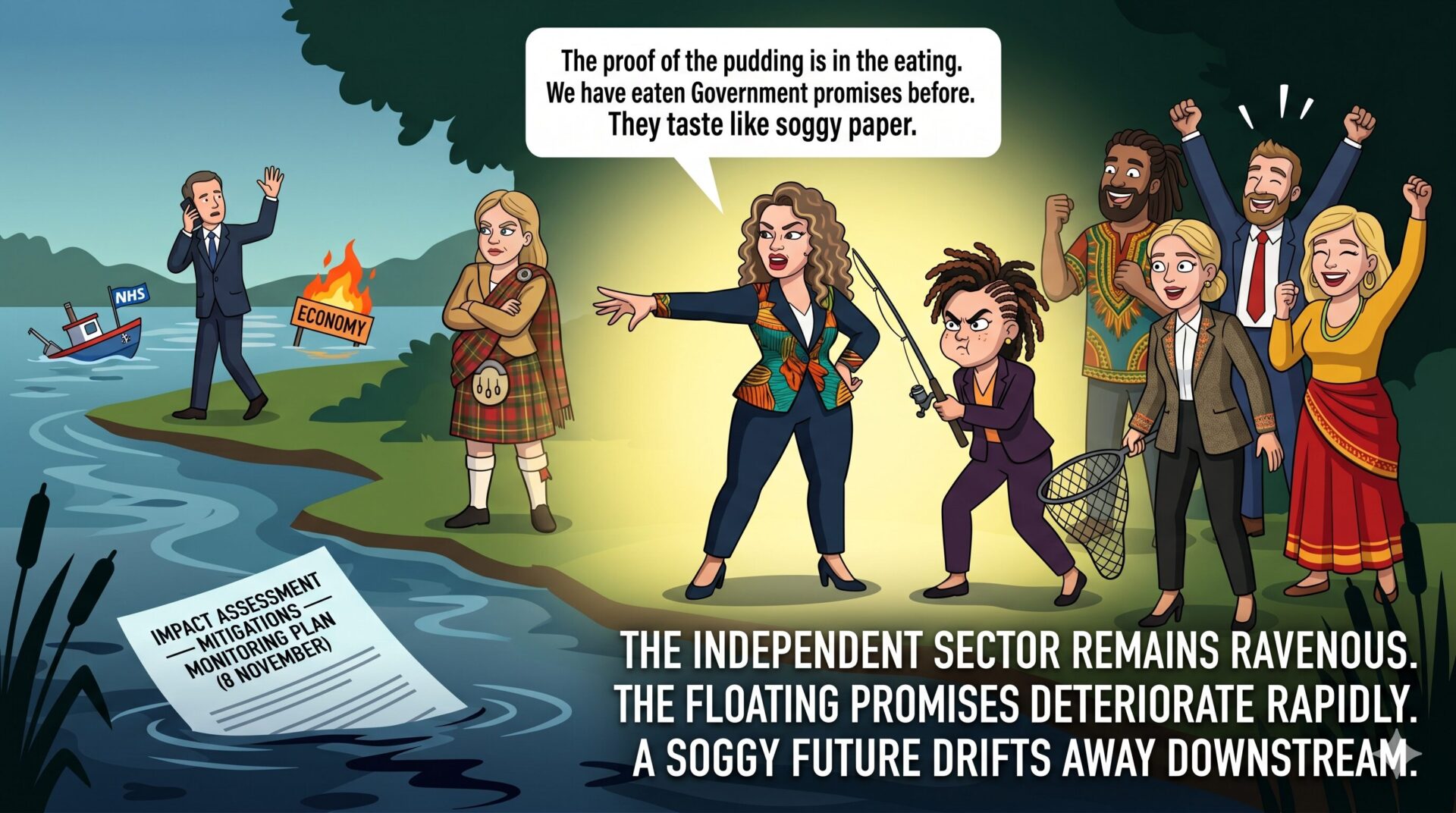
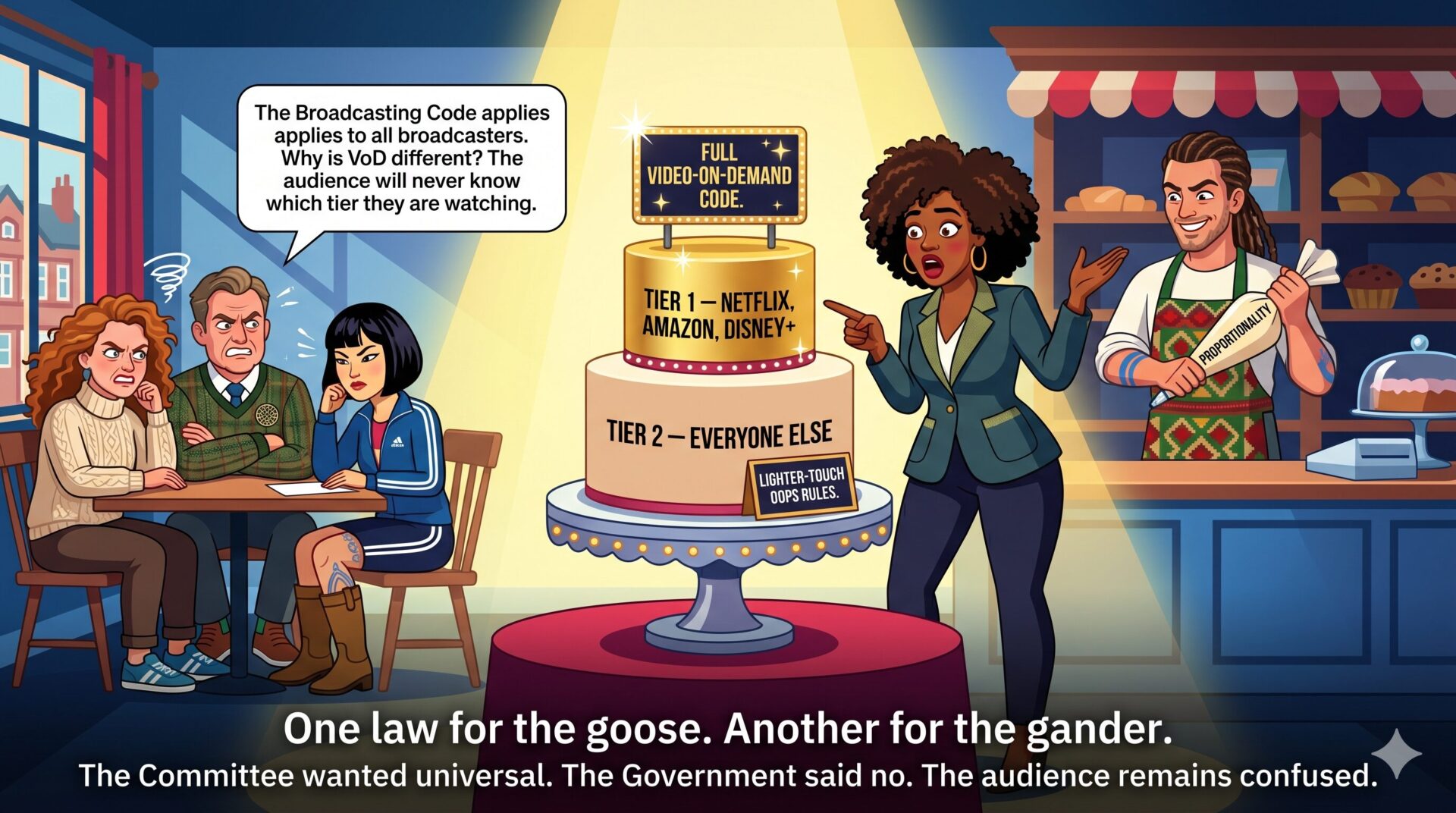


Listed Events: Who Owns the Nation’s Big Moments?
The Streaming Loophole: How the Crown Jewels Could Vanish Behind a Paywall
“The devil finds work for idle hands.” The old saying has a corollary that the Media Bill’s drafters seem to have overlooked: the devil also finds loopholes for lazy legislation. And what a loophole they have left. Wide enough to drive a World Cup through. Spacious enough to hide an Olympic final. Generous enough to make a private equity baron weep with joy.
Here is the situation. The listed events regime is supposed to guarantee that the nation’s sporting crown jewels — the FA Cup Final, Wimbledon, the Grand National, the Olympics — remain available to everyone, free at the point of use. It is a simple, beautiful idea. Some things belong to all of us. Some moments are too important to be sold to the highest bidder.
But the law was written in 1996. The world has changed. And the Bill that was supposed to fix the regime has left a gap so obvious that it is almost insulting.
A pure streaming service — one that does not appear on an Electronic Programme Guide, one that exists only as an app, one that has no broadcast presence whatsoever — can buy the rights to a listed event and put them behind a paywall. Not because the law allows it. But because the law does not forbid it. And in the gap between allowing and forbidding, the streamers are already sharpening their knives.
The 1996 Time Warp
The Broadcasting Act 1996 created the listed events regime. It was a different world. The internet was a curiosity. Streaming was not even a dream. The idea that someone might watch a football match on a telephone was science fiction.
So the law focused on what existed: television channels. Qualifying services were defined as those that reached ninety-five percent of the population and were free-to-air. In practice, this meant the Public Service Broadcasters. The regime worked because the only way to watch a major event was through a broadcast channel, and the only broadcast channels with national reach were the PSBs.
Now, a viewer can watch the World Cup final on a phone, a tablet, a laptop, a smart TV, a games console, a smart speaker with a screen. They can watch it through a dozen different apps and platforms. And many of those apps and platforms have no EPG presence. They are pure streaming services. They exist outside the legal framework that was designed to regulate broadcast television.
The Government knew this. They acknowledged it in the 2022 White Paper. They promised to close the loophole. And then, in the draft Bill, they did not.
The Hypothetical That Became Real
The Committee heard evidence that this is not a theoretical problem. A streaming service could, in principle, acquire the rights to the Olympics and charge subscribers twenty pounds a month to watch. The service would have no EPG presence, so the listed events regime would not apply. The rights holder would be free to sell to the highest bidder. The nation would be told to pay up or miss out.
This is not alarmism. This is what happens when regulation fails to keep pace with technology. The music industry learned this lesson the hard way with Napster. The newspaper industry learned it with the decline of classified advertising. The broadcasting industry is learning it now, in real time, as the Media Bill dawdles through Parliament.
The BBC called the failure to close the loophole a “missed opportunity.” That is diplomatic language. What they meant was: you had one job. One job. And you have managed to leave the door wide open.
The Committee was less diplomatic. They demanded action. They recommended amending the Bill to close the loophole. They pointed out that the Government’s alternative plan — bringing streaming services under EPG regulation — would not work because many streaming services are not on EPGs. They are apps. They are websites. They are embedded in smart TVs. They exist everywhere and nowhere.
The Government’s response was to amend the Bill. But did they close the loophole? They tried. They gave Ofcom the power to draw up a list of “relevant services” to capture streaming services not covered by the definition of an internet programme service. This sounds technical. It sounds like progress. But the devil, as always, is in the details.
The Fix That Might Not Fix
The Government’s amendment allows Ofcom to designate which streaming services fall within the listed events regime. The regulator can look at a service, assess its reach, and decide whether it should be treated like a broadcaster for the purposes of listed events.
This is better than nothing. It is also a recipe for endless litigation.
Every streaming service that is designated will challenge the designation. They will argue that Ofcom has misapplied the criteria. They will argue that the regime is anti-competitive. They will argue that the Government has exceeded its authority. The courts will be busy for years. And while the lawyers argue, the rights will be sold, the paywalls will be erected, and the audiences will lose.
The Committee wanted a clean fix. They wanted the Bill to close the loophole directly, without leaving it to Ofcom to mop up afterward. They wanted a definition of “qualifying service” that included any service, however delivered, that reached a significant number of UK viewers. They wanted the regime to be platform-neutral, technology-blind, and legally robust.
The Government chose the path of maximum complexity and minimum certainty. They chose to kick the can down the road, into Ofcom’s in-tray, where it will sit for years while the lawyers feast.
The Paywall Nightmare
Imagine the following. The year is 2030. The World Cup is being held in a time zone that makes live broadcast inconvenient for British viewers. A streaming service — let us call it SportMax — bids for the exclusive UK rights. SportMax is not on Freeview. It is not on Sky. It is not on Virgin. It is an app. You download it from the App Store. You subscribe for £14.99 a month. You watch on your phone, your tablet, your laptop.
SportMax wins the bid. The matches are behind a paywall. The nation is told that if they want to see England in the final, they must subscribe. The listed events regime says nothing, because SportMax is not a “qualifying service” under the 1996 Act and the Government’s amendment has not yet taken effect, or has been challenged in court, or has been designed so narrowly that it misses SportMax entirely.
The fans who can afford it subscribe. The fans who cannot, do not. The pubs that can afford the commercial license show the matches. The pubs that cannot, do not. The nation fragments into those who saw it and those who did not. The shared moment — the collective experience of watching the same thing at the same time, of celebrating or mourning together — is gone.
This is not a dystopian fantasy. This is the logical conclusion of the Government’s failure to act decisively. The paywall is coming. The only question is whether Parliament will stop it before it arrives.
The Rights Holder’s Dilemma
The sports rights holders are not villains. They are organisations trying to maximise revenue to reinvest in their sports. The Premier League uses broadcast income to fund clubs at every level. The FA uses Cup Final money to support grassroots football. The Olympics relies on rights fees to stage the Games.
From their perspective, selling to the highest bidder is not greed. It is responsibility. If a streaming service offers more money than the PSBs, the rights holder has a duty to consider that offer. The listed events regime exists precisely to override that duty. It says: some events are so important that they cannot be sold to the highest bidder. They belong to the nation.
The loophole undermines this principle. If a streaming service can buy the rights and hide them behind a paywall, the regime has failed. The rights holder will argue that they are not breaking the law — the streaming service is not a qualifying service, so the regime does not apply. They are technically correct. That is the worst kind of correct.
The Committee understood this. They wanted to remove the technicality. They wanted to make it impossible for any service, however delivered, to buy listed event rights and restrict access. The Government’s amendment does not go that far. It nibbles around the edges. It hopes that Ofcom will catch the worst offenders. It assumes that the streamers will play fair.
They will not. They have shareholders.
The Global Dimension
Streaming services are global. The ones that might buy listed event rights are American, or Chinese, or European. They have no loyalty to the British public. They have no commitment to public service broadcasting. They have a legal obligation to maximise shareholder value.
The listed events regime is a British peculiarity. Other countries have similar systems, but the details vary. A global streaming service that buys rights in multiple territories will comply with the law in each territory, but only exactly. They will not volunteer to be regulated. They will not expand the scope of the regime out of public-spiritedness.
The Government’s amendment relies on Ofcom designating services. But Ofcom can only designate services that are caught by the definition. If the definition is too narrow, the streamers will simply structure themselves to fall outside it. They will create subsidiaries. They will use different delivery mechanisms. They will hire clever lawyers who specialise in regulatory arbitrage.
This is not speculation. This is what happens every time regulation tries to catch up with technology. The regulated entities are always one step ahead. They have more money, more lawyers, more incentives to find the gaps. The Government, by contrast, has one shot at getting the legislation right. The Media Bill is that shot. And they are aiming at a target that has already moved.
The Committee’s Frustration
The Committee’s report on the listed events loophole is remarkable for its tone. They are not angry. They are disappointed. They had been told, repeatedly, that the Government would close the loophole. They had seen the White Paper. They had heard the Minister’s assurances. And then they saw the Bill.
“Missed opportunity,” they wrote. That is the language of a disappointed parent, not a parliamentary committee. They had expected better. They had been let down.
The Government’s response was defensive. They pointed to the amendment allowing Ofcom to draw up a list of relevant services. They claimed this would close the loophole. They did not address the Committee’s central criticism: that the amendment is too weak, too slow, too dependent on Ofcom’s willingness to act.
The Committee wanted a clean, simple, legally robust fix. The Government provided a messy, complex, legally uncertain alternative. The loophole remains. It is narrower than before. But it is still wide enough for a determined streamer to squeeze through.
The Adage
There is an old legal maxim: hard cases make bad law. The converse is also true: bad law makes hard cases. The listed events loophole is a hard case. It is the product of legislation that failed to anticipate technological change. The Media Bill was supposed to fix that. Instead, it has added another layer of complexity to an already creaky regime.
The devil finds work for idle hands. But the devil also finds work for lazy draftsmanship. The loophole exists because someone in the Department for Culture, Media, and Sport decided that the problem could wait. That Ofcom could handle it. That the streamers would behave responsibly.
They were mistaken. The problem will not wait. Ofcom cannot handle it alone. The streamers will behave like businesses, not charities. And the nation’s sporting crown jewels will be auctioned to the highest bidder unless Parliament acts now.
The Committee acted. They demanded a clean fix. The Government refused. The loophole remains. And somewhere, in a glass office in California, a streaming executive is reading the Bill and smiling. The devil has found his work. And it is paying very well indeed.
The PSB-Only Privilege: Keeping the Crown Jewels Where They Belong
“Possession is nine-tenths of the law.” The proverb is usually invoked by those who have something and want to keep it. But in the case of listed events, possession is not the issue. Access is. And the Government has decided, after years of dithering, that access to the nation’s sporting crown jewels must be guaranteed by limiting who can bid for them. Only Public Service Broadcasters need apply.
The reaction from the commercial sector was immediate and furious. Sky called it anti-competitive. Amazon said it reduced consumer choice. Warner Bros Discovery warned that it would harm investment in sport. The usual suspects lined up to deliver the usual lamentations about market distortion and lost opportunities.
The Minister’s response was a single sentence, sharp as a scalpel: “Free-to-air means nothing if a household lacks the necessary device or subscription.”
Let that land. Let it sink in. For years, the commercial broadcasters have argued that they can show listed events free-to-air. They point to Sky’s Pick TV, which is available without a subscription. They point to Amazon’s deal with Channel 4 to show the US Open final. They argue that the market can deliver universal access without the heavy hand of regulation.
The Minister’s reply cuts through the spin. Free-to-air is not the same as universally accessible. A channel that is technically free but requires a satellite dish, a set-top box, or a smart TV is not free for the millions of households that lack that equipment. A streaming service that requires a broadband connection and a compatible device is not free for the seven percent without home internet. Free-to-air, in the commercial sector’s vocabulary, means free for people who already have the right kit. Everyone else can watch the highlights on YouTube.
The PSB-only privilege is not about favouring the BBC over Sky. It is about recognising that universal access requires universal distribution. And only the PSBs, with their guaranteed place on every platform, their reach into every home, their obligation to serve everyone regardless of ability to pay, can provide that.
The Myth of Commercial Free-to-Air
Sky’s Pick TV is free. That is true. It is also irrelevant. Pick TV is available only to Sky subscribers. Wait, that cannot be right. How can a free channel be available only to subscribers? Because Pick TV is part of the Sky platform. You do not need a subscription to watch it, but you do need a Sky box. And you only have a Sky box if you have, or have had, a Sky subscription.
This is the sleight of hand that the commercial sector has perfected. They offer “free” channels that are only accessible to people who have already paid for access to the platform. It is like a pub offering free crisps to anyone who buys a pint. The crisps are free, technically. But you cannot get them without the pint.
Amazon’s deal with Channel 4 to show the US Open final was genuine free-to-air. Channel 4 broadcast it on its linear channel, available to anyone with a television and an aerial. Amazon provided the streaming supplement for those who wanted it. That was a good-faith effort to serve audiences through multiple routes.
But it was also a one-off. A promotional exercise. A way for Amazon to burnish its public service credentials while building its brand. The question is not whether Amazon can show events free-to-air. The question is whether they will do so consistently, reliably, as a matter of course, without being compelled. The history of commercial broadcasting suggests the answer is no.
The Minister’s retort is sharp because it is true. Free-to-air is not the same as universally accessible. And universal accessibility is the entire point of the listed events regime.
The S4C Factor
There is a subplot to this story that is easy to miss. The old listed events regime required qualifying services to reach ninety-five percent of the population. S4C, the Welsh-language broadcaster, could not meet that threshold. Not because it is small or unsuccessful, but because its audience is concentrated in Wales. A service that reaches ninety-five percent of Wales reaches about five percent of the UK. The maths simply does not work.
Under the old regime, S4C could not bid for listed events. They were locked out, not by any deliberate exclusion, but by a technical criterion that made no sense for a nation-within-a-nation service. The PSB-only privilege changes that. S4C is a PSB. Therefore, S4C can bid. The technical barrier disappears.
This is not a niche concern. S4C has argued for years that listed events are “a crucial means of introducing S4C’s services and the Welsh language to much wider audiences.” When S4C shows a major sporting event in Welsh, people who do not normally watch S4C tune in. They hear the language. They see the coverage. They discover a broadcaster they might otherwise have ignored. The cultural impact extends far beyond the match itself.
The commercial sector’s objections to the PSB-only privilege rarely mention S4C. They would rather not be seen arguing against Welsh-language broadcasting. So they frame their objections in terms of consumer choice and market competition. But the effect is the same: they want to preserve the possibility of bidding for listed events themselves, even if that means locking S4C out of the process.
The Government’s decision to limit the regime to PSBs is, among other things, a victory for S4C. It is a recognition that public service broadcasting means serving the whole nation, including its nations and regions. The commercial sector can complain about anti-competitive behaviour. But they cannot credibly claim to represent Welsh viewers.
The Competition Argument
Sky’s argument is straightforward: restricting listed events to PSBs reduces competition, which reduces the rights fees that sports bodies receive, which reduces investment in sport. Less competition means lower bids. Lower bids mean less money for grassroots football, tennis, horseracing. Everyone loses, except the PSBs who get the rights on the cheap.
This argument sounds reasonable. It is also wrong.
The listed events regime is not a free market. It is a deliberate intervention in the market. It exists precisely to override market outcomes. The whole point is to prevent the highest bidder from winning, because the highest bidder might put the event behind a paywall. Competition is not the goal. Access is.
The rights holders understand this. They may grumble about the PSB-only privilege, but they also understand that the regime guarantees them a certain level of exposure that paywall broadcasting cannot match. The FA Cup Final on BBC One reaches millions of viewers who would never subscribe to a sports streaming service. Those viewers become fans. Those fans buy tickets, merchandise, subscriptions to other services. The exposure has value that is not captured in the rights fee.
The commercial broadcasters want to have it both ways. They want the prestige of broadcasting major events and the freedom to charge for access. The PSB-only privilege denies them that. It says: if you want the prestige, you must accept the access conditions. You cannot have the crown jewels and hide them in a vault.
The Device Fragmentation Problem
The Minister’s retort about devices and subscriptions is not a rhetorical flourish. It is a description of reality. The number of ways to watch television has exploded. A household might have a Freeview box, a Sky dish, a streaming stick, a smart TV, a games console, and half a dozen mobile devices. Each platform has its own access requirements, its own subscription model, its own technical quirks.
A listed event that is shown on a commercial “free-to-air” channel might be accessible on some of these devices and not others. It might be available on Sky but not on Freeview. It might be available through an app but not through the EPG. It might be available live but not on catch-up. The fragmentation is endless.
The PSBs have a simpler proposition. They are available on every platform, through every device, in every home with a television. They are not perfect — no system is — but they are the closest thing to universal access that exists. The BBC, ITV, Channel 4, Channel 5, and S4C together cover the vast majority of British households through a combination of broadcast and online distribution.
The commercial sector cannot match this. Not because they lack the resources, but because their business model depends on fragmentation. They need to differentiate their offering. They need to create reasons for viewers to choose their platform over others. Universal access is incompatible with that model. And the listed events regime, by privileging PSBs, recognises this incompatibility.
The Future-Proofing Failure
The PSB-only privilege is a solution to the problems of today. It is not a solution to the problems of tomorrow. The Committee recognised this. They warned that the regime must be able to adapt as the broadcasting landscape continues to change.
What happens if a PSB fails? What happens if Channel 4 is privatised? What happens if the BBC’s funding model collapses? The PSB-only privilege would suddenly become a PSB-privilege-for-whoever-is-left. The list of eligible broadcasters would shrink. The competition would diminish further. The regime would become less effective currently it was most needed.
The Government’s response to this concern is to shrug. They have not future-proofed the regime. They have locked in the current set of PSBs without considering what happens if that set changes. This is short-term thinking dressed up as decisive action.
The Committee recommended including provisions to enable digital rights to be added to the regime without further primary legislation. The Government is “considering this issue.” That is Whitehall for “we have no idea what to do, and we are hoping the problem goes away.”
It will not go away. The digital rights issue is already time-sensitive. The listed events regime that excludes catch-up and clip rights is a regime with a hole in its heart. The PSB-only privilege addresses the live broadcast question. It does not address the question of what happens the morning after, when the match is over and the highlights are being shared on social media.
The Adage Revisited
Possession is nine-tenths of the law. But access is nine-tenths of the experience. The PSB-only privilege is not about giving the BBC and ITV something they do not deserve. It is about recognising that some things belong to everyone, and that only broadcasters with a public service mission can be trusted to honour that belonging.
Sky and Amazon are furious. They have every right to be. The PSB-only privilege excludes them from a lucrative market. But fury is not the same as injustice. The listed events regime is not about commercial fairness. It is about cultural fairness. It is about ensuring that a child in a council flat in Glasgow can watch the same Wimbledon final as a child in a manor house in Surrey. It is about ensuring that an elderly woman in a care home in Blackpool can see the Grand National. It is about ensuring that a family in a rural village in Powys can cheer England or Scotland or Wales together, in the same room, at the same time.
The commercial broadcasters cannot guarantee that. They will not guarantee that. Their business model depends on charging for access, and the only thing standing between them and the crown jewels is a piece of legislation that the Government is finally, belatedly, strengthening.
The Minister’s retort was sharp. It was also correct. Free-to-air means nothing if a household lacks the necessary device or subscription. The PSB-only privilege means something. It means that the crown jewels stay where they belong — in the hands of the public, not in the vaults of the highest bidder. The commercial sector can complain all they like. The nation will keep watching.
The Digital Rights Frontier: When the Nation Watches Clips, Not Matches
“The night has a thousand eyes.” The old saying refers to the stars, but it could just as easily describe the digital audience. While the live broadcast slept, the clips went viral. While the linear viewers counted themselves in hundreds of thousands, the online viewers swelled into millions. The night has a thousand eyes, and those eyes are watching on phones, tablets, laptops, and screens that did not exist when the listed events regime was written.
Charlotte Worthington’s gold medal in Tokyo was a miracle of British sport. The BMX freestyle final took place in the small hours, British time. Four hundred thousand people watched live on television. That is a respectable audience. It is not a national moment.
But over the following days, 3.4 million people watched clips online. Short-form highlights. The winning run, broken into digestible chunks. The reaction, captured from multiple angles. The medal ceremony, shared and reshared. Three point four million. More than eight times the live audience.
This is the new frontier. And the law has not caught up.
The 1996 Mindset
The listed events regime was designed for a world of appointment viewing. You sat down at a specific time, on a specific channel, and you watched. If you missed it, you missed it. The VCR was the height of technology. On-demand did not exist. Streaming was a dream. Clips were what you found in a scrapbook.
That world is gone. The regime remains.
Under current law, the listed events regime covers live broadcast. It does not cover catch-up. It does not cover clips. It does not cover highlights packages. It does not cover the endless cascade of short-form content that now defines how most people, especially young people, consume sport.
This means that a rights holder could sell the live rights to a PSB, satisfying the regime, and then sell the digital rights to a streaming service. The match would be free to watch live, at 3am, when almost no one is watching. The clips — the moments everyone actually sees — would be behind a paywall.
The absurdity is so obvious that it is almost embarrassing. The regime exists to ensure that the nation can share in major sporting moments. But the regime defines “major sporting moments” in a way that excludes how most people actually experience those moments. It protects the live broadcast that few watch and ignores the digital highlights that millions consume.
The 400,000 and the 3.4 Million
Let us sit with those numbers for a moment. Four hundred thousand live viewers. Three point four million clip viewers. The ratio is 1:8.5. For every person who watched Charlotte Worthington win gold in real time, eight and a half people watched the highlights later.
If the digital rights had been sold to a paywalled service, those 3.4 million people would have seen nothing. Or they would have seen what the streaming service chose to give them — perhaps thirty seconds of free footage, perhaps a teaser, perhaps nothing at all. The national moment would have been reduced to a statistic. A gold medal won in the dark, seen by the few, ignored by the many.
The BBC had the digital rights. That is why the clips were free. That is why 3.4 million people could watch. But the BBC had the digital rights because they negotiated for them, not because the law required it. The listed events regime gave them no protection. They were reliant on the goodwill of the rights holder and their own negotiating power.
Next time, the rights holder might be less generous. Next time, the BBC might be outbid. Next time, the 3.4 million might be told to subscribe or go without.
The Committee heard this evidence and understood the danger. They recommended that the Government include provisions in the Bill to enable digital rights to be added to the listed events regime without the need for further primary legislation. Not to add them now — the Government was still consulting — but to create a mechanism for adding them later, quickly, when the consultation concluded.
The Government’s response was a masterpiece of evasion. They are “considering this issue.” They plan to “set out more detail in due course.” They want to “maintain the right balance between access for audiences and commercial freedoms.”
Due course. Right balance. The language of delay dressed in the clothing of deliberation.
The Slippery Slope Argument
The commercial broadcasters have a response to all of this. They argue that extending the listed events regime to digital rights would be a slippery slope. If clips are protected, why not behind-the-scenes footage? If highlights are protected, why not interviews? If catch-up is protected, why not every piece of content related to the event?
The argument is not entirely without merit. There is a line to be drawn. Not every piece of digital content deserves the same protection as the live broadcast. The challenge is drawing the line in a way that makes sense for the way audiences actually behave.
But the commercial broadcasters are not making a good-faith argument about line-drawing. They are making a bad-faith argument about preventing any regulation at all. They know that the current system benefits them. They know that digital rights are increasingly valuable. They know that the listed events regime, as it stands, leaves those rights unprotected. They want to keep it that way.
The Government, caught between the Committee’s urgency and the broadcasters’ resistance, has chosen to do nothing. They are still considering. They are still consulting. They are still balancing. And while they consider, consult, and balance, the rights are being sold. The clips are being paywalled. The national moments are being fragmented.
The Olympic Example, Extended
Tokyo was not an isolated case. The pattern repeats at every major sporting event. The live audience for the Olympics has been declining for years. The reasons are complex: time zones, fragmentation, changing viewing habits. But the decline is real and measurable.
The digital audience has been growing. Clips, highlights, behind-the-scenes content, athlete vlogs, reaction videos — the ecosystem of Olympic coverage has exploded. The official broadcasters still matter, but they are no longer the only game in town. Social media platforms, streaming services, and specialist sports channels all compete for attention.
The listed events regime was designed for a world where the broadcasters were the only game in town. That world is gone. The regime has not adapted. And the Media Bill, which was supposed to be the moment of adaptation, is failing to deliver.
The Committee’s recommendation was modest. They did not demand that digital rights be added immediately. They asked for a mechanism — an enabling power — that would allow the Government to add them later, after consultation, without returning to primary legislation. A simple, sensible, future-proofing measure.
The Government’s response was a shrug. They are still considering. They are still consulting. They are still balancing. The mechanism remains absent. The digital rights remain unprotected. And the next Charlotte Worthington, winning gold in the small hours, will be watched by 400,000 live and 3.4 million in clips — unless the clips are behind a paywall. In which case, the 3.4 million will see nothing whatsoever.

The Cultural Loss
There is a cost to this failure that goes beyond the immediate question of access. The shared national moment is disappearing. Not because people do not care, but because the infrastructure of sharing is being privatised.
When Charlotte Worthington won gold, the nation did not wake up to a live broadcast. They woke up to clips. They saw the winning run on their phones, at the breakfast table, on the commute to work. They shared it with colleagues, with friends, with family. The clips were the event. The live broadcast was a footnote.
If the clips had been behind a paywall, that sharing would not have happened. The nation would have fragmented into those who could afford to subscribe and those who could not. The water cooler conversation would have been replaced by silence. The gold medal would have been a headline, not a shared experience.
This is not speculation. This is what happens when cultural goods are commodified. The market does not care about shared experiences. The market cares about extracting value. And the digital rights to a gold medal are extremely valuable.
The listed events regime was designed to protect the shared experience. It was designed to say: some things are more important than the market. Some moments belong to all of us. The regime has served that purpose well for live broadcast. It is failing to serve that purpose for digital. And the Media Bill is failing to fix it.
The PSB Advantage
There is a deeper argument here that the commercial broadcasters do not want to acknowledge. The PSBs are better at digital than they are given credit for. The BBC’s iPlayer is a world-class streaming platform. ITVX has transformed ITV’s digital offering. Channel 4’s All4 has been producing innovative digital content for years. S4C Clic serves Welsh-language audiences across the globe.
The PSBs are not technophobes clinging to the past. They are digital broadcasters who also maintain linear services. They understand the importance of clips, highlights, and catch-up. They have the infrastructure to deliver digital content at scale.
The commercial broadcasters argue that extending the listed events regime to digital rights would give the PSBs an unfair advantage. But the PSBs already have that advantage. They have it because they have invested in digital, not because the law protects them. The question is whether the law will allow them to use that investment to serve the public, or whether the commercial broadcasters will be allowed to buy up digital rights and hide them behind paywalls.
The Government’s hesitation is telling. They are afraid of being seen as anti-competitive. They are afraid of the commercial broadcasters’ lobbying power. They are afraid of the legal challenges that would inevitably follow any extension of the regime.
But fear is not a strategy. And the cost of inaction is measured in lost national moments, fragmented audiences, and a public that no longer shares the experiences that used to bind them together.
The Thousand Eyes
The night has a thousand eyes. And those eyes are watching digital clips, not live broadcasts. The listed events regime was written for a different night, a different set of eyes, a different way of watching. The Media Bill was supposed to update the regime for the way we watch now.
It has failed. Not completely. The PSB-only privilege is a step forward. The streaming loophole has been partially closed. But the digital rights frontier remains unguarded. The clips that 3.4 million people watched are still unprotected. The moments that define the nation are still vulnerable to the highest bidder.
The Committee saw this clearly. They recommended a mechanism to fix it. The Government said they are considering it. Considering. Consulting. Balancing. The words of delay, not decision.
Charlotte Worthington won her gold medal at 3am. The nation watched clips at breakfast. The next champion will win at a similar hour, on a similar time zone, in a similar small-hours broadcast. The question is whether the nation will still be able to watch the clips, or whether they will be told to subscribe. The answer depends on whether the Government stops considering and starts acting.
The night has a thousand eyes. But those eyes can be closed by a paywall. The Media Bill could have kept them open. It still could, if the Government listens to the Committee and acts on digital rights. The night is watching. The question is whether Parliament is watching too.
The Commercial Argument: When Rights Holders Threaten to Take Their Ball Home
“Cut off your nose to spite your face.” The old proverb describes a peculiar form of self-destructive behaviour. You are angry, so you do something that hurts yourself more than it hurts the person you are angry at. You are frustrated, so you make a choice that leaves everyone worse off. You are seeking leverage, so you threaten to destroy the very thing you are negotiating over.
Warner Bros Discovery’s warning to the Committee was a classic example of this peculiar logic. Restricting listed events to Public Service Broadcasters reduces competition, they said. Reduced competition means lower rights fees. Lower rights fees mean rights holders might decide not to sell the rights at all. They might withhold the event entirely. They might keep it for themselves, show it on their own platforms, and let the British public go without.
It is a plausible threat. It is also a threat that the Committee judged less important than universal access.
Let us understand why.
The Structure of the Threat
The rights holder for a major sporting event has several options. They can sell the live rights to a PSB for a fee. They can sell them to a commercial broadcaster for a higher fee. They can sell them to a streaming service for an even higher fee. Or they can keep the rights and exploit them directly, through their own platforms, cutting out the middleman entirely.
The listed events regime removes some of these options. It says that if an event is Category A — the FA Cup Final, Wimbledon, the Grand National, the Olympics — the rights cannot be sold exclusively to a paywalled service. The rights holder can still sell to a PSB. They can still sell to a commercial broadcaster that shows the event free-to-air. But they cannot sell to Sky or Amazon or any other subscription service unless they also make the event available to a qualifying free-to-air broadcaster on fair and reasonable terms.
The PSB-only privilege tightens this further. It says that only PSBs can bid for Category A events. Commercial broadcasters, even those that show events free-to-air, are excluded. The rights holder now has fewer potential buyers. Fewer buyers means lower prices. Lower prices means less money for the sport.
The threat is that the rights holder, frustrated by the lower prices, will simply not sell the rights at all. They will keep the event for themselves. They will broadcast it on their own streaming service, behind their own paywall, and dare the Government to stop them. The listed events regime applies only to broadcasters. If the rights holder is not a broadcaster, the regime does not apply.
This is the nuclear option. This is cutting off your nose to spite your face. The rights holder loses the rights fee entirely. The sport loses the exposure. The public loses the event. Everyone loses. But the rights holder, in their fury at the Government’s regulation, might decide that losing everything is preferable to accepting lower fees.
The Plausibility Question
Is this threat plausible? Yes, in theory. In practice, it is vanishingly unlikely.
Consider the economics of a major sporting event. The FA Cup Final costs millions to stage. The clubs expect a return. The players expect to be paid. The sponsors expect exposure. The rights fee is not a bonus. It is a necessity. Without it, the event cannot happen at the scale it currently does.
A rights holder that withholds the event from broadcast would lose that rights fee entirely. They would also lose the exposure that drives ticket sales, merchandise revenue, and future sponsorship deals. The short-term gain of “sticking it to the Government” would be massively outweighed by the long-term damage to the sport’s commercial viability.
The Committee understood this. They did not dismiss the threat out of hand. They acknowledged that rights holders might be frustrated. They acknowledged that the PSB-only privilege would reduce competition and, in the short term, reduce rights fees. But they judged that the risk of a rights holder actually withholding an event was remote. And they judged that universal access was worth that remote risk.
Warner Bros Discovery’s warning was a negotiating tactic, not a genuine prediction. It was designed to scare the Committee into backing down. The Committee did not back down. They called the bluff.
The Australian Precedent
Australia has a listed events regime similar to the UK’s. It has faced similar threats from rights holders. And those threats have, time and again, proven to be empty.
In 2018, the Australian Rugby Union considered moving the Bledisloe Cup to a paywalled streaming service. The government reminded them of the listed events regime. The Rugby Union grumbled and sold the rights to a free-to-air broadcaster. The event was shown. The public watched. The rights holder received a lower fee than they wanted. The world did not end.
In 2020, Cricket Australia threatened to put the Ashes behind a paywall. The government held firm. Cricket Australia blinked. The Ashes remained free-to-air. The public watched. The rights holder complained about the reduced fee. Then they counted the exposure, the ticket sales, the merchandise revenue, and went quiet.
The pattern is consistent. Rights holders threaten. Governments hold firm. Rights holders blink. The public watches.
The Committee did not need Australian examples to reach their conclusion. But those examples reinforced what they already suspected: the threat of withholding is a bluff. A well-rehearsed bluff. A bluff that has been called before and will be called again.
The Government’s response to the Committee’s recommendation was to adopt the PSB-only privilege but leave the digital rights loophole open. They accepted the Committee’s judgment on competition versus access. They accepted that universal access matters more than maximising rights fees. They accepted that the threat of withholding is less plausible than the rights holders claim.
Then they failed to close the digital rights loophole. They accepted the principle and flinched on the detail. The nose remains attached. The face remains intact. The rights holders can still sell their digital clips to the highest bidder. The threat of withholding has been replaced by the reality of fragmentation.
The Rights Holder’s Dilemma, Revisited
The rights holders are not villains. They are organisations trying to maximise revenue to reinvest in their sports. The Premier League uses broadcast income to fund clubs at every level. The FA uses Cup Final money to support grassroots football. The Olympics relies on rights fees to stage the Games.
From their perspective, the PSB-only privilege is a problem. It reduces their bargaining power. It limits their pool of potential buyers. It forces them to accept lower fees than the market would otherwise deliver.
But the rights holders also understand the value of exposure. A major event on BBC One reaches millions of viewers who would never subscribe to a sports streaming service. Those viewers become fans. Those fans buy tickets, merchandise, subscriptions to other services. The exposure has value that is not captured in the rights fee.
The commercial argument ignores this value. It treats the rights fee as the only thing that matters. It assumes that a lower fee is always worse than a higher fee, regardless of the accompanying exposure. This is a narrow, short-sighted view of commercial value.
The Committee’s judgment was that universal access is more important than maximising rights fees. They did not deny that the PSB-only privilege would reduce competition. They did not deny that rights holders would receive lower fees. They simply concluded that the public’s right to watch the nation’s crown jewels outweighed the rights holders’ desire for higher payments.
This is a value judgment. It is not an economic calculation. It is a statement about what matters in a democratic society. The Committee made that statement clearly. The Government accepted it. The rights holders will have to live with it.
The Streaming Elephant
The commercial argument also ignores the elephant in the room: the streaming services are not benevolent. They are not offering higher rights fees out of public-spiritedness. They are offering higher rights fees because they want to lock viewers into their ecosystems, harvest their data, and sell them other services.
When Amazon pays billions for Thursday Night Football, they are not doing it because they love the sport. They are doing it because Prime subscribers who watch football are more likely to renew their subscriptions, buy from Amazon’s marketplace, and stay within the Amazon ecosystem. The rights fee is a customer acquisition cost. It is marketing, not philanthropy.
The same logic applies to any streaming service that bids for listed events. They are not competing to serve the public. They are competing to capture the public. The higher fees they offer are not a sign of efficiency. They are a sign of monopoly power being deployed to eliminate competition.
The PSB-only privilege blocks this strategy. It prevents streaming services from using listed events as loss leaders to capture audiences. It ensures that the crown jewels remain in the hands of broadcasters whose mission is to serve, not to capture.
The commercial argument never mentions this. It presents streaming services as simply another set of potential buyers, competing fairly in an open market. This is a fiction. The streaming services are not like the PSBs. They do not have a public service mission. They do not have an obligation to serve everyone. They have an obligation to serve their shareholders. The PSB-only privilege recognises this difference. The commercial argument denies it.
The Adage Revisited
Cut off your nose to spite your face. The rights holders who threaten to withhold events are threatening to harm themselves more than they harm the Government. They would lose the rights fee. They would lose the exposure. They would lose the fans. The Government would lose a sporting event. Everyone loses. The threat is self-destructive.
The Committee judged that this threat was not credible. They judged that rights holders would not, in the end, choose self-destruction over negotiation. They judged that universal access was worth the risk of a bluff being called.
The commercial argument is not wrong. It is incomplete. It focuses on competition without considering mission. It focuses on price without considering value. It focuses on rights fees without considering exposure. It presents a narrow, distorted picture of how the sporting economy actually works.
The Committee saw through it. They acknowledged the threat and judged it less important than universal access. The Government accepted that judgment. The rights holders will complain. They will threaten. They will negotiate. And in the end, they will sell the rights to the PSBs, because something is better than nothing, and exposure is better than oblivion.
The nose remains attached. The face remains intact. The public keeps watching. The commercial argument fades into the background, remembered only as the threat that was not carried out, the bluff that was called, the nose that stayed where it belonged.
S4C’s Moment: How a Loophole Became a Lifeline for the Welsh Language
“A nation without a language is a nation without a heart.” The words are often attributed to the Irish patriot Padraig Pearse, though he was far from the first to voice the sentiment. Language is not merely a tool for communication. It is the vessel of memory, the medium of belonging, the breath of a people. Lose the language, and the nation does not die all at once. It fades. It forgets itself. It becomes a museum exhibit, visited by tourists and studied by scholars, but no longer living.
The Welsh have fought for their language for centuries. They have won battles and lost wars. They have seen the number of speakers decline and, in recent decades, stabilise and grow. The Welsh Government has set an ambitious target: one million Welsh speakers by 2050. It is a target that requires not just schools and families, but media. A language that is not heard, not seen, not spoken on the airwaves, is a language in retreat.
S4C, the Welsh-language broadcaster, is the frontline of that media battle. And the Media Bill’s PSB-only listed events regime is, for S4C, a victory of enormous significance.
The 95 Percent Barrier
The old listed events regime required qualifying services to reach ninety-five percent of the UK population. This made sense for the BBC, ITV, Channel 4, and Channel 5. They are national broadcasters. Their signals cover the entire country. The ninety-five percent threshold was easily met.
S4C could not meet it. Not because the broadcaster is small or unsuccessful, but because its audience is concentrated in Wales. A service that reaches ninety-five percent of Wales reaches about five percent of the UK. The maths simply does not work. S4C was excluded from the listed events regime not by any deliberate policy, but by a technical criterion that made no sense for a nation-within-a-nation service.
The consequence was absurd and deeply unfair. S4C could not bid for the FA Cup Final, Wimbledon, the Grand National, or the Olympics. A Welsh-language broadcaster, serving a Welsh-speaking audience, was barred from showing the sporting events that most matter to Welsh viewers. A Welsh speaker in Cardiff who wanted to watch the rugby in Welsh was forced to watch in English, because the law said S4C was not popular enough.
The PSB-only privilege changes this. The ninety-five percent threshold is gone. The question is no longer about reach, but about status. S4C is a PSB. Therefore, S4C can bid. The technical barrier disappears. The absurdity is resolved.
This is not a small thing. This is a fundamental reorientation of the listed events regime. It moves from a quantitative measure — how many people can you reach? — to a qualitative measure — what is your mission? The PSBs have a public service mission. That mission entitles them to bid for the crown jewels. The commercial broadcasters do not. The distinction is clear, defensible, and, for S4C, transformative.
The Cultural Multiplier
Why does this matter? Because listed events are not just sporting contests. They are cultural moments. They are occasions when the nation gathers, when the usual fragmentation of viewing habits gives way to a shared experience. When Wales plays England at rugby, the nation holds its breath together. When the FA Cup Final is played, families gather around the television. When the Olympics are on, the rhythm of daily life changes.
If those moments are experienced in Welsh, the language gains something that no amount of classroom teaching can replicate. It becomes the language of joy, of triumph, of collective emotion. It becomes the language that children hear when they remember their first cup final. It becomes the language that grandparents speak when they recall the greatest try they ever saw.
S4C has made this argument for years. The Committee heard it and accepted it. They noted that S4C welcomed the change and argued that listed events were “a crucial means of introducing S4C’s services and the Welsh language to much wider audiences.”
The commercial broadcasters, in their objections to the PSB-only privilege, rarely mentioned S4C. They did not want to be seen arguing against Welsh-language broadcasting. So they framed their objections in terms of consumer choice and market competition. But the effect was the same: they wanted to preserve the possibility of bidding for listed events themselves, even if that meant locking S4C out of the process.
The Government rejected that argument. They accepted the Committee’s recommendation. S4C is now inside the tent. The cultural multiplier can begin to work.
The One Million Target
The Welsh Government’s target of one million Welsh speakers by 2050 is ambitious. The current number is around nine hundred thousand, give or take depending on how you measure. An increase of one hundred thousand over twenty-five years is not impossible, but it is not guaranteed. It requires sustained effort across education, family, and community.
Media is a crucial part of that effort. A language that is present on the airwaves, that is used in high-profile contexts, that is associated with prestige and excitement, is a language that attracts new speakers and retains existing ones. A language that is absent from major sporting events, that is confined to niche programming and specialist channels, is a language that feels marginal, optional, fading.
S4C’s ability to broadcast listed events in Welsh changes the perception of the language. It says: Welsh is not a hobby. It is not a heritage project. It is a living language, capable of describing the most exciting moments in sport, capable of reaching the largest audiences, capable of being the language of the nation’s shared experiences.
The UK Government has committed to supporting the one million target. The Media Bill’s PSB-only privilege is a concrete expression of that commitment. It is not the only thing needed — far from it — but it is a genuine, measurable step forward. S4C can now bid for events that were previously out of reach. The cultural multiplier can begin to work.
The Technical Challenge
There is, of course, a catch. S4C may be allowed to bid for listed events, but can it afford to win? The rights fees for major sporting events are enormous. The BBC and ITV have deep pockets. Channel 4 has significant resources. S4C’s budget is modest by comparison.
The Government’s response to this concern is essentially: that is a matter for S4C. The law removes the barrier to bidding. It does not guarantee that S4C will win. The broadcaster must make its own commercial decisions, raise its own resources, fight its own battles.
This is fair, but it is also a reminder that the PSB-only privilege is not a magic wand. S4C will need to be strategic. It will need to choose which events to pursue, which partnerships to form, which compromises to accept. It may not win every bid. It may not win any bid, in the short term. But the door is open. The exclusion is ended. The rest is up to S4C.
The Committee did not shy away from this reality. They celebrated the change while acknowledging the challenges. They noted that S4C would benefit from the prominence provisions in the Bill as well, which require platforms to give regional PSBs appropriate prominence. Taken together, these changes create a significantly improved environment for Welsh-language broadcasting.
The Regional Prominence Connection
The PSB-only privilege is not the only change in the Bill that benefits S4C. The prominence provisions, which require television selection services to give PSBs appropriate prominence, include a specific carve-out for regional variation. This means that S4C can receive different prominence in Wales than it does in the rest of the UK. A viewer in Cardiff might see S4C on the first screen. A viewer in Manchester might see it further down. The law allows for this flexibility.
The tech industry objected to this provision. They argued that technical and privacy challenges make it difficult to know a viewer’s exact location. They proposed that users should be able to input their location or select their configuration preferences.
S4C’s response was withering. They pointed out that platforms already collect vast amounts of user data for advertising. They argued that the means of collecting user location data already exists. They warned that allowing user selection would “risk undermining both the policy intent underpinning this Bill and a key component of the PSB compact.”
The Committee sided with S4C. They noted that the revenues of the television selection services likely to be in scope of the legislation are enormous. The technical challenges, they concluded, are not so great as to make compliance disproportionate or unreasonable. The regional prominence provision stands.
This matters for S4C because prominence is power. A broadcaster that appears on the first screen, in the top row, with a large tile, is a broadcaster that viewers will find. A broadcaster that is buried on the third page, in a small font, behind a menu, is a broadcaster that viewers will miss. The prominence provisions ensure that S4C is findable. The regional variation ensures that the findability is tailored to the audience. The combination is powerful.
The English Audience
There is an irony here that is worth noting. S4C is a Welsh-language broadcaster. Its primary audience is Welsh speakers. But the PSB-only privilege and the prominence provisions will also make S4C more visible to English speakers.
Consider a viewer in Cardiff who does not speak Welsh. They are scrolling through their smart TV’s interface. They see S4C on the first screen, alongside BBC One, ITV, Channel 4, and Channel 5. They might never watch it. But they see it. They know it exists. They are reminded, every time they turn on the television, that Wales has its own language, its own culture, its own broadcaster.
This is not a small thing. Visibility is not the same as fluency. But visibility normalises. It makes the unfamiliar familiar. It chips away at the assumption that English is the only language that matters, the only language that belongs on the first screen.
The PSB-only privilege and the prominence provisions work together to achieve this visibility. The first ensures that S4C can bid for the events that draw large audiences. The second ensures that those audiences can find S4C when they broadcast those events. The combination is a significant step forward for Welsh-language broadcasting and, by extension, for the Welsh language itself.
The Adage
A nation without a language is a nation without a heart. The Media Bill is not going to make Wales a nation of a million Welsh speakers overnight. That target will be won or lost in schools, in families, in communities. But the Bill can help. It can ensure that the Welsh language is present on the airwaves, visible on the screen, audible in the biggest moments. It can ensure that a child growing up in Cardiff can watch the FA Cup Final in Welsh, that a family in Bangor can gather around the television to see the Olympics, that a pensioner in Swansea can hear the commentary in the language they spoke as a child.
The old listed events regime excluded S4C. Not because of any malice, but because of a technical criterion written in 1996, when streaming was a dream and Welsh-language broadcasting was an afterthought. The Media Bill fixes that. The PSB-only privilege brings S4C in from the cold. The prominence provisions ensure that Welsh speakers can find what S4C broadcasts.
The heart of the nation beats in its language. The Media Bill has given that heart a stronger pulse. It is not the only medicine needed. But it is a start. And for S4C, for Welsh speakers, for anyone who believes that a nation’s language deserves to be heard, it is a moment worth celebrating.

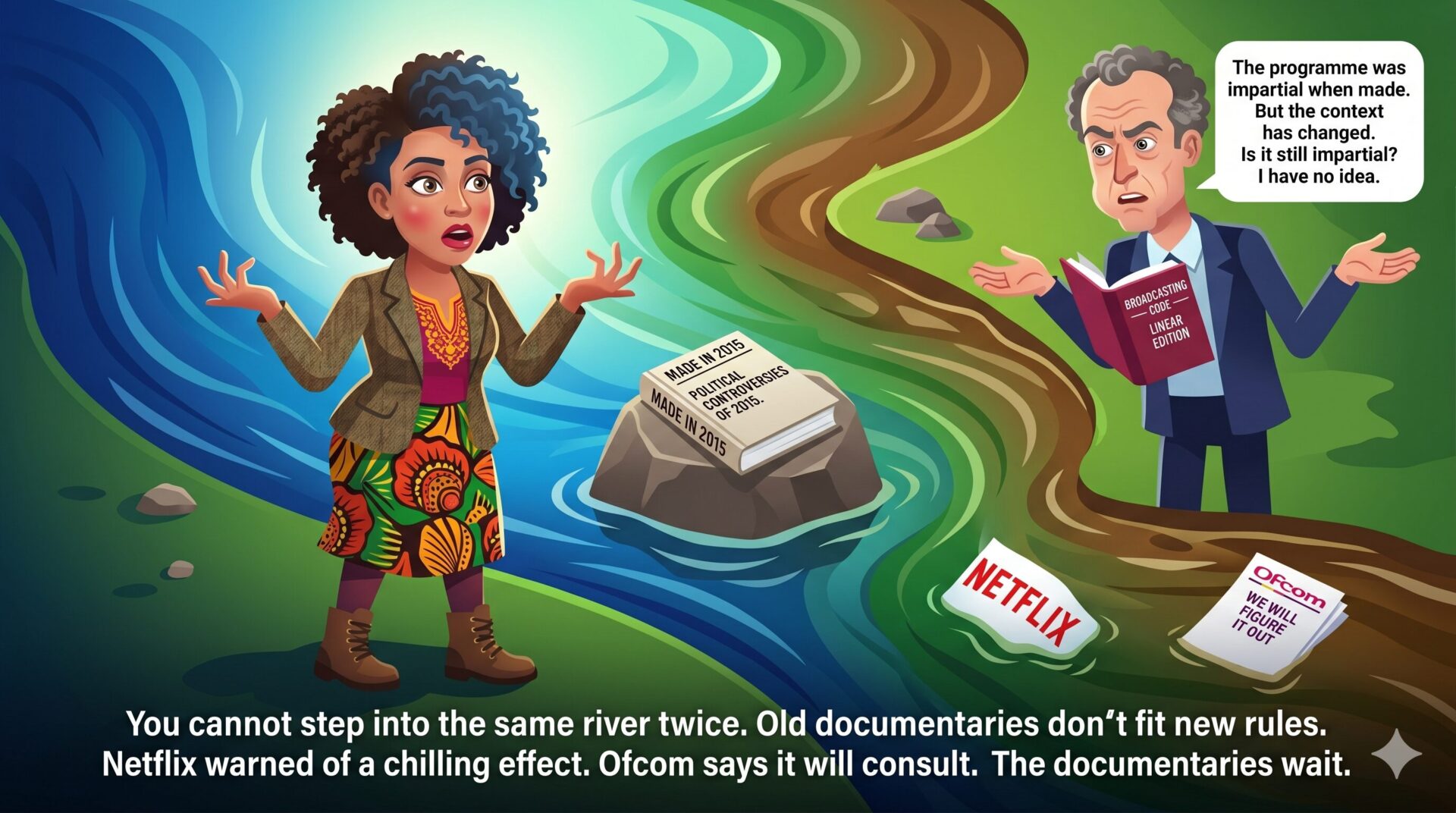
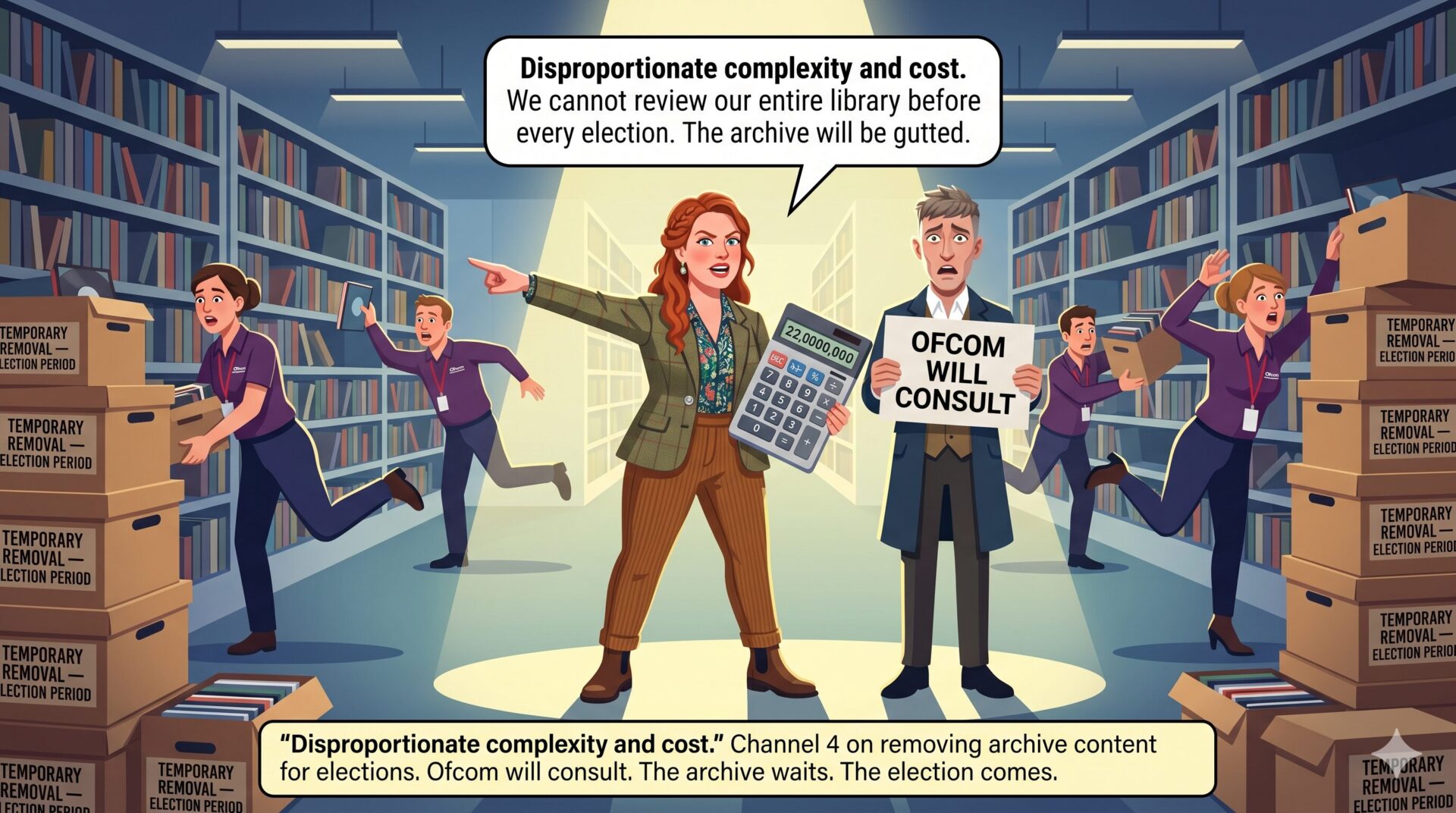
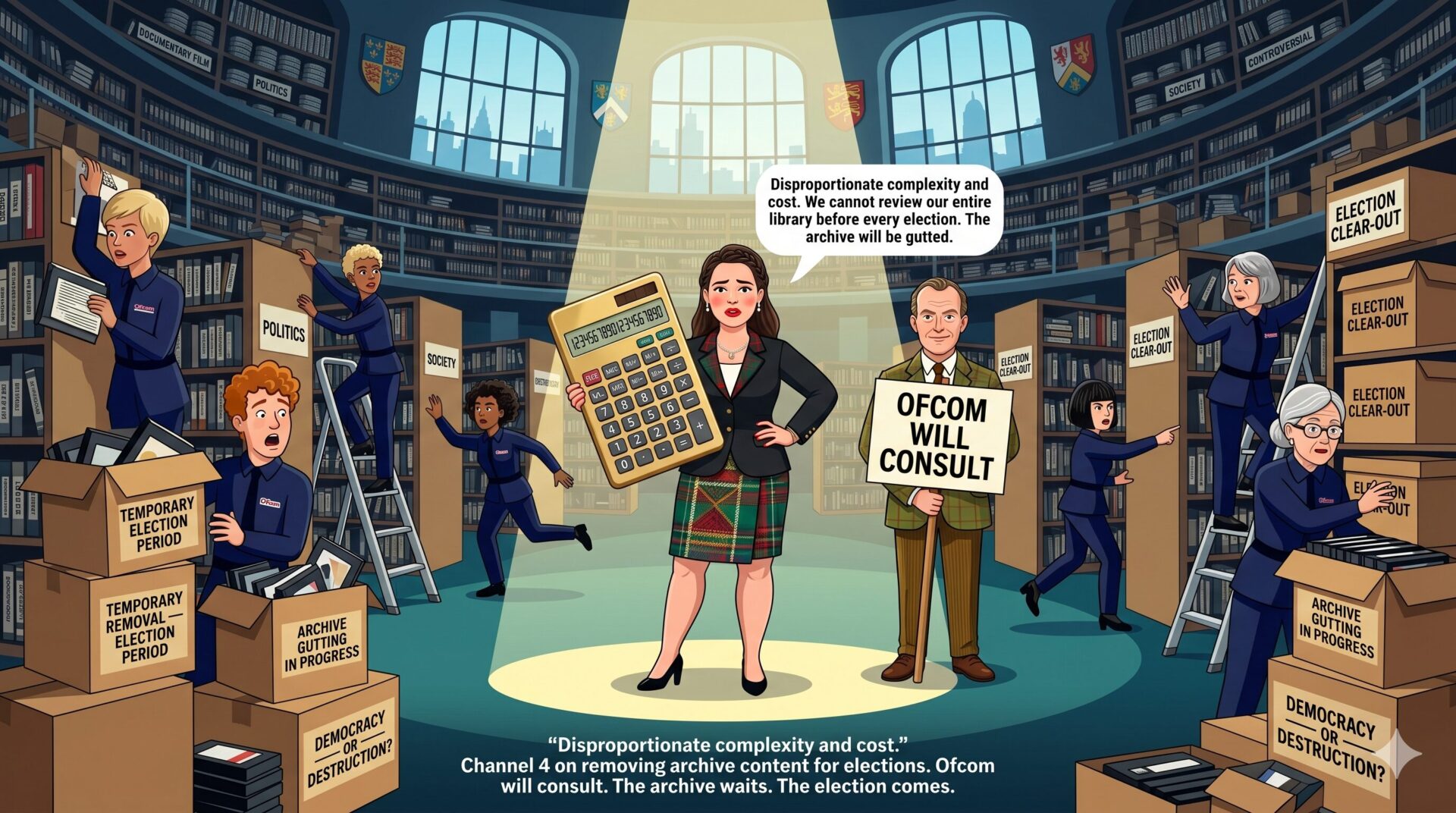
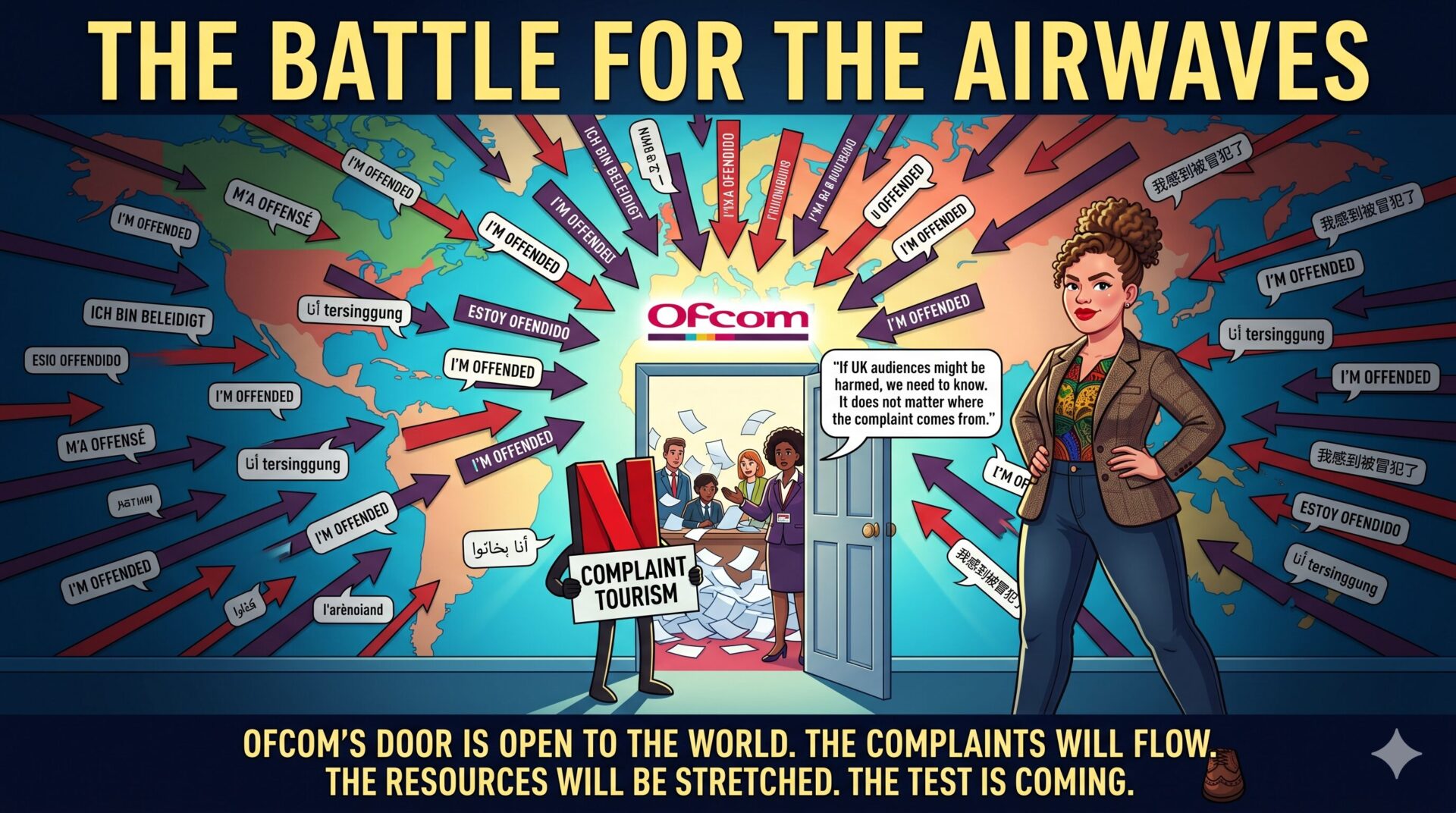
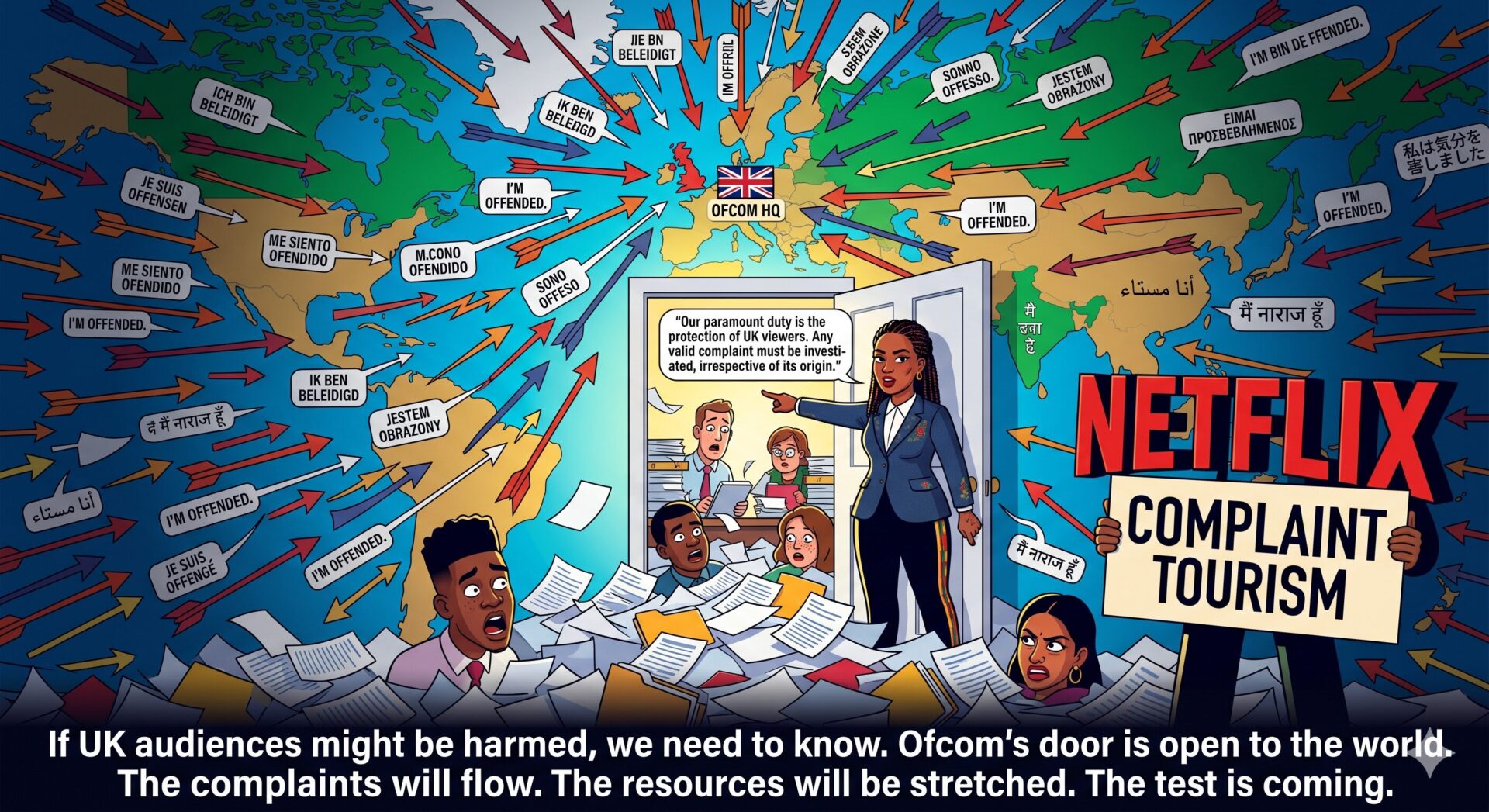
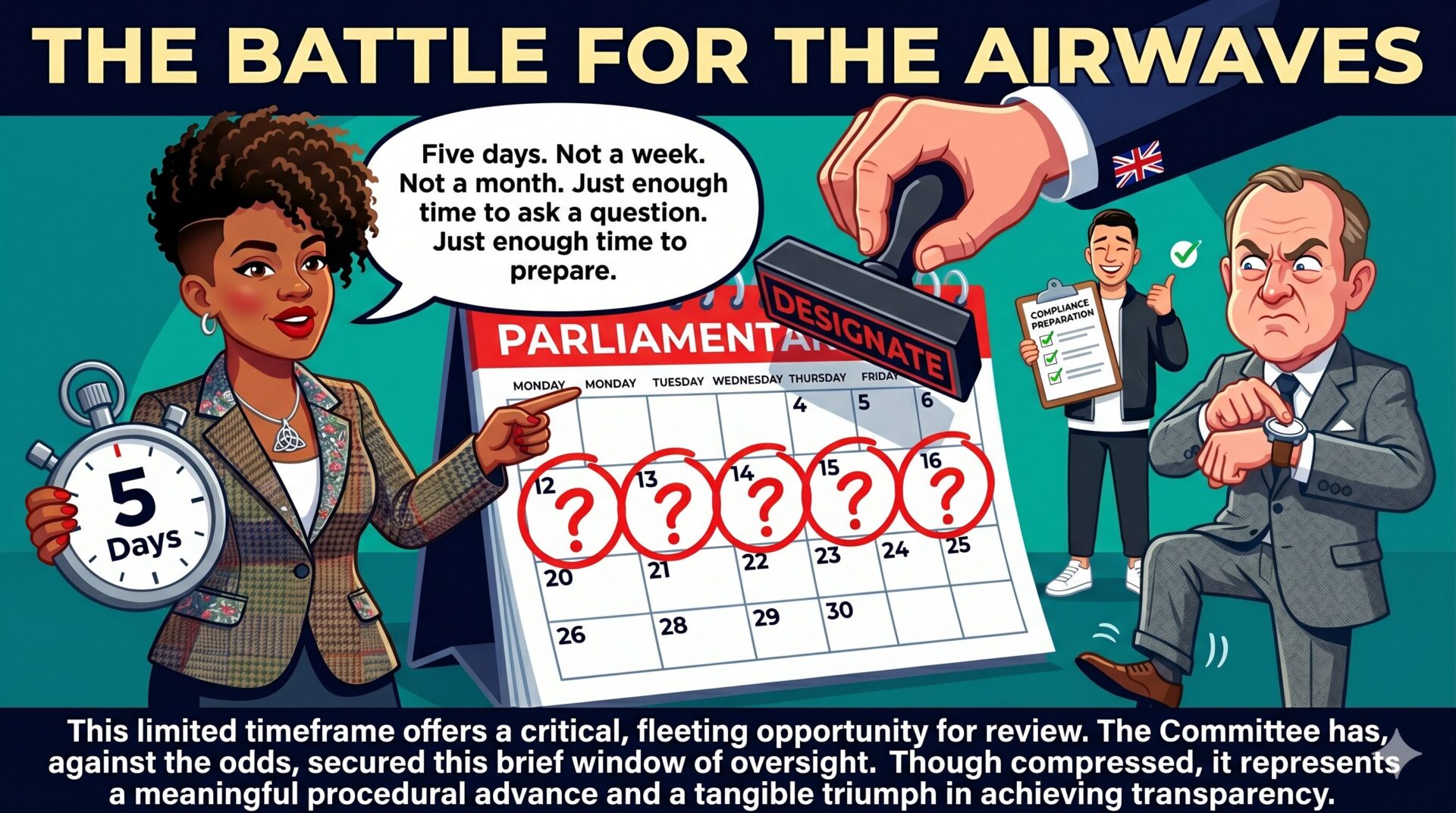
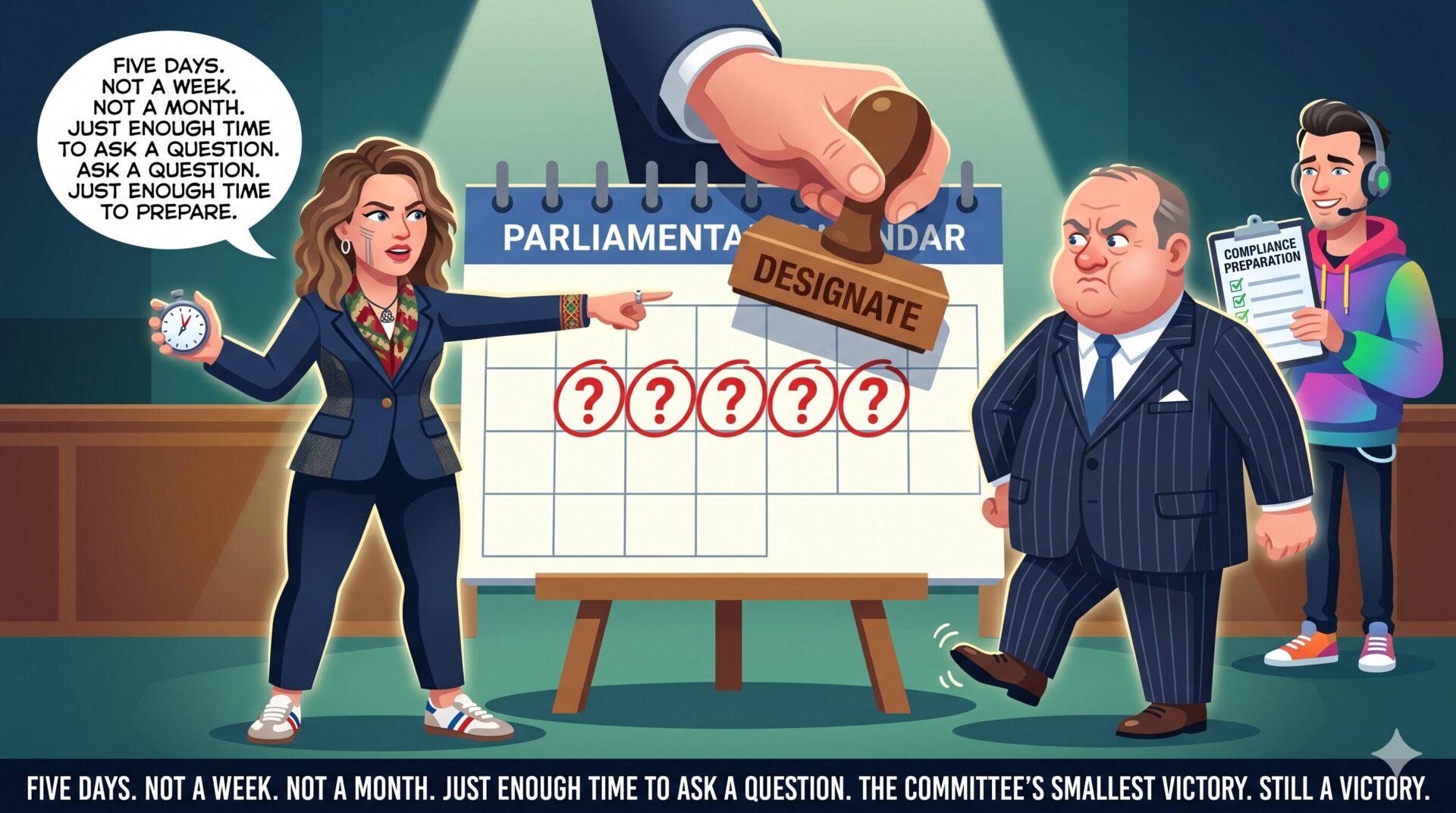
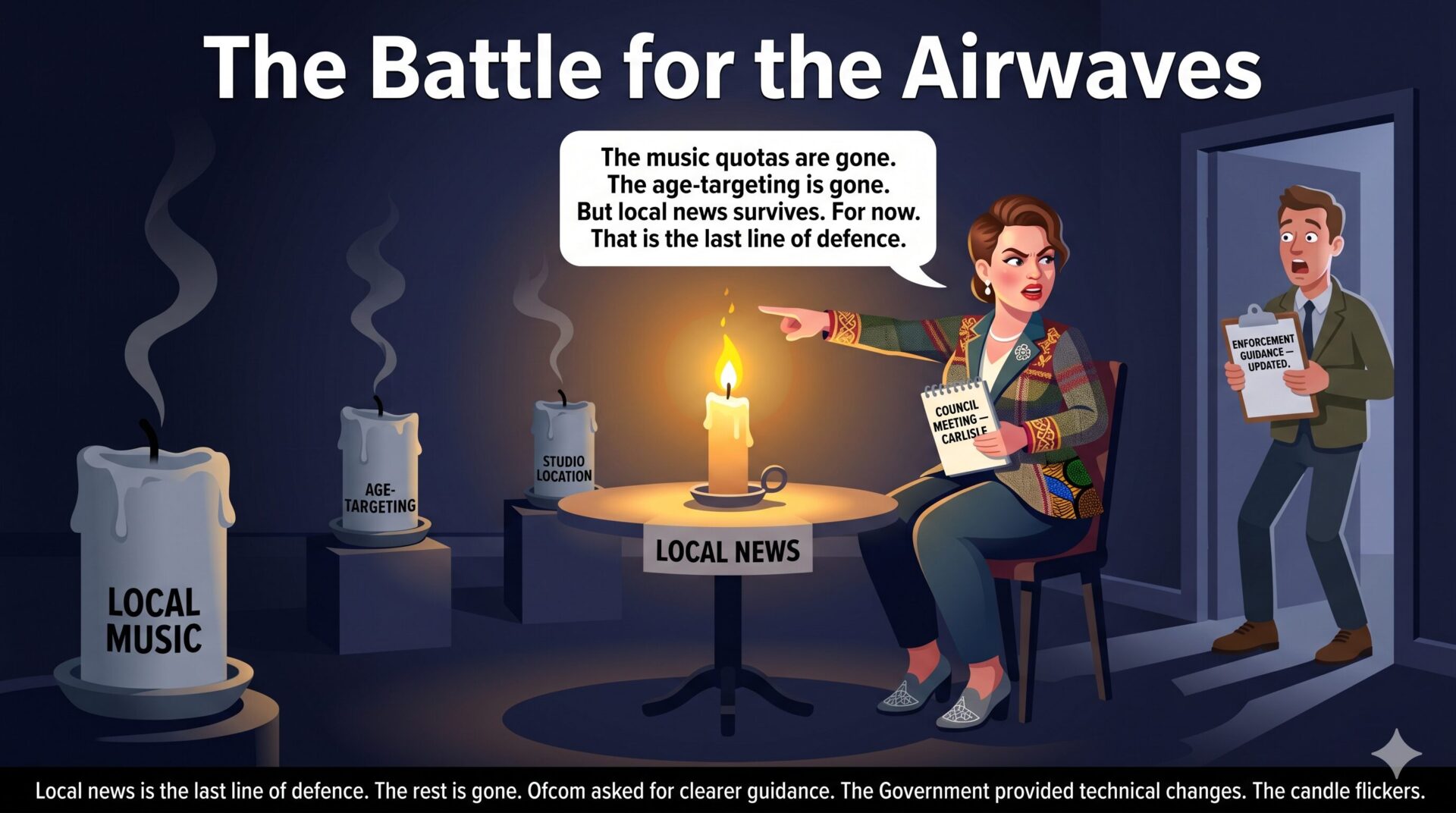
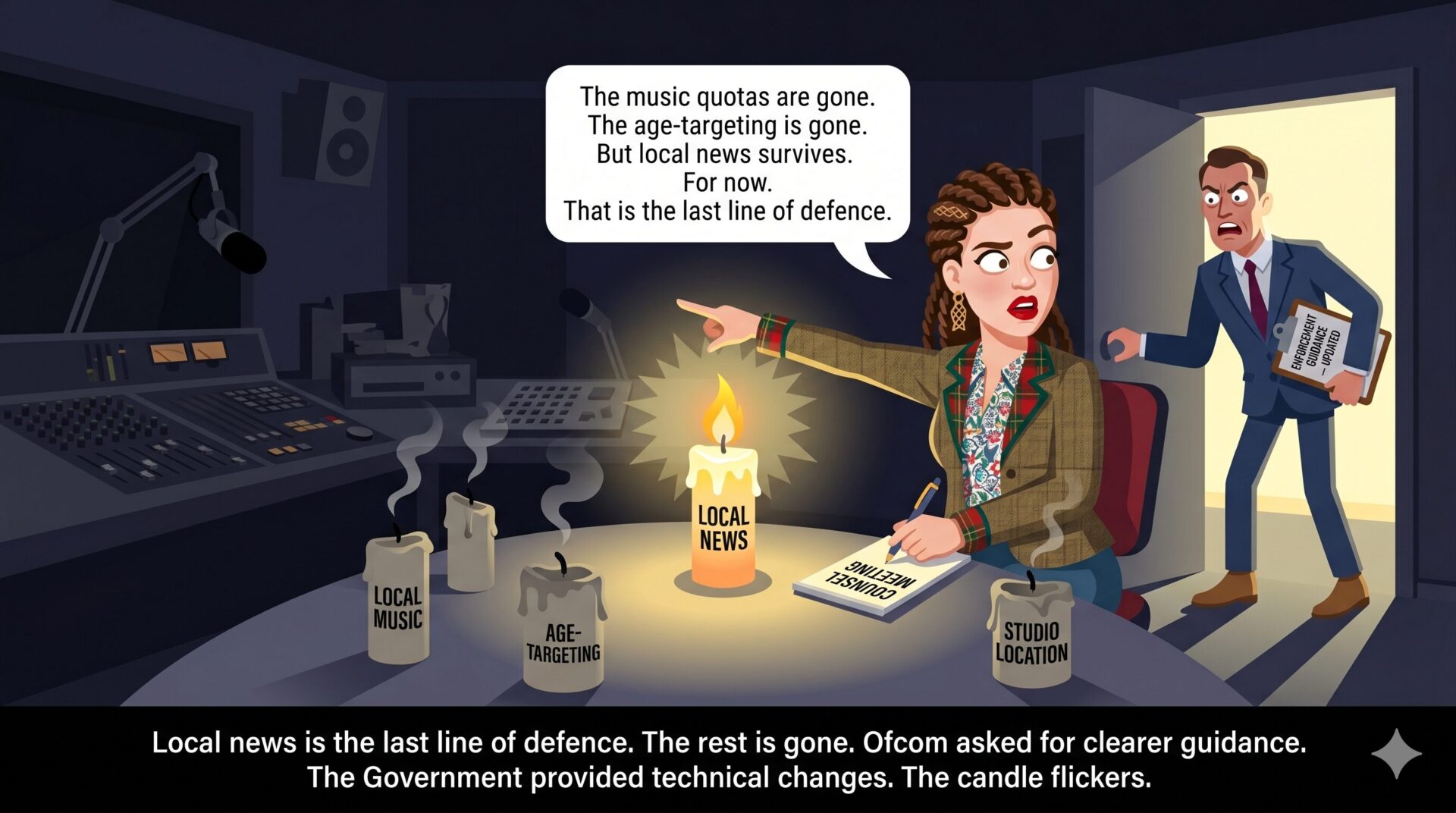
Prominence on Smart TVs: The Fight for the First Screen
The Battle of the Words: Why “Appropriate” Is Not Good Enough
“A rose by any other name would smell as sweet.” Shakespeare’s Juliet was trying to convince herself that the surname Montague did not matter, that the essence of her beloved transcended the label. It is a beautiful sentiment. It is also, in the context of media regulation, complete nonsense. Words matter. Labels matter. The difference between “appropriate” and “significant” is the difference between a guaranteed spot on the front page and a quiet burial somewhere in the settings menu.
Electronic Programme Guides have long given Public Service Broadcasters the top five slots. BBC One in position one. BBC Two in position two. ITV or STV in position three. Channel 4 in position four, except in Wales where S4C takes the spot. Channel 5 in position five. This is not a suggestion. It is not a guideline. It is the law. The EPG provider must place the PSBs in those slots, in that order, without exception.
The system works. It has worked for decades. Viewers know where to find the PSBs. The PSBs know where they will appear. The platforms know what is required of them. Certainty, clarity, enforceability.
Now consider the smart TV interface. There is no EPG, or rather, the EPG is just one of many ways to find content. There are rails — horizontal scrolls of tiles representing different categories. There are hero tiles — large images that dominate the screen, promoting specific programmes. There are search functions — text, voice, predictive. There are recommendations — algorithms suggesting what you might like based on what you have watched before. There are personalised layouts — each viewer’s home screen potentially different from their neighbour’s.
In this environment, what does “appropriate prominence” mean? The Government’s answer is: it depends. On the device. On the interface. On the viewer. On the algorithm. On the phase of the moon. Appropriateness is a judgment call. It is flexible. It is contextual. It is also, for anyone who has ever had to enforce a regulation, a nightmare.
The EPG Certainty
The EPG prominence regime is a masterpiece of legislative clarity. Ofcom determines what “appropriate” means. Ofcom has determined that appropriate means the top five slots in a specific order. There is no ambiguity. There is no negotiation. There is no room for a platform to argue that slot six is also appropriate, or that slot three is fine but slot two is overkill.
The broadcasters know where they stand. The platforms know what they must do. The viewers know where to look. Certainty is not a small thing. It is the entire point of regulation. You regulate to create predictable outcomes. You regulate to prevent the powerful from exploiting ambiguity.
The Media Bill’s prominence provisions for smart TV interfaces use the same word — appropriate — but apply it to a radically different environment. The EPG has a linear, hierarchical structure. The smart TV interface does not. There is no slot one, slot two, slot three. There are rails, tiles, search results, recommendations. What does “appropriate prominence” mean on a rail of ten tiles? Is position one appropriate? Position two? Position five? Does it vary by device? By platform? By time of day?
The Government’s answer is that Ofcom will issue a Code of Practice. The Code will provide guidance. The platforms will be expected to follow the guidance. This is not certainty. This is a process. A process that will be gamed, litigated, and delayed.
The Committee understood this. They recommended changing the descriptor from “appropriate” to “significant.” Not because they hate flexibility, but because they recognise that “appropriate” has failed to deliver certainty in the EPG context without decades of interpretation, and the smart TV context is infinitely more complex.
The Platform’s Defence
The platforms argue that “significant” is too rigid. They point to the variety of user interfaces. A voice-activated search returns results in a list. What does “significant prominence” mean for the third item on that list? A personalised recommendation engine surfaces content based on viewing history. Should the PSBs always appear first, even if the viewer has never watched them? A hero tile is large and eye-catching. Is one hero tile enough, or do the PSBs need multiple tiles?
These are legitimate questions. The Government’s preference for “appropriate” is, in part, a response to these questions. Flexibility, they argue, allows Ofcom to tailor the requirements to each interface, each device, each use case. Significant prominence, by contrast, is a blunt instrument.
The Committee’s response was that the blunt instrument is preferable to no instrument at all. “Appropriate” has allowed platforms to bury PSB content in the past. On Amazon Fire, All4 appeared on the second page. BBC children’s channels were lower than anyone liked. The platforms did not intend to hide this content. They simply prioritised their own commercial interests. The algorithm favoured Amazon’s own offerings. The layout promoted services that generated revenue. The PSBs, through no malice, ended up out of sight.
The Committee’s evidence was clear: “appropriate” had not worked. The word had been interpreted in ways that disadvantaged the PSBs. Changing to “significant” would send a clear signal to the platforms, to Ofcom, and to the courts that prominence is not optional. It is not a nice-to-have. It is a must-have. The PSBs belong on the first screen, in the top positions, where viewers can find them.
The Government disagreed. They kept “appropriate.” They added some additional clarity around the agreement objectives. They expanded the explanatory notes. They did not change the word.
The Ofcom Perspective
Ofcom told the Committee that “appropriate” works well from an enforcement perspective. The regulator has used the word for years in the EPG context. They are comfortable with it. They believe they can apply it to smart TV interfaces without difficulty.
This is reassuring. It is also, perhaps, too reassuring. The EPG context is simple. The smart TV context is not. Ofcom will have to make judgments about hundreds of different interfaces, from major platforms like Sky and Virgin to niche devices with tiny market share. Each interface will require its own analysis. Each platform will argue that its unique design justifies a different interpretation of “appropriate.”
The regulator has the resources to do this work. Ofcom is a capable organisation. But capability is not the same as certainty. The Committee’s preference for “significant” was not a vote of no confidence in Ofcom. It was a recognition that “appropriate” had failed to prevent the very problems the Bill was designed to solve. The PSBs had already been buried. The platforms had already prioritised their own content. The word had been tested in the real world and found wanting.
The Government’s response ignored this evidence. They pointed to Ofcom’s confidence. They pointed to the flexibility that “appropriate” provides. They did not explain why the flexibility had not prevented the problems that everyone acknowledged existed.
The Regional Variation Problem
There is a subplot here that the Committee explored in detail. The Bill allows for regional variation in prominence. This is crucial for S4C and STV. A viewer in Wales should see S4C more prominently than a viewer in England. A viewer in Scotland should see STV more prominently than a viewer in the south of England.
“Significant prominence” is compatible with regional variation. A service can be significant in Wales and merely appropriate in England. The word does not prevent differentiation. What it does is raise the floor. Every viewer, everywhere, must see the PSBs with significant prominence. Regional variation determines which PSBs are significant where.
The platforms argued that this is technically challenging. Knowing a viewer’s location raises privacy issues. The Committee was unpersuaded. Platforms already collect vast amounts of data for advertising. They know where viewers are. The technical challenges, they concluded, are not insurmountable.
The Government accepted this conclusion. The regional variation provisions remain. But they retained “appropriate” rather than “significant.” This creates an odd mismatch. Regional variation is a precise, targeted intervention. “Appropriate prominence” is a vague, flexible standard. The former requires technical sophistication. The latter invites legal challenge. The combination is unstable.
The Adage Revisited
A rose by any other name would smell as sweet. But “appropriate” and “significant” are not different names for the same thing. They are different concepts with different consequences. “Appropriate” invites judgment, interpretation, negotiation. “Significant” demands action, visibility, priority.
The Committee wanted “significant” because they had seen what happened under “appropriate.” The PSBs were buried. The platforms prioritised their own content. The word had not protected the public service mission. It had enabled its erosion.
The Government kept “appropriate” because they value flexibility. They believe that Ofcom can make it work. They are willing to accept the risk that the PSBs will be buried again, that the platforms will find new ways to prioritise their own content, that the word will prove as inadequate in the future as it has in the past.
The rose may smell as sweet regardless of its name. But a regulation that fails to regulate is not a rose. It is a weed. And the Media Bill’s prominence provisions, for all their good intentions, are planting weeds in the garden of public service broadcasting. The Committee tried to pull them out. The Government refused. The weeds will grow. And the viewers will wonder why they cannot find what they are looking for.
The Second Page Graveyard: Why Self-Preference Is Not a Crime, But Should Be
“Power tends to corrupt, and absolute power corrupts absolutely.” Lord Acton’s maxim is usually applied to politicians and popes, not to product managers at technology companies. But the sentiment applies equally well to anyone who controls the architecture of choice. The person who designs the menu decides what you eat. The person who designs the screen decides what you watch. And when that person works for a platform that also sells its own content, the temptation to put that content first is not corruption. It is not even conscious. It is simply the path of least resistance.
On Amazon Fire sticks, All4 once lived on the second page. Not the first screen. Not the top row. The second page. The viewer had to press a button, scroll past Amazon’s own offerings, navigate through a maze of tiles and recommendations, and finally, if they persevered, find Channel 4’s on-demand service. BBC children’s channels appeared even lower. The exact position varied by device, by software version, by the phase of the moon. But the pattern was consistent: the platform’s own content came first. The PSBs came somewhere after.
This was not malice. Amazon did not hate the BBC. They did not have a grudge against children’s programming. They simply prioritised their own commercial interests. The Fire stick is an Amazon product. The home screen is Amazon’s real estate. The recommendations are Amazon’s algorithms. Of course Amazon’s own services appeared first. That is what any rational business would do.
But that is precisely why regulation exists. The market does not correct this imbalance. It amplifies it. The platform with the most market power gets the most prominent placement. The platform with the most prominent placement gets the most viewers. The viewers reinforce the platform’s power. The cycle continues. The PSBs, which exist to serve the public rather than to maximise shareholder value, are squeezed out of the spaces they helped to create.
The Media Bill’s prominence provisions are designed to break this cycle. They say: your platform, your real estate, your algorithms — we do not care. The PSBs belong on the first screen, in the top positions, where viewers can find them. Not because the PSBs are more efficient or more popular, but because they serve a public purpose that the market would otherwise ignore.
The Committee wanted the word “significant” to make this obligation crystal clear. The Government preferred “appropriate,” arguing that flexibility matters. But whatever the wording, the underlying fight is the same: who controls the architecture of attention?
The Invisible Architecture
Most viewers do not think about the layout of their smart TV screen. They turn on the device. They see some tiles. They click on one. They watch something. The architecture is invisible, which is precisely why it is so powerful.
The person who designs the screen decides what is easy to find and what requires effort. A service on the first screen, in the top row, with a large tile, is effortless. A service on the second page, in a small font, behind a menu, requires work. Most viewers will not do the work. They will watch what is easy. The architecture shapes behaviour without the viewer ever noticing.
This is not manipulation. It is design. All interfaces have priorities. All layouts make choices about what to foreground and what to background. The question is not whether prioritisation happens, but who does the prioritising and in whose interest.
Under the current system, the platforms do the prioritising. They decide what appears where. They have every incentive to foreground their own content and background everyone else’s. The PSBs are not their partners. They are competitors. The platform’s own streaming service competes with ITVX. The platform’s own music service competes with BBC Sounds. The platform’s own children’s content competes with CBeebies.
The prominence provisions change this. They transfer the power of prioritisation from the platform to the regulator. Ofcom decides what counts as appropriate or significant prominence. The platforms must comply. The architecture of attention is no longer a commercial tool. It is a public resource.
The Committee’s evidence showed why this transfer is necessary. On Amazon Fire, All4 was buried. On other platforms, the pattern repeated. The PSBs were not being treated equally. They were being treated as competitors to be managed, not as public service broadcasters to be promoted. The platforms were not breaking any law. They were simply exercising their market power. The law had not kept pace with the technology.
The Media Bill is the attempt to catch up. The fight over “appropriate” versus “significant” is the attempt to define how far the law should reach. But the underlying principle is not in dispute: the architecture of attention must serve the public, not just the platform’s bottom line.
The Self-Preference Problem
Self-preference is not unique to Amazon. Every platform does it. Google prioritises its own products in search results. Apple privileges its own apps on the iPhone. Sky gives its own channels prominent placement on the EPG. The pattern is universal because the incentive is universal. Why would a platform promote a competitor’s content over its own?
The problem is that self-preference becomes self-reinforcing. The platform that controls the interface can steer viewers toward its own content, increasing its audience, which increases its market power, which increases its ability to steer viewers. The competitors, lacking access to the interface, lose audience, lose revenue, and lose relevance. The market tips. The platform becomes a gatekeeper. The gatekeeper becomes a monopoly.
The PSBs are not ordinary competitors. They have a legal mandate to serve the public. They are required to produce content that is not commercially viable. They are required to reach audiences that advertisers ignore. They are required to be available to everyone, regardless of ability to pay. The market does not value these things. The law must protect them.
The prominence provisions are that protection. They say: regardless of your commercial incentives, you must give the PSBs a prominent place on your interface. You must make it easy for viewers to find them. You must not bury them on the second page or hide them behind a menu.
The Committee’s evidence showed that without this protection, the PSBs lose out. All4 on the second page. BBC children’s channels lower than anyone liked. The platforms were not being malicious. They were being rational. And their rationality was destroying the public service broadcasting system that the nation depends on.
The ITVX Launch Disaster
ITV learned this lesson the hard way. When they launched ITVX, their new streaming platform, they discovered that some older devices could not support it. The software was too old. The hardware was too weak. The economic case for updating those devices was non-existent. ITVX simply would not work on millions of televisions.
This was not a problem of self-preference. It was a problem of technological fragmentation. But it illustrated the same underlying dynamic: the platforms control the interface, and the PSBs must adapt or die.
ITV’s Magnus Brooke told the Committee about the broadcaster’s “bitter first-hand experience.” They had found it “literally technically impossible” to put ITVX on some legacy platforms. The software could not support the sophistication of the service. The economic feasibility was zero.
The prominence provisions do not solve this problem. Legacy devices remain a challenge. But they highlight why the fight over prominence matters. The PSBs are already struggling to keep up with technological change. They do not need the additional burden of being buried on the platforms that do support them.
The Committee recommended allowing Ofcom to de-designate legacy devices, so that older platforms are not required to comply with provisions they cannot feasibly implement. The Government accepted this recommendation. It is a small victory in a larger war.
The Data Dimension
There is another dimension to this fight that is easy to miss. The prominence provisions are not just about where the PSBs appear. They are about what happens when viewers click on them.
When a viewer watches ITVX through Amazon Fire, who gets the data? Who knows what they watched, when they watched it, how long they watched for? The answer is complicated. The platform collects some data. The broadcaster collects some data. The advertisers collect some data. The viewer has no idea.
The agreement objectives in the Bill attempt to address this. They require that the commercial arrangements between PSBs and platforms be “consistent with the former being able to meet costs reasonably incurred in fulfilling the public service remit.” This is clunky language, but it points to a crucial issue: the PSBs need access to data to improve their services, sell advertising, and compete with the platforms. If the platforms hoard all the data, the PSBs cannot survive.
The Committee heard evidence that platforms have demanded up to thirty percent of advertising revenue in exchange for prominent placement. They have required PSBs to use the platform’s advertising system, cutting the broadcaster out of the relationship with the advertiser. They have refused to share data that the PSBs need to understand their audiences.
This is not speculation. This is happening. The prominence provisions are designed to stop it. They give the PSBs leverage in negotiations. They create a backstop that Ofcom can activate if negotiations break down. They are not a complete solution, but they are a start.
The Adage
Power tends to corrupt, and absolute power corrupts absolutely. The platforms that control the architecture of attention have immense power. They decide what is easy to find and what requires effort. They decide which services thrive and which starve. They are not evil. They are not conspiring against the PSBs. They are simply doing what any rational business would do: prioritising their own interests.
Regulation exists to correct that imbalance. It says: your commercial interests are not the only interests that matter. The public has an interest in a diverse, accessible, public service broadcasting system. That interest must be protected, even if it means telling a platform to put a competitor’s content on the first screen.
The fight over “appropriate” versus “significant” is a fight over how strong that protection should be. The Committee wanted “significant” because they had seen what happened under “appropriate.” The PSBs were buried. The platforms prospered. The balance tipped too far.
The Government kept “appropriate” because they value flexibility. They believe that Ofcom can make it work. They are willing to accept the risk that the PSBs will be buried again, that the platforms will find new ways to prioritise their own content, that the second page graveyard will fill with new headstones.All4 once lived on the second page. BBC children’s channels appeared lower than anyone liked. The platforms did not intend to hide them. They simply did not prioritise them. And that is why regulation matters. Because without it, the public service broadcasters will always be an afterthought. The first screen will belong to the platforms. And the viewers will watch whatever is easiest to find, never knowing what they are missing.
The Ten-Year-Old Telly: Why Legacy Devices Deserve a dignified Death
“You can’t teach an old dog new tricks.” The proverb is ancient because it is true. Old dogs have their habits. Their joints ache. Their eyesight fades. They are not being stubborn when they refuse to learn a new command. They are being old. The same is true of old televisions. The ten-year-old set in the spare bedroom does not have the processing power to run ITVX. The five-year-old streaming stick cannot handle the new codec. The three-year-old smart TV has already been forgotten by its manufacturer, which has moved on to newer models with bigger profit margins.
No one wants to re-engineer a ten-year-old telly. Not the manufacturer, for whom the device is a relic of a previous product cycle. Not the broadcaster, whose resources are already stretched. Not the viewer, who just wants to watch telly without having to think about software updates. And certainly not the regulator, which has better things to do than police the compliance of obsolete hardware.
The Media Bill’s treatment of legacy devices is a rare moment of sensible pragmatism in a piece of legislation otherwise defined by ideological battles and industry lobbying. The Bill now allows Ofcom to de-designate older devices where compliance is technically impossible or economically absurd. A device that is no longer sold, no longer supported, no longer capable of running modern applications — that device can be exempted from the prominence provisions. It can be allowed to die with dignity, rather than being kept on life support by a regulation that no one can comply with and no one will enforce.
This is not a small thing. It is a recognition that regulation must be proportionate. It is an acknowledgment that the world does not stand still while Parliament legislates. It is a victory for common sense over legalism.
The Technical Reality
The technical reality is brutal and unforgiving. A television is not just a screen. It is a computer. It has a processor, memory, storage, an operating system, a network connection. The applications that run on it are not magic. They are code. Code that requires specific hardware capabilities, specific software libraries, specific security protocols.
When ITV launched ITVX, they discovered that some older devices could not run it. The processors were too slow. The memory was insufficient. The operating system was too old to support the modern encryption standards that content rights holders demanded. ITV had a choice: either spend millions of pounds re-engineering their platform to support obsolete hardware, or accept that some viewers would need to upgrade their devices.
They chose the latter. It was not a difficult decision. The cost of supporting a ten-year-old telly is enormous. The benefit is negligible. The viewers who still use those devices are a tiny fraction of the audience. The broadcasters cannot justify the expense.
The Media Bill’s legacy device provisions recognise this reality. They say: if a device is so old that compliance is technically impossible or economically absurd, Ofcom can exempt it. The broadcaster does not have to support it. The platform does not have to carry it. The viewer can either upgrade or accept that their old telly will not show the new services.
This is harsh. It is also unavoidable. The alternative is to freeze technology at the level of the oldest device still in use, which would mean no innovation, no improvement, no progress. The broadcasters would be stuck with the same codecs, the same encryption, the same user interfaces, forever. The viewers would lose far more than they gained.
The Economic Absurdity
The economic argument is even more compelling. A ten-year-old television has already been paid for. Its owner has no ongoing costs beyond electricity. Upgrading to a new device costs money — perhaps two hundred pounds for a basic model, perhaps five hundred for something better. For many households, that is a significant expense.
But the alternative — forcing broadcasters to support the old device — is even more expensive. The cost of maintaining compatibility with obsolete hardware is shared across all viewers, not just the ones who use the old devices. Every household’s licence fee, every advertiser’s spend, every subscription payment would be partially diverted to keep a tiny minority of viewers on their ancient tellies.
The economics do not work. They have never worked. That is why the industry has always moved on. The VHS gave way to DVD. DVD gave way to Blu-ray. Blu-ray gave way to streaming. Each transition left some viewers behind. The ones who could not or would not upgrade lost access to some content. They gained access to other content. The system adjusted.
The Media Bill’s legacy device provisions are not cruel. They are realistic. They acknowledge that not every device can be supported forever. They create a mechanism for exemption that is transparent, accountable, and subject to regulatory oversight. Ofcom decides. Ofcom consults. Ofcom publishes its reasons. The device is de-designated. The world moves on.
The Committee supported this approach. They recommended the amendment. The Government accepted it. For once, there was consensus. Everyone agreed that no one wants to re-engineer a ten-year-old telly.
The Anti-Avoidance Safeguard
There is, of course, a risk. The legacy device provisions could be abused. A manufacturer could release a new device every year, each one slightly different, each one requiring its own compliance analysis. A platform could argue that a perfectly capable device is “legacy” to avoid the cost of carrying PSB content. A broadcaster could collude with a platform to de-designate devices that are inconvenient for their commercial arrangements.
The Bill includes safeguards against this. Ofcom must consider “technical functionality and duration on the market” when deciding whether to de-designate a device. A device that is still being sold cannot be de-designated. A device that is still receiving software updates cannot be de-designated. A device that is capable of running modern applications cannot be de-designated.
The threshold is high. The manufacturer must have ceased support. The device must be genuinely obsolete. The cost of compliance must be genuinely prohibitive. Ofcom, not the manufacturer, not the platform, not the broadcaster, makes the final decision.
The Committee was satisfied with these safeguards. They noted that both PSBs and platforms supported the legacy device provisions. The broadcasters did not want to be forced onto devices they could not technically support. The platforms did not want to re-engineer products that were no longer profitable. The viewers did not want to watch degraded services on ancient hardware. Everyone’s interests aligned. The provisions were a rare example of win-win regulation.
The Environmental Angle
There is another dimension to this debate that the Committee did not explore in depth, but which deserves mention. The legacy device provisions have environmental implications. If older devices are exempted from compliance, viewers may be more inclined to keep them. They are not forced to upgrade to a new device just to maintain access to PSB content. The old telly in the spare bedroom can stay where it is, doing what it does, without needing to be replaced.
This is good for the planet. Electronic waste is a growing crisis. Millions of televisions are discarded every year, many of them still functional, many of them replaced not because they have failed but because they are no longer supported. The Media Bill’s legacy device provisions reduce the pressure to upgrade. They say: your old telly is fine. It may not show the fanciest new services, but it will still show the core PSB channels. You do not need to throw it away.
The environmental benefit is a side effect, not a goal. The provisions were drafted to address technical and economic realities, not to save the planet. But the side effect is real. And it is welcome.
The Viewer Experience
What does this mean for the viewer with a ten-year-old telly? They will still be able to watch the main PSB channels. BBC One, ITV, Channel 4, Channel 5, S4C — these will remain available through broadcast, through the EPG, through the basic functions of the device. What they may lose is access to the on-demand services. ITVX, All4, My5, the advanced features of iPlayer — these may not work. The device may not support the necessary codecs, encryption, or user interface.
The viewer has a choice. They can upgrade to a new device, perhaps a streaming stick that costs thirty pounds, perhaps a new smart TV. Or they can accept that their old telly will only show the linear channels. The choice is theirs. The law does not force them either way.
This is not perfect. Some viewers will be frustrated. Some will feel left behind. But the alternative — forcing broadcasters to support obsolete hardware forever — is worse. It would freeze technology. It would increase costs for everyone. It would ultimately lead to a worse experience for all viewers, not just the ones with old tellies.
The legacy device provisions strike a balance. They protect the ability of broadcasters to innovate. They protect the ability of viewers to keep using old devices for as long as they want. They protect the environment from unnecessary upgrades. They are not perfect, but they are sensible. And in the world of media regulation, sensible is rare.
The Adage
You cannot teach an old dog new tricks. The old dog is the ten-year-old telly. The new trick is ITVX. The dog is not stupid. It is not stubborn. It is simply old. Its processor is slow. Its memory is limited. Its operating system is obsolete. No amount of training will make it perform like a puppy.
The Media Bill recognises this. It allows Ofcom to de-designate the old dog. The dog can retire. It can live out its days doing what it has always done: showing the main channels, providing a window on the world, keeping its owner company. It does not need to learn new tricks. It does not need to support the latest streaming service. It is enough that it works.
The Committee supported this approach. The Government accepted it. The broadcasters welcomed it. The platforms breathed a sigh of relief. The old dogs of the world can rest easy. They will not be forced to perform. They will be allowed to age with dignity. And when they finally give up the ghost, their owners will replace them with something newer, something faster, something capable of learning all the tricks that the old dog never could.
That is progress. That is pragmatism. That is the Media Bill at its best. It is a shame that the rest of the Bill is not so sensible. But on legacy devices, at least, the Government got it right. The old dogs can sleep. The new tricks can wait. The telly plays on.
The Privacy Dodge: Why Platforms Cannot Hide Behind Your Postcode
“A man who is his own lawyer has a fool for a client.” The old saying applies equally to technology companies that plead privacy concerns when it suits them and ignore those same concerns when profit is at stake. The spectacle of TechUK complaining that regional prominence for S4C and STV raises privacy issues is a masterclass in selective outrage. It is the digital equivalent of a fox demanding that the henhouse install better locks — while carrying a feather in its teeth.
Here is the situation. The Media Bill requires television selection services to give regional prominence to S4C in Wales and STV in Scotland. A viewer in Cardiff should see S4C on the first screen, in a prominent position. A viewer in Manchester might see it further down, or not at all. The same applies to STV in Scotland versus the north of England. The law recognises that public service broadcasting is not uniform across the United Kingdom. What matters in Wales is not the same as what matters in Cumbria.
TechUK, representing the technology industry, complained that this requirement raises privacy issues. Knowing a viewer’s precise location, they argued, is technically challenging and potentially intrusive. They proposed an alternative: allow the user to input their location or select their configuration preferences. Let the viewer choose. Let the viewer decide where they want to be.
S4C’s response was withering. The Welsh-language broadcaster pointed out that platforms already collect vast amounts of user data for advertising. They know what you watch, when you watch it, how long you watch for, what you watch before, what you watch after. They know your age, your gender, your income bracket, your political preferences, your shopping habits. They know all of this because you give it to them, either directly or through the trail of data you leave behind with every click, every scroll, every pause.
And yet, when asked to use that same capability to ensure that a Welsh speaker in Cardiff can find S4C, the platforms suddenly discover privacy concerns. Location, they claim, is beyond them. The technology is too difficult. The privacy implications are too grave.
The Committee was not fooled. They agreed with S4C. The platforms can do this. They already do this. The only question is whether they are willing to do it for public service purposes, not just for commercial gain.
The Data Harvesting Machine
Let us be clear about what the platforms already know. When you use a smart TV, you are not just watching television. You are feeding a data harvesting machine. The device collects information about every programme you watch, every app you open, every search you conduct. It sends this information back to the manufacturer, which uses it to improve its recommendations, target its advertising, and sell access to your viewing habits to third parties.
The data is not anonymous. It is linked to your device, your account, your household. The manufacturer may not know your name, but they know your IP address, your viewing patterns, your preferences. They can infer your age, your gender, your income, your location. They can build a profile of you that is detailed enough to sell to advertisers, detailed enough to influence what you see and what you pay.
This is not speculation. This is the business model. Smart TVs are cheap because the manufacturer expects to make money from your data. The device is the loss leader. The data is the product.
Against this backdrop, the claim that regional prominence raises insurmountable privacy challenges is laughable. The platforms already know where you are. They know your postcode. They know your precise location, to within a few metres, because your device is connected to the internet and the internet knows where you are. The only question is whether they choose to use that information to serve the public interest or to serve their own bottom line.
S4C’s response was not withering by accident. It was withering by design. The broadcaster has spent years watching the platforms collect data about Welsh speakers, target them with advertising, and profit from their attention. They have watched the same platforms plead helplessness when asked to use that data to ensure that Welsh speakers can find Welsh-language content. The hypocrisy is breathtaking. And the Committee saw right through it.
The Technical Smokescreen
TechUK’s alternative — allowing users to input their location or select their configuration preferences — sounds reasonable. It puts control in the hands of the viewer. It respects privacy. It avoids the need for the platform to track location automatically.
But it is a smokescreen. The average viewer will not know that they need to input their location. They will not understand why S4C is not appearing on their screen. They will not realise that the problem is a setting they did not adjust. The default will be no regional prominence. The viewer who does nothing will see nothing. The platforms win. S4C loses.
The Committee understood this. They noted that “the means of collecting user location data already exists.” The platforms do not need viewers to input their postcodes. They already know where the viewers are. The technical challenge is not technical. It is political. The platforms do not want to be required to use their data for public service purposes. They want to keep that data for themselves, to monetise, to control.
S4C’s position was clear: the platforms should offer a default UK-wide prominence for S4C until they are able to configure regional delivery. In other words, until the platforms can figure out how to show S4C prominently in Wales and less prominently elsewhere, they should show it prominently everywhere. This is not a perfect solution, but it is a fair one. It ensures that Welsh speakers are not penalised by the platforms’ technical limitations. It puts the burden on the platforms to solve the problem, not on the viewers to work around it.
The Committee did not go this far. They accepted the regional prominence provision as drafted, without requiring a default UK-wide fallback. But they agreed with S4C’s underlying point: the platforms can do this. They should do this. And the law must make them do it.
The Advertising Precedent
The advertising industry provides a useful precedent. When a company wants to target ads to Welsh speakers, they do not ask the viewer to input their location. They use the data they already have. They serve Welsh-language ads to devices in Wales. They serve English-language ads to devices in England. The technology works. The privacy concerns are managed. The money changes hands.
If the platforms can do this for advertisers, they can do it for S4C. The technical infrastructure is identical. The data is the same. The only difference is the purpose. Advertising serves the platform’s bottom line. Regional prominence serves the public interest. The platforms are willing to invest in the former because it makes them money. They are reluctant to invest in the latter because it does not.
The Committee was not fooled by the privacy smokescreen. They noted that the revenues of the television selection services likely to be in scope of the legislation are enormous. The technical challenges, they concluded, are not so great as to make compliance disproportionate or unreasonable.
This is a crucial finding. It says: the platforms can afford to do this. They have the resources. They have the technology. They have the data. The only thing missing is the will. The law will provide that will. The platforms will comply. And Welsh speakers will finally be able to find S4C on their smart TVs without having to navigate through menus, scroll through pages, or input their postcode into a settings screen that they did not know existed.
The Scottish Parallel
STV faces a similar challenge, though the politics are different. STV is the Channel 3 licensee for Scotland. It broadcasts the same network programming as ITV, but with Scottish opt-outs, Scottish news, Scottish advertising. A viewer in Glasgow should see STV prominently. A viewer in Newcastle should see ITV.
The regional prominence provision ensures this. It says that platforms must differentiate between STV and ITV based on the viewer’s location. A Scottish viewer sees STV in the prominent position. An English viewer sees ITV. The technology is the same as for S4C. The data is the same. The privacy concerns are identical.
TechUK’s complaint applied equally to both broadcasters. They wanted a user-input solution for STV as well as for S4C. The Committee rejected this. They supported the regional prominence provision in full. They agreed that the platforms can do this. They should do this. The law will make them do it.
STV welcomed the provision. The broadcaster has long argued that it is disadvantaged by the current system, which treats ITV as a single national service. In reality, Scotland has its own broadcaster, with its own programmes, its own priorities, its own audience. The regional prominence provision recognises this reality. It ensures that Scottish viewers are not forced to navigate past English content to find the news that matters to them.
The Privacy Paradox
There is a deeper irony here that deserves attention. The platforms that complain about privacy concerns when asked to serve the public interest are the same platforms that have built their entire business models on harvesting user data. They track your location because it helps them sell advertising. They track your viewing habits because it helps them recommend content. They track your searches because it helps them refine their algorithms. Privacy is not a value for them. It is a constraint. They comply with privacy laws because they have to. They push against those laws whenever they can.
But when the law asks them to use their data for public service purposes, they suddenly discover a deep commitment to privacy. They cannot possibly know where the viewer is located. The technology is too invasive. The risks are too great.
This is the privacy paradox. The platforms are happy to invade your privacy for profit. They are reluctant to use that same invasive capability for public benefit. The difference is not principle. It is profit.
The Committee understood this. They rejected TechUK’s complaint. They supported the regional prominence provision. They agreed with S4C that the platforms can do this. The law will require them to do it. And the viewers, Welsh and Scottish alike, will finally see their national broadcasters where they belong: on the first screen, in the top positions, easy to find.
The Adage
A man who is his own lawyer has a fool for a client. The platforms that plead privacy concerns when it suits them are acting as their own lawyers. They are arguing a case that no reasonable person would accept. They are hoping that the Committee will be fooled by the technical smokescreen, the privacy paradox, the selective outrage.
The Committee was not fooled. They saw through the performance. They agreed with S4C. The platforms already collect vast amounts of user data for advertising. Location cannot be beyond them. The only question is whether they are willing to use that data for public service purposes. The law will provide the answer. The platforms will comply. And the viewers will benefit.
The old saying about self-representation warns of the danger of foolishness. The platforms are not fools. They are sophisticated actors who understand the law, the technology, and the politics. They know that their privacy argument is weak. They make it anyway, because it is the only argument they have. The Committee saw through it. The law will move forward. And the regional prominence provision will stand, a small victory for public service broadcasting in a Bill full of compromises.
The Affirmative Fight: When Parliament Demands a Vote, Not a Silence
“In the kingdom of the blind, the one-eyed man is king.” The old saying describes how a small advantage can become decisive when everyone else is disabled. In the context of parliamentary scrutiny, the advantage is visibility. The affirmative procedure requires a vote. The negative procedure requires only silence. In the kingdom of the blind, where most statutory instruments pass unnoticed, the one-eyed man who demands a vote is not just king. He is a revolutionary.
The fight over whether the Secretary of State’s power to designate regulated television selection services should be subject to the affirmative or negative procedure sounds technical. It sounds like the kind of thing that only parliamentary geeks care about. But it is not technical. It is fundamental. It is the difference between Parliament having a say and Parliament being informed after the fact. It is the difference between democracy and its pale imitation.
The Government wanted the negative procedure. The Committee demanded the affirmative. The Government largely got its way, with a few exceptions. But the fight revealed something important about how this Government views Parliament: as an inconvenience to be managed, not a partner to be respected.
The Two Procedures Explained
The negative procedure is the path of least resistance. The Government lays a statutory instrument before Parliament. The instrument becomes law unless a Member objects within forty sitting days. If no one objects, it passes silently. If someone objects, there is a debate and a vote. But the default is approval. The default is silence. The default is the Government getting what it wants without anyone having to defend it.
The affirmative procedure is the path of accountability. The Government lays a statutory instrument before Parliament. The instrument does not become law until both Houses have voted to approve it. There must be a debate. There must be a vote. The Government must make its case. The Opposition can challenge. The instrument lives or dies based on the outcome.
The difference is not minor. The negative procedure allows regulations to pass with minimal scrutiny. Most statutory instruments are never debated. Most pass without a single Member noticing. The Government can do what it wants, within the bounds of the enabling Act, without ever having to justify its decisions to Parliament.
The affirmative procedure forces scrutiny. It forces the Government to defend its choices. It gives Parliament a real opportunity to object, to amend, to reject. It is slower. It is more cumbersome. It is also more democratic.
The Government preferred the negative procedure for most of the Bill’s delegated powers. The Committee disagreed. They argued that the stakes were too high for silence. The designation of regulated services determines which platforms must give prominence to PSBs, which streaming services are subject to the Video-on-Demand Code, which radio selection services must carry UK stations. These are not minor decisions. They are the heart of the Bill. They deserve a vote.
The Government’s Defence
The Government’s defence of the negative procedure was predictable. They argued that the Bill already contains sufficient detail about which services will be designated. They argued that Ofcom will advise the Secretary of State before any designation. They argued that the designation itself is “a largely administrative step.”
This is nonsense. The Bill contains principles, not details. It says that services used by a “significant number of members of the public” may be designated. It does not say what “significant” means. It does not say how “used by” is measured. It does not say whether the threshold is based on devices, users, hours, or something else entirely. These details will be filled in by the Secretary of State, on Ofcom’s advice, through secondary legislation. And under the negative procedure, that secondary legislation will pass without a debate unless a Member happens to object.
The Committee was not fooled. They noted that the Secretary of State can reject Ofcom’s advice. She must publish her reasons if she does, but those reasons are published after the fact, not debated before. The negative procedure gives Parliament no opportunity to challenge the Secretary of State’s judgment before the designation takes effect. Parliament can only object after the fact, and even then, only if a Member notices and acts within forty days.
The Government’s claim that designation is “administrative” is also nonsense. Designation determines which platforms are regulated. A platform that is designated faces significant costs, legal obligations, and regulatory oversight. A platform that is not designated faces none of these. The decision is not administrative. It is political. It is commercial. It is existential for the platforms involved. And it should be subject to a vote.
The Committee won this argument in part. The Government accepted the affirmative procedure for some powers, including the power to amend the definition of an internet radio service and the power to specify new categories of audiovisual content for the PSB remit. But for the core designation powers — designating television selection services, radio selection services, and Tier 1 VoD services — the Government held the line. The negative procedure remains.

The Ofcom Consultation Dodge
The Government’s second defence was that Ofcom will be consulted before any designation. Ofcom will provide advice. Ofcom’s advice will be published. Parliament will have access to that advice. Therefore, the Government argued, the negative procedure is sufficient. Parliament can scrutinise Ofcom’s advice and hold the Secretary of State to account through other means.
The Committee was not impressed. They noted that Ofcom’s advice is not binding. The Secretary of State can reject it. She must publish her reasons, but those reasons are published after the fact. Parliament has no opportunity to debate the Secretary of State’s decision before it takes effect. Ofcom’s advice is a fig leaf, not a safeguard.
The Committee also noted that Ofcom itself is not a substitute for Parliament. The regulator is independent. It is also unelected. Its advice is valuable, but it does not carry democratic legitimacy. Only Parliament can provide that. The affirmative procedure ensures that Parliament’s voice is heard before the designation takes effect. The negative procedure allows the Secretary of State to act without Parliament’s approval, relying on Ofcom’s advice as a shield.
The Government’s response to this argument was essentially: trust us. We will consult Ofcom. We will publish the advice. We will give reasons if we depart from it. Parliament can object if it wants. The negative procedure is sufficient.
The Committee did not trust the Government. They had seen too many examples of statutory instruments passing without scrutiny. They had heard too many witnesses complain about the lack of parliamentary oversight. They wanted the affirmative procedure because they did not believe that the Government would voluntarily submit its decisions to meaningful scrutiny.
The Government did not budge. The negative procedure remains. Parliament will be informed. It will not be consulted. The Secretary of State will decide. And the Committee’s warning will hang in the air, unheeded, until the first controversial designation provokes the very crisis they tried to prevent.
The Radio Exception
There was one area where the Government conceded. The power to amend the definition of an internet radio service — the provision that determines which stations benefit from the radio selection services regime — is now subject to the affirmative procedure. The Committee had recommended this change. The Government accepted it.
Why the exception? Because the definition of an internet radio service is currently narrow. It covers only live simulcasts of broadcast radio stations that make “reasonable efforts” to use the same advertisements. On-demand and online-only content are excluded. The Committee wanted the power to amend this definition in the future, as listening habits change. They wanted that power to be subject to the affirmative procedure, to ensure that any expansion of the regime is properly scrutinised.
The Government agreed. The affirmative procedure now applies to any amendment of the internet radio service definition. This is a genuine victory for the Committee. It is also a reminder of what could have been. If the Government can accept the affirmative procedure for this power, why not for the others? The answer is that the Government picks its battles. The internet radio service definition was a relatively small concession. The core designation powers were not.
The Democratic Deficit
The affirmative procedure debate is not about process. It is about power. The negative procedure gives power to the Executive. The affirmative procedure gives power to Parliament. The Government prefers the negative procedure because it makes governing easier. The Committee prefers the affirmative because it makes accountability real.
This is not a technical disagreement. It is a constitutional one. The Government believes that it has a mandate to govern. Parliament’s role is to scrutinise, but not to obstruct. The negative procedure strikes the right balance: Parliament can object if it wants, but the default is approval. The Committee believes that Parliament’s role is not just to scrutinise but to consent. Major decisions — like designating which platforms are regulated — require explicit approval, not silent acquiescence.
The Government won most of these battles. The negative procedure remains for the core designation powers. Parliament will be informed. It will not be asked to vote. The Secretary of State will decide. And the Committee’s warning will be forgotten until the next time a controversial designation provokes outrage.
But the fight was not pointless. The Committee forced the Government to defend its position. They extracted concessions on some powers. They established the principle that some decisions are too important for silence. They planted a flag. And in the long run, that flag may matter more than the immediate outcome.
The Adage
In the kingdom of the blind, the one-eyed man is king. Parliament is not blind. It sees what the Government is doing. It sees the negative procedure for what it is: a way to avoid accountability. The Committee used its one eye to demand a vote. The Government refused. The negative procedure remains. Parliament will be informed. It will not be asked to decide.
The one-eyed man is not king. He is a prophet, ignored in his own time. The Committee warned that the negative procedure is inadequate. They warned that the stakes are too high for silence. They warned that the Government’s trust in Ofcom is misplaced. Their warnings will be forgotten until the first crisis. Then, suddenly, everyone will wonder why Parliament had no say.
The affirmative procedure is not a technicality. It is democracy. The Government prefers efficiency over democracy. The Committee preferred accountability over efficiency. The Government won. The negative procedure remains. And the next time the Secretary of State designates a regulated service, she will do so without Parliament’s approval. She will inform Parliament after the fact. She will hope no one objects. And in the kingdom of the blind, the one-eyed man will watch, powerless, as the blind stumble toward the cliff.
The Great Revenue Heist: When Platforms Demand Their Cut of the Public’s Pie
“There is no such thing as a free lunch.” The old economist’s saying is usually invoked to remind us that someone, somewhere, always pays. In the context of must-offer, must-carry, the question is not whether someone pays, but who. The platforms want the PSBs to pay for the privilege of being carried. The PSBs want to be carried for free, as they always have been. The Government’s “agreement objectives” were supposed to resolve this standoff. Instead, they were so vague that they nearly started a war.
Here is the deal. Under the new prominence regime, PSBs must offer their content to regulated platforms. The platforms must carry that content. Neither side can walk away. The PSBs cannot refuse to deal. The platforms cannot refuse to carry. The relationship is compulsory.
But compulsory does not mean free. The parties still need to agree on the terms. Who pays what? Who gets which data? Who controls the advertising? Who is responsible for technical integration? These questions are not trivial. They are the entire substance of the negotiation.
The Bill’s “agreement objectives” were supposed to guide these negotiations. They set out the principles that both sides should follow. The second objective stated that arrangements must be “consistent with the former being able to meet costs reasonably incurred in fulfilling the public service remit.”
ITV read this and panicked. They feared that platforms would interpret “meet costs” as the limit of what the PSBs should receive. The PSBs would get their costs covered, nothing more. The platforms would keep all the upside. The advertising revenue, the data, the customer relationship — all would flow to the platform. The PSBs would become suppliers of content, not broadcasters with a public service mission.
Magnus Brooke of ITV told the Committee that this was an “existential threat.” He was not exaggerating. A PSB that cannot profit from its content cannot invest in new programming. A PSB that loses access to viewer data cannot understand its audience. A PSB that cedes control of advertising to a platform cannot compete for revenue. The public service remit requires profitability. Without it, the PSBs cannot fulfil their obligations.
The Government heard the concern. They amended the Bill to remove the word “cost” from the drafting. The agreement objective now refers to “sustainability” rather than cost recovery. The explanatory notes were expanded to clarify that zero-net-fee arrangements — the industry standard in linear television — remain acceptable. A platform cannot demand payment simply because the law requires it to carry the PSB’s content.
This was a victory for the PSBs. But the underlying fear remains. The platforms have deep pockets, clever lawyers, and every incentive to extract as much value as possible from the compulsory relationship. The agreement objectives are a shield. They are not a guarantee.
The Zero-Net-Fee Precedent
In the world of linear television, PSBs and platforms have long operated on a zero-net-fee basis. The platform carries the PSB’s channels. The PSB does not pay the platform. The platform does not pay the PSB. The benefit is mutual: the platform gets content that viewers want; the PSB gets distribution that reaches viewers. No money changes hands.
This arrangement works because both sides benefit. The platform’s value is the content. The PSB’s value is the distribution. Neither needs to pay the other because the exchange is already fair.
The new prominence regime extends this arrangement to on-demand services. The PSB’s app is carried on the platform’s interface. The PSB does not pay. The platform does not pay. The benefit is the same: the platform gets content that viewers want; the PSB gets distribution that reaches viewers.
But the platforms want more. They argue that the on-demand environment is different. The PSB’s app competes with the platform’s own services. The platform’s interface is valuable real estate. The PSB should pay for prominent placement, just as any other commercial service would.
The Government rejected this argument. The explanatory notes now state explicitly that zero-net-fee arrangements are compatible with the agreement objectives. A platform cannot demand payment simply because the law requires it to carry the PSB’s content. The mutual benefit is sufficient.
This is a crucial clarification. Without it, the platforms could have demanded millions of pounds from the PSBs for the privilege of being carried. The PSBs, having no alternative, would have had to pay. The money would have flowed from public service broadcasting to private platforms. The public would have lost twice: first, through the reduced programming that the PSBs could afford; second, through the increased power of the platforms.
The Government’s amendment closed this loophole. It did not close all loopholes. But it closed the most obvious one.
The Data Wars
Money is not the only thing the platforms want. They also want data. When a viewer watches ITVX through Amazon Fire, who gets to know what they watched? Who gets to use that information to target advertising? Who gets to build a profile of the viewer’s preferences and habits?
The current answer is: it depends. The platform collects some data. The broadcaster collects some data. The advertisers collect some data. The viewer has no idea who knows what.
The PSBs want access to viewer data so they can improve their services, target their advertising, and compete with the platforms. The platforms want to keep that data for themselves, because data is the currency of the digital economy. The agreement objectives do not resolve this conflict. They say only that arrangements must be “consistent with the former being able to meet costs reasonably incurred in fulfilling the public service remit.”
ITV argued that this wording is too narrow. The PSBs need more than cost recovery. They need access to data to sustain their business models. Without data, they cannot compete. Without competition, the platforms win by default.
The Government’s response was to point to Ofcom’s guidance. The regulator will issue guidance on the agreement objectives, including on data access. Ofcom will consult with stakeholders. The guidance will provide clarity.
This is not a solution. It is a process. The PSBs will have to fight for data access in the guidance, then in the negotiations, then in the dispute resolution mechanism if the negotiations fail. The platforms will resist. The lawyers will bill. The outcome is uncertain.
The Committee recommended that the Government examine the principles on which existing successful carriage deals have been negotiated and use them to improve the drafting of the agreement objectives. ITV and Sky have a successful deal. They have negotiated mutually beneficial terms for years. What principles underpin that deal? Can those principles be codified?
The Government accepted this recommendation in principle. They amended the Bill to clarify the drafting. They expanded the explanatory notes. They did not, however, codify any specific principles. The agreement objectives remain vague. The details remain to be negotiated. The data wars will continue.
The Dispute Resolution Backstop
If negotiations fail, Ofcom can step in. The regulator has the power to resolve disputes between PSBs and platforms. This is the backstop. It is designed to ensure that the compulsory relationship does not break down entirely.
The backstop is necessary. Without it, a platform could refuse to negotiate in good faith, knowing that the PSB has no alternative. The PSB would be forced to accept whatever terms the platform offered, or else be carried on disadvantageous terms, or not carried at all.
But the backstop is also imperfect. Ofcom’s dispute resolution process is untested in this context. The regulator has experience with EPG disputes, but the smart TV interface is different. The issues are more complex. The stakes are higher. The platforms have more resources.
The Committee heard evidence that the backstop might be needed more often than the Government expects. The agreement objectives are vague. The platforms have every incentive to push for favourable terms. The PSBs have every incentive to resist. The natural outcome is deadlock. And deadlock leads to Ofcom.
The Government’s response was to express confidence in Ofcom. The regulator will issue guidance. The guidance will be consulted on. The guidance will provide clarity. The backstop will work.
This is faith, not evidence. Ofcom is a capable regulator, but it is not a miracle worker. The dispute resolution process will be slow, expensive, and uncertain. The platforms will use every legal tool at their disposal. The PSBs will struggle to keep up.
The Committee did not recommend changes to the dispute resolution mechanism. They accepted that it is the best available option. But they warned that the vagueness of the agreement objectives would lead to more disputes, not fewer. The Government disagreed. Time will tell who is right.
The Adage
There is no such thing as a free lunch. Someone always pays. In the must-offer, must-carry regime, the question is who. The PSBs want the lunch to be free, as it has always been. The platforms want the PSBs to pay. The Government’s agreement objectives try to split the difference: the PSBs should not have to pay, but they should not expect to profit either. The platforms should not be able to extract payment, but they should not be forced to subsidise the PSBs.
This is a delicate balance. The Government’s initial drafting tipped it toward the platforms. The fear of a thirty percent advertising revenue demand was real. ITV’s existential warning was not hyperbole. The platforms would have extracted as much as they could. The PSBs would have paid, because they had no choice.
The Government’s amendment restored the balance. Zero-net-fee arrangements are explicitly permitted. The PSBs do not have to pay for prominence. The platforms cannot demand payment as the price of carriage.
But the balance remains fragile. The data wars are unresolved. The dispute resolution mechanism is untested. The agreement objectives are still vague. The platforms will continue to push. The PSBs will continue to resist. Ofcom will continue to mediate.
There is no such thing as a free lunch. The platforms will not provide prominence out of the goodness of their hearts. The PSBs will not provide content out of the goodness of theirs. The law must force the exchange. The agreement objectives must guide it. Ofcom must enforce it.
The Government has done the bare minimum. The amendment removing “cost” was necessary. The clarification on zero-net-fee was welcome. The rest remains to be fought over in the guidance, in the negotiations, in the disputes. The lunch is not free. The question is who will pay. And the answer, as always, is the viewer.
The Data Hollowing: How Platforms Could Suck the Life Out of Public Service Broadcasting
“Give them an inch, and they will take a mile.” The old proverb captures something essential about the relationship between power and appetite. Those who have power want more. Those who have a little leverage will use it to gain a lot. And in the world of must-offer, must-carry, the platforms have more than a little leverage. They have the interface. They have the data. They have the relationship with the viewer. The PSBs have the content. That is all.
Magnus Brooke, ITV’s Group Director of Strategy, Policy and Regulation, did not mince words. He told the Committee that without fair terms, platforms could force PSBs into their advertising systems. The PSBs would lose their relationship with advertisers. They would lose access to viewer data. They would lose the ability to innovate in advertising technology. They would become, in effect, suppliers of raw material to platforms that control the entire value chain. “That is an existential threat to PSB,” he said. “There is no other way of putting it.”
This is not speculation. This is what happens when a platform controls the interface and the PSB is compelled to be carried. The platform can demand that the PSB use its advertising system. The platform can insist that all advertising sold on its interface flows through its pipes. The platform can capture the data, the revenue, and the customer relationship. The PSB is left with the content and the cost of producing it.
The Bill’s agreement objectives were supposed to prevent this. They were supposed to ensure that the terms of carriage are fair. But the objectives were so vaguely drafted that ITV feared the worst. The Government has since clarified that zero-net-fee arrangements remain acceptable. But the deeper threat — the hollowing out of the PSBs’ commercial capabilities — remains unresolved.
The Advertising System Trap
Here is how the trap works. A platform, let us call it DeviceCo, makes smart TVs. DeviceCo also sells advertising. It has its own advertising system, its own sales force, its own relationships with brands. When a viewer watches ITVX on a DeviceCo television, DeviceCo wants to control the advertising. They want their system to decide which ads appear, when they appear, and how much they cost. They want their sales force to sell the inventory. They want their technology to measure the results.
From DeviceCo’s perspective, this is reasonable. The viewer is using their device. The interface is their property. The advertising inventory is their real estate. Why should ITV get to sell ads on DeviceCo’s screen?
From ITV’s perspective, this is catastrophic. ITV has spent decades building relationships with advertisers. They have a sales force that understands the market. They have an advertising system, Planet V, that allows advertisers to target audiences programmatically. They have data about their viewers that helps them sell inventory at premium prices. If DeviceCo forces ITV to use its advertising system, all of that disappears. The relationships, the data, the technology — gone. ITV becomes a content factory, not a broadcaster.
The Bill’s agreement objectives do not explicitly forbid this outcome. They say only that arrangements must be “consistent with the former being able to meet costs reasonably incurred in fulfilling the public service remit.” A clever platform lawyer could argue that using the platform’s advertising system is consistent with cost recovery. After all, ITV would still get paid for the ads. They would still meet their costs. They just would not control the process.
ITV’s response is that cost recovery is not enough. Public service broadcasting requires profitability. It requires investment. It requires the ability to take risks on programmes that might fail. A PSB that is reduced to a content supplier cannot do any of this. It can only produce what the platform wants, at the price the platform is willing to pay. The public service mission dies by a thousand cuts.
The Government heard this warning. They removed the word “cost” from the agreement objectives. They expanded the explanatory notes to clarify that zero-net-fee arrangements remain acceptable. They did not, however, explicitly forbid platforms from forcing PSBs into their advertising systems. The trap remains. The threat is real.
The Data Hollowing
Data is the other front in this war. The PSBs need viewer data to understand their audiences, improve their services, and sell advertising. The platforms have that data. They collect it every time someone uses their device. They know what you watch, when you watch it, how long you watch for, what you watch before, what you watch after. They know your age, your gender, your location, your income bracket. They know all of this because you gave it to them, either directly or through the trail of data you leave behind.
The PSBs want access to this data. They want to know who is watching ITVX on DeviceCo televisions. They want to know what those viewers also watch, what they search for, what they ignore. They want to use that data to sell advertising, to commission new programmes, to schedule their content.
The platforms want to keep the data. It is valuable. It is the currency of the digital economy. Sharing it with the PSBs would reduce its value to the platform. The platform would lose its competitive advantage. The PSBs would become more effective competitors.
The Bill’s agreement objectives do not resolve this conflict. They say nothing about data. They leave it to the parties to negotiate. But the negotiation is not fair. The platform has the data. The PSB wants it. The platform can demand almost anything in exchange. The PSB, compelled to be carried, has limited leverage.
ITV’s existential warning applies to data as much as to advertising. Without access to viewer data, the PSBs cannot compete. They cannot understand their audiences. They cannot target their advertising. They cannot prove their value to advertisers. They become second-class players in a market that the platforms dominate.
The Government’s response has been to punt the issue to Ofcom. The regulator will issue guidance on the agreement objectives, including on data access. Ofcom will consult with stakeholders. The guidance will provide clarity. This is not a solution. It is a delay.
The Planet V Precedent
ITV’s Planet V is a programmatic advertising platform. It allows advertisers to target specific audiences across ITV’s channels and on-demand services. An advertiser who wants to reach young women in the north of England can do so with a few clicks. ITV gets the revenue. The advertiser gets the reach. The viewer gets relevant ads.
Planet V is a success. It is the kind of innovation that the PSBs need to survive in a digital world. It is also the kind of innovation that platforms want to capture. If DeviceCo forces ITV to use its advertising system, Planet V becomes irrelevant. The technology, the relationships, the data — all absorbed into the platform’s ecosystem.
The Committee heard evidence that this is not a hypothetical risk. Platforms have already demanded that PSBs use their advertising systems as a condition of carriage. They have demanded a share of advertising revenue — up to thirty percent, in some cases — in exchange for prominent placement. They have refused to share data that the PSBs need to understand their audiences.
The Bill’s must-offer, must-carry regime is supposed to prevent this. It is supposed to give the PSBs leverage. They can say to the platform: you must carry our content. You cannot refuse to deal. You cannot demand extortionate terms. We will negotiate in good faith. If you do not, Ofcom will step in.
But the leverage is only as strong as the law. The Bill’s agreement objectives are vague. The dispute resolution mechanism is untested. The platforms have deep pockets and clever lawyers. The PSBs have limited resources and a public service mission that the platforms do not share.
ITV’s existential warning was not hyperbole. It was a sober assessment of the power imbalance that the Bill is supposed to correct. The Government has made some progress. The removal of “cost” from the agreement objectives was necessary. The clarification on zero-net-fee arrangements was welcome. But the deeper threat — the hollowing out of the PSBs’ commercial capabilities — remains.
The Ofcom Gamble
The Government is gambling that Ofcom can solve these problems through guidance and dispute resolution. The regulator will issue guidance on the agreement objectives. The guidance will address advertising systems, data access, and other commercial terms. Ofcom will consult with stakeholders. The guidance will be published. The parties will be expected to follow it.
If they do not, Ofcom can step in. The regulator can resolve disputes. It can impose terms. It can fine non-compliant parties. The backstop is there. It is untested, but it is there.
The PSBs are not confident. They have seen Ofcom struggle with complex commercial disputes in the past. They have seen the regulator take years to reach decisions. They have seen the platforms appeal those decisions, delay implementation, and wear down their opponents.
The Government’s response is that the new regime is different. The must-offer, must-carry obligations are compulsory. The platforms cannot walk away. The PSBs cannot walk away. The parties are locked in. Ofcom’s role is to ensure that the lock does not become a prison.
ITV’s existential warning suggests that the lock is already a prison. The PSBs are compelled to deal. The platforms control the interface. The agreement objectives are vague. The dispute resolution mechanism is untested. The balance of power favours the platforms. The public service mission is at risk.
The Government disagrees. They believe that the Bill strikes the right balance. They believe that Ofcom can make it work. They believe that the PSBs will negotiate fair terms. They believe that the platforms will act in good faith.
The Committee was not convinced. They accepted the Government’s amendments, but they warned that the vagueness of the agreement objectives would lead to disputes. They recommended that the Government examine the principles of existing successful carriage deals and use them to improve the drafting. The Government agreed in principle. The drafting was improved. The vagueness remains.
The Adage
Give them an inch, and they will take a mile. The platforms have been given an inch. The must-offer, must-carry regime compels the PSBs to deal. The platforms control the interface. The agreement objectives are vague. The dispute resolution mechanism is untested. The platforms will take as much as they can.
ITV’s existential warning is a warning about the mile. The platforms will demand access to advertising systems. They will demand a share of revenue. They will hoard the data. They will hollow out the PSBs’ commercial capabilities. The PSBs will become content factories. The public service mission will die.
The Government has given the platforms an inch. They have not given them a mile. But the difference between an inch and a mile is not fixed. It is negotiated. It is fought over. It is decided by power.
The PSBs have some power. They have the content. They have the law. They have Ofcom. They have the Committee’s warnings. They have the public’s support. Whether that is enough to stop the platforms from taking a mile remains to be seen.
Magnus Brooke did not mince words. He said there is no other way of putting it. The threat is existential. The PSBs will survive or die based on the terms they can negotiate. The Bill gives them a fighting chance. It does not guarantee victory. The fight is just beginning. And the platforms have already taken their inch.
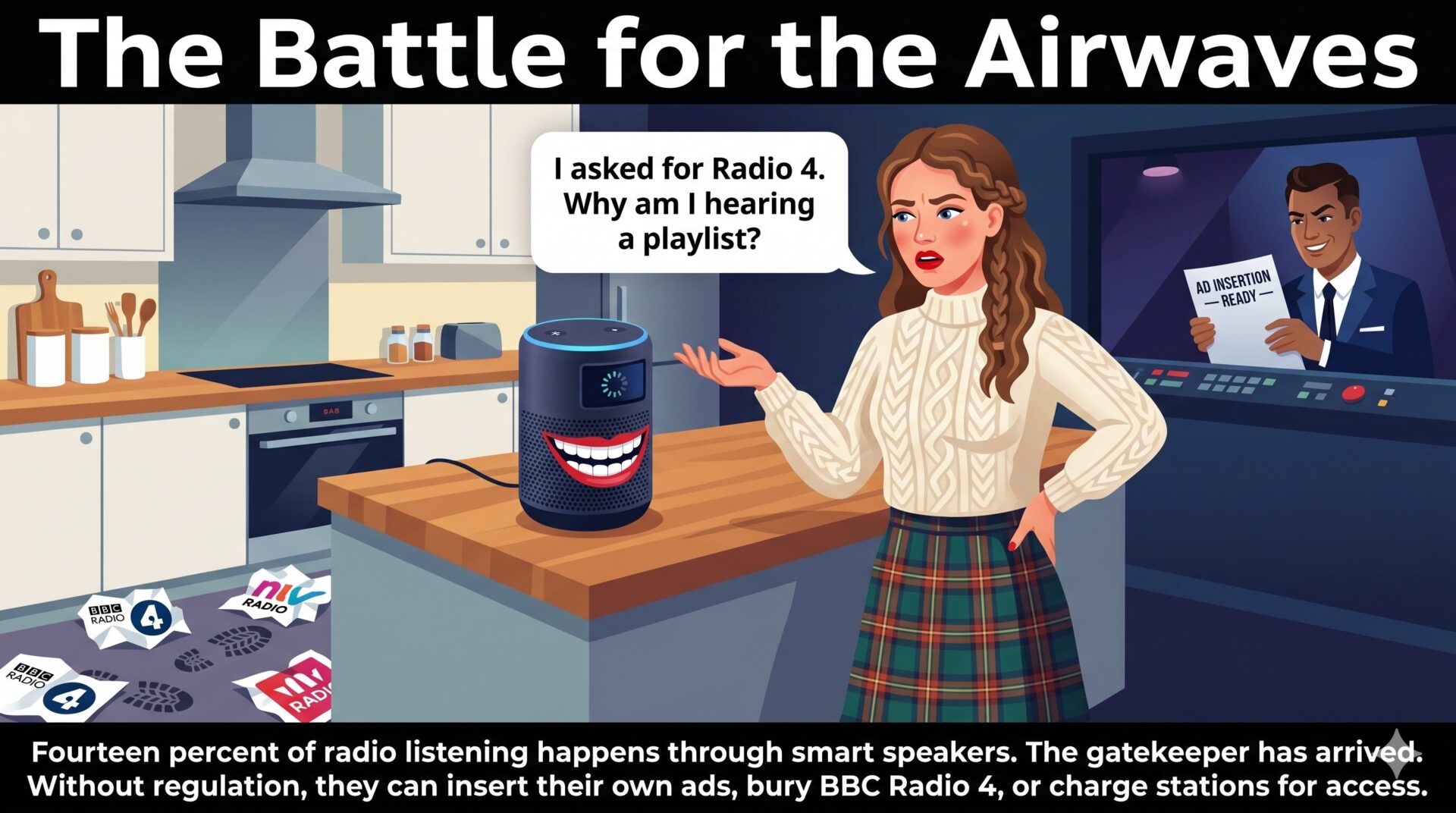
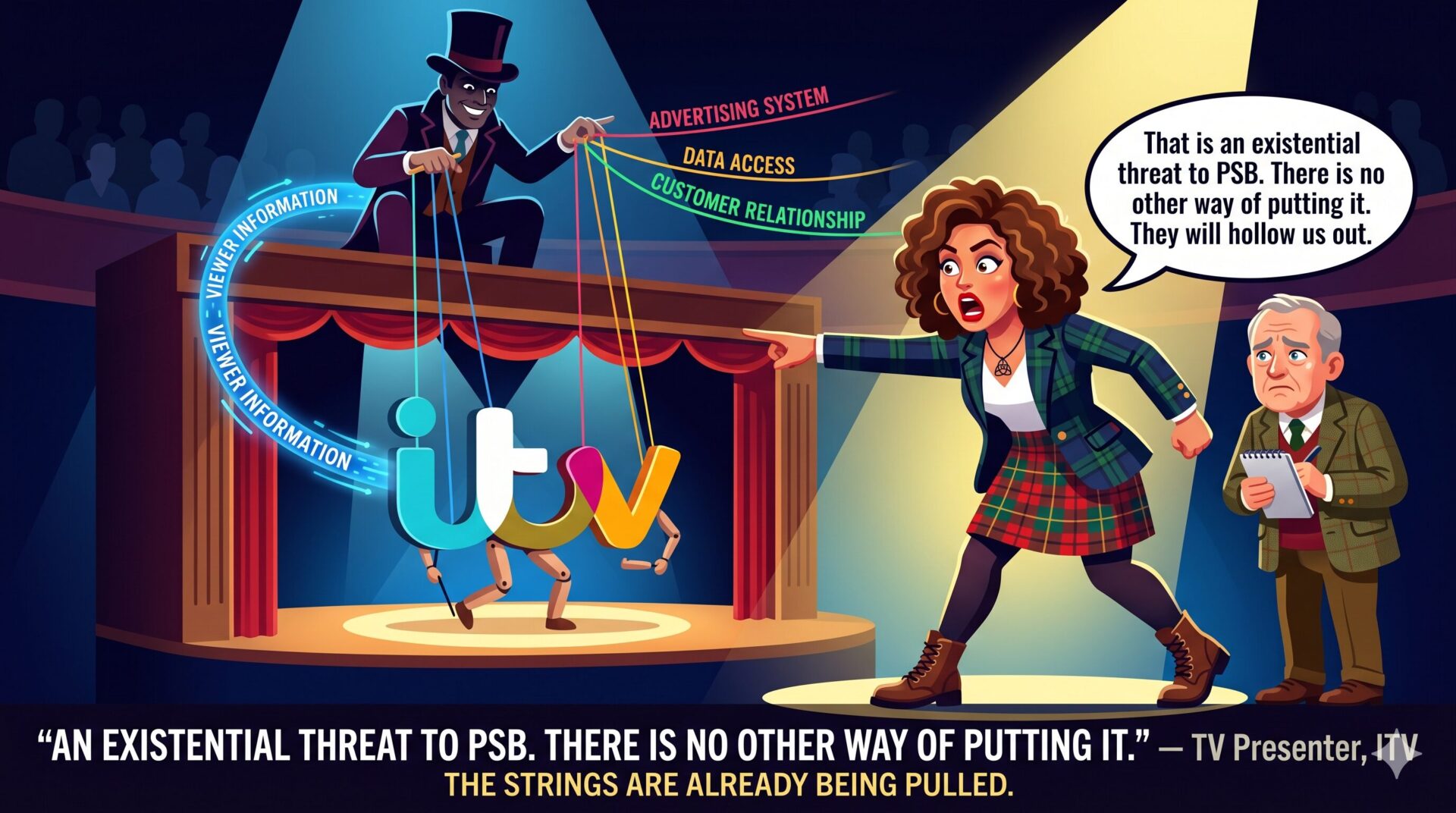
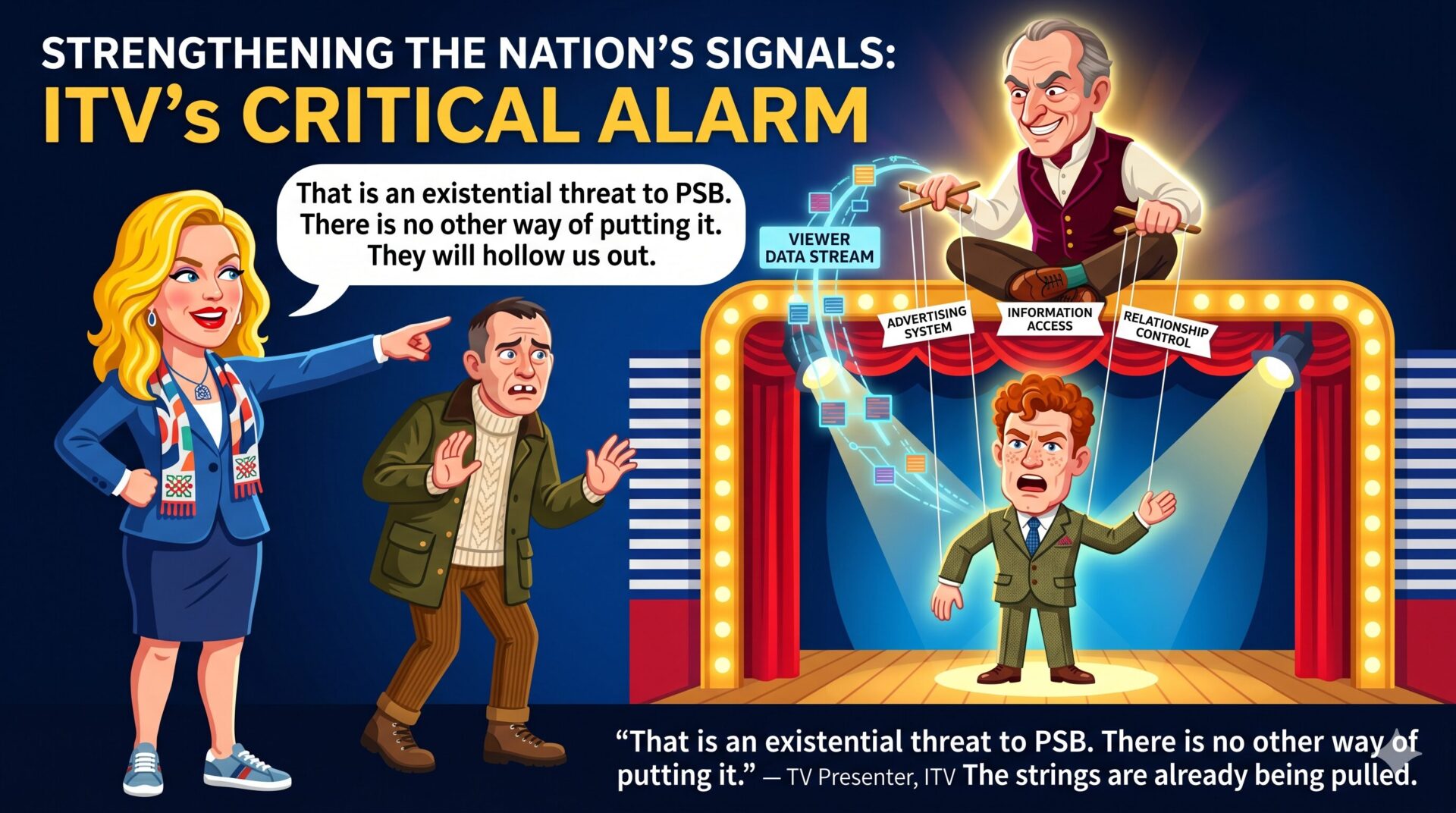
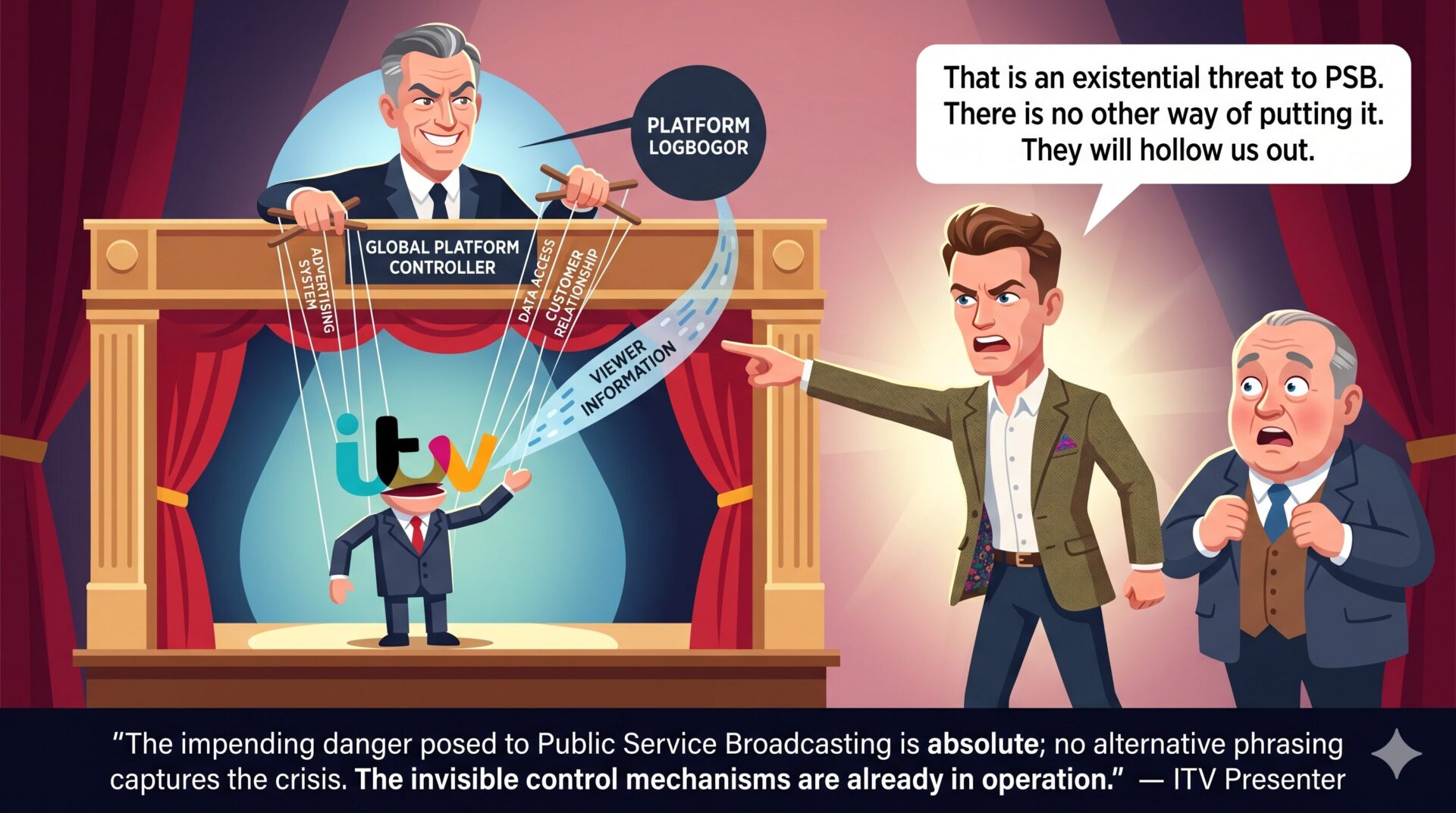 The Government kept “appropriate” because they value flexibility. They believe that Ofcom can make it work. They are willing to accept the risk that the PSBs will be buried again, that the platforms will find new ways to prioritise their own content, that the second page graveyard will fill with new headstones.
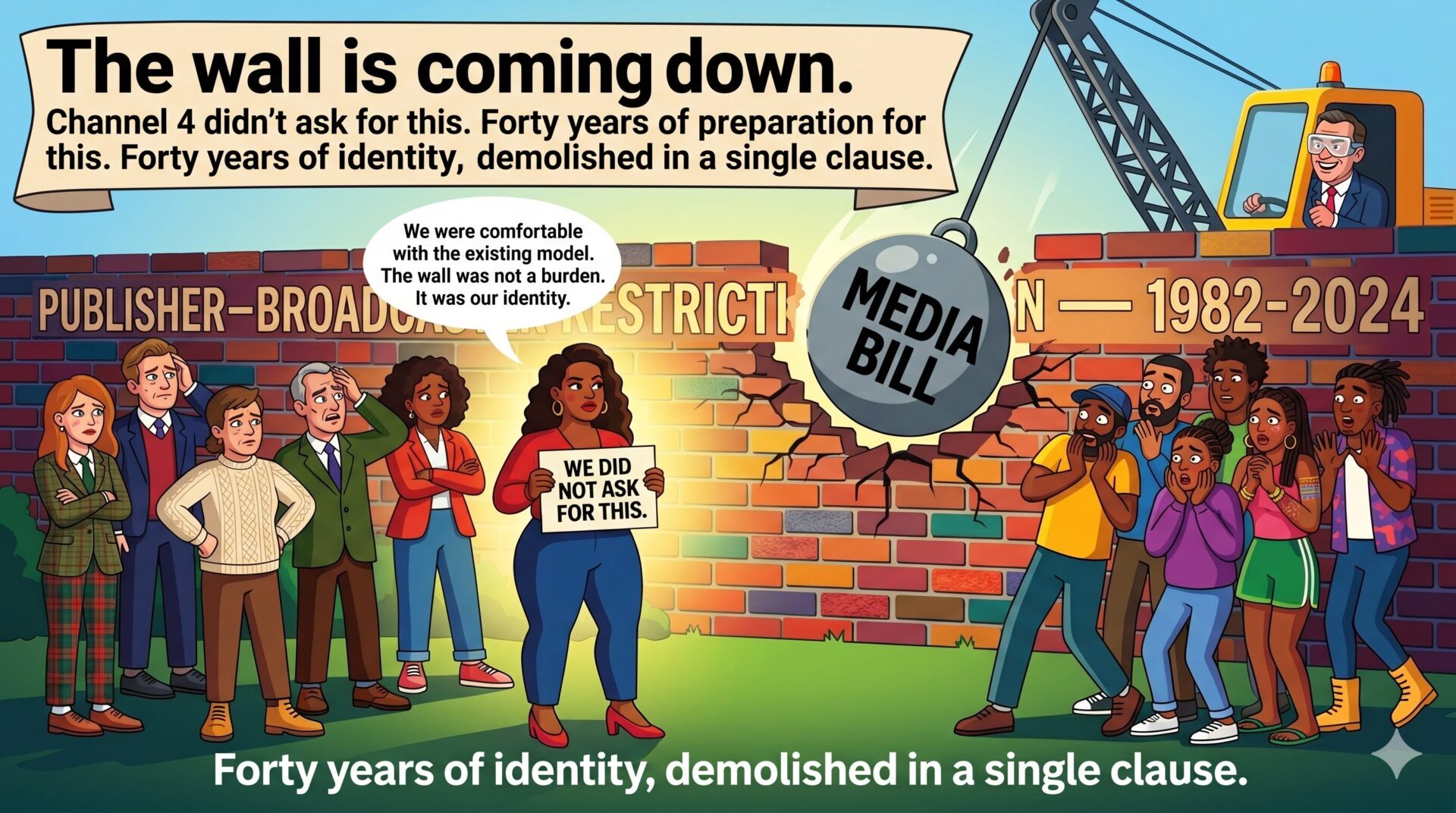
Channel 4: The Publisher-Broadcaster Wall Comes Down
The Advert Collapse: Why Channel 4 Had to Change or Die
“When the tide goes out, you see who has been swimming naked.” Warren Buffett’s observation about financial markets applies equally well to broadcasting. For decades, Channel 4’s business model was simple: sell advertising on linear television, reinvest the profits into programming, repeat. The tide was high. The water was warm. No one asked whether the broadcaster was wearing any clothes.
Now the tide has gone out. Linear advertising is collapsing. In 2020, it accounted for seventy-eight percent of Channel 4’s revenue. By 2022, that had fallen to sixty-eight percent. The trend is accelerating. Young viewers have abandoned linear television. Advertisers have followed. The money is flowing to streaming platforms, social media, and the tech giants that control the digital advertising market.
Channel 4 has no shareholders. It is a publicly owned, not-for-profit corporation. Every pound it makes goes back into programming. This is its strength and its vulnerability. It is not beholden to short-term profit demands. But it also has no reserves to fall back on. When advertising revenue falls, programming falls with it.
The Government’s argument for removing Channel 4’s publisher-broadcaster restriction is simple: the broadcaster needs new tools to survive. It needs to be able to make its own content, own its own intellectual property, and monetise that content across multiple platforms. The old model, which required Channel 4 to commission everything from independent producers, is no longer sustainable.
The broadcaster did not ask for this change. Khalid Hayat, Channel 4’s Director of Strategy and Consumer Insight, told the Committee that the broadcaster was “comfortable” with the existing model. But he acknowledged that the advertising market is challenging. He acknowledged that the broadcaster needs to diversify its revenue. He acknowledged that the Government’s proposal, while not requested, might be necessary.
This is the language of reluctant acceptance. Channel 4 knows that the world has changed. It knows that the old model cannot last forever. It knows that the publisher-broadcaster restriction, which once protected the independent production sector, is now a straitjacket. The broadcaster needs room to move. The Government is giving it that room. The question is whether the price is too high.
The Linear Advertising Death Spiral
Linear advertising is not in decline. It is in freefall. The trend lines are brutal. Young viewers have abandoned linear television almost entirely. They watch YouTube, TikTok, Netflix, and a dozen other streaming services. They do not watch scheduled programming. They do not watch commercials. They skip, block, or ignore them.
Advertisers have followed the viewers. The money that used to flow to ITV, Channel 4, and Channel 5 now flows to Google, Meta, and Amazon. The tech giants offer targeted advertising, measurable results, and global reach. Linear television offers mass audiences, but mass audiences are no longer what advertisers want. They want precise demographics. They want data. They want proof that their money is being spent effectively.
Channel 4 is caught in the middle. It has a loyal audience, but that audience is ageing. It has a respected brand, but brand loyalty does not pay the bills. It has a public service mission, but the market does not value public service. The broadcaster needs to find new sources of revenue. The publisher-broadcaster restriction prevents it from exploiting its own intellectual property. The Government’s proposal removes that restriction.
The Committee heard evidence that the advertising market is unlikely to recover. The shift to digital is permanent. The tech giants are not going to give back their market share. Channel 4 must adapt or die. The publisher-broadcaster restriction is an adaptation that the broadcaster did not ask for but may need.
The Government’s impact assessment acknowledges the uncertainty. The advertising market could stabilise. Channel 4 could find new sources of revenue without changing its model. The publisher-broadcaster restriction could remain in place without harming the broadcaster’s viability. But the Government is not willing to take that risk. They argue that Channel 4 needs the flexibility now, not later, when the crisis is even worse.
The Independent Production Sector’s Fear
The publisher-broadcaster restriction is not just a rule. It is the foundation of the independent production sector. For decades, Channel 4 has been required to commission at least twenty-five percent of its programming from independent producers. In practice, it commissions much more — fifty-five percent in 2022. The restriction has created a thriving ecosystem of small and medium-sized production companies, many of them based outside London. These companies employ thousands of people. They produce some of the most innovative programming on British television.
The removal of the restriction threatens this ecosystem. Channel 4 could decide to make more programmes in-house. It could keep the intellectual property, the profits, and the jobs for itself. The independent producers would lose commissions. Some would go out of business. Others would shrink. The diversity of voices that the restriction was designed to protect would diminish.
The Government acknowledges this risk. They have committed to raising Channel 4’s independent production quota from twenty-five percent to thirty-five percent. They have promised new measures to ensure fair and open access to Channel 4’s commissions, with oversight from Ofcom. They have published an assessment of impact that sets out their plan for monitoring the changes.
The independent production sector is not reassured. Pact, the trade association representing independent producers, warned that the removal of the restriction could have “adverse impacts on competition.” Directors UK was concerned that the changes would “distort or negatively impact the market.” Teledwyr Annibynnol Cymru, representing independent producers in Wales, feared that the changes would reduce opportunities for new entrants to the market.
The Committee shared these concerns. They recommended that the Government publish a policy statement setting out its intended monitoring and mitigations for any harm to the wider production sector. The Government complied. The policy statement was published alongside the Bill. It is detailed. It is comprehensive. It is also, for the independent producers, cold comfort. The restriction is being removed. The ecosystem will change. The only question is how much.
The Sustainability Duty
The Bill also introduces a new sustainability duty for Channel 4. The broadcaster must carry on its activities in a way that would be most likely to enable it, over the long term, to sustain its level of activities and to be securely in a position to meet its costs.
This sounds innocuous. It is not. The sustainability duty is a fundamental change to Channel 4’s legal framework. Previously, the broadcaster’s primary duty was to secure the continued provision of the channel. The new duty adds a forward-looking, strategic dimension. Channel 4 must think about its long-term viability, not just its immediate obligations.
The broadcaster was comfortable with this change, but with caveats. They wanted the duty to be linked explicitly to their primary functions. They wanted to avoid unintended consequences, such as a conflict with their existing obligations. The Government worked with Channel 4 on the drafting. The final version is a compromise.
The Committee recommended that the Government review the wording to ensure compatibility with Channel 4’s existing obligations. The Government accepted this recommendation. They made revisions. The duty now sits more comfortably within the existing legal framework.
But the underlying tension remains. Channel 4 is a public service broadcaster with a commercial remit. It must serve audiences that the market ignores. It must produce programming that is not commercially viable. It must reinvest all profit into content. The sustainability duty could be interpreted as requiring the broadcaster to prioritise its own survival over its public service mission. The Government insists that this is not the intention. The wording has been revised to reflect that. The independent producers are not convinced.
The Reluctant Acceptance
Channel 4 did not ask for this change. The broadcaster told the Committee that it was “comfortable” with the existing model. It did not lobby for the removal of the publisher-broadcaster restriction. It did not demand the sustainability duty. The changes are the Government’s initiative, not the broadcaster’s.
This is important. It means that Channel 4 is not driving the reform. It is accepting it. The broadcaster is not convinced that the changes are necessary. It is not confident that the benefits will outweigh the costs. It is agreeing to the changes because the Government is insisting, and because the advertising market is terrifying.
The Committee heard evidence that Channel 4’s leadership is worried about the future. The advertising decline is real. The competition from streaming services is intense. The broadcaster needs to diversify its revenue. The publisher-broadcaster restriction is an obstacle. Removing it gives Channel 4 options that it did not have before.
But options are not guarantees. Channel 4 may choose not to produce its own content. It may continue to commission from independent producers. The restriction was a prohibition, not a requirement. Removing it does not force the broadcaster to do anything. It simply gives it the freedom to choose.
The independent producers fear that freedom. They fear that Channel 4 will choose to produce in-house, that the commissions will dry up, that the ecosystem will collapse. The Government’s mitigations are designed to prevent this. The higher quota, the fair access measures, the Ofcom oversight — these are not guarantees, but they are safeguards.
Channel 4’s reluctant acceptance is a gamble. The broadcaster is betting that the freedom to produce its own content is worth the risk of damaging the independent sector. The Government is betting that the mitigations will work. The independent sector is betting that the damage will be contained. No one knows who will be right.
The Adage
When the tide goes out, you see who has been swimming naked. Channel 4 has been swimming in the warm waters of linear advertising for decades. The tide is going out. The broadcaster is not naked, but it is exposed. It needs new clothes.
The publisher-broadcaster restriction is an old suit. It fitted well in the era of limited channels and guaranteed audiences. It is tight now. It restricts movement. The Government is offering a new suit: the freedom to produce in-house content, to own intellectual property, to monetise across platforms. The suit is untested. It might fit. It might not.
Channel 4 is trying it on. The broadcaster is not enthusiastic, but it is not resisting. It knows that the old suit cannot last forever. It knows that the tide will not come back in. It knows that swimming naked is not an option.
The independent producers are watching from the shore. They are worried that the new suit will be made from their fabric. The Government has promised protections. The quota will rise. Ofcom will watch. The producers are not reassured. They have seen promises broken before.
The tide is going out. Channel 4 is swimming. The independent producers are swimming nearby. The Government is on the beach, waving. No one knows what the water will look like when the tide turns. But everyone knows that the old world is gone. The new world is uncertain. And Channel 4, like it or not, is swimming toward it.
The Fall of the Wall: How Channel 4 Became a Producer, Like It or Not
“The old order changeth, yielding place to new.” Alfred, Lord Tennyson wrote those words about the passing of King Arthur. He could have been writing about Channel 4’s publisher-broadcaster restriction. For four decades, the wall stood firm. Channel 4 commissioned content from independent producers. It did not make its own programmes. It did not own its own intellectual property. It was a publisher, not a producer. A curator, not a creator.
That wall is coming down. Not because Channel 4 asked for it. Not because the independent producers demanded it. Not because the public clamoured for change. The wall is falling because the Government decided that the old order must yield to the new. The advertising market has collapsed. The streaming giants are everywhere. Channel 4 needs new tools to survive. The publisher-broadcaster restriction is a luxury it can no longer afford.
The history of the restriction is worth recalling. When Channel 4 was created in 1982, the publisher-broadcaster model was a deliberate choice. The new channel would not compete with the independent production sector. It would nurture it. It would provide a guaranteed market for small companies, regional producers, and diverse voices. The restriction was not a burden. It was a mission.
For decades, the mission succeeded. The independent production sector grew from nothing into a thriving ecosystem. Companies like Hat Trick, Talkback, and Endemol built their businesses on Channel 4 commissions. The broadcaster became known for innovation, risk-taking, and distinctive programming. The restriction was not a constraint. It was an identity.
Now the identity is being rewritten. Channel 4 will be allowed to produce its own content. It will own its own intellectual property. It will compete with the very companies it was created to nurture. The wall is coming down. The old order is changing. The new order is uncertain.
The 1982 Settlement
The publisher-broadcaster restriction was not an accident. It was a deliberate feature of Channel 4’s founding legislation. The broadcaster was designed to be different. It would not chase ratings. It would not produce its own programmes. It would commission from independent producers, taking risks that the BBC and ITV would not take. It would provide a platform for new talent, new voices, new ideas.
The restriction was also a protection. The independent production sector was fragile. The BBC and ITV dominated the industry. Channel 3 licensees were required to commission a certain amount of independent content, but the requirement was weak. Channel 4 was the real engine. It was the guaranteed customer. It was the safety net.
For decades, the system worked. Channel 4 commissioned some of the most innovative programming on British television. The Tube, Brookside, Queer as Folk, The Big Breakfast, Father Ted, The Inbetweeners, Black Mirror — the list is long and distinguished. The independent producers grew wealthy. The sector expanded. The restriction was celebrated as a success.
But the world changed. The advertising market fragmented. The streaming giants arrived. The independent producers grew large enough to compete with Channel 4 itself. The restriction that had once been a strength became a constraint. Channel 4 could not produce its own content. It could not own its own intellectual property. It could not exploit its own successes across multiple platforms.
The Government decided that the time had come for change. The wall would come down. Channel 4 would be allowed to make its own programmes. The independent sector would have to adapt. The old order was yielding to the new.
The Independent Sector’s Panic
The independent producers did not take the news well. They had built their businesses on the guarantee that Channel 4 would not compete with them. The restriction was the foundation of their security. Removing it felt like a betrayal.
Pact, the trade association representing independent producers, warned that the change could have “adverse impacts on competition.” Directors UK was concerned that the removal would “distort or negatively impact the market.” Teledwyr Annibynnol Cymru feared that the change would reduce opportunities for new entrants to the market, particularly in Wales.
The concerns were not abstract. If Channel 4 produces its own content, it will keep the intellectual property. It will keep the profits. It will keep the jobs. The independent producers will lose commissions. Some will go out of business. Others will shrink. The diversity of voices that the restriction was designed to protect will diminish.
The Government acknowledged these concerns. They committed to raising Channel 4’s independent production quota from twenty-five percent to thirty-five percent. They promised new measures to ensure fair and open access to Channel 4’s commissions, with oversight from Ofcom. They published an assessment of impact that set out their plan for monitoring the changes.
The independent sector was not reassured. The quota increase helps, but it does not replace the certainty of the publisher-broadcaster restriction. The fair access measures are untested. The Ofcom oversight is unproven. The wall is coming down. The producers are afraid.
Channel 4’s Khalid Hayat told the Committee that the broadcaster shared the Government’s objective of ensuring that the independent sector continues to flourish. But he noted that the more restrictions placed on Channel 4’s new freedom, the harder it would be to develop a commercially sustainable business case. The broadcaster wanted the freedom to compete. The independent sector wanted protection from that competition. The Government was caught in the middle.
The Intellectual Property Goldmine
The publisher-broadcaster restriction prevented Channel 4 from owning the intellectual property for the programmes it commissioned. The independent producers kept the rights. They could sell the programmes to other broadcasters, license them to streaming services, and exploit them across multiple platforms. Channel 4 received a limited window of exclusivity, then the rights reverted to the producer.
This was a terrible deal for Channel 4. The broadcaster invested millions in developing new programmes. It took risks that no one else would take. It built audiences for shows that became global hits. And then it watched as the independent producers reaped the rewards.
The Inbetweeners is a classic example. Channel 4 commissioned the show, nurtured it, and broadcast it to growing audiences. The independent producer, Bwark Productions, owned the rights. When the show became a global hit, Channel 4 saw little of the upside. The films, the merchandise, the international sales — most of the money went to the producer.
The removal of the publisher-broadcaster restriction changes this. Channel 4 will be able to produce its own content and keep the rights. It will be able to exploit that content across multiple platforms. It will be able to build a library of intellectual property that generates revenue for years, not just for the duration of a single commission.
This is the commercial logic of the change. The Government argues that Channel 4 needs this flexibility to survive. The advertising market is collapsing. The streaming giants are everywhere. The broadcaster cannot afford to give away its most valuable asset. It needs to own its own future.
The independent producers argue that this logic is self-serving. Channel 4 was never meant to be a commercial powerhouse. It was meant to be a publisher, a curator, a risk-taker. The intellectual property was the reward for the producers who took the risks. Taking it away undermines the entire ecosystem.
The Committee heard both arguments. They did not recommend reversing the change. They accepted that the publisher-broadcaster restriction was no longer sustainable. But they demanded safeguards. The independent production quota must rise. Ofcom must oversee. The impact must be monitored. The wall is coming down. The question is what will be built in its place.
The removal of the publisher-broadcaster restriction is a fundamental change to Channel 4’s DNA. The broadcaster was created as a publisher. It has operated as a publisher for forty years. Its identity, its culture, its relationships with the independent sector — all are built on the publisher model.
Changing that model is not simple. Channel 4 will need to build production capabilities from scratch. It will need to hire producers, directors, and crew. It will need to develop its own intellectual property. It will need to compete with the independent producers for talent, for ideas, for commissions.
The broadcaster is not starting from zero. It has some production capability already. It has made programmes in-house on a small scale, with Ofcom’s permission. But the scale of the change is enormous. Channel 4 will need to invest millions. It will need to take risks. It will need to accept that some of its own productions will fail.
The independent producers are watching nervously. They fear that Channel 4 will prioritise its own productions over theirs. They fear that the commissioning process, which is supposed to be fair and open, will become a charade. They fear that the quota increase and the Ofcom oversight will not be enough to protect them.
The Government’s response is that the market will adjust. Some independent producers will lose out. Others will thrive. The ecosystem will survive, even if individual companies do not. This is cold comfort for the producers who fear for their livelihoods. But it is the logic of the market. And the market, as always, is unforgiving.
The Adage
The old order changeth, yielding place to new. The old order was the publisher-broadcaster restriction. The new order is Channel 4 as producer. The change is not voluntary. It is not welcome. It is necessary, or so the Government argues. The advertising market has collapsed. The streaming giants are everywhere. The broadcaster needs new tools. The wall must fall.
The independent producers are mourning. They have lost a guarantee. They have lost a partner. They have lost a piece of their identity. The wall was not just a restriction. It was a relationship. It was a commitment. It was a promise that Channel 4 would not compete with them.
That promise is broken. The wall is down. Channel 4 will make its own programmes. It will own its own intellectual property. It will compete with the very companies it was created to nurture. The old order is gone. The new order is uncertain.
Tennyson wrote of Arthur’s passing: “The old order changeth, yielding place to new, and God fulfills himself in many ways, lest one good custom should corrupt the world.” The publisher-broadcaster restriction was a good custom. It was not perfect, but it worked. It nurtured an entire industry. It produced some of the best programming on British television. It was a distinctive feature of the broadcasting landscape.
Now it is gone. The wall is down. Channel 4 will produce. The independents will compete. The Government will watch. The custom has yielded to necessity. Whether the new order will be better than the old is anyone’s guess. But the old order is gone. And there is no going back.
The Indie Apocalypse: When the Guaranteed Customer Becomes a Competitor
“The fox knows many things, but the hedgehog knows one big thing.” The ancient Greek poet Archilochus understood something about strategy. The fox, with its many cunning tricks, can evade capture in countless ways. The hedgehog, with its single defence of rolling into a spiky ball, has only one big thing. The independent production sector in Britain has been the hedgehog. Its one big thing was the publisher-broadcaster restriction. Channel 4 could not compete with them. It could only commission from them. That was the spiky ball that kept the predators at bay.
Now the hedgehog is being asked to unroll. Channel 4 will be allowed to produce its own content. The fox, with its many cunning tricks, will be let into the garden. The independent producers are terrified. They have good reason to be.
Pact, Directors UK, and Teledwyr Annibynnol Cymru all warned the Committee that in-house production would crowd out smaller producers. They did not say might crowd out. They did not say could potentially crowd out. They said will crowd out. The certainty of their language reflected the depth of their fear. They have seen this movie before. They know how it ends.
The Government’s response was to raise Channel 4’s independent production quota from twenty-five percent to thirty-five percent. They promised new measures to ensure fair and open access to Channel 4’s commissions, with oversight from Ofcom. They published an assessment of impact that set out their plan for monitoring the changes.
The independent producers were not reassured. A higher quota is not a guarantee. Ofcom oversight is not a shield. The history of media regulation is littered with promises that were kept until they were inconvenient. The independent sector knows this. They have lived through deregulation before. They have seen the BBC’s indie quota become a floor, not a ceiling. They have watched as Channel 4’s commitment to regional production has waxed and waned with each change of leadership.
The hedgehog knows one big thing. The independent producers know that their survival depends on the guarantee that Channel 4 will not compete with them. The Government is removing that guarantee. The quota increase is a consolation prize. It is not enough.
The Quota Illusion
The independent production quota sounds like a protection. Channel 4 must commission at least thirty-five percent of its programming from independent producers. That is higher than the current twenty-five percent. It is higher than the statutory minimum that has been in place for decades. On paper, it looks like a victory for the independent sector.
In practice, it is an illusion. The quota applies to qualifying programmes. It does not apply to everything Channel 4 broadcasts. News, sport, and other categories are excluded. The broadcaster can produce those in-house without any constraint. The quota also applies to the cost of commissions, not to the number of hours or the number of producers. Channel 4 could meet the quota by commissioning a few expensive programmes from a few large producers, while producing everything else in-house.
The independent sector’s fear is not that Channel 4 will stop commissioning altogether. It is that the commissioning will become concentrated. The small producers, the regional producers, the niche producers — the ones who do not have the scale to compete for the big commissions — will be squeezed out. The quota does not protect them. It protects the large producers who can afford to lobby, to negotiate, to survive.
The Government’s impact assessment acknowledges this risk. It notes that the independent production sector is diverse. It notes that small producers may be more vulnerable to changes in Channel 4’s commissioning behaviour. It notes that the impact of the changes will need to be monitored. It does not, however, propose any specific protections for small producers. The quota is a blunt instrument. It is not a scalpel.
The Committee heard evidence from Teledwyr Annibynnol Cymru, which represents independent producers in Wales. They warned that the changes could have “a direct impact on the vibrancy and competitive nature of the sector.” They noted that Welsh producers are already at a disadvantage compared to London-based companies. The removal of the publisher-broadcaster restriction would make that disadvantage worse.
The Government’s response was to point to the quota increase. Welsh producers will compete for the same thirty-five percent as everyone else. There is no regional sub-quota. There is no preference for producers outside London. The market will decide. And the market, as always, favours the already powerful.
The Ofcom Oversight Mirage
Ofcom will oversee the new regime. The regulator will ensure that Channel 4’s commissioning processes are fair and open. It will investigate complaints. It will impose sanctions if necessary. On paper, this sounds like meaningful oversight.
In practice, it is a mirage. Ofcom is an under-resourced regulator with an expanding remit. The Media Bill adds new responsibilities for video-on-demand, radio selection services, and prominence disputes. The regulator is already stretched. Adding oversight of Channel 4’s commissioning processes will stretch it further.
The independent sector knows this. They have seen Ofcom struggle to enforce existing rules. They have watched as the regulator has been slow to investigate complaints, reluctant to impose sanctions, and deferential to the broadcasters it regulates. They have no confidence that Ofcom will be able to protect them from Channel 4’s new in-house production capability.
The Government’s impact assessment acknowledges that Ofcom will need additional resources. It notes that the regulator will be able to levy fees on the industry to cover the cost of its regulatory activity. This is not a solution. It is an abdication. The industry will pay for the regulator that oversees it. The regulator will be dependent on the industry for its funding. The fox will pay for the hedgehog’s defence. The hedgehog will not trust the fox.
The Committee did not recommend changes to the Ofcom oversight provisions. They accepted that the regulator is the best available option. But they noted that the oversight will need to be robust, well-resourced, and genuinely independent. The Government agreed. The independent sector is waiting to see if the promises will be kept.
The removal of the publisher-broadcaster restriction is a fundamental change to Channel 4’s DNA. The broadcaster was created as a publisher. It has operated as a publisher for forty years. Its identity, its culture, its relationships with the independent sector — all are built on the publisher model.
Changing that model is not simple. Channel 4 will need to build production capabilities from scratch. It will need to hire producers, directors, and crew. It will need to develop its own intellectual property. It will need to compete with the independent producers for talent, for ideas, for commissions.
The broadcaster is not starting from zero. It has some production capability already. It has made programmes in-house on a small scale, with Ofcom’s permission. But the scale of the change is enormous. Channel 4 will need to invest millions. It will need to take risks. It will need to accept that some of its own productions will fail.
The independent producers are watching nervously. They fear that Channel 4 will prioritise its own productions over theirs. They fear that the commissioning process, which is supposed to be fair and open, will become a charade. They fear that the quota increase and the Ofcom oversight will not be enough to protect them.
The Government’s response is that the market will adjust. Some independent producers will lose out. Others will thrive. The ecosystem will survive, even if individual companies do not. This is cold comfort for the producers who fear for their livelihoods. But it is the logic of the market. And the market, as always, is unforgiving.
The Adage
The fox knows many things, but the hedgehog knows one big thing. The independent production sector’s one big thing is the publisher-broadcaster restriction. It is the guarantee that Channel 4 will not compete with them. It is the foundation of their security. It is the reason they have been able to thrive.
The Government is removing that guarantee. The quota increase is a concession. Ofcom oversight is a promise. Neither replaces the certainty of the restriction. The fox is being let into the garden. The hedgehog is being asked to unroll.
The independent producers are not naive. They know that the old order cannot last forever. They know that Channel 4 needs new tools to survive. They know that the advertising market has collapsed. They know that the streaming giants are everywhere. They know that change is inevitable.
But they also know that change does not have to mean destruction. The Government could have designed a transition that protected the most vulnerable producers. It could have introduced regional quotas. It could have ring-fenced commissions for small companies. It could have given the independent sector a voice in the design of the new regime.
It did none of these things. The quota was raised. Ofcom will oversee. The market will decide. The hedgehog is on its own.
The fox knows many things. The independent producers know one big thing: they are afraid. They have reason to be. The wall is coming down. The guarantee is gone. The future is uncertain. The hedgehog is unrolling. And the fox is already in the garden.
The Reluctant Revolution: When the Patient Demands a Second Opinion
“Be careful what you wish for, lest it come true.” The old warning is usually directed at the overeager, the ambitious, those who chase their dreams without considering the consequences. But what about those who did not wish for anything at all? What about the patient who is told they need surgery, who did not ask for the operation, who would prefer to heal on their own, but who is being wheeled into theatre anyway? Channel 4 is that patient. The Government is the surgeon. The publisher-broadcaster restriction is the appendix being removed. And the broadcaster is not sure it wants to go under the knife.
Channel 4 did not ask for this change. Let that sink in. The Government has spent years debating the future of the broadcaster. There were plans for privatisation. There were campaigns to save it. There were marches, petitions, parliamentary motions. The public was told that Channel 4 was under threat. And then, after all that, the Government decided not to privatise. Instead, they decided to remove the publisher-broadcaster restriction. They decided to let Channel 4 make its own content. They decided to give the broadcaster a new set of tools to survive in a collapsing advertising market.
Channel 4’s director of strategy, Khalid Hayat, told the Committee that the broadcaster was “comfortable” with the existing model. That is polite language for “we did not ask for this.” He warned that “the more onerous the additional restrictions, the harder it will be to develop a commercially sustainable business case.” That is polite language for “if you tie our hands behind our backs, do not expect us to win the fight.”
The broadcaster is not opposed to change. It recognises that the advertising market is collapsing. It knows that the old model cannot last forever. It understands that it needs new sources of revenue. But it also knows that change comes with costs. The quota increase from twenty-five to thirty-five percent is a cost. The Ofcom oversight is a cost. The uncertainty of the new regime is a cost. And every cost makes it harder for Channel 4 to do what it was created to do: take risks, nurture talent, serve audiences that the market ignores.
The patient is being wheeled into theatre. The surgeon is confident. The patient is not.
The Unasked Question
Why is this happening? The Government’s official answer is that Channel 4 needs new tools to survive. The advertising market is collapsing. The streaming giants are everywhere. The publisher-broadcaster restriction is a straitjacket. Removing it gives the broadcaster flexibility.
But Channel 4 did not ask for flexibility. It did not lobby for the removal of the restriction. It did not demand the right to produce its own content. The broadcaster was content with the existing model. It had adapted to the changing market. It had launched a streaming service, All4. It had diversified its revenue. It had built a successful digital business. The publisher-broadcaster restriction was not preventing Channel 4 from surviving. It was preventing Channel 4 from thriving in the way that the Government wanted it to thrive.
The unasked question is whether the Government’s real motivation is different. The Conservative Party has never been comfortable with Channel 4. The broadcaster is publicly owned. It is not-for-profit. It has a remit to serve audiences that the market ignores. It is, in many ways, the antithesis of the free market ideology that has dominated Conservative thinking for decades. The attempt to privatise Channel 4 was defeated by public outcry. But the desire to reshape the broadcaster remains.
Removing the publisher-broadcaster restriction is a way to reshape Channel 4 without privatising it. The broadcaster will become more commercial. It will produce its own content. It will own its own intellectual property. It will compete with the independent sector. It will be less dependent on advertising. It will be more like a conventional broadcaster. The public service mission will remain, but it will be squeezed.
Channel 4’s caution reflects an awareness of this dynamic. The broadcaster knows that the Government is not acting out of pure altruism. It knows that the removal of the restriction is part of a broader agenda. It knows that the additional restrictions — the higher quota, the Ofcom oversight — are designed to limit the damage. But it also knows that the damage will be real. And it knows that it did not ask for any of it.
The Onerous Restrictions
Khalid Hayat’s warning about “onerous additional restrictions” was directed at the Government’s proposed safeguards. The independent sector had demanded protections. The Government had responded with a package: a higher independent production quota, fair access measures, Ofcom oversight. On paper, these protections look reasonable. In practice, they are burdens.
The higher quota means that Channel 4 must commission at least thirty-five percent of its programming from independent producers. That is ten percentage points higher than the current statutory minimum. It is a significant increase. It will cost money. It will limit the broadcaster’s ability to produce in-house content. It is, from Channel 4’s perspective, a restriction.
The fair access measures are even more burdensome. Channel 4 must ensure that its commissioning processes are fair and open. It must not favour its own productions over independent ones. Ofcom will oversee. The regulator will investigate complaints. The broadcaster will be subject to constant scrutiny. Every commissioning decision could be challenged. Every in-house production could be questioned. The uncertainty is enormous.
Channel 4’s caution reflects a calculation. The benefits of the new freedom must outweigh the costs of the new restrictions. The broadcaster can produce its own content. It can own its own intellectual property. It can exploit that content across multiple platforms. But it must also commission more from independents. It must submit to Ofcom oversight. It must navigate a regulatory regime that is designed to limit its new freedom.
The Government’s response is that the restrictions are necessary to protect the independent sector. Without them, Channel 4 could crowd out smaller producers. The higher quota ensures that independents still have a guaranteed market. The Ofcom oversight ensures that the commissioning process is fair. The restrictions are not onerous. They are proportionate.
Channel 4 disagrees. The broadcaster did not ask for this change. It did not ask for the restrictions. It did not ask for the oversight. It is being given freedom with one hand and shackles with the other. The patient is being wheeled into theatre. The surgeon is tying tourniquets around both arms. The patient is asking whether the operation is really necessary.
The Commercial Sustainability Test
The Bill includes a new sustainability duty for Channel 4. The broadcaster must carry on its activities in a way that would be most likely to enable it, over the long term, to sustain its level of activities and to be securely in a position to meet its costs. This sounds innocuous. It is not.
The sustainability duty is a commercial test. Channel 4 must think about its long-term viability. It must consider whether its decisions are consistent with its survival. It cannot take risks that might undermine its future. It cannot invest in programmes that might not pay off. It must be careful. It must be prudent. It must be commercial.
This is a fundamental change to Channel 4’s identity. The broadcaster was created to take risks. It was designed to produce programmes that the BBC and ITV would not touch. It was given a public service remit that prioritised innovation over profit. The sustainability duty reverses that priority. It says: survive first, innovate second. It says: be commercial, be careful, be sustainable.
Channel 4’s caution about the removal of the publisher-broadcaster restriction is tied to the sustainability duty. The broadcaster knows that it must now be more commercial. It knows that it must generate more revenue. It knows that it must produce content that pays for itself. The freedom to produce in-house is a tool to achieve that goal. But the restrictions on that freedom make the goal harder to achieve.
Khalid Hayat’s warning about “onerous additional restrictions” is a warning about the sustainability duty. The higher quota, the fair access measures, the Ofcom oversight — all of these make it harder for Channel 4 to develop a commercially sustainable business case. The broadcaster is being told to swim with weights attached. It is being told to run a race with hurdles that keep getting higher.
The Government’s response is that the restrictions are necessary to protect the independent sector. Channel 4’s survival cannot come at the expense of the ecosystem that sustains it. The broadcaster must thrive, but not at the expense of others. The restrictions ensure that the rise of Channel 4 as a producer does not mean the fall of the independent sector.
Channel 4 accepts this logic. It does not want to destroy the independent sector. It values the ecosystem that has nurtured so much great programming. But it also knows that the balance is delicate. Too many restrictions, and the new freedom is worthless. Too few, and the independent sector suffers. The broadcaster is warning the Government not to tip the balance too far. The patient is asking the surgeon to be gentle.
The Adage
Be careful what you wish for, lest it come true. Channel 4 did not wish for this. The broadcaster did not ask for the removal of the publisher-broadcaster restriction. It did not lobby for the freedom to produce its own content. It did not demand the right to own its own intellectual property. The change was imposed by the Government. The broadcaster is making the best of it.
But the broadcaster is also warning. The additional restrictions are onerous. The higher quota, the fair access measures, the Ofcom oversight — all of these make it harder to develop a commercially sustainable business case. The patient is being wheeled into theatre. The surgeon is confident. The patient is not.
The old adage about wishes assumes that the wisher is the one who asked. Channel 4 did not ask. It is being operated upon without its consent. It is being given freedom with one hand and shackles with the other. It is being told to swim with weights attached. It is being told to run with hurdles in the way.
The broadcaster will survive. It is too important, too resilient, too creative to fail. But the cost of survival will be higher than the Government acknowledges. The restrictions will bite. The sustainability duty will constrain. The oversight will burden. The patient will leave the theatre with scars that were not necessary.
Be careful what you wish for. Channel 4 did not wish for this. But it is happening anyway. The only question is how deep the scars will be.
The Sustainability Trap: When Doing Good Means Staying Alive
“First, do no harm.” The Hippocratic Oath is the foundation of medical ethics. It is a negative injunction: do not make things worse. It is not a positive command to save every patient at any cost. It is a recognition that sometimes the best thing a doctor can do is nothing at all. Sometimes the cure is worse than the disease. Sometimes the treatment kills the patient faster than the illness ever would.
Channel 4’s new sustainability duty is not a Hippocratic Oath. It is a corporate survival mandate. The broadcaster must carry on its activities in a way that would be most likely to enable it, over the long term, to sustain its level of activities and to be securely in a position to meet its costs. This is not a command to do no harm. It is a command to stay alive. And staying alive, in the world of commercial broadcasting, often means doing harm to the very things that made you worth saving.
Channel 4 wanted the sustainability duty linked explicitly to its primary functions. The broadcaster’s primary functions are set out in the Broadcasting Act. They include innovation, experimentation, and the provision of programming that the market would not otherwise supply. The sustainability duty, as originally drafted, said nothing about these functions. It said only that Channel 4 must be sustainable. The broadcaster feared that this would create unintended conflicts. A director trying to fulfil the sustainability duty might feel compelled to cut back on risky, innovative programming. The duty to survive would override the duty to serve.
The Government worked with Channel 4 on the wording. The final version is a compromise. The sustainability duty is now linked to the broadcaster’s primary functions, though not as explicitly as Channel 4 wanted. The explanatory notes provide additional clarity. The director who prioritises survival over innovation will have to defend that choice. The duty to do good is not erased. It is just made harder to enforce.
The Committee recommended that the Government review the wording to ensure compatibility with Channel 4’s existing obligations. The Government accepted. They made revisions. The sustainability duty is now less dangerous than it was. It is still dangerous.
The Director’s Dilemma
Imagine you are a director of Channel 4. You have multiple duties. You must secure the continued provision of the channel. You must promote innovation and experimentation. You must serve audiences that the market ignores. You must now also consider the long-term sustainability of the broadcaster.
These duties are not always aligned. Innovation is risky. Experimentation often fails. Serving ignored audiences is expensive. The programme that wins a BAFTA may lose money. The risky commission that launches a new talent may bomb in the ratings. The dutiful director who prioritises public service over profit will sometimes make choices that undermine sustainability.
The sustainability duty tips the balance. It says: you must consider long-term viability. You cannot ignore the financial consequences of your decisions. You cannot sacrifice sustainability on the altar of public service. You must find a way to do both, or you must explain why you chose one over the other.
This is a classic director’s dilemma. Every board faces it. The difference is that Channel 4’s directors are now required by law to consider sustainability. Previously, they could choose to prioritise public service over profit. They could argue that the broadcaster’s unique remit justified taking risks that a commercial broadcaster would not take. The sustainability duty removes that argument. It says: sustainability is not optional. It is a legal obligation.
Channel 4’s concern about unintended conflicts was not theoretical. The broadcaster’s primary functions include innovation and experimentation. These functions are inherently risky. They are not guaranteed to succeed. They are not always sustainable. A director who takes the sustainability duty seriously might conclude that the safest course is to avoid risk altogether. Commission safe programmes. Pursue mass audiences. Abandon the very things that make Channel 4 distinctive.
The Government’s revisions were designed to prevent this outcome. The sustainability duty is now linked to the primary functions. The director must consider sustainability, but not at the expense of the broadcaster’s core mission. The explanatory notes make clear that the duty is not a licence to abandon public service. The broadcaster must still innovate. It must still experiment. It must still serve ignored audiences. It must just do so in a way that is sustainable.
This is a fine balance. It is also an impossible one. There is no formula for reconciling innovation with sustainability. There is no algorithm that tells you when a risky commission is worth the cost. The director must judge. The duty provides guidance. The guidance is contradictory.
The Unintended Consequences
The sustainability duty will have consequences that its drafters did not intend. Some of them are already visible.
First, Channel 4 will become more cautious. The broadcaster will think twice before commissioning a programme that might not find an audience. It will demand clearer business cases. It will seek guarantees of performance. The space for pure experimentation — the programme that no one asked for, that no one expected to succeed, that became a hit through sheer originality — will shrink.
Second, the sustainability duty will be used as a justification for unpopular decisions. When Channel 4 cuts a risky programme, it will point to the duty. When it prioritises commercial revenue over public service, it will invoke sustainability. The duty will become a shield, protecting the broadcaster from criticism. The director who makes a hard choice will say: the law made me do it.
Third, the independent sector will feel the effects. Channel 4’s new caution will flow through to its commissioning decisions. The broadcasters will favour established producers with proven track records. It will avoid small, risky, innovative companies. The diversity of voices that the publisher-broadcaster restriction was designed to protect will diminish. The sustainability duty will accelerate this trend.
The Government’s impact assessment acknowledges these risks. It notes that the sustainability duty could lead to “unintended consequences” for the broadcaster’s public service remit. It does not explain how those consequences will be prevented. It trusts Channel 4’s directors to strike the right balance.
The Committee was less trusting. They recommended that the Government review the wording to ensure compatibility with Channel 4’s existing obligations. The Government accepted. They made revisions. The duty is now less likely to produce perverse outcomes. It is still likely to produce some.
The Commercialisation Creep
The sustainability duty is part of a broader pattern. The Government has been pushing Channel 4 toward greater commercialisation for years. The attempt to privatise the broadcaster failed, but the pressure to behave more like a commercial entity continues. The sustainability duty is the latest instalment.
Channel 4 has resisted this pressure. The broadcaster has argued that its public service mission requires it to take risks that a commercial entity would not take. It has argued that its not-for-profit status allows it to prioritise public value over shareholder value. It has argued that the publisher-broadcaster restriction protects the independent sector and ensures diversity.
The sustainability duty chips away at these arguments. It says: you must be sustainable. You cannot rely on the licence fee or government subsidies. You must generate enough revenue to cover your costs. You must build a business that can survive in a competitive market.
This is not unreasonable. Channel 4 has always been commercial. It has always generated its own revenue. It has always been expected to be sustainable. The difference is that the duty is now explicit. It is now a legal obligation. It is now something that directors must consider alongside their other duties.
The danger is not the duty itself. The danger is the creep. Once sustainability is enshrined in law, it will be cited in every decision. Once directors are required to consider it, they will prioritise it. Once the priority shifts, the public service mission will suffer. Not overnight. Not dramatically. But slowly, steadily, imperceptibly. The broadcaster will become more commercial. The innovation will fade. The risk-taking will diminish. The public service will erode.
Channel 4’s caution about the sustainability duty reflected this fear. The broadcaster wanted the duty linked explicitly to its primary functions. It wanted a legal guarantee that sustainability would not override public service. The Government provided a link, but not a guarantee. The explanatory notes provide clarity, but not certainty. The creep will continue.
The Adage
First, do no harm. Channel 4’s directors have always tried to follow this principle. They have taken risks, but not reckless ones. They have innovated, but not at the expense of sustainability. They have served ignored audiences, but not to the point of bankruptcy. The broadcaster has survived for forty years without a sustainability duty. It has done so by balancing its public service mission with commercial reality.
The sustainability duty changes this balance. It elevates sustainability from a consideration to an obligation. It forces directors to think about long-term viability in a way they did not have to before. It tips the scales away from risk and toward caution.
The Government’s revisions were necessary. They were not sufficient. The sustainability duty is still dangerous. It will still produce unintended consequences. It will still accelerate the commercialisation of a broadcaster that was created to be different.
Channel 4 wanted the duty linked explicitly to its primary functions. It wanted a legal guarantee that sustainability would not override public service. The Government provided a compromise. The duty is now linked, but not explicitly. The guarantee is implied, but not certain. The director who must choose between sustainability and public service will have to decide which duty takes priority. The law does not say. The explanatory notes do not decide. The director must judge.
First, do no harm. The sustainability duty will harm something. It will harm the risk-taking that made Channel 4 distinctive. It will harm the innovation that defined its brand. It will harm the public service mission that justified its existence. The only question is how much harm. The director will try to minimise it. The duty will push in the opposite direction. The balance is fragile. The future is uncertain. The patient is being treated. The cure may be worse than the disease.
The Policy Statement: Promises Written on Water
“The proof of the pudding is in the eating.” The old proverb is a warning against judging things by their appearance. A pudding may look delicious. It may smell wonderful. It may be presented on a silver platter with all the ceremony that a pudding deserves. But none of that matters if it tastes like cardboard. The proof is not in the recipe. It is not in the ingredients. It is not in the chef’s confident assurances. The proof is in the eating.
The Government has published its policy statement. The Committee demanded it. The Ministers complied. On 8 November, alongside the introduction of the Bill, the Department for Culture, Media and Sport released an assessment of impact, a package of mitigations, and a plan for monitoring the effects of removing Channel 4’s publisher-broadcaster restriction. The document runs to dozens of pages. It is detailed. It is comprehensive. It is, on paper, exactly what the Committee asked for.
The independent production sector is not impressed. They have seen promises before. They have watched as assurances were made, then quietly forgotten. They have experienced the gap between what the Government says and what the Government does. They know that a policy statement is not a guarantee. It is a piece of paper. And pieces of paper can be filed, ignored, or contradicted by the next Minister, the next crisis, the next election.
The proof of the pudding is in the eating. The independent sector is waiting to taste. They are not optimistic.
The Package of Mitigations
The Government’s package of mitigations is substantial. On paper, it addresses many of the concerns raised by the Committee and the independent sector.
First, Channel 4’s independent production quota will rise from twenty-five percent to thirty-five percent of qualifying programmes. This is a significant increase. It means that more of Channel 4’s content must come from independent producers. It provides a guaranteed market for the sector.
Second, new measures will ensure fair and open access to Channel 4’s commissions. The broadcaster cannot favour its own productions over independent ones. The commissioning process must be transparent. Ofcom will oversee.
Third, Ofcom will review the impact of Channel 4 starting a production business as part of its five-yearly reviews of the UK’s PSB system. The regulator will assess whether the changes have harmed the independent sector. It will make recommendations. The Government will respond.
These mitigations are not trivial. They are real commitments. They will require Channel 4 to change its behaviour. They will give the independent sector some protection. They will provide a mechanism for monitoring and accountability.
The independent sector’s scepticism is not about the content of the mitigations. It is about their durability. A quota can be changed. A fair access measure can be watered down. An Ofcom review can be ignored. The Government that giveth can also taketh away. The next election could bring a new Minister with different priorities. The next crisis could push the independent sector down the list of concerns.
The proof of the pudding is in the eating. The independent sector has eaten before. They have tasted promises that turned to ash. They are not hungry for more paper.
The Impact Assessment
The impact assessment is a curious document. It acknowledges that the removal of the publisher-broadcaster restriction could harm the independent sector. It notes that Channel 4 might choose to produce more content in-house. It recognises that smaller producers, regional producers, and niche producers could be squeezed out.
But the impact assessment does not quantify these risks. It does not say how many producers might go out of business. It does not estimate how many jobs might be lost. It does not calculate the economic cost to the regions. The impact assessment is long on description and short on numbers. It describes the risks. It does not measure them.
The independent Regulatory Policy Committee, which assesses the quality of the Government’s evidence and analysis, recommended that the Department consider the potential impact of a change in programming direction. The Government acknowledged this recommendation. They did not, however, provide the additional analysis that the Committee requested. The impact assessment remains incomplete.
The Committee was not satisfied. They demanded a policy statement. They got one. They asked for mitigations. They received them. They wanted a monitoring plan. It was provided. But the underlying uncertainty remains. No one knows how the removal of the publisher-broadcaster restriction will affect the independent sector. The Government’s impact assessment does not answer the question. It only frames it.
The proof of the pudding is in the eating. The independent sector will learn the answers the hard way: by living through them. The producers who lose commissions will know that the impact assessment underestimated the risk. The producers who survive will know that they were lucky. The Government will point to the mitigations and claim success. The independent sector will point to the casualties and demand answers.
The Monitoring Plan
Ofcom will monitor the impact of the changes. The regulator will review Channel 4’s compliance with the new quota. It will investigate complaints about fair access. It will assess whether the independent sector is being harmed. It will report its findings as part of its five-yearly reviews of the PSB system.
This sounds robust. It is not.
Five-yearly reviews are too infrequent. The independent sector could suffer significant damage long before Ofcom’s next review. A producer who loses commissions this year cannot wait five years for a report. A region that sees production move to London cannot wait five years for a recommendation. The monitoring plan is retrospective. It looks backward. It does not prevent harm. It only documents it after the fact.
The Government’s response to this concern is that Ofcom can conduct additional reviews if necessary. The regulator has the power to investigate at any time. The five-yearly reviews are a minimum, not a maximum. The independent sector is not reassured. They have seen Ofcom struggle to keep up with its existing responsibilities. They have watched as the regulator has been slow to investigate, reluctant to act, and deferential to the broadcasters it regulates. They have no confidence that Ofcom will step in before the damage is done.
The proof of the pudding is in the eating. The independent sector will not wait for Ofcom’s reviews to know whether they are being harmed. They will feel it in their cash flow. They will see it in their commissions. They will experience it in their ability to survive. The monitoring plan is for the Government’s benefit, not the sector’s. It allows Ministers to say that they are watching. It does not require them to act.
The Political Context
The policy statement was published on 8 November. That date is not accidental. The Bill was being introduced. The Committee had demanded the statement. The Government needed to show that it was listening. The document was produced on time. It was detailed. It was comprehensive. It was, from a political perspective, a success.
The independent sector is not concerned with political timelines. They are concerned with their survival. They know that the Government’s attention will move on. The Bill will pass. The Ministers will focus on other things. The independent sector will be left to live with the consequences. The policy statement will sit on a shelf. The mitigations will be implemented, then forgotten. The monitoring plan will produce reports that no one reads.
This is not cynicism. It is experience. The independent sector has seen this pattern before. The BBC’s indie quota was supposed to protect them. It became a floor, not a ceiling. Channel 4’s commitment to regional production was supposed to nurture talent outside London. It waxed and waned with each change of leadership. The Government’s promises are not worthless. But they are not ironclad.
The proof of the pudding is in the eating. The independent sector has eaten many puddings. Some were delicious. Most were bland. A few were poisonous. They have learned to be sceptical of the chef’s assurances. They have learned to taste before they trust.
The Adage
The proof of the pudding is in the eating. The Government has served a pudding. It is beautifully presented. The policy statement is detailed. The mitigations are substantial. The monitoring plan is robust. On paper, it is exactly what the Committee demanded.
The independent sector is not eating. They are watching. They are waiting to see whether the pudding tastes as good as it looks. They are waiting to see whether the quotas are enforced. Whether the fair access measures work. Whether Ofcom steps in when needed. Whether the Government remembers its promises when the next crisis hits.
The proof is not in the policy statement. It is not in the impact assessment. It is not in the monitoring plan. The proof is in the eating. The independent sector will taste the pudding every day. Every commission they win or lose. Every job they create or eliminate. Every pound they earn or fail to earn. The pudding will be digested. The nutrients will be absorbed. The waste will be excreted.
The Government hopes the pudding is nourishing. The independent sector fears it is poison. The Committee demanded a recipe. The Government provided one. The cooking is done. The eating has begun. The proof will come. And the independent sector will be the ones who taste it first.
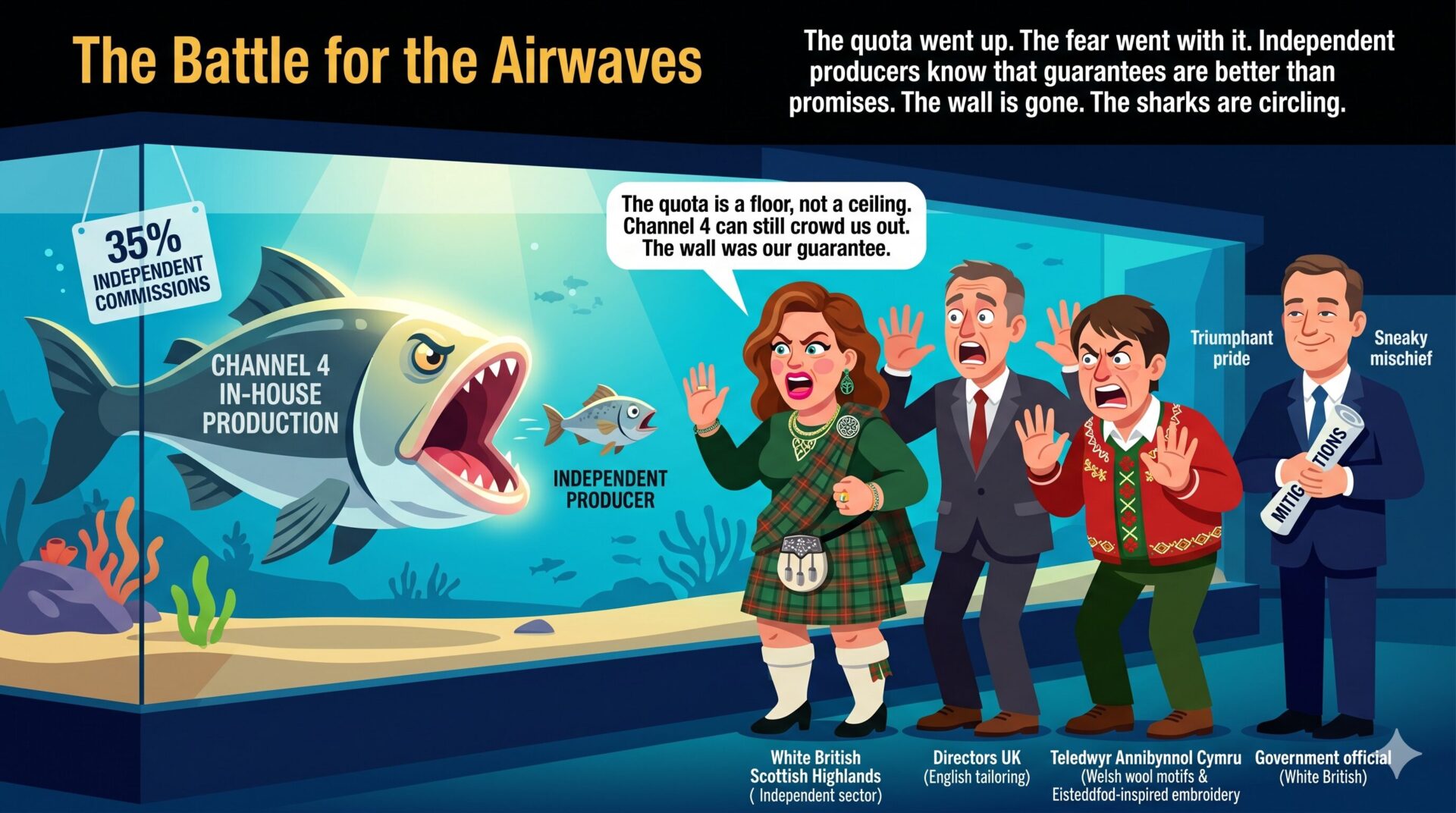
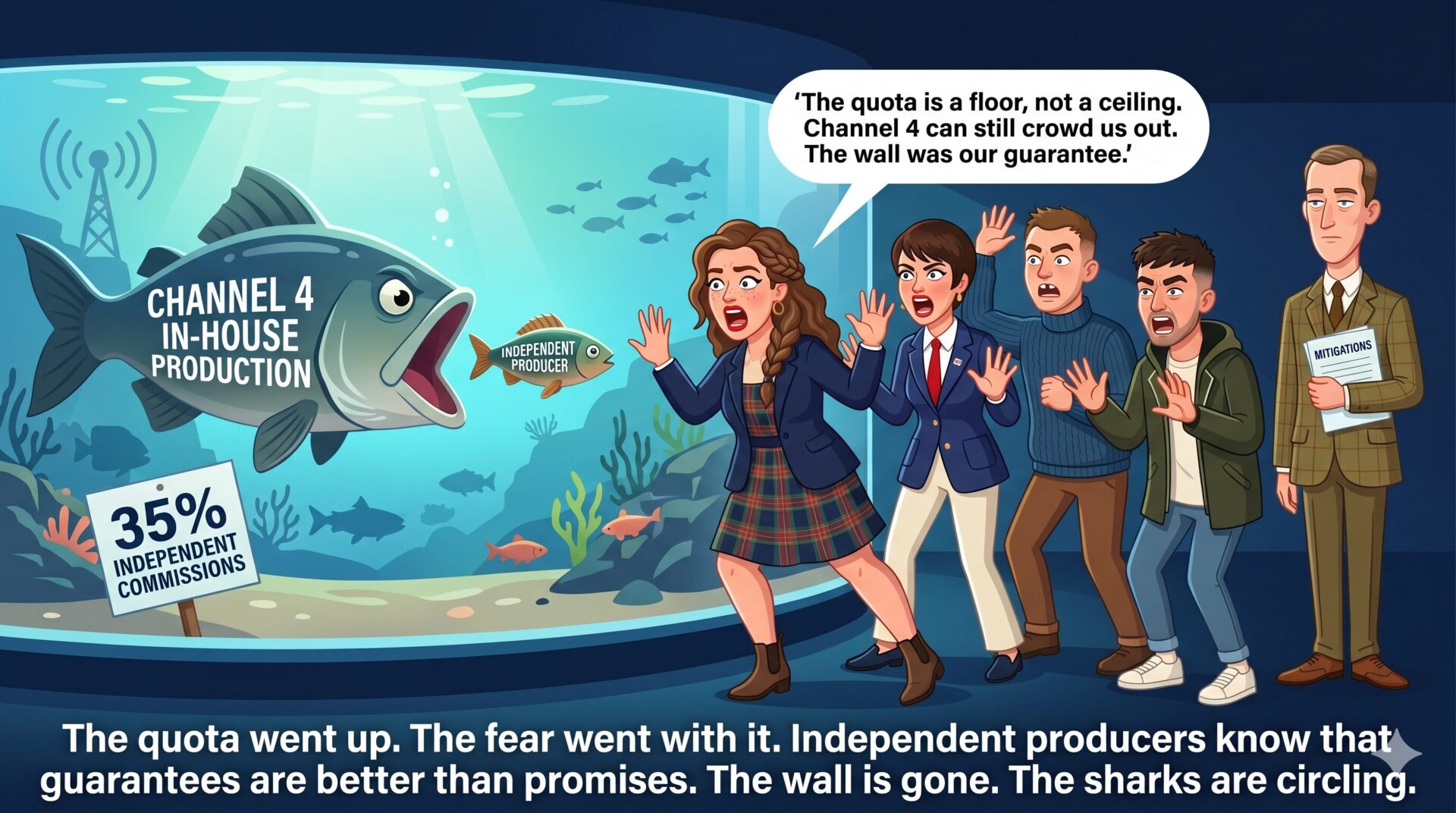
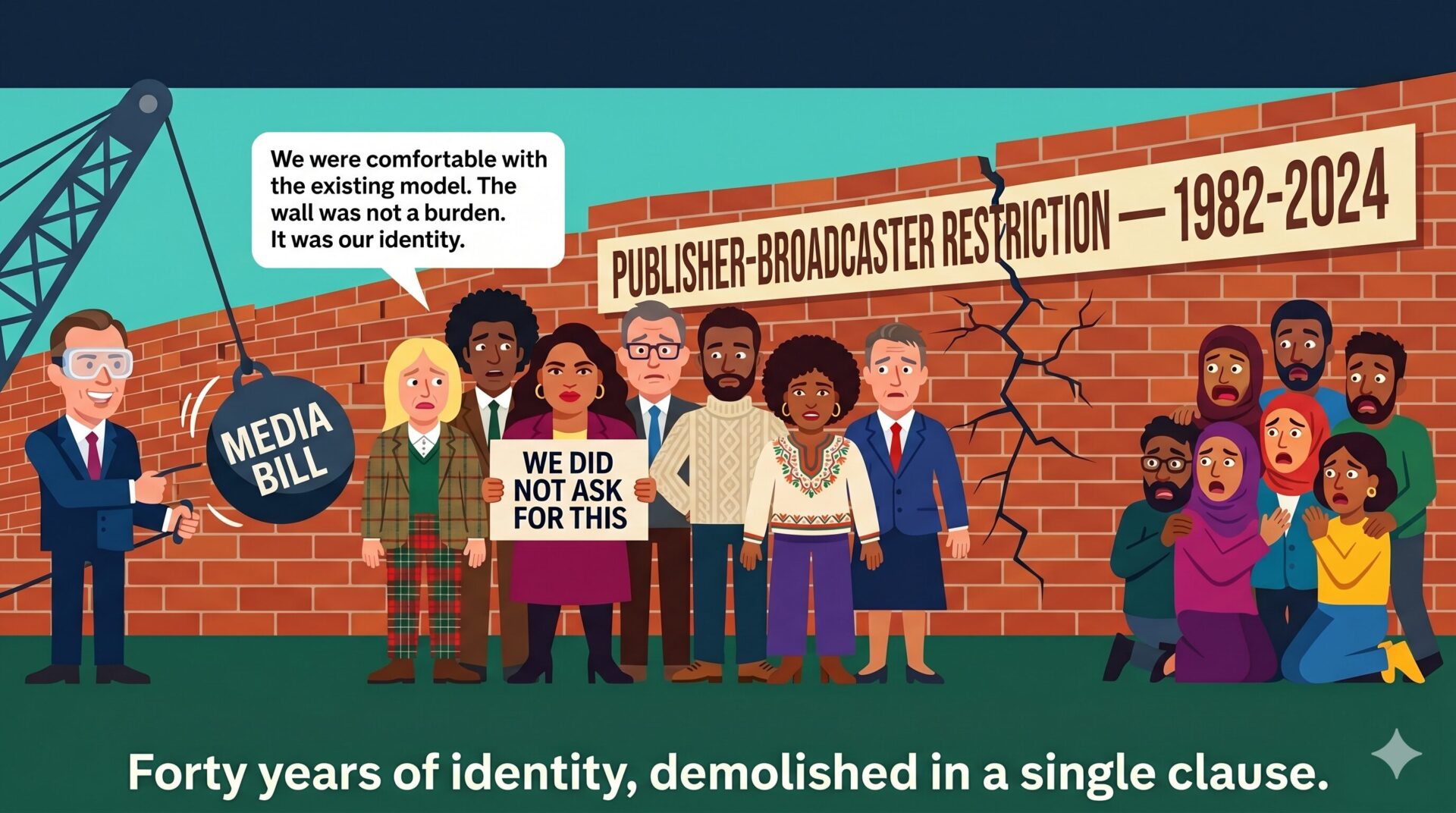
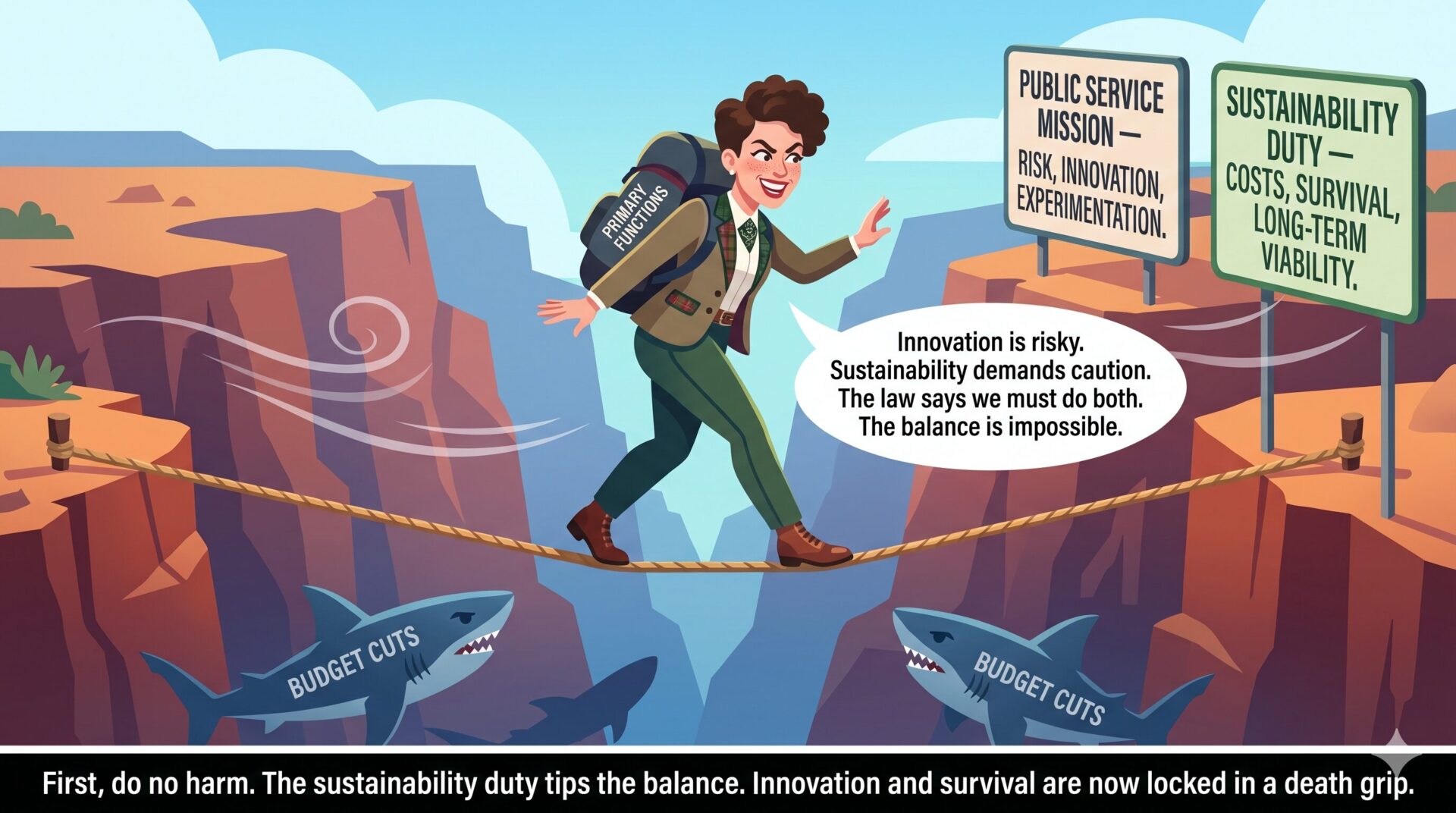
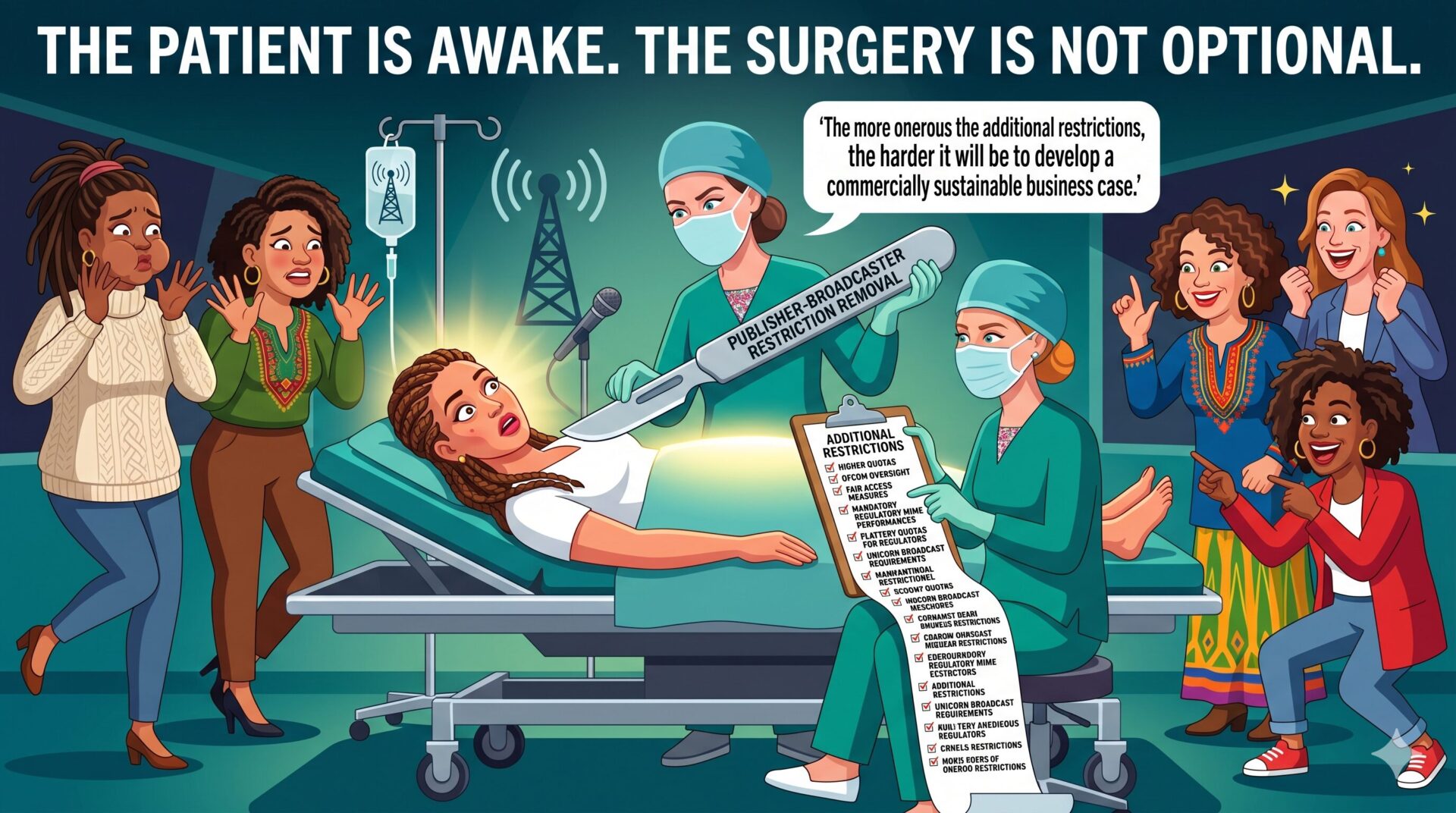
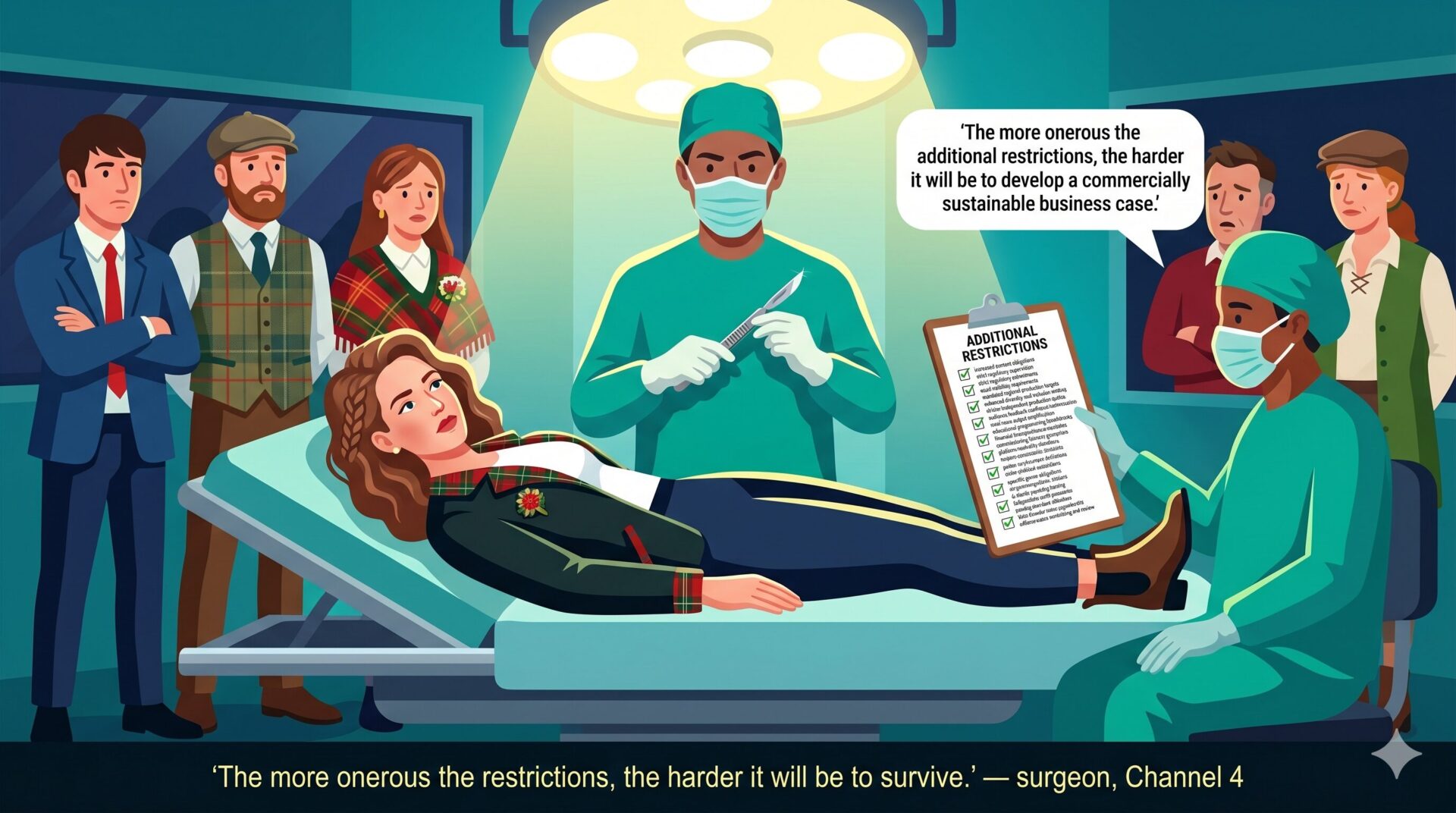
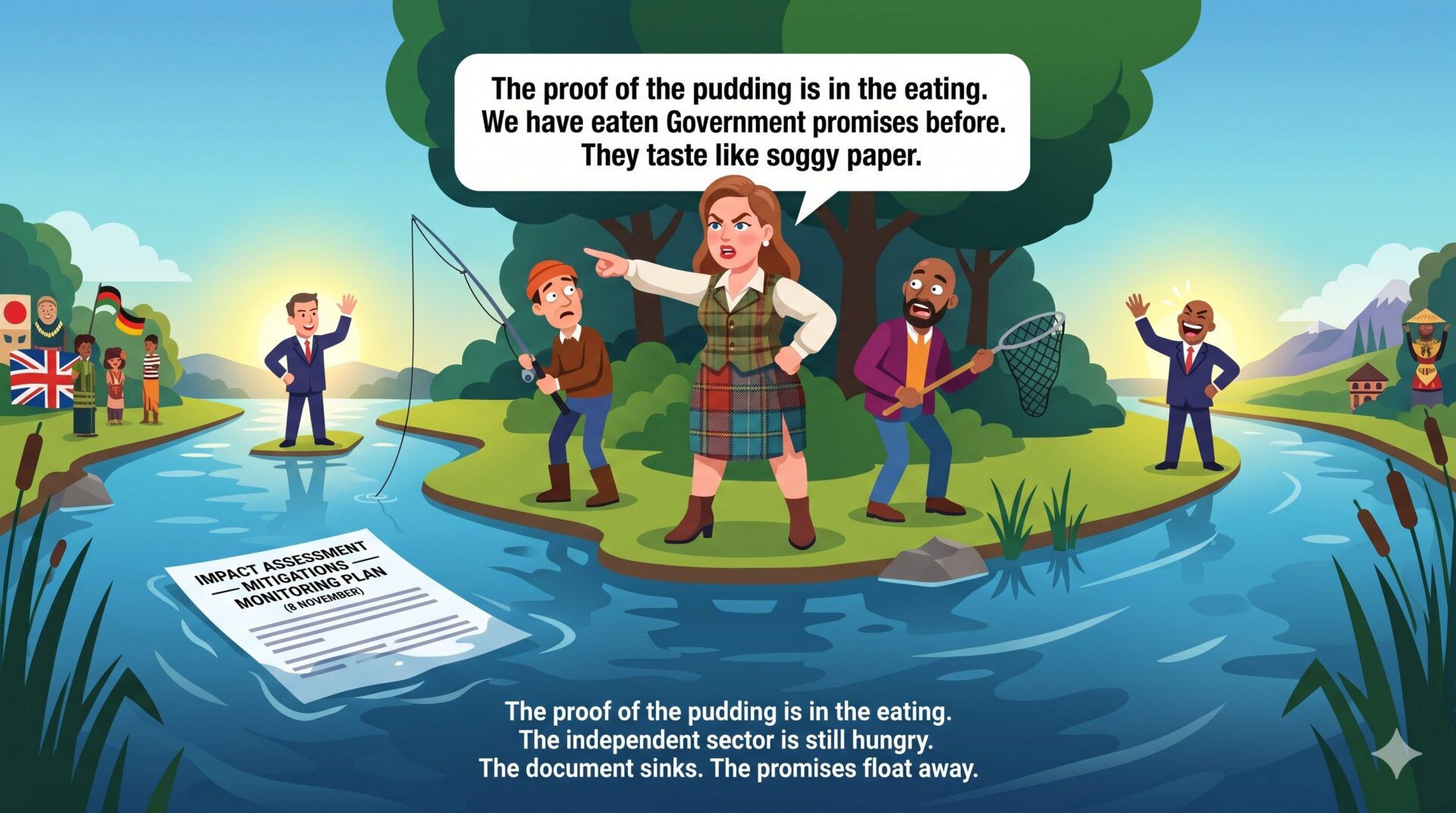
Video on Demand: Closing the Netflix Loophole
The Two-Tier System: When Regulation Becomes a Game of Hide and Seek
“One law for the rich, and another for the poor.” The old saying captures a grievance as old as civilisation itself. The powerful make the rules. The wealthy hire the lawyers. The connected find the loopholes. Everyone else pays the price. In the context of video-on-demand regulation, the Government has written that grievance into law. Tier 1 services — the largest, richest, most powerful streaming platforms — will face the new Video-on-Demand Code. Smaller services will remain under the lighter-touch ODPS rules. One law for Netflix. Another for the football club’s fan channel. The Government calls this proportionate. Netflix calls it confusing. The Committee called it inadequate.
The tiered approach is a choice. It is not forced by technology. It is not demanded by the European Union. It is not required by any treaty or international obligation. The Government chose to regulate only the largest services because they believe it is proportionate. They believe that smaller services should not face the same burdens as global streaming giants. They believe that a football club’s video-on-demand service, showing highlights of last Saturday’s match, should not have to comply with the same rules as Netflix.
There is logic to this. A small service with a tiny audience does not pose the same risks as a global platform with millions of subscribers. The harm that could be caused by a racist rant on a fan channel is real, but it is not the same as the harm that could be caused by a documentary on Netflix viewed by millions. Proportionate regulation means matching the burden to the risk.
But the logic breaks down at the edges. Where is the line drawn? How small is small enough? How large is large enough? The Government has not answered these questions. They have delegated them to Ofcom, which will report on the video-on-demand market and make recommendations. The Secretary of State will then designate which services are Tier 1. The criteria are not in the Bill. They will be decided later, in secret, by officials and Ministers.
Netflix called this confusing. They were being polite. What they meant was: you are creating a two-tier system that will be gamed, litigated, and exploited. Smaller services will try to stay small to avoid regulation. Larger services will argue that they are not large enough. The regulator will be constantly fighting definitional battles. The audience will have no idea which services are regulated and which are not. The confusion will be total.
The Committee agreed. They recommended that the Video-on-Demand Code apply to all services, just as the Broadcasting Code applies to all broadcasters. The Government refused. The tiered approach remains. The confusion remains. The one law for the rich, another for the poor, remains.
The Netflix Objection
Netflix’s objection to the tiered approach was not self-interested. The streaming giant will almost certainly be designated as Tier 1. It has the resources to comply with the new Code. It has the lawyers, the compliance officers, the technical infrastructure. The tiered approach does not threaten Netflix. It threatens Netflix’s competitors. And Netflix believes that competition is healthy.
Benjamin King, Netflix’s Director of Public Policy UK and Ireland, told the Committee that the tiered approach “risks perpetuating the confusion with audiences that greater harmonisation of the regulatory regime for broadcasting and on-demand was meant to resolve.” This is a sophisticated argument. It says: the whole point of this exercise is to give audiences confidence that all content, however they watch it, meets the same standards. A two-tier system undermines that confidence. The audience will not know which services are regulated and which are not. They will not know whether the programme they are watching has been held to the Broadcasting Code or the lighter-touch ODPS rules. The confusion will be worse than before.
Netflix also raised practical concerns. The company has tens of thousands of hours of content in its catalogue. It would need to review all of that content for compliance with the new Code. The cost would be substantial. But Netflix can afford it. The smaller services that just miss the Tier 1 threshold cannot. They would face the same compliance burden without the same resources. The tiered approach protects them from that burden. That is the Government’s defence.
The Committee was not persuaded. They noted that the Broadcasting Code applies to all broadcasters, regardless of size. A tiny community radio station must comply with the same rules as the BBC. A small local television channel must comply with the same rules as ITV. The principle is clear: the rules apply to everyone, because the harm does not discriminate. A racist rant on a small service is still a racist rant. A privacy violation on a niche platform is still a privacy violation.
The Government’s response is that scale matters. A racist rant on a service with ten viewers is not the same as a racist rant on a service with ten million viewers. The potential for harm is different. The burden of regulation should reflect that difference. The tiered approach is proportionate. The one-size-fits-all approach is not.
The Committee disagreed. They recommended a single code for all services. The Government refused. The tiered approach stands. The confusion remains.
The Threshold Problem
The threshold for Tier 1 designation is not in the Bill. The Government has delegated it to Ofcom. The regulator will report on the video-on-demand market, considering audience figures, turnover, catalogue size, and other factors. The Secretary of State will then make regulations designating which services are Tier 1.
This is a recipe for uncertainty. Services will not know whether they are regulated until the Secretary of State decides. They cannot plan. They cannot budget. They cannot hire compliance staff. They must wait. And while they wait, the market may change. A service that is below the threshold today may be above it tomorrow. A service that is designated today may fall below the threshold next year. The regime is static. The market is dynamic. The mismatch is obvious.
The Committee recognised this problem. They recommended that the Government lay a list of services before Parliament no fewer than five sitting days before the statutory designation is made. This would give services some notice. It would allow Parliament to scrutinise the designations. It would introduce a measure of transparency.
The Government accepted this recommendation. Services will now have at least five days’ notice before they are designated. This is better than nothing. It is not enough. Five days is not enough time to prepare for regulation. Five days is not enough time to challenge a designation. Five days is not enough time for Parliament to scrutinise a decision that could have enormous commercial consequences.
The Committee wanted more. They wanted the affirmative procedure for designations. They wanted Parliament to vote. The Government refused. The negative procedure remains. The five-day notice period is a small concession. It does not solve the threshold problem. It does not address the uncertainty. It does not give services the confidence they need to invest and plan.
The Gaming Risk
The tiered approach creates perverse incentives. Services that are close to the threshold will try to stay below it. They will limit their growth. They will restrict their audience. They will avoid investing in new content. They will do whatever it takes to avoid the burden of Tier 1 regulation.
This is not speculation. It is the predictable response to any threshold-based regulation. Companies game the system. They hire lawyers to find the loopholes. They restructure their operations to fall just below the line. The regulator responds by tightening the rules. The companies respond by finding new loopholes. The arms race continues. The only winners are the lawyers.
The Government’s response is that the thresholds will be set high enough to avoid this problem. Only the largest services will be designated. The services that are close to the threshold are not the ones the Government is trying to regulate. They are small. They pose little risk. They can stay under the threshold without causing harm.
This is naive. The threshold will be a number. Services will try to stay under it. Some will succeed. Some will fail. The ones that fail will complain. The ones that succeed will celebrate. The regulator will be constantly fighting definitional battles. The uncertainty will never end.
The Committee’s recommendation for a single code would have eliminated this problem. If all services are regulated, there is no threshold to game. No incentive to stay small. No arms race. The rules apply to everyone. The playing field is level. The Government rejected this approach because they believe it is disproportionate. They are willing to accept the gaming risk. The Committee was not. The Government won.
The Audience Confusion
The audience does not care about tiers. They do not know what ODPS means. They do not understand the difference between the Broadcasting Code and the Video-on-Demand Code. They just want to know that what they are watching is safe, fair, and legal.
The tiered approach undermines this confidence. The audience will not know whether the service they are using is regulated. They will not know whether the programme they are watching has been held to the full Code or the lighter-touch rules. They will not know whether they can complain to Ofcom if something goes wrong.
The Government’s response is that the audience does not need to know. The regulation is behind the scenes. It is about ensuring that services have systems in place to prevent harm. It is not about giving audiences a badge of approval. The audience does not need to know which services are regulated. They just need to be protected.
This is a reasonable argument. It is also incomplete. The audience’s confidence in the regulatory system depends on transparency. If they do not know which services are regulated, they cannot hold those services accountable. If they cannot hold services accountable, the regulation is toothless. The tiered approach creates a two-tier system of accountability. The largest services are visible. The smaller services are invisible. The audience is left in the dark.
The Committee understood this. They recommended a single code for all services. The Government refused. The tiered approach remains. The audience will remain confused. The regulation will remain opaque. The one law for the rich, another for the poor, will remain the law of the land.
The Adage
One law for the rich, and another for the poor. The Government has written this adage into the Media Bill. Tier 1 services — the global streaming giants with billions in revenue — will face the full Video-on-Demand Code. Smaller services will face lighter-touch rules. The rich will be regulated. The poor will be left alone.
The Government calls this proportionate. Netflix calls it confusing. The Committee called it inadequate. The audience will call it invisible. They will not know which services are which. They will not know what standards apply. They will not know whether they are protected.
The old adage is a grievance. It is a complaint about injustice. The Government’s response is that there is no injustice. The rich pose greater risks. The rich should face greater regulation. The poor pose smaller risks. The poor should face lighter burdens. This is not one law for the rich and another for the poor. It is the same principle applied proportionately.
The Committee disagreed. They believed that the principle should apply equally to all. A racist rant on a small service is still a racist rant. A privacy violation on a niche platform is still a privacy violation. The size of the audience does not change the nature of the harm. The regulation should reflect the harm, not the audience.
The Government held firm. The tiered approach remains. One law for Netflix. Another for the football club. The audience will never know the difference. The regulators will fight definitional battles. The lawyers will grow rich. The confusion will continue. And the old adage will still be true.
The Universal Code: Why One Rule Should Bind Them All
“What’s sauce for the goose is sauce for the gander.” The old proverb is a demand for consistency. It says: do not treat similar things differently. Do not apply one standard to the powerful and another to the weak. Do not exempt the small from rules that bind the large. The goose and the gander swim in the same pond. They eat the same food. They face the same predators. They should be protected by the same laws.
The Committee’s demand for a universal Video-on-Demand Code is a demand for goose-and-gander consistency. The Broadcasting Code applies to all broadcasters. A tiny community radio station in the Scottish Highlands must comply with the same rules as BBC Radio 4. A small local television channel in Cornwall must comply with the same rules as ITV. The principle is clear: the rules apply to everyone, because the harm does not discriminate.
The Government’s tiered approach violates this principle. Only the largest VoD services will face the new Code. Smaller services will remain under the lighter-touch ODPS rules. The goose will be regulated. The gander will not. The pond will be uneven. The predators will find the weak spots. The audience will never know which services are safe and which are not.
The Committee’s argument was simple and powerful. “In the same way that the Broadcasting Code applies to all broadcasters,” they wrote, “the Video-on-Demand Code should apply to all Video-on-Demand services.” Anything less, they warned, “undermines the promise of consistent standards.” The Government disagreed. The promise remains broken. The standards remain inconsistent. The goose and the gander swim in different ponds, under different rules, with different levels of protection.
The Principle of Consistency
Consistency is not a aesthetic preference. It is a functional necessity. A regulatory system that applies different rules to different services is a system that cannot be enforced. The services that face lighter rules will have a competitive advantage. The services that face heavier rules will lobby for exemptions. The regulator will spend its time fighting definitional battles. The audience will have no idea what standards apply to what they are watching.
The Broadcasting Code avoids these problems. It applies to all broadcasters. There is no tiering. There is no threshold. There is no debate about whether a service is large enough to warrant regulation. The rules are the rules. Everyone follows them. The regulator enforces them. The audience trusts them.
The Government’s tiered approach abandons this model. It introduces thresholds, definitions, and designations. It creates a two-tier system that will be gamed, litigated, and exploited. It undermines the very consistency that the Broadcasting Code has achieved over decades.
The Committee’s recommendation was not radical. It was conservative. It said: do what has worked. Apply the same principle to VoD that you have applied to broadcasting for generations. Do not reinvent the wheel. Do not create new problems while trying to solve old ones.
The Government’s response was that the VoD market is different. The Broadcasting Code applies to a relatively small number of licensed broadcasters. The VoD market includes thousands of services, many of them tiny, many of them ephemeral. Applying the full Code to all of them would be disproportionate. The burden would fall heaviest on the smallest services. The audience would gain little protection.
The Committee disagreed. They argued that the burden could be scaled. Smaller services could face lighter enforcement. They could be given longer grace periods. They could be offered simplified compliance procedures. The principle of universal application does not require identical treatment. It requires that the same rules apply to everyone, even if the enforcement is tailored.
The Government was not persuaded. The tiered approach remains. The principle of consistency has been sacrificed to the god of proportionality.
The Government’s defence of the tiered approach rests on proportionality. The burden of regulation must be proportional to the risk. A small VoD service with a tiny audience poses less risk than a global streaming giant with millions of subscribers. Therefore, the small service should face less regulation.
This is a reasonable argument. It is also a slippery slope. Once you accept that the level of regulation should vary with the size of the service, you must define the thresholds. You must decide how small is small enough. You must create a system for measuring size. You must update the thresholds as the market changes. You must handle appeals from services that disagree with their designation. You must constantly fight definitional battles.
The Broadcasting Code avoids all of this. It accepts that a community radio station and the BBC face the same rules. It accepts that the burden on the small station is proportionally greater. It accepts that this is the price of consistency. The alternative — a tiered system — is worse.
The Committee agreed with this logic. They noted that the Broadcasting Code has worked for decades. They noted that the tiered approach would create new problems. They noted that the Government had not explained why VoD should be different from broadcasting.
The Government’s response was that VoD is different. The number of services is much larger. The range of content is much wider. The risks are more varied. The Broadcasting Code model cannot be transplanted directly. Some adaptation is necessary.
The Committee accepted that adaptation is necessary. They did not demand a literal transplant. They demanded a universal code. They wanted the same rules to apply to everyone, even if the enforcement was tailored. The Government refused. The tiered approach stands. The proportionality argument has won. The consistency argument has lost.
The Competitive Distortion
The tiered approach distorts competition. Services that are just below the threshold have a competitive advantage over services that are just above it. The former face lighter regulation. The latter face the full Code. The former can operate more cheaply. The latter must invest in compliance.
This distortion is not accidental. It is inherent in any threshold-based system. The Government’s response is that the threshold will be set high enough to minimise the distortion. Only the largest services will be designated. The services that are close to the threshold are not the ones the Government is trying to regulate. They are small. They pose little risk. They can stay under the threshold without causing harm.
This is naive. The threshold will be a number. Services will try to stay under it. Some will succeed. Some will fail. The ones that fail will complain. The ones that succeed will celebrate. The regulator will be constantly fighting definitional battles. The uncertainty will never end.
The Committee’s recommendation for a universal code would have eliminated this distortion. If all services are regulated, there is no threshold to game. No incentive to stay small. No competitive advantage for being just under the line. The rules apply to everyone. The playing field is level.
The Government rejected this approach because they believe it is disproportionate. They are willing to accept the competitive distortion. The Committee was not. The Government won.
The Audience’s Right to Know
The audience has a right to know what standards apply to the content they are watching. The tiered approach undermines this right. The audience will not know whether the service they are using is regulated. They will not know whether the programme they are watching has been held to the full Code or the lighter-touch rules. They will not know whether they can complain to Ofcom if something goes wrong.
The Government’s response is that the audience does not need to know. The regulation is behind the scenes. It is about ensuring that services have systems in place to prevent harm. It is not about giving audiences a badge of approval. The audience does not need to know which services are regulated. They just need to be protected.
This is a reasonable argument. It is also incomplete. The audience’s confidence in the regulatory system depends on transparency. If they do not know which services are regulated, they cannot hold those services accountable. If they cannot hold services accountable, the regulation is toothless.
The Committee’s recommendation for a universal code would have solved this problem. The audience would know that all VoD services are regulated. They would know that the same standards apply everywhere. They would know that they can complain to Ofcom about any service. The transparency would be complete.
The Government rejected this approach. The tiered approach remains. The audience will remain confused. The regulation will remain opaque. The right to know will remain unfulfilled.
The Adage
What’s sauce for the goose is sauce for the gander. The Committee applied this adage to video-on-demand regulation. The Broadcasting Code applies to all broadcasters. The Video-on-Demand Code should apply to all VoD services. The goose and the gander should swim in the same pond, under the same rules, with the same protection.
The Government disagreed. The goose is large. The gander is small. The goose poses greater risks. The gander should face lighter rules. The sauce should be different. The pond should be divided. The goose and the gander should swim separately.
The Committee was not convinced. They argued that the harm does not discriminate. A racist rant on a small service is still a racist rant. A privacy violation on a niche platform is still a privacy violation. The size of the audience does not change the nature of the harm. The regulation should reflect the harm, not the audience.
The Government held firm. The tiered approach remains. The goose gets the full Code. The gander gets lighter-touch rules. The sauce is different. The pond is divided. The audience is confused.
The old adage is a demand for consistency. The Committee made that demand. The Government refused. The goose and the gander swim in different ponds. The sauce is not the same. The promise of consistent standards is broken. The audience will never know what they are watching. The regulators will fight definitional battles. The lawyers will grow rich. And the old adage will still be true, even if the Government pretends otherwise.
The Impartiality Puzzle: When Yesterday’s Documentary Becomes Today’s Controversy
“You cannot step into the same river twice.” Heraclitus knew that everything changes. The water flows. The banks shift. The river you entered yesterday is not the river you enter today. The same is true of documentaries. A programme made five years ago about a political controversy is not the same programme when viewed today. The context has changed. The participants have moved on. The audience brings different knowledge, different assumptions, different expectations. The river is not the same. Neither is the documentary.
The Media Bill’s Video-on-Demand Code includes impartiality requirements. They mirror the Broadcasting Code, with one exception: the obligation to maintain due impartiality in relation to matters of political or industrial controversy, or matters relating to current public policy, has been removed. The Government believes this obligation has “little relevance” in the VoD context. Streaming services do not generally respond to live, rapidly developing events. They offer libraries of content, some of it years old. Requiring due impartiality for a documentary made in 2018 about the Brexit referendum makes little sense. The controversy has moved on. The current public policy is different. The programme is a historical artefact, not a contribution to a live debate.
Netflix warned of a “chilling effect.” The streaming giant argued that the impartiality obligations do not “readily translate from a linear to a VoD environment.” A documentary that was impartial when made could become partial over time, as the political context shifts. A programme about climate change made in 2015 might be scrupulously balanced between scientists and deniers. In 2025, after years of scientific consensus, that same balance would be false. The documentary would be partial, even though nothing in it had changed. The river had changed. The documentary was still the same.
Netflix’s Benjamin King told the Committee that the obligations required “much clearer definition, much clearer parameters as to their application, to be workable for a service such as ours.” He warned that the risk of non-compliance could lead streamers to avoid offering factual content altogether. The chilling effect would be real. Documentaries about controversial subjects would be removed from libraries. New documentaries would not be commissioned. The audience would lose access to important content. The regulator would have achieved the opposite of what it intended.
Ofcom says it will consult on how to adapt the rules. The regulator recognises that the linear model does not fit the VoD environment. It will seek input from stakeholders. It will develop guidance. It will try to strike a balance between protecting audiences and preserving access to factual content. The Committee accepted this approach. They recognised the problem. They did not propose a legislative fix. They trusted Ofcom to find a solution.
The puzzle remains unsolved. The river flows. The documentaries age. The impartiality rules remain unchanged. The chilling effect is real. The consultation has not yet begun.
The Linear Legacy
The Broadcasting Code’s impartiality rules were designed for a linear world. Programmes are scheduled. Audiences watch them at a specific time. The context is known. The controversy is current. The broadcaster has control over what is shown and when. The regulator can assess impartiality based on the programme as broadcast.
In the VoD world, none of this holds. Programmes are not scheduled. They are available on demand. The audience watches them at any time, in any order, in any context. A documentary made ten years ago about a political controversy is still available today. The controversy may have been resolved. The participants may have changed their views. The audience may watch it alongside other programmes that provide different perspectives. Or they may watch it in isolation, with no context at all.
The linear rules do not fit. A documentary that was impartial when made may become partial over time. A documentary that was partial when made may become less partial as the consensus shifts. The regulator cannot assess impartiality based on the programme alone. It must consider the context. But the context is constantly changing. The river flows. The regulator cannot step into the same river twice.
The Government’s solution was to remove the due impartiality obligation for matters of political controversy. This was a recognition that the linear rules do not translate. But it was also an admission that the VoD Code is incomplete. Other impartiality obligations remain. The chilling effect applies to them as well.
Netflix’s warning about the chilling effect was not hypothetical. The company has tens of thousands of hours of content in its library. It would need to review all of that content for compliance with the new rules. The cost would be substantial. But the bigger risk is uncertainty. If the rules are unclear, the safest course is to remove anything that might be problematic. Documentaries about controversial subjects would be the first to go. The audience would lose access. The chilling effect would be real.
Ofcom’s consultation is an attempt to address this uncertainty. The regulator will seek to clarify the rules. It will provide guidance. It will try to reassure streamers that they can continue to offer factual content without fear of enforcement. The Committee trusted Ofcom to find the right balance. The streamers are less confident. They have seen regulators overreach before. They have experienced the gap between guidance and enforcement. They are not reassured.
The River Flows
The impartiality puzzle is not new. It has been discussed in academic circles for years. The shift from linear to on-demand has forced regulators around the world to reconsider their approach. Some have adopted a “contextual” standard, assessing impartiality based on the programme’s position within the library, the availability of alternative perspectives, and the viewer’s ability to access them. Others have retained the linear standard, accepting that it will be imperfectly applied.
The UK has chosen a third path: remove the most problematic obligation and consult on the rest. This is a pragmatic approach. It is also an incomplete one. The remaining obligations still pose problems. A documentary about immigration made in 2010 might have been impartial at the time. The political context has since shifted dramatically. The same documentary might now be seen as partial, even though nothing in it has changed. The regulator must decide whether to enforce against the streamer. The streamer must decide whether to remove the documentary. The audience loses either way.
Ofcom’s consultation will need to address these questions. It will need to define what impartiality means in a VoD context. It will need to decide whether programmes should be assessed as of the date of production or the date of viewing. It will need to consider whether libraries should be treated as a whole, with alternative perspectives available elsewhere, or whether each programme should be assessed in isolation. These are not easy questions. They have no obvious answers. The regulator will struggle. The streamers will wait. The audience will remain in the dark.
The Committee recognised the difficulty. They did not propose a legislative solution. They accepted that Ofcom would need to develop guidance. They trusted the regulator to find the right balance. This was a reasonable position. It was also a deferential one. The Committee could have demanded more clarity. They could have required the Government to define impartiality in the Bill. They did not. They punted the problem to Ofcom. The river flows. The regulator swims. The audience watches from the bank, wondering what happens next.
The Chilling Effect
The chilling effect is real. Netflix’s warning was not hypothetical. The company has already had to make difficult decisions about its library. Programmes that were once available have been removed because of regulatory uncertainty. Others have been retained but flagged with warnings. The cost of compliance is substantial. The risk of non-compliance is even greater.
The impartiality obligations are a particular concern. Documentaries about controversial subjects are inherently risky. They may be impartial when made. They may become partial over time. The streamer cannot predict how the regulator will assess them. The safest course is to avoid them altogether. Commission fewer documentaries. License fewer factual programmes. Remove anything that might be problematic. The library becomes safer. It also becomes poorer. The audience loses access to important content. The public discourse is diminished.
The Government’s response is that the chilling effect is overstated. The VoD Code will be enforced proportionately. Ofcom will focus on the most serious breaches. Minor issues will be addressed through guidance and education. Streamers will not be punished for good-faith efforts to comply.
Netflix is not reassured. The company has experience with regulators around the world. It has seen how guidance can become enforcement. It has watched as regulators have expanded their reach over time. It knows that the safest course is to assume the worst. The chilling effect is not a theoretical concern. It is a practical reality. The streamers will adapt. The audience will lose.
The Committee heard this evidence. They did not dismiss it. They recognised that the impartiality obligations could have unintended consequences. They trusted Ofcom to mitigate those consequences through consultation and guidance. The regulator has not yet begun that work. The streamers are waiting. The audience is watching. The chilling effect is already being felt.
The Adage
You cannot step into the same river twice. The impartiality rules were designed for a linear river. The water flowed in one direction. The broadcaster controlled the current. The regulator stood on the bank and watched. The river of VoD is different. It flows in many directions. It changes course constantly. The streamer does not control the current. The regulator cannot stand on the bank and watch. The water is always different. The rules are always the same.
The puzzle is how to apply old rules to a new river. The Government removed one obligation. Ofcom will consult on the rest. The Committee trusted the regulator. The streamers are nervous. The audience is confused.
The river flows. The documentaries age. The impartiality rules remain unchanged. The chilling effect is real. The consultation has not yet begun. The answers are not clear. The regulator will struggle. The streamers will wait. The audience will lose.
Heraclitus knew that change is constant. He did not know about video-on-demand. He did not know about impartiality rules. But he would have understood the puzzle. You cannot step into the same river twice. You cannot apply the same rules to a changing medium. The river flows. The rules must flow with it. The question is how. The answer is not yet written. The consultation has not yet begun. The water is still moving. The regulator is still swimming. The audience is still watching. And the documentaries are still there, waiting to be judged, in a river that is never the same twice.
The Election Blackout: When Old Programmes Become New Weapons
“A little learning is a dangerous thing.” Alexander Pope’s warning was about shallow knowledge, the kind that makes people overconfident. But it applies equally to the idea of applying broadcast election rules to video-on-demand libraries. A little learning suggests that what works for linear television should work for streaming. A little learning ignores the vast differences between a scheduled broadcast and a library of thousands of programmes. A little learning leads to absurd conclusions. Like demanding that Netflix remove a documentary about the 2015 election every time a new election is called. Like requiring Disney+ to delete an episode of The West Wing because it might influence voters. Like telling Amazon Prime to scrub its library of any content that could be construed as political commentary.
Channel 4 called this “disproportionate complexity and cost.” They were being polite. What they meant was: this is insane. You cannot run a streaming service if you have to review your entire library every time an election is called. You cannot maintain a business if you have to remove content at a moment’s notice, then restore it after the polls close. The cost would be enormous. The complexity would be unmanageable. The disruption would be intolerable. And the benefit to the democratic process would be zero.
The Broadcasting Code requires due impartiality during election periods. Linear broadcasters must ensure that their coverage does not favour one party or candidate over another. This makes sense for live programmes, news bulletins, and current affairs shows. It does not make sense for a documentary about the Iraq War made in 2015. It does not make sense for a drama about a fictional prime minister. It does not make sense for a comedy sketch that mentions a politician by name. The election period rules were designed for a world of scheduled programming. They do not translate to a world of on-demand libraries.
The Government recognised this problem. They removed the due impartiality obligation for matters of political controversy from the VoD Code. But they did not address the election period issue directly. The matter is now with Ofcom’s consultation process. The regulator will decide how, or whether, to apply election rules to streaming services. Channel 4 has warned against a literal transplant. The independent producers are watching nervously. The streamers are waiting for clarity. The election will come. The rules are not yet written.
The Linear Logic
The election period rules exist for good reason. Broadcasters have enormous power to influence voters. A news bulletin that favours one party over another can swing an election. A current affairs programme that gives disproportionate airtime to one candidate can distort the democratic process. The rules ensure that broadcasters remain impartial. They do not have to be neutral, but they must be fair. They must give due weight to different perspectives. They must not tip the scales.
This logic depends on the linear model. The broadcaster controls the schedule. The audience watches at a specific time. The regulator can assess the programme in context. The rules can be enforced before the damage is done. A broadcaster that breaches the rules during an election can be sanctioned quickly. The deterrent effect is real.
None of this applies to video-on-demand. The streamer does not control when the audience watches. A documentary about the 2015 election could be viewed during the 2024 campaign. The streamer cannot predict when this will happen. It cannot intervene in real time. It can only remove the content entirely, or leave it up and hope for the best.
The regulator faces a similar problem. It cannot assess the programme in context because the context is unknown. A documentary that was impartial when made might be partial if viewed during an election. The same documentary might be fine the day after the election. The regulator cannot predict how the programme will be used. It can only enforce after the fact, when the damage has already been done.
The obvious solution is to require streamers to remove potentially problematic content during election periods. This is what Channel 4 called “disproportionate complexity and cost.” The broadcaster would need to review its entire library before every election. It would need to identify any programme that could be seen as political commentary. It would need to remove those programmes for the duration of the campaign. It would need to restore them afterward. The cost would be enormous. The complexity would be unmanageable. The disruption would be constant.
Channel 4’s warning was not hyperbole. The broadcaster has thousands of hours of content in its library. Much of it is not political. Some of it is. Distinguishing between the two would require human judgment. Algorithms could help, but they would make mistakes. The review process would take weeks. The election period would be over before the review was complete. The exercise would be futile.
The Archive Problem
The archive problem is even worse. Channel 4 has programmes in its library that were made decades ago. Some of them mention politicians who are no longer alive. Some of them discuss issues that are no longer relevant. Some of them are historical artefacts, not contributions to current debates. Applying election period rules to these programmes is absurd. A documentary about the miners’ strike made in 1985 does not become partial just because a new election is called. The context has changed. The programme is a document of its time, not a weapon in a current campaign.
But the law does not recognise this distinction. The Broadcasting Code applies to all programmes, regardless of age. A documentary about the 1987 election is subject to the same rules as a news bulletin about the 2024 campaign. The regulator could, in theory, require its removal during an election period. The absurdity is obvious. The risk is real.
Channel 4’s concern about “disproportionate complexity and cost” was a concern about the archive. The broadcaster cannot review its entire library before every election. It cannot afford to employ the army of compliance officers that would be required. It cannot accept the disruption to its service. The only solution is to ignore the rules and hope for the best. This is not a sustainable strategy.
The independent producers are watching nervously. They do not want their programmes removed from libraries. They do not want to lose revenue. They do not want to see their work disappear because of a regulatory technicality. They want clarity. They want rules that make sense for the VoD environment. They want the Government to think before it regulates.
The matter is now with Ofcom. The regulator will consult. It will hear from broadcasters, streamers, producers, and audience groups. It will try to develop rules that are proportionate and workable. It will struggle. The archive problem has no easy solution. The election period rules were designed for a world that no longer exists. Adapting them to the VoD environment will require creativity, compromise, and a willingness to accept that some rules cannot be transplanted.
The International Dimension
Other countries have faced similar problems. Australia requires streaming services to maintain impartiality during election periods. The rules have been controversial. Streamers have complained about the cost. Regulators have struggled to enforce. The results have been mixed.
Canada has taken a different approach. Election period rules apply only to live or near-live content. Archived programmes are exempt. The streamer does not have to review its entire library. It only has to worry about new content added during the campaign. The burden is lower. The logic is clearer. The rules are more workable.
The UK could learn from these examples. A narrow exemption for archived content would solve the archive problem. Programmes made more than a year ago would be exempt. Programmes that have been available continuously for a long period would be presumed compliant. The streamer would not have to review its entire library. It would only have to focus on new content.
Channel 4 would welcome such an approach. The broadcaster does not want to be exempt from the rules entirely. It accepts that election periods require special measures. It simply wants those measures to be proportionate. It wants to avoid the “disproportionate complexity and cost” of reviewing its entire library every few years.
Ofcom’s consultation will need to consider these international examples. The regulator will hear from stakeholders. It will weigh the costs and benefits. It will try to strike a balance. The outcome is uncertain. The election will come. The rules are not yet written.
The Adage
A little learning is a dangerous thing. The Government has a little learning about election period rules. It knows that the Broadcasting Code requires impartiality. It knows that this makes sense for linear television. It assumes that the same rules can be applied to video-on-demand. It is wrong.
The little learning leads to absurd conclusions. Requiring streamers to review their entire libraries before every election. Requiring them to remove decades-old documentaries. Requiring them to police content that no reasonable person would consider political. The cost would be enormous. The complexity would be unmanageable. The benefit would be zero.
Channel 4 called this “disproportionate complexity and cost.” The Committee heard the warning. They did not dismiss it. They referred the matter to Ofcom. The regulator will consult. It will try to find a solution. The election will come. The rules are not yet written.
Pope knew that shallow knowledge leads to error. The Government’s shallow knowledge of election period rules has led to a problem. The problem is now with Ofcom. The regulator will drink deep from the well of expertise. It will learn from international examples. It will consult with stakeholders. It will try to write rules that work.
The election will come. The rules will be written. The streamers will comply. The audience will watch. The documentaries will remain in the libraries, safe from removal, safe from censorship, safe from the absurdity of applying linear rules to a nonlinear world. The little learning will be replaced by deep knowledge. The danger will pass. The election will be fought. And the archive will survive, intact, waiting for the next viewer, the next context, the next election.
The Global Complaints Machine: When the World Knocks on Ofcom’s Door
“Hell hath no fury like a bureaucrat scorned.” The old misquotation of Congreve usually refers to matters of the heart. But it could just as easily describe the relationship between global streaming services and national regulators. Netflix does not fear Ofcom. It fears the thousands of potential complainants around the world who might use Ofcom as a weapon. It fears the activist groups who will trawl its library for anything that might offend. It fears the competitors who will file frivolous complaints to impose costs. It fears the offended individuals who will seek revenge for perceived slights. It fears the global complaints machine that the fairness and privacy code will unleash.
The Media Bill’s fairness and privacy code will allow anyone, anywhere, to complain to Ofcom. Not just UK residents. Not just citizens. Anyone. A viewer in Australia who watches a documentary about British politics. A subscriber in America who finds a programme offensive. A troll in Russia who wants to cause trouble. All of them will be able to file a complaint. All of them will expect Ofcom to investigate. All of them will demand a response.
Netflix called this “complaint tourism.” The phrase is deliberately provocative. It suggests that Ofcom will become a destination for those who cannot get satisfaction elsewhere. A complainant who fails in their own country will try the UK. A complainant who wants to harass a streaming service will file multiple complaints across multiple jurisdictions. A complainant who enjoys the attention will become a serial filer. The regulator will be overwhelmed. The streaming services will be buried. The system will collapse.
Ofcom’s response is robust. The regulator does not care where the complaint comes from. It cares about whether UK audiences might be harmed. A programme that is available in the UK is subject to UK regulation. It does not matter who complains about it. The only question is whether the programme breaches the code. The origin of the complaint is irrelevant.
This is a principled position. It is also a practical nightmare. Ofcom will receive complaints from around the world. It will need to investigate each one. It will need to determine whether the programme is available in the UK. It will need to assess whether the complaint has merit. It will need to respond to the complainant. The volume could be enormous. The cost could be staggering. The resources could be stretched to breaking point.
The Committee recognised this risk. They recommended that the Government monitor the extent to which the fairness and privacy code requires Ofcom to manage complaints from abroad. They recommended that the Government resource Ofcom accordingly. The Government accepted this recommendation in principle. The resources have not yet been allocated. The complaints have not yet begun. The test is still to come.
The Complaint Tourism Phenomenon
Complaint tourism is not hypothetical. It has happened before. In other jurisdictions, regulators have been flooded with complaints from around the world. The phenomenon is well documented. Activists identify a regulator with a broad remit and a low threshold for intervention. They file complaints strategically, often in coordination. They aim to impose costs on the target, regardless of the merit of the complaint. The regulator becomes a tool of harassment. The system is gamed.
Netflix fears this. The company has enemies. It has competitors who would love to see it waste time and money on frivolous complaints. It has activists who disagree with its content choices. It has individuals who feel personally wronged by a documentary or a drama. All of them could use Ofcom as a weapon. All of them could file complaints. All of them could demand investigations.
The company’s concerns are not entirely self-serving. A flood of frivolous complaints would harm the regulatory system. Ofcom would be distracted from its core mission. Genuine complaints would be delayed. The regulator’s reputation would suffer. The streaming services would be burdened. The audience would lose.
Ofcom’s response is that it will filter out frivolous complaints. The regulator has experience in this area. It receives thousands of complaints each year. It knows how to identify those with merit. It will not be overwhelmed. The system will cope.
Netflix is not reassured. The company has seen other regulators overwhelmed. It has watched as complaint volumes have skyrocketed. It knows that filtering takes time. It knows that every complaint, however frivolous, requires some level of assessment. It knows that the cost of that assessment will be passed on to the regulated industry. The streamers will pay. The audience will pay. The only winners will be the complainants.
The Committee’s recommendation for monitoring was a recognition of this risk. They did not demand that the Government exclude foreign complaints. They accepted Ofcom’s principle that harm to UK audiences is the relevant test. But they wanted to track the volume. They wanted to ensure that Ofcom had the resources to cope. They wanted to avoid a situation where the regulator was overwhelmed.
The Government accepted this recommendation. The monitoring will happen. The resources will be allocated if needed. The test is still to come. The complaints have not yet begun.
The Resource Implications
Ofcom is not a large regulator. It has a broad remit and a limited budget. The Media Bill adds new responsibilities: video-on-demand regulation, radio selection services, prominence disputes, and now the fairness and privacy code. Each new responsibility stretches the regulator further. Each new responsibility requires resources. Each new responsibility competes for the same finite pot of money.
The fairness and privacy code is particularly resource-intensive. Each complaint requires investigation. Each investigation requires skilled staff. Each case requires legal analysis. The cost adds up quickly. If the volume of foreign complaints is high, the cost could be staggering.
The Government’s impact assessment acknowledges this risk. It notes that Ofcom will be able to levy fees on the industry to cover the cost of its regulatory activity. The streamers will pay. The cost will be passed on to subscribers. The audience will bear the burden.
Netflix is not opposed to paying its fair share. The company accepts that regulation costs money. It accepts that it should contribute. What it fears is unpredictable costs. A flood of frivolous complaints could impose costs that cannot be anticipated or budgeted. The fees could skyrocket. The business case could be undermined.
The Committee’s recommendation for monitoring was designed to address this concern. If the volume of foreign complaints is high, the Government should provide additional resources. The industry should not bear the full cost of a problem it did not create. The complainants should not be allowed to impose costs without limit.
The Government accepted this recommendation in principle. The monitoring will happen. The resources will be allocated if needed. The principle is clear. The practice is untested. The complaints have not yet begun.
The Free Speech Dimension
There is a free speech dimension to this issue that is easy to miss. The fairness and privacy code is designed to protect individuals from unjust or unfair treatment. This is a worthy goal. But it can also be used to silence legitimate expression. A complainant who disagrees with a documentary’s political stance could file a complaint alleging unfair treatment. A complainant who dislikes a drama’s portrayal of a particular group could allege bias. The code could become a tool of censorship, wielded by those who want to suppress speech they dislike.
Ofcom is aware of this risk. The regulator has experience balancing free speech with other rights. It knows how to distinguish between legitimate complaints and attempts at censorship. It will not be fooled by bad-faith complainants. The system will protect free speech.
Netflix is less confident. The company has seen how complaints can be weaponised. It has watched as activists have used regulatory processes to harass content creators. It knows that even unsuccessful complaints impose costs. The chilling effect is real. The streamers will think twice before offering controversial content. The audience will lose.
The Committee did not address this dimension directly. They focused on the resource implications. They trusted Ofcom to balance the competing interests. The regulator will have to navigate these waters carefully. The free speech dimension cannot be ignored. The complaints will come. The decisions will be made. The precedents will be set.
The Adage
Hell hath no fury like a bureaucrat scorned. The misquotation captures something essential about the relationship between regulators and the regulated. The regulator has power. The regulated fear that power. The complaints mechanism is a channel for that power. It can be used for good or ill. It can protect the vulnerable or harass the powerful. The difference depends on how it is designed and enforced.
Ofcom’s robust response is a statement of intent. The regulator will not be deterred by complaint tourism. It will investigate complaints from anywhere. It will focus on harm to UK audiences. It will filter out frivolous complaints. The system will work.
Netflix fears that the system will not work. The company has seen complaint tourism before. It knows the damage that can be done. It worries about the cost. It worries about the chilling effect. It worries about the unintended consequences.
The Committee’s recommendation for monitoring was a compromise. They did not exclude foreign complaints. They did not demand that Ofcom ignore them. They asked for data. They asked for resources. They asked for accountability.
The Government accepted. The monitoring will happen. The resources will be allocated if needed. The complaints will come. The system will be tested.
Congreve wrote about love. The misquotation is about fury. The fairness and privacy code will generate both. Love for the principle of protecting individuals from harm. Fury at the cost of that protection. The regulator will be caught in the middle. The complaints will flow. The resources will be stretched. The test will come. And the adage will be proven true, one way or another.
The Five Sitting Days: A Small Victory for Transparency in a Sea of Secrecy
“Sunlight is the best disinfectant.” Justice Louis Brandeis, the great American jurist, understood something essential about power. It thrives in darkness. It wilts in light. The powerful prefer to operate behind closed doors, away from scrutiny, away from accountability. The powerless depend on transparency to see what is being done in their name. Sunlight is not a guarantee of good behaviour. But it is a prerequisite. Without it, the public cannot judge. Without it, the regulators cannot be held to account. Without it, the powerful can do as they please.
The Committee’s demand for five sitting days’ notice before the designation of Tier 1 video-on-demand services is a small victory for sunlight. It is not a large victory. It is not a transformative victory. It is a modest, incremental, almost technical change. But it matters. It matters because the Government wanted no notice at all. It matters because the Government preferred to designate services in secret, informing Parliament after the fact, if at all. It matters because the Committee forced the Government to acknowledge that transparency matters, even when it is inconvenient.
The original Bill said nothing about notice. The Secretary of State could designate Tier 1 services at any time, without warning, without consultation, without parliamentary scrutiny. The list would be published. The designations would take effect. The services would be regulated. Parliament would be informed, but only after the fact. There would be no debate. There would be no vote. There would be no opportunity for affected services to prepare.
The Committee found this unacceptable. They noted that the Government had argued that transparency was important. They noted that the Government had promised to publish a list of proposed designations. They noted that the Government had relied on this publication as the basis for parliamentary scrutiny. But the Bill provided no time limit. The Government could publish the list and designate the services on the same day. Parliament would have no opportunity to scrutinise. The affected services would have no opportunity to prepare. The transparency would be an illusion.
The Committee’s solution was simple: the list must be laid before Parliament at least five sitting days before the designation takes effect. Five days. Not a week. Not a month. Five parliamentary working days. Enough time for Members to read the list. Enough time for questions to be asked. Enough time for a debate to be scheduled if necessary. Not enough time to block the designation if the Government is determined. But enough time to shine a little light.
The Government accepted this recommendation. The five sitting days are now in the Bill. The sunlight has been let in. A little.
The Government’s Resistance
The Government did not want to give notice. Their resistance was not explicit. They did not argue against transparency directly. They argued that the affirmative procedure was unnecessary. They argued that Ofcom’s advice provided sufficient scrutiny. They argued that the negative procedure allowed Parliament to object. But they did not argue for zero notice. They simply did not include any notice requirement in the original Bill. The omission was telling.
The Committee asked the Government why there was no time restriction. The Department’s response was that the publication of the list would provide “maximum transparency for providers” and allow for “appropriate scrutiny” by Parliament. They did not explain why the scrutiny could not happen before the designation took effect. They did not explain why providers should not have time to prepare. They did not explain why Parliament should be informed after the fact rather than before.
The absence of a notice requirement was not an oversight. It was a choice. The Government preferred to act first and inform later. They preferred to present Parliament with a fait accompli. They preferred to minimise the opportunity for debate, for questions, for delay. The Committee’s five-day requirement frustrates that preference. It forces the Government to wait. It forces the Government to give notice. It forces the Government to accept a small measure of accountability.
The Government’s acceptance of the recommendation was gracious. They did not fight it. They did not argue that five days was too long. They did not propose a shorter period. They simply agreed. The five sitting days are now in the Bill. The sunlight has been let in. A little.
The Transparency Principle
The five-day requirement is not just about video-on-demand services. It is about a principle. The principle is that regulation of speech requires transparency. The Government is designating which services will be subject to the Video-on-Demand Code. Those services will face new rules, new obligations, new enforcement. They will be required to monitor their content, to remove harmful material, to comply with Ofcom’s investigations. The designation is not a minor administrative step. It is a significant regulatory intervention.
The Government argued that the designation is administrative. They argued that the criteria will be clear. They argued that services will know whether they are likely to be designated. They argued that the five-day notice period is unnecessary. The Committee disagreed. They noted that the criteria are not in the Bill. They noted that Ofcom will advise, but the Secretary of State will decide. They noted that services will not know for certain whether they are designated until the list is published. The five-day notice period gives them time to prepare. It gives Parliament time to scrutinise. It gives the public time to understand.
The transparency principle applies beyond the video-on-demand context. The Committee applied the same logic to television selection services and radio selection services. They demanded the affirmative procedure for designations. The Government refused. But they won the five-day notice period for video-on-demand. It is a small victory. It is not a precedent. But it is a recognition that sunlight matters.
The Practical Impact
What does five sitting days mean in practice? It means that the Government cannot designate Tier 1 services on a Friday and expect the designations to take effect on Monday. It must lay the list before Parliament. Parliament must sit for at least five days. Members must have the opportunity to read the list, to ask questions, to raise concerns. The Government must wait.
Five days is not a long time. It will not delay the implementation of the regime significantly. It will not give affected services months to prepare. It will not allow Parliament to block designations that the Government is determined to make. But it will provide a window. A window for scrutiny. A window for accountability. A window for sunlight.
The practical impact is likely to be modest. Most designations will be uncontroversial. Netflix will be designated. Amazon Prime will be designated. Disney+ will be designated. No one will object. The five-day notice period will pass without comment. The designations will take effect. The sunlight will have done its work quietly, invisibly, effectively.
But the five-day period will also apply to controversial designations. A service that is close to the threshold. A service that the Government wants to regulate but that has powerful friends. A service that the Committee believes should not be regulated. In those cases, the five-day period will matter. It will give Parliament time to debate. It will give affected services time to lobby. It will give the public time to understand. The sunlight will be needed. The five-day window will be used.
The Committee’s victory is not about the routine cases. It is about the edge cases. It is about the moments when the Government might be tempted to act without scrutiny. It is about the principle that transparency matters, especially when it is inconvenient.
The Unfinished Business
The five-day notice period is a victory. It is not the victory the Committee wanted. They wanted the affirmative procedure. They wanted Parliament to vote on designations. They wanted a real check on the Government’s power. They got five days’ notice. It is better than nothing. It is not enough.
The affirmative procedure would have required a debate and a vote. Parliament could have rejected a designation. The Government would have had to defend its decision. The affected services would have had a real opportunity to influence the outcome. The five-day notice period provides none of these. It provides information. It does not provide accountability.
The Committee’s frustration was evident. They had argued for the affirmative procedure. They had been refused. The five-day notice period was a consolation prize. They accepted it because it was better than nothing. They did not celebrate it. They noted it. They moved on.
The unfinished business remains. The Government still has too much power to designate services without parliamentary approval. The negative procedure still applies. The five-day notice period is a small check. It is not a sufficient check. The Committee will continue to argue for more. The Government will continue to resist. The battle is not over. The sunlight has been let in. But the room is still dark.
The Adage
Sunlight is the best disinfectant. The Committee applied this adage to the designation of Tier 1 services. They demanded transparency. They demanded notice. They demanded that Parliament be given time to scrutinise before the designation took effect. The Government resisted. The Committee persisted. The five sitting days are now in the Bill.
The sunlight is not bright. Five days is not a long time. The negative procedure still applies. Parliament cannot vote. The Government can still act without approval. But the sunlight is there. A little. Enough to see. Enough to ask questions. Enough to raise concerns.
Brandeis knew that sunlight is not a cure-all. It does not prevent all wrongdoing. It does not guarantee good behaviour. But it makes wrongdoing harder. It makes bad behaviour more visible. It creates accountability. The five-day notice period does the same. It makes designation visible. It creates a window for accountability. It is not enough. But it is something.
The Committee’s victory is small. It is not the victory they wanted. But it is a victory. The sunlight has been let in. A little. The room is still dark. But there is a crack in the door. The light is seeping through. The disinfectant is working. Slowly. Imperfectly. But working.
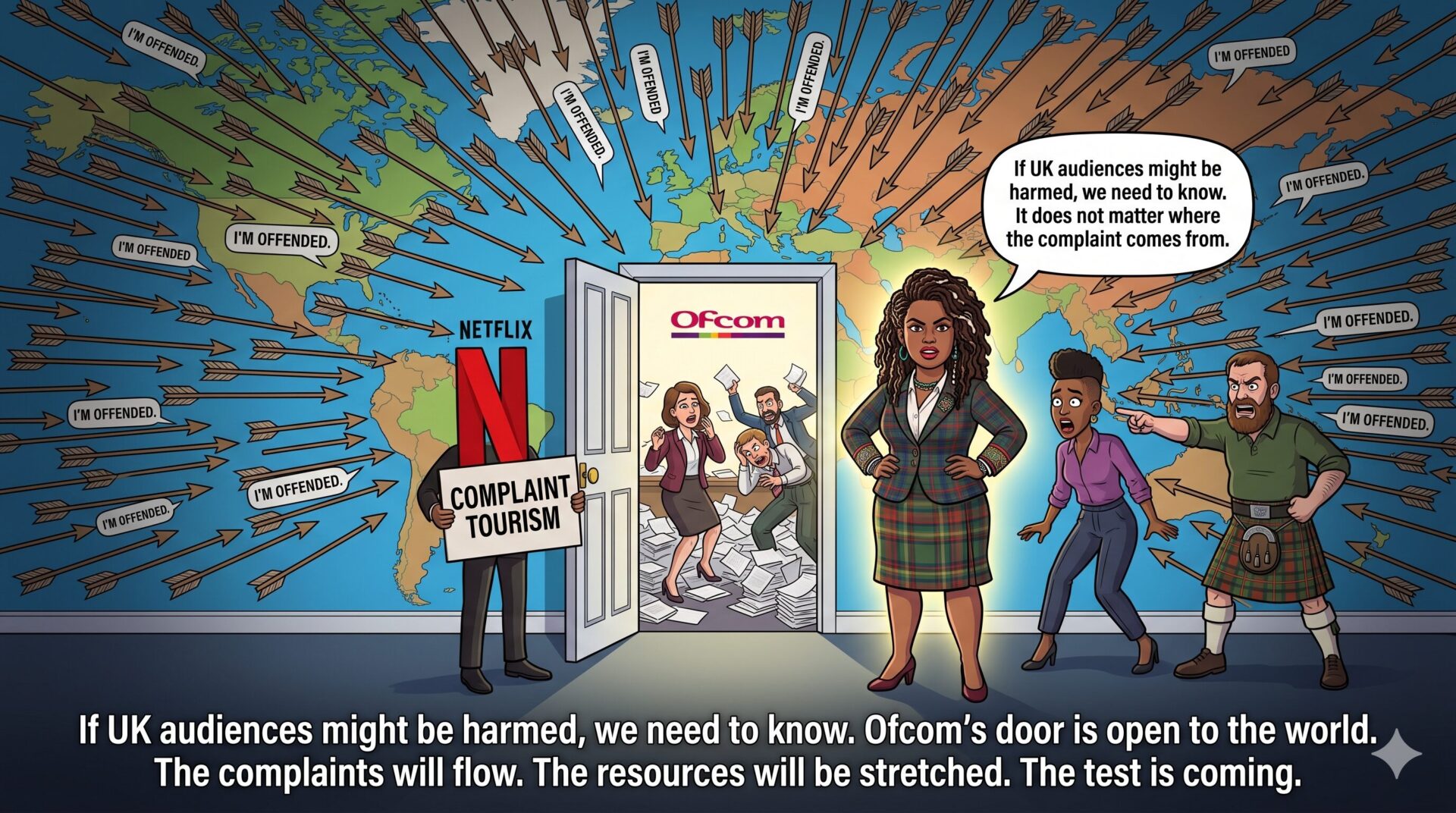
Commercial Radio Deregulation: Less Isn’t Always More
The Local News Lifeline: What Survives When Everything Else Is Swept Away
“All politics is local.” The old slogan, attributed to Tip O’Neill, contains a deeper truth. What matters to people is not the grand sweep of history. It is the pothole at the end of the street. It is the school that needs a new roof. It is the factory that just closed. It is the voice on the radio telling you that the floods are coming, that the road is closed, that the council meeting last night decided something that affects your life. All politics is local. And all local radio, at its best, is politics in its most essential form.
The Media Bill drops requirements for local music and specific age-targeting. Commercial radio stations will no longer be forced to play local artists or target particular age groups. These requirements, developed in the 1990s, were designed for a world of scarcity. There were only a few radio stations. Each had to serve a broad range of listeners. The requirements ensured that no one was left out. The world has changed. There are hundreds of stations, thousands of podcasts, millions of playlists. The scarcity is gone. The requirements, the Government argues, can go with it.
But local news survives. Not all of it. Not in the form it once took. But the obligation to provide locally-gathered news remains. A commercial radio station in Carlisle cannot fill its schedule with networked programming from London. It must still send journalists to council meetings, to court hearings, to the scene of the story. It must still tell its listeners what is happening in their community. The news requirement is the last line of defence against the homogenisation of local radio.
Ofcom asked for clearer guidance on enforcement. The regulator was worried. The Bill’s provisions on local news were vague. What counts as locally-gathered news? How much is enough? How does Ofcom measure compliance? The regulator wanted the Government to provide answers. The Government responded with technical changes to the Bill’s face. The Explanatory Notes were updated. The definition was tightened. Ofcom’s role was clarified.
The local news requirement survived. Not because the Government loves local radio. Not because the commercial broadcasters demanded it. But because the alternative was unthinkable. A Britain without local news is a Britain where the powerful are never held to account. A Britain where the council can meet in secret. A Britain where the factory can close without explanation. A Britain where the flood warnings come too late. The Government was not willing to go that far. The local news requirement remains. For now.
The Deregulation Consensus
The deregulation of commercial radio has been coming for years. The 2017 consultation set the direction. The industry demanded it. The regulators supported it. The Government legislated for it. The consensus was remarkable. Broadcasters, regulators, and Ministers all agreed that the old rules were outdated. The local music requirements were absurd in an era of Spotify. The age-targeting rules were unenforceable. The location of studios was irrelevant when content could be produced anywhere.
The only disagreement was about local news. Everyone agreed that local news matters. Everyone agreed that it should be protected. Everyone agreed that the old rules were not working. The question was how to protect local news without the cumbersome apparatus of the old regime. The Bill provides an answer: a narrower duty focused on local news and information, enforced by Ofcom, with clearer guidance and technical changes.
The Committee supported this approach. They noted that local news is what audiences value most about local radio. They noted that local radio reaches audiences that other news providers struggle to reach. They noted that the Government had committed to providing greater legislative clarity. They asked for clearer guidance on enforcement. The Government provided it. The local news requirement survived. The rest of the deregulatory package passed without significant opposition.
The consensus on local news is fragile. The broadcasters would prefer no requirements at all. They would prefer to be left alone to serve their audiences as they see fit. They accept the local news requirement because they have to. They will comply with it because the law requires it. They will not go beyond it. The minimum will become the maximum. The local news that survives will be the local news that the law demands. Nothing more.
Ofcom’s role will be crucial. The regulator must enforce the requirement. It must ensure that stations are actually gathering news locally. It must investigate complaints. It must impose sanctions. The Committee asked for clearer guidance. The Government provided technical changes. The guidance is now on the face of the Bill. Ofcom’s job is clearer. It is not easier. The regulator will still have to make difficult judgments. It will still have to balance competing priorities. It will still have to fight for resources.
The Local Music Graveyard
The removal of the local music requirement is a loss. It is not a loss that many will mourn. The requirement was often honoured in the breach. Stations played local artists because they wanted to, not because the law forced them. The ones that did not want to play local artists found ways around the rules. The requirement was weak. The enforcement was weaker. Its removal changes little.
But the symbolism matters. The local music requirement was a recognition that commercial radio has a role beyond entertainment. It can nurture talent. It can provide a platform for voices that would otherwise go unheard. It can connect communities through shared cultural experiences. The removal of the requirement says that this role is optional. Commercial radio can choose to nurture local talent. It can also choose not to. The law does not care.
UK Music opposed the removal. They argued that local radio gives airtime to new and upcoming artists. They called on the Government to scrap the amendment. The industry disagreed. Radiocentre’s Matt Payton argued that technology has created more opportunities for musicians. There are more stations, more platforms, more ways to reach audiences. The loss of the local music requirement is not a loss at all. It is an adaptation to a changed environment.
The Committee heard both arguments. They did not recommend retaining the local music requirement. They accepted the Government’s position. The requirement was outdated. The enforcement was weak. The benefits were minimal. The deregulation was justified. The local music requirement is gone. The graveyard is small. The headstones are few. No one is visiting.
The Age-Targeting Abandonment
The age-targeting rules were always odd. Stations were required to target particular age groups. The theory was that different age groups have different needs. Younger listeners need different content than older listeners. The rules ensured that no age group was ignored. The practice was different. Stations targeted the age groups that advertisers wanted. The rules were gamed. The enforcement was minimal.
The removal of the age-targeting requirements is a recognition of reality. Commercial radio exists to sell audiences to advertisers. Advertisers want young, affluent listeners. Stations target those listeners. The law cannot change this. The age-targeting rules could not change this. Their removal changes nothing.
The Committee did not object. They noted that the industry had moved away from individually licensed local stations toward national networks. The age-targeting rules made little sense in this context. A national network cannot target different age groups in different regions. The rules were unworkable. Their removal was inevitable.
The age-targeting requirement is gone. No one will miss it. The graveyard is empty. The headstones are blank. The mourners are elsewhere.
The Local News Battle
The local news requirement survived because the alternative was too terrible to contemplate. A Britain without local news is a Britain where democracy withers. The council can meet in secret. The planning application can be approved without scrutiny. The hospital closure can be announced without debate. The local radio station is often the only check on local power. Remove the requirement to provide local news, and the check disappears.
The broadcasters know this. They did not ask for the local news requirement to be removed. They accept that it is necessary. They will comply with it. They will not love it. They will not go beyond it. The minimum will become the maximum.
Ofcom’s role is critical. The regulator must ensure that stations are actually gathering news locally. It must distinguish between genuine local news and the appearance of local news. A station that reads wire copy from London is not providing locally-gathered news. A station that sends a journalist to the council meeting is. The difference matters. The regulator must enforce it.
The Committee asked for clearer guidance. The Government provided technical changes. The definition of locally-gathered news is now on the face of the Bill. Ofcom’s enforcement role is clarified. The local news requirement has teeth. The question is whether Ofcom will use them.
The Adage
All politics is local. The adage is a reminder that what matters to people is close to home. The local radio station is close to home. It is the voice that wakes you up. It is the voice that tells you about the traffic. It is the voice that announces the school closures, the flood warnings, the election results. Remove the requirement to provide local news, and the voice goes silent. The politics becomes distant. The community becomes unmoored.
The Bill keeps the voice alive. Not all of it. The local music requirement is gone. The age-targeting rules are gone. The studio location requirements are gone. But the local news requirement remains. The voice can still speak. The community can still hear. The politics can still be local.
Ofcom asked for clearer guidance. The Government provided it. The local news requirement has teeth. The regulator must use them. The broadcasters must comply. The community must listen.
All politics is local. The Bill recognises this. Not fully. Not generously. But enough. The local news requirement survives. The voice speaks. The community listens. The politics remains local. For now.
The Talent Myth: When the Market Decides Who Gets Heard
“If a tree falls in a forest and no one is around to hear it, does it make a sound?” The old philosophical riddle has a practical answer in the world of music. A song can be brilliant. A musician can be gifted. A career can be destined for greatness. But if no one plays the record, if no one hears the track, if no one gives the artist a platform, then the talent might as well not exist. The forest is full of fallen trees. The question is who is listening.
UK Music fears that the deregulation of commercial radio will silence emerging artists. The local music requirements, removed by the Media Bill, were not perfect. They were often honoured in the breach. Stations found ways around them. Enforcement was weak. But they existed. They were a legal obligation. A station that wanted to ignore local talent had to actively work to avoid the rules. The requirement created friction. Friction that sometimes, in some stations, led to airtime that would not otherwise have been given.
Now the friction is gone. The requirement is removed. A station that wants to ignore local talent can do so without effort. The default is silence. The emerging artist must fight for every second of airtime. The established artist with a major label deal will get the plays. The local singer-songwriter with a homemade demo will not. The market will decide. And the market, as always, favours the already powerful.
Radiocentre’s Matt Payton disagrees. He insists that digital platforms now offer more routes to audiences than ever. Spotify, Apple Music, YouTube, SoundCloud, TikTok — the emerging artist has a dozen ways to reach listeners without relying on commercial radio. The local music requirement was a relic of a bygone era. Its removal is not a loss. It is an adaptation. “Talent rises to the top,” he says. The phrase is cheerful. It is optimistic. It is also, in the cold light of the music industry’s reality, deeply misleading.
Talent does not rise to the top. Talent is pushed, pulled, promoted, and marketed. The history of popular music is littered with brilliant artists who never found an audience. It is also littered with mediocre artists who succeeded because someone with power decided to back them. The market does not reward merit. It rewards what can be sold. And what can be sold is determined by those who control the platforms, the playlists, the airwaves.
The local music requirement was a small check on this dynamic. It forced stations to pay attention to local talent. It created opportunities that would not otherwise have existed. Its removal removes that check. The market is freer. The emerging artist is more exposed. The tree falls. The forest is silent.
The Digital Promise
Payton’s argument about digital platforms is not wrong. It is incomplete. Yes, there are more routes to audiences than ever. A teenager with a smartphone can upload a song to SoundCloud in minutes. A band with a modest following can build a presence on YouTube. A singer-songwriter can find a niche on Spotify without ever setting foot in a radio station.
But these routes are not equal. The algorithms that govern digital platforms are not neutral. They favour what is already popular. They amplify what is already being played. They recommend what is already being consumed. The emerging artist starts at zero. The algorithm does not promote zero. The emerging artist must find a way to get the first plays, the first followers, the first algorithmic boost. That first boost often comes from traditional media. A play on local radio. A mention in a local paper. A feature on a local blog. The digital platforms are not a replacement for traditional media. They are a complement. The emerging artist needs both.
The local music requirement provided the traditional media boost. A station that was required to play local artists might discover a gem. That gem might get played again. Listeners might hear it, like it, share it. The algorithm might notice. The boost might come. The career might start.
Without the requirement, the boost is less likely. The station has no reason to play local artists. The emerging artist must find another way. The digital platforms are there, but they are not enough. The tree falls. The forest is silent.
Payton’s confidence in digital platforms is understandable. He represents commercial radio. His members would prefer not to be required to do anything. They would prefer to be left alone to serve their audiences as they see fit. The digital promise allows him to argue that the local music requirement is unnecessary. The market will provide. Talent will rise. The forest will be heard.
The Committee heard both arguments. They accepted the Government’s position. The local music requirement was removed. The digital promise was deemed sufficient. The emerging artist was left to the mercy of the algorithm.
The Cream Rises Fallacy
“Cream rises to the top” is a comforting myth. It suggests that the world is fair. It suggests that merit is rewarded. It suggests that the best artists will succeed regardless of the obstacles. The myth is popular because it justifies the status quo. If cream rises, then those at the top deserve to be there. If cream rises, then those at the bottom have only themselves to blame. If cream rises, then no one needs to intervene. The market will sort it out.
The reality is different. Cream does not rise. Cream is churned. It is pasteurised. It is homogenised. It is packaged. It is marketed. The cream that reaches the top is not the cream that was naturally the best. It is the cream that someone decided to promote. The music industry is not a meritocracy. It is a network of relationships, a web of power, a system of gatekeepers. The gatekeepers decide who gets heard. The gatekeepers decide who succeeds. The gatekeepers are not neutral. They have their own interests, their own tastes, their own biases.
The local music requirement was a small check on the gatekeepers. It forced them to open the door to local talent. It did not guarantee success. It did not ensure that the best artists would rise. But it created opportunities. It gave emerging artists a chance to be heard. It allowed the cream to be tasted before it was judged.
Without the requirement, the gatekeepers are freer. They can ignore local talent entirely. They can fill their playlists with established artists, major labels, safe bets. The emerging artist must find another way. The digital platforms are there, but they are not enough. The gatekeepers are still in charge. The cream is still being churned. The top is still reserved for those with connections.
Payton’s insistence that talent rises to the top is not just optimistic. It is a defence of the status quo. It says: do not intervene. The market will work. The best will succeed. The rest will fail. The local music requirement was an intervention. Its removal restores the market. The cream will rise. The forest will be heard. The myth will be confirmed.
The Committee was not convinced by the myth. But they did not fight it. They accepted the Government’s position. The local music requirement was removed. The cream is on its own. The forest is silent.
The Community Radio Counterpoint
There is a counterpoint to Payton’s argument that the Committee heard but did not emphasise. Community radio stations are different from commercial stations. They are not driven by advertising revenue. They are driven by a mission to serve their communities. They play local music because they want to, not because the law requires it. They nurture emerging talent because they believe in it. They are the exception that proves the rule. When the market fails, community radio steps in.
But community radio is small. Its reach is limited. Its resources are minimal. It cannot replace the commercial sector. It cannot provide the same scale of exposure. The removal of the local music requirement will not kill community radio. But it will not save commercial radio’s commitment to local talent either. The commercial stations will do what they have always done: follow the money. The money leads to established artists, major labels, safe bets. The emerging artist is left to community radio, to digital platforms, to luck.
The Committee noted the importance of community radio. They did not recommend restoring the local music requirement. They accepted that commercial radio has changed. They accepted that digital platforms offer new opportunities. They accepted that talent will find a way. The optimism was forced. The evidence was thin. The outcome is uncertain.
The Adage
If a tree falls in a forest and no one is around to hear it, does it make a sound? The philosophical riddle is usually answered: yes, it makes a sound, even if no one hears it. The sound waves exist. The vibrations are real. The tree falls. The forest echoes.
But the practical answer is different. A song that is not played makes no difference. A musician who is not heard has no career. A talent that is not discovered might as well not exist. The tree falls. The forest is silent. The world moves on.
The local music requirement ensured that some trees were heard. It forced stations to listen. It created opportunities. It was not perfect. It was not enough. But it was something. Now it is gone. The stations are free to ignore local talent. The emerging artist must find another way. The digital platforms are there, but they are not enough. The algorithms are not neutral. The gatekeepers are still in charge. The cream does not rise. It is churned.
Matt Payton insists that talent rises to the top. He is wrong. Talent is pushed. Talent is promoted. Talent is discovered. The local music requirement was a small push. Its removal is a small loss. The tree falls. The forest is silent. The question is whether anyone will hear. The answer, for most emerging artists, is no.
The Consultation Precedent: When a Small Change Reveals a Big Truth
“For want of a nail, the shoe was lost; for want of a shoe, the horse was lost; for want of a horse, the rider was lost; for want of a rider, the battle was lost.” The old proverb about cascading consequences is usually invoked to show how small things matter. A missing nail leads to a lost kingdom. A forgotten comma leads to a misinterpreted law. A missing consultation requirement leads to a regulation that nobody thought through. The small things are not small. They are the nails that hold the kingdom together.
The Secretary of State’s power to make regulations on localness requirements was originally drafted without any explicit requirement to consult Ofcom. The Government said that consultation was intended. They said they would consult. They said the Bill did not need to say so. The Committee disagreed. They noted that the Government’s intentions are not law. They noted that a future Secretary of State might not share the current Minister’s commitment to consultation. They noted that the Bill should say what it means and mean what it says.
The Committee’s recommendation was simple: amend the Bill to require consultation with Ofcom. Not a suggestion. Not a guidance note. Not a statement of intent. A legal requirement. The Secretary of State must consult the regulator before making regulations on localness. No consultation, no regulation. The small change was made. The Bill was amended. The precedent was set.
This is a small change. It is not a revolution. It is not a transformation. It is a single nail in a very large shoe. But the precedent matters. It says that consultation cannot be assumed. It must be required. It says that the Government’s good intentions are not enough. The law must compel. It says that the small things are not small. They are the foundation of accountability.
The Committee understood this. They did not celebrate the change. They noted it. They moved on. But the precedent will echo. Other powers in the Bill that lack consultation requirements will be scrutinised. Other Secretaries of State will be reminded that they cannot act without consulting. The small change will have cascading consequences. The kingdom will be saved, or lost, by nails.
The Intention Gap
The Government’s defence was that consultation was intended. They said they would consult Ofcom. They said the Bill did not need to say so because their word was sufficient. The Committee was not convinced. They had seen too many intentions abandoned. They had watched as Ministers promised one thing and did another. They knew that the gap between intention and action is wide. The Bill must bridge that gap. The law must compel what the Government promises.
The intention gap is not unique to this Bill. It is a feature of the legislative process. Governments often resist putting consultation requirements on the face of legislation. They prefer flexibility. They prefer to be trusted. They prefer to act without constraint. The Committee’s job is to hold them accountable. To demand that promises be written into law. To close the gap between intention and action.
The localness regulations are not the most important part of the Bill. They are a small power, delegated to the Secretary of State, to be used in limited circumstances. The consultation requirement is a small change. But the principle it establishes is large. Consultation must be required, not assumed. The law must compel, not request. The intention gap must be closed.
The Government accepted the Committee’s recommendation. The Bill was amended. The consultation requirement is now on the face of the legislation. The intention gap is closed. For this power, at least.
The Precedent Set
The localness consultation requirement is a precedent. It will be cited in future debates about other powers. When the Government resists a consultation requirement, the Committee will point to this amendment. You accepted it here, they will say. You cannot reject it there. The principle is the same. Consultation must be required. The law must compel. The intention gap must be closed.
The Government may resist. They may argue that each power is different. That some powers require more flexibility. That some consultations are impractical. The Committee will push back. They will note that the localness power is not special. That the principle applies broadly. That the precedent is binding.
The small change will have cascading consequences. The nail will save the shoe. The shoe will save the horse. The horse will save the rider. The rider will save the battle. The kingdom will be saved by a single consultation requirement. Or lost by its absence.
This is not hyperbole. The legislative process is a series of small decisions. Each amendment, each change, each word matters. The consultation requirement for localness regulations is a small word. It is also a nail. The Committee hammered it in. The Government let them. The kingdom is a little stronger.
The Ofcom Role
The consultation requirement ensures that Ofcom is heard. The regulator has expertise. It knows the local radio market. It understands the impact of regulation. It can advise the Secretary of State on the consequences of different approaches. The consultation requirement forces the Secretary of State to listen. Not to agree. Not to follow. To listen.
Ofcom’s advice is not binding. The Secretary of State can reject it. She must publish her reasons if she does. The consultation requirement does not transfer power from the Minister to the regulator. It ensures that the regulator’s voice is heard before the decision is made. The Minister still decides. But she decides with the benefit of expert advice.
The Committee’s recommendation was not about transferring power. It was about ensuring accountability. The Secretary of State must consult. The regulator must advise. The public can see what was said. The decision can be scrutinised. The small change creates transparency. Transparency creates accountability. Accountability creates better regulation.
The Government accepted this logic. They amended the Bill. The consultation requirement is now law. Ofcom will be heard. The Secretary of State will listen. The public will watch. The localness regulations will be better for it.
The Unfinished Business
The localness consultation requirement is a victory. It is not the only consultation requirement that the Committee sought. They asked for similar requirements for other powers. The Government resisted. They accepted some. They rejected others. The unfinished business remains.
The power to amend the definition of a radio selection service now requires consultation with Ofcom. The Committee asked for it. The Government agreed. The power to make regulations on the designation of radio selection services now requires consultation. The Committee asked for it. The Government agreed. Other powers remain without consultation requirements. The Committee will continue to push. The Government will continue to resist. The battle continues.
The localness precedent will be cited. The Committee will point to it. The Government will distinguish it. The outcome is uncertain. The principle is clear. Consultation must be required, not assumed. The law must compel, not request. The intention gap must be closed.
The small change is a nail. The kingdom is a little stronger. The battle is not won. But the precedent is set.
The Adage
For want of a nail, the shoe was lost. For want of a shoe, the horse was lost. For want of a horse, the rider was lost. For want of a rider, the battle was lost. The small things matter. A consultation requirement is a small thing. It is a nail. It holds the shoe. The shoe holds the horse. The horse holds the rider. The rider wins the battle.
The Committee hammered the nail. The Government let them. The localness regulations will be better for it. Ofcom will be heard. The Secretary of State will listen. The public will watch. The small change will have cascading consequences. The kingdom will be saved, not by a grand reform, but by a single nail.
The unfinished business is the rest of the Bill. Other powers lack consultation requirements. Other nails are missing. The shoe is loose. The horse is stumbling. The rider is nervous. The battle is not yet won. The Committee will keep hammering. The Government will keep resisting. The kingdom will hang in the balance.
For want of a nail. The old proverb is a warning. The Committee heeded it. They hammered the nail. The shoe is a little tighter. The horse is a little steadier. The rider is a little more confident. The battle is a little closer to being won. The small change is a small victory. It is not nothing. It is a nail. And nails matter.
Specified Acts only – The original Bill allowed amendment of “any Act of Parliament.” That sweeping power has been narrowed to specified Acts (the Communications Act 2003, the Broadcasting Acts 1990 and 1996). Parliament flexing its muscles.
Radio Selection Services: Protecting the Wireless in a Wired World
The Smart Speaker Siege: When the Voice in Your Kitchen Stops Being Yours
“First they came for the gramophone, and I did not speak out because I did not own a gramophone.” The famous poem by Martin Niemöller is about the cowardice of silence, about the gradual erosion of rights, about the moment when the threat arrives at your own door and there is no one left to speak for you. The smart speaker is that door. Fourteen percent of all radio listening now happens through smart speakers. That was zero in 2016. The growth is exponential. The trend is clear. The voice in your kitchen, the voice in your bedroom, the voice that wakes you up and tells you the news and plays your favourite station — that voice is passing through a gatekeeper. And gatekeepers, as the history of every medium teaches, eventually demand payment.
Without regulation, the platforms that control smart speakers could do three things. They could insert their own advertisements over the top of radio stations, replacing the broadcaster’s ads with their own, keeping the revenue for themselves. They could bury BBC Radio 4 behind their own music services, making it harder to find, harder to access, harder to listen to. They could charge stations for access, demanding a fee for the privilege of being heard on the device that sits in millions of homes.
These are not hypothetical fears. They are the logical extension of the platform’s business model. Smart speakers are cheap because the manufacturers expect to make money from the ecosystem. The device is the loss leader. The content is the product. The platform that controls the interface can decide what is easy to find and what requires effort. It can decide which stations are promoted and which are buried. It can decide whether radio remains free or becomes a paid service.
The Media Bill’s provisions on radio selection services are designed to prevent this. They require platforms to carry UK radio stations. They require platforms to give listeners access to the station they ask for, not a substitute chosen by the platform. They require platforms to respect the broadcaster’s advertising, not overlay their own. They are a pre-emptive strike against a future that has not yet arrived but is rushing toward us.
The smart speaker moment is now. The fourteen percent will become twenty, then thirty, then fifty. The voice in the kitchen will be the primary way that millions of people listen to radio. The question is whether that voice will belong to the listener or to the platform. The Bill answers: the listener. For now.
The Gatekeeper’s Power
The platform that controls the smart speaker controls the interface. The interface is the listener’s only way to access content. There is no dial, no tuner, no physical connection to the station. There is only the voice command. “Play BBC Radio 4.” The platform processes the command, decides how to respond, and delivers the result. The listener has no alternative. The platform is the gatekeeper.
Gatekeeper power is not new. The newspaper industry learned this lesson when Google and Facebook became the gatekeepers to news. The music industry learned it when Spotify and Apple Music became the gatekeepers to songs. The television industry is learning it now as streaming platforms replace broadcast channels. In every case, the gatekeeper extracts value. The content creators are squeezed. The audience pays more and gets less.
Radio is the next industry in line. The smart speaker is the gatekeeper. The platforms are Google, Amazon, Apple, and a handful of others. They control the devices, the operating systems, the voice assistants. They decide what is easy and what is hard. They decide what is free and what costs. They decide what is promoted and what is buried.
The Bill’s provisions are designed to prevent the worst excesses of gatekeeper power. They do not regulate the platforms’ other activities. They do not prevent them from making money. They simply require them to carry UK radio stations on fair and reasonable terms. They require them to respect the broadcaster’s advertising. They require them to make radio easy to find.
The platforms argue that regulation is unnecessary. They say the market will work. They say they have no intention of abusing their power. The Committee heard this argument and rejected it. The market has not worked in other industries. The platforms’ intentions are irrelevant. The power is the problem. The regulation is the solution.
The Advertising Insertion Nightmare
The most immediate threat is advertising insertion. The platform could decide to replace the broadcaster’s ads with its own. The listener asks for a station. The platform delivers the audio stream. But before the station’s content begins, the platform inserts its own ad. Or during a commercial break, the platform replaces the broadcaster’s ads with ads sold by the platform. The revenue flows to the platform, not to the station.
This is not speculation. It is already happening in other contexts. YouTube inserts ads before videos. Spotify inserts ads between songs. The platform controls the stream. The platform sells the inventory. The content creator gets a slice, or nothing. The model is proven. The economics are clear. The only question is when it will come to radio.
The Bill prohibits this. Platforms cannot insert their own advertising over radio stations. They cannot alter the audio stream. They cannot replace the broadcaster’s content. The listener hears what the broadcaster intended. The revenue stays with the station. The model is preserved.
The platforms argue that this restriction is unnecessary. They say they have no plans to insert ads. They say they respect the broadcaster’s relationship with its listeners. The Committee was not convinced. Plans change. Market pressures shift. The platform that promises today to respect radio may be acquired tomorrow by a less scrupulous owner. The law must be forward. The prohibition must be clear.
The Bill’s advertising provisions are a shield. They protect the broadcaster’s revenue. They protect the listener’s experience. They protect the integrity of the radio station. The platforms will comply. They have no choice. The law is the law.
The other threat is discoverability. The platform controls the interface. It decides which stations are easy to find and which require effort. “Play BBC Radio 4” is a clear command. The platform cannot pretend to misunderstand. But what about “play the news”? Or “play some music”? Or “play something interesting”? The platform decides how to interpret these commands. It could direct the listener to its own music service. It could promote a partner station over a competitor. It could bury public service broadcasting behind commercial offerings.
The Bill requires platforms to make UK radio stations easily discoverable. The listener who asks for a station must get that station. The listener who asks for a genre must be presented with a range of options, including public service broadcasters. The platform cannot prioritise its own services over those of licensed radio stations.
The discoverability provisions are the heart of the regime. Without them, the platforms could slowly, subtly, shift listeners away from traditional radio. A listener who says “play music” might be directed to Amazon Music rather than BBC Radio 1. A listener who says “play the news” might be directed to a podcast rather than Times Radio. Over time, the audience would fragment. The radio stations would lose listeners. The revenue would fall. The public service mission would be undermined.
The platforms argue that discoverability is subjective. What is easy for one listener may be hard for another. The Bill’s provisions are too vague. The Committee disagreed. They noted that the platforms already have sophisticated algorithms for personalisation. They can apply the same technology to ensure that UK radio stations are easily discoverable. The burden is minimal. The benefit is substantial.
The Access Fee Threat
The third threat is access fees. The platform could charge stations for the privilege of being carried. A small fee per listener. A percentage of advertising revenue. A flat annual payment. The station would have no choice but to pay. Without access to the platform, the station loses a growing share of its audience. The platform holds the keys. The station must pay to enter.
The Bill prohibits access fees. Platforms cannot charge stations for carriage. The must-carry obligation is free. The station provides its audio stream. The platform provides access. No money changes hands. The zero-net-fee arrangement that has worked for linear television is extended to smart speakers.
The platforms argue that this is unfair. They invest in the devices, the software, the infrastructure. They should be allowed to recoup that investment. The Committee disagreed. The platforms are already compensated. The devices are sold. The software is part of the ecosystem. The infrastructure is shared across millions of users. The cost of carrying radio is minimal. The platforms are not losing money. They are protecting their position.
The access fee prohibition is essential. Without it, the platforms could slowly, steadily, extract value from radio. A small fee today. A larger fee tomorrow. A percentage of revenue next year. The stations would have no choice but to pay. The money would flow from public service broadcasting to private platforms. The listener would lose.
The Bill’s prohibition is clear. Platforms cannot charge for carriage. The zero-net-fee model is preserved. The stations are protected. The listener is served.
The Adage
First they came for the gramophone, and I did not speak out because I did not own a gramophone. Then they came for the transistor radio, and I did not speak out because I did not own a transistor radio. Then they came for the smart speaker, and there was no one left to speak for me.
Niemöller’s poem is about the danger of silence. The Committee refused to be silent. They heard the evidence. They understood the threat. They demanded regulation. The Bill delivers.
The smart speaker moment is now. Fourteen percent of all radio listening happens through smart speakers. The trend is clear. The platform’s power is growing. Without regulation, they will insert their own ads. They will bury public service broadcasting. They will charge stations for access. The voice in the kitchen will belong to the platform, not to the listener.
The Bill prevents this. Not perfectly. Not completely. But sufficiently. The platforms must carry UK radio. They must not insert their own ads. They must not bury public service broadcasting. They must not charge for access. The voice in the kitchen remains the listener’s voice. The station remains the station. The radio remains free.
The adage is a warning. The Committee heeded it. The Bill is the response. The smart speaker moment is now. The regulation is here. The voice in the kitchen is safe. For now. The platforms will keep pushing. The Committee will keep watching. The listener will keep listening. The battle is not over. But the first line of defence has been built. The voice in the kitchen is still yours.
The Default Route War: Who Controls the Path to the Listener’s Ear
“All roads lead to Rome.” The old saying described the genius of the Roman Empire. A network of roads, radiating from the capital, connecting the furthest provinces to the centre. The traveller could start anywhere and end at the same destination. The routes were many. The destination was one. In the world of smart speakers, the roads are digital. The destination is the listener’s ear. And the question is not whether all roads lead to Rome, but who controls the map.
Broadcasters want the right to specify their preferred technical route to the listener. The BBC wants listeners who ask for Radio 4 to be directed to BBC Sounds, the corporation’s own platform. Global wants listeners who ask for Capital to be directed to Global Player. Bauer wants listeners who ask for Kiss to be directed to Rayo. The broadcaster’s preferred route gives them access to data, to advertising revenue, to the direct relationship with the listener. The generic aggregator, like TuneIn, sits in the middle, capturing data and revenue that the broadcaster would prefer to keep.
The Bill originally gave broadcasters an absolute right to specify their preferred route. The platform must use that route, no questions asked. The platforms groaned. They said this could mean years of engineering work. Each broadcaster might request a different route. Each route would require technical integration. The costs would be substantial. The complexity would be enormous. The Bill would be unworkable.
The Government listened. The Bill was amended. The broadcaster’s request must now be “reasonable.” The platform can push back if the request is unreasonable. What counts as unreasonable? The Bill does not say. The guidance will be developed. Ofcom will oversee. The negotiations will continue. The balance has shifted. The broadcasters no longer have an absolute right. The platforms have some protection.
The default route war is not over. It has entered a new phase. The broadcasters will argue that their requests are reasonable. The platforms will argue that they are not. Ofcom will mediate. The lawyers will bill. The listener will hear the same station, regardless of the route, and will never know the difference. The battle is invisible. The stakes are high.
The Broadcaster’s Perspective
The broadcaster’s preferred route is not a technical nicety. It is the difference between having a relationship with the listener and being a commodity supplier. When a listener asks for Radio 4 through BBC Sounds, the BBC captures data. It knows what the listener is listening to, when, for how long. It can use that data to improve its services, to personalise recommendations, to sell advertising. The listener becomes a known entity, not a anonymous number.
When the same listener asks for Radio 4 through a generic aggregator like TuneIn, the aggregator captures the data. The BBC sees nothing. It knows that someone listened to Radio 4, but not who, not when, not for how long. The relationship is mediated. The data is lost. The value is captured by the aggregator.
The default route provision was designed to prevent this. It gives broadcasters the right to insist that their preferred route be used. The platform cannot substitute its own route or a third-party aggregator. The broadcaster controls the path to the listener’s ear. The data stays with the broadcaster. The relationship remains direct.
The BBC’s Paul Oldfield told the Committee that data is “such a key currency in the digital landscape.” He said that having the ability to play out through the BBC’s preferred service allows the corporation to get the data it needs to improve its services. The default route provision is not a luxury. It is a necessity. Without it, the platforms would capture the data. The broadcasters would be blind.
The Committee heard this argument. They accepted it. The default route provision remained in the Bill. But they also heard the platforms’ concerns. The absolute right was too strong. The amendment requiring reasonableness was a compromise. The broadcasters can still specify their preferred route. But they cannot demand the impossible. The request must be reasonable. The platform can say no.
The Platform’s Perspective
The platforms’ concerns were not hypothetical. Rosie Johnston-Luff of Google told the Committee that it takes “about a year” of engineering work to onboard a new route. The listener might ask for a station in different ways. “BBC Radio 6” might be “6 Music Radio” or “6 Music” or “BBC 6.” Each variation must be coded. Each route must be tested. The work is substantial. The cost is real.
If every broadcaster requests a different route, the platforms could be overwhelmed. The engineering work would never end. The costs would spiral. The listener experience would suffer. The Bill’s absolute right to specify a preferred route was, from the platforms’ perspective, unworkable.
The Government listened. The Bill was amended. The broadcaster’s request must now be “reasonable.” The platform can push back if the request would require unreasonable engineering work. What counts as unreasonable? The Bill does not say. The guidance will be developed. Ofcom will oversee. The platforms have some protection.
The amendment is a victory for the platforms. It is not a complete victory. The broadcasters can still specify their preferred route. The platforms cannot simply refuse. But they can negotiate. They can argue that a particular request is unreasonable. They can seek Ofcom’s guidance. The balance has shifted. The platforms are no longer passive recipients of broadcaster demands. They have a voice.
The Committee heard the platforms’ concerns. They accepted that the absolute right was too strong. They supported the amendment requiring reasonableness. The default route provision is now more balanced. The broadcasters have rights. The platforms have protections. The listener hears the station. The invisible battle continues.
The Reasonableness Test
The reasonableness test is the heart of the compromise. The broadcaster’s request must be reasonable. The platform’s refusal must be reasonable. Ofcom will decide what is reasonable. The guidance will be developed. The consultation will happen. The lawyers will argue.
What makes a request unreasonable? The Bill does not say. The Government’s impact assessment offers some clues. A request that would require years of engineering work might be unreasonable. A request that would impose costs far beyond the benefit might be unreasonable. A request that is technically impossible might be unreasonable. The test is flexible. The outcome is uncertain.
The broadcasters are nervous. They fear that the reasonableness test will be used to deny them the default route they need. The platforms are nervous. They fear that the reasonableness test will be interpreted so broadly that it offers no protection. Ofcom is nervous. They fear that they will be asked to adjudicate hundreds of disputes. The listener is oblivious. They just want to hear the station.
The reasonableness test is a gamble. The Government is gambling that Ofcom can make it work. The broadcasters are gambling that they can make reasonable requests. The platforms are gambling that they can refuse unreasonable ones. The listener is gambling that the station will still be there, regardless of the route. The stakes are high. The outcome is uncertain.
The Committee accepted the reasonableness test. They did not propose an alternative. They noted that the Bill had been amended to address the platforms’ concerns. They trusted Ofcom to develop sensible guidance. The default route war is not over. It has entered a new phase. The battle lines are drawn. The reasonableness test is the battlefield.
The Data Prize
The default route war is about data. The broadcaster wants it. The platform wants it. The listener generates it. The data is valuable. It can be used to improve services, to target advertising, to personalise recommendations. The party that controls the data controls the relationship with the listener.
The default route provision gives broadcasters a fighting chance. They can insist on their preferred route. They can capture the data. They can build the relationship. The platforms cannot intercept. The aggregators cannot mediate. The broadcaster is in control.
But the reasonableness test gives platforms a way to push back. If the broadcaster’s preferred route is technically difficult or economically unreasonable, the platform can refuse. The data stays with the platform. The broadcaster loses. The balance is delicate. The outcome is uncertain.
The data prize is enormous. The broadcasters are fighting to preserve their relationship with the listener. The platforms are fighting to capture that relationship for themselves. The listener is caught in the middle. The station is the same. The experience is the same. The only difference is invisible. The data flows one way or the other. The value is captured by one party or the other.
The Bill’s default route provision is a shield. It protects broadcasters from the worst excesses of platform power. It is not a guarantee. The reasonableness test creates uncertainty. The platforms will test the limits. The broadcasters will defend their rights. Ofcom will adjudicate. The listener will hear the station. The invisible war will continue.
The Adage
All roads lead to Rome. The old saying describes a network of routes radiating from a centre. The traveller could start anywhere and end at the same destination. The routes were many. The destination was one.
In the world of smart speakers, the roads are digital. The destination is the listener’s ear. The routes are controlled by broadcasters and platforms. The broadcaster wants to control the map. The platform wants to control the map. The listener just wants to hear the station.
The Bill’s default route provision gives broadcasters the right to specify their preferred route. The platform must use that route, unless the request is unreasonable. The reasonableness test is a compromise. The broadcaster has rights. The platform has protections. The listener hears the station.
All roads lead to Rome. But the question is who controls the roads. The broadcasters want to build their own roads. The platforms want to control the existing roads. The Bill gives broadcasters the right to build. It gives platforms the right to object if the building is unreasonable. The compromise is imperfect. The battle is not over. The roads are still being built. The listener is still listening. Rome is still Rome. But the journey is no longer simple. The map is contested. The routes are disputed. The traveller is oblivious. The war is invisible. The stakes are high. The outcome is uncertain. The adage remains. All roads lead to Rome. But who controls the roads? That is the question the Bill tries to answer. The answer is not final. The battle continues.
The Connected Car: When Your Dashboard Becomes a Gatekeeper
“The devil finds work for idle hands.” The old saying is usually invoked to warn against laziness, against the temptation that fills a vacuum. But it applies equally well to the gaps in legislation. The Media Bill excludes cars from its scope. The Government has decided, for now, that in-car infotainment systems should not be regulated like smart speakers. The decision is not based on any principle. It is based on a calculation. The car market is different. The technology is evolving. The time is not right. The devil, finding idle hands, is already at work.
The Committee is watching closely. They heard evidence that the car is becoming a battleground. Tesla models already ship without broadcast radio at all. There is no FM, no AM, no DAB. The only way to listen to radio in a Tesla is through streaming. The car has a cellular connection. It can access internet radio stations. But the interface is controlled by Tesla. The manufacturer decides which stations are easy to find and which require effort. The manufacturer can promote its own services, partner with favoured platforms, and bury the competition. The dashboard is a gatekeeper. The gatekeeper has power.
The Government’s exclusion of cars is temporary. They acknowledge that the market is changing. They acknowledge that connected cars could become a significant threat to radio. They promise to keep the issue under review. The Committee is not satisfied. They have seen how slowly Governments move. They have watched as problems fester because no one acted early. They want the issue reviewed now, not later, when the damage is done.
The car is not like the home. The listener is driving. The attention is divided. The interface must be simple. The options must be few. The manufacturer controls what is available. A station that is not on the first screen might as well not exist. A station that requires multiple taps is a distraction. The driver will not scroll through menus. They will accept what is offered. The manufacturer’s choices become the listener’s reality.
The connected car could be the next battleground. The Committee is watching. The Government is reviewing. The devil is working. The question is whether Parliament will act before the damage is irreversible.
The Tesla Precedent
Tesla is the most visible example of the trend. The company’s vehicles do not have broadcast radio tuners. There is no FM. There is no AM. There is no DAB. The only audio sources are streaming services, Bluetooth, and USB. Radio is available only through internet streams. The listener must have a cellular connection. The listener must use the Tesla interface. The listener must accept whatever Tesla provides.
Tesla is not alone. Other manufacturers are moving in the same direction. The broadcast radio tuner is expensive. It takes up space. It requires additional components. Manufacturers are asking whether it is worth it. The answer, increasingly, is no. The younger buyers who are the target market for new cars do not listen to broadcast radio. They stream. They podcast. They use Spotify. The broadcast tuner is a relic. The cost can be saved. The space can be used for something else.
The Committee heard evidence from Radiocentre’s Matt Payton. He described the trend as “serious.” He noted that recent model Teslas do not even have a broadcast radio at all. The only way to listen to radio is through streaming. And the streaming interface is controlled by Tesla. The manufacturer can decide which stations are available. It can decide which stations are easy to find. It can decide which stations are promoted and which are buried.
The Government’s response is that the car market is different. The listening environment is different. The technology is still evolving. They are not ready to regulate. They will keep the issue under review. The Committee is not convinced. The Tesla precedent is clear. The trend is accelerating. The review is too slow.
The Dashboard as Gatekeeper
The car dashboard is a unique interface. The driver’s attention is on the road. The screen is small. The options must be limited. The manufacturer controls the layout. It decides which apps appear on the home screen. It decides which stations are available through voice command. It decides which services are promoted and which are hidden.
This is gatekeeper power in its most concentrated form. The driver will not scroll through pages of options. They will accept what is offered. The manufacturer’s choices become the listener’s reality. A station that is not on the first screen might as well not exist. A station that requires multiple taps is a distraction. The driver will not take their eyes off the road to search for BBC Radio 4. They will listen to whatever is easiest.
The Government’s exclusion of cars from the Bill’s scope means that this gatekeeper power is unregulated. The manufacturer can promote its own streaming service. It can partner with Spotify or Amazon Music. It can bury traditional radio. The listener has no recourse. The law is silent.
The Committee heard evidence that this is already happening. Some manufacturers are prioritising their own services. Others are partnering with global platforms. Traditional radio is being pushed aside. The trend is clear. The damage is real. The Government is watching. The Committee is watching. The devil is working.
The connected car could become the next battleground. The Committee wants the Government to act before the battle is lost. The Government wants to wait. The tension is unresolved. The car is moving. The radio is fading. The listener is oblivious. The dashboard is the gatekeeper. The gatekeeper has power. The power is unregulated. The devil is working.
The Ofcom Horizon
Ofcom has a new role in the Bill: horizon-scanning. The regulator is supposed to keep an eye on emerging trends, to identify threats before they become crises, to advise the Government on when to act. The car is an obvious candidate. The trends are clear. The threats are real. The regulator should be watching.
The Committee recommended that the Government and Ofcom proactively keep the issue of in-car infotainment under close review. The Government accepted the recommendation. The review will happen. The question is when. The car market is moving fast. The broadcast tuner is disappearing. The dashboard is becoming a gatekeeper. The review must keep pace.
Ofcom’s horizon-scanning role is new. It is untested. The regulator will need to develop new capabilities. It will need to hire new staff. It will need to build relationships with car manufacturers. The work is substantial. The time is short. The car is already changing.
The Committee is watching. They will hold Ofcom accountable. They will ask what the regulator has seen, what it has recommended, what the Government has done. The horizon-scanning role is a promise. The Committee will ensure it is kept.
The Future Battleground
The connected car is not the only battleground. The smart speaker was the first. The car is the second. There will be others. The television, the fridge, the wearable, the voice-activated everything. Each new device is a potential gatekeeper. Each new gatekeeper is a potential threat to radio.
The Bill’s approach is device-neutral. It regulates radio selection services, not specific devices. The car is excluded for now, but the framework could be extended. The Secretary of State has the power to amend the definition of a radio selection service. The car could be brought within scope. The power exists. The will is uncertain.
The Committee wants the Government to act sooner rather than later. They have seen how quickly markets move. They have watched as gatekeepers consolidate power. They know that early intervention is easier than late repair. The car is a test. The Government is being watched.
The future battleground is unknown. The devices are not yet invented. The threats are not yet visible. But the principle is clear. Gatekeeper power must be regulated. The listener must be protected. The radio must be accessible. The Bill provides a framework. The framework must be extended. The car is the next test. The Committee is watching. The Government is reviewing. The devil is working. The outcome is uncertain.
The Adage
The devil finds work for idle hands. The Government’s hands are idle on the car. They have excluded it from the Bill’s scope. They have promised to keep the issue under review. They are waiting. The devil is working.
Tesla already ships without broadcast radio. Other manufacturers are following. The dashboard is becoming a gatekeeper. The gatekeeper has power. The power is unregulated. The listener is losing. The radio is fading.
The Committee is watching. They have recommended a review. The Government has accepted. The review is happening. The question is when it will conclude, what it will recommend, whether the Government will act. The car is moving. The radio is fading. The devil is working.
The adage warns against idleness. The Government is not idle. They are reviewing. But reviewing is not acting. The car is changing. The market is moving. The listener is losing. The devil is working. The Committee is watching. The Government is reviewing. The question is whether the review will lead to action before the damage is done. The car is the test. The outcome is uncertain. The devil is working. The hands are not idle. They are folded. The question is when they will unfold.
The Future-Proofing Amendment: How to Build a Law That Does Not Crumble
“The only constant is change.” Heraclitus knew that the world flows. The river is never the same twice. The law that is written today will be obsolete tomorrow if it cannot adapt. The Media Bill’s drafters faced a choice. They could write a fixed definition of an “internet radio service” and hope that technology stood still. Or they could include a power to amend the definition, allowing the law to evolve as the market evolved. They chose the latter. The Bill now includes an explicit power to amend the definition. Any change requires an Ofcom report and the affirmative approval of both Houses of Parliament. It is a model of how to balance flexibility with accountability.
The current definition is narrow. An internet radio service is a live simulcast of a broadcast radio station that makes “reasonable efforts” to use the same advertisements. On-demand content is excluded. Online-only stations are excluded. Podcasts are excluded. The definition reflects the world of 2023, not the world of 2033. The power to amend allows the definition to expand as listening habits change. If on-demand becomes the primary way that people consume radio, the definition can be changed. If online-only stations grow in importance, they can be brought within scope. The law can adapt.
The power to amend is not unlimited. The Secretary of State cannot act alone. She must first receive a report from Ofcom. The regulator must provide evidence. The evidence must justify the change. Only then can the Secretary of State lay regulations before Parliament. And those regulations are subject to the affirmative procedure. Both Houses must vote to approve. The change does not happen by default. It happens only if Parliament agrees.
This is the balance. Flexibility without accountability is dangerous. The Government could change the definition on a whim, expanding the scope of regulation without scrutiny. Accountability without flexibility is paralyzing. The law would be frozen, unable to adapt to new technologies, new markets, new threats. The Bill’s approach avoids both extremes. The Government can propose changes. Ofcom must provide evidence. Parliament must approve. The balance is struck.
The Committee welcomed this approach. They had recommended it. The Government accepted. The power to amend is now in the Bill. The definition is future-proofed. The law can adapt. The river flows. Parliament watches. Ofcom advises. The balance holds.
The Narrow Definition
The current definition of an internet radio service is a product of compromise. The broadcasters wanted a broad definition. They wanted on-demand content included. They wanted online-only stations included. They wanted podcasts included. The platforms wanted a narrow definition. They wanted to minimise the scope of regulation. The Government chose the middle ground. Live simulcasts only. Same ads only. Reasonable efforts only.
The narrow definition reflects the reality of 2023. Live radio still dominates. The vast majority of listening is to live simulcasts. On-demand is growing, but it is still a minority. Podcasts are popular, but they are not radio. The definition captures the core of the market. It leaves the edges for future consideration.
But the edges are growing. On-demand listening is increasing. Online-only stations are proliferating. Podcasts are becoming a mainstream medium. The narrow definition will not hold forever. The power to amend allows the law to expand as the market changes. The definition can be updated. The scope can be widened. The regulation can keep pace.
The Committee supported the narrow definition for now. They recognised that the market is still evolving. They accepted that the Government’s approach was proportionate. But they wanted the power to amend. They wanted the law to be ready for the future. The Government agreed. The power is now in the Bill.
The Ofcom Report
The Ofcom report is the first safeguard. The Secretary of State cannot propose a change without evidence. The regulator must provide that evidence. Ofcom must analyse the market. It must assess listening habits. It must project future trends. It must make a recommendation. The report is the foundation of any amendment.
The Ofcom report is not a rubber stamp. The regulator is independent. It has its own expertise. It will not simply agree with whatever the Government wants. It will conduct its own analysis. It will reach its own conclusions. The Secretary of State can disagree. But she cannot ignore the report. She must publish it. Parliament will see it. The public will see it. The evidence will be transparent.
The Committee welcomed the Ofcom report requirement. They had recommended it. The Government accepted. The report is now a statutory requirement. Any amendment must be preceded by evidence. The regulator must be consulted. The analysis must be published. The safeguard is strong.
The Ofcom report is not a veto. The Secretary of State can propose a change even if Ofcom recommends against it. But she must publish her reasons. Parliament will scrutinise. The public will judge. The political cost of ignoring the regulator is high. The safeguard is not absolute. It is sufficient.
The Affirmative Procedure
The affirmative procedure is the second safeguard. The Secretary of State can propose a change. Ofcom can provide a report. But Parliament must approve. Both Houses must vote. The regulations do not take effect unless Parliament agrees.
The affirmative procedure is the strongest form of parliamentary scrutiny. The Government cannot sneak a change through while no one is looking. There must be a debate. There must be a vote. The Opposition can challenge. The backbenchers can rebel. The Government must win the argument.
The Committee had demanded the affirmative procedure for other powers. The Government had resisted. But for the power to amend the definition of an internet radio service, the Government accepted. The affirmative procedure is now in the Bill. The safeguard is strong.
The affirmative procedure is not a guarantee of good outcomes. Parliament can approve bad regulations. The Government can whip its members into line. The Opposition can be outmanoeuvred. But the procedure ensures that the decision is visible. The debate is public. The vote is recorded. Accountability is real.
The Committee welcomed the affirmative procedure. They had recommended it. The Government accepted. The safeguard is now in the Bill. The definition is future-proofed. Parliament is in control. The river flows. The law adapts. The balance holds.
The power to amend the definition of an internet radio service is a model for the rest of the Bill. It balances flexibility with accountability. The Government can propose changes. Ofcom must provide evidence. Parliament must approve. The safeguards are strong. The process is transparent. The outcome is legitimate.
The rest of the Bill is not so balanced. Other powers lack the Ofcom report requirement. Other powers lack the affirmative procedure. The Government resisted the Committee’s demands. The safeguards are weaker. The accountability is less. The balance is tilted toward the Executive.
The Committee noted this inconsistency. They praised the internet radio service power. They criticised the others. The Government accepted the praise. They ignored the criticism. The model stands alone. The rest of the Bill is not a model. It is a compromise. The internet radio service power is a beacon. It shows what is possible. The rest of the Bill shows what is political.
The Committee will continue to fight. They will demand that other powers be brought into line. The Government will resist. The battle continues. The model is a goal. The rest is a reality. The river flows. The law adapts. The balance is not yet struck.
The Adage
The only constant is change. Heraclitus knew that the world flows. The law that is written today will be obsolete tomorrow. The Media Bill’s drafters faced a choice. They could write a fixed definition and hope. Or they could include a power to amend and prepare. They chose to prepare.
The power to amend is a model. It balances flexibility with accountability. The Government can propose changes. Ofcom must provide evidence. Parliament must approve. The safeguards are strong. The process is transparent. The outcome is legitimate.
The rest of the Bill is not a model. Other powers lack the safeguards. The Government resisted the Committee’s demands. The balance is tilted. The accountability is less. The river flows. The law adapts. But not all parts adapt equally. Some are frozen. Some are flexible. The inconsistency is a weakness.
The Committee praised the model. They criticised the rest. The Government accepted the praise. They ignored the criticism. The beacon shines. The rest is dark. The river flows. The law adapts. The question is whether it will adapt fast enough. The power to amend is a tool. The tool must be used. The Ofcom report must be written. The affirmative vote must be won. The change must happen. The river flows. The law adapts. The only constant is change. The Bill prepares for it. The rest is up to Parliament.
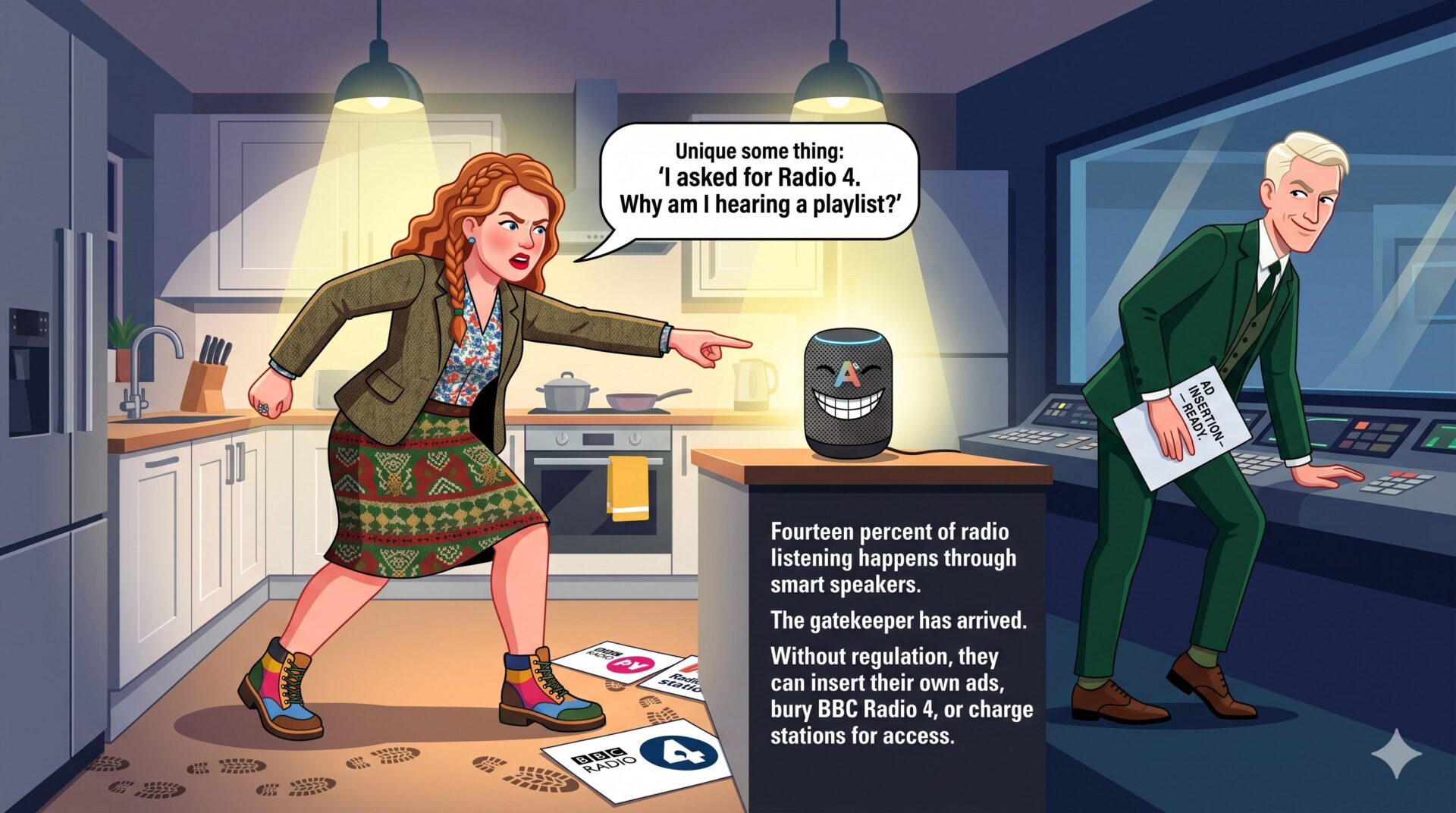
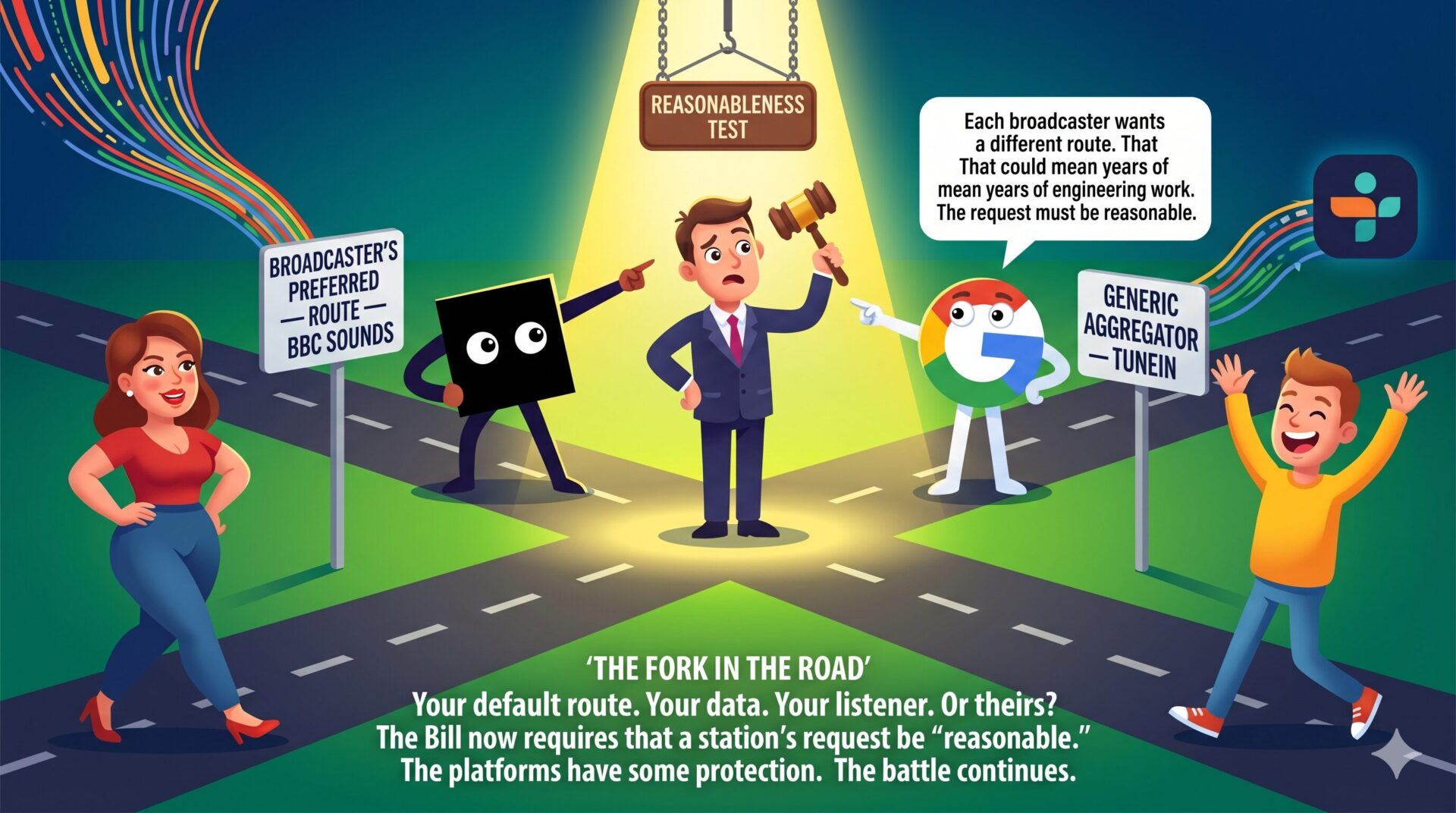



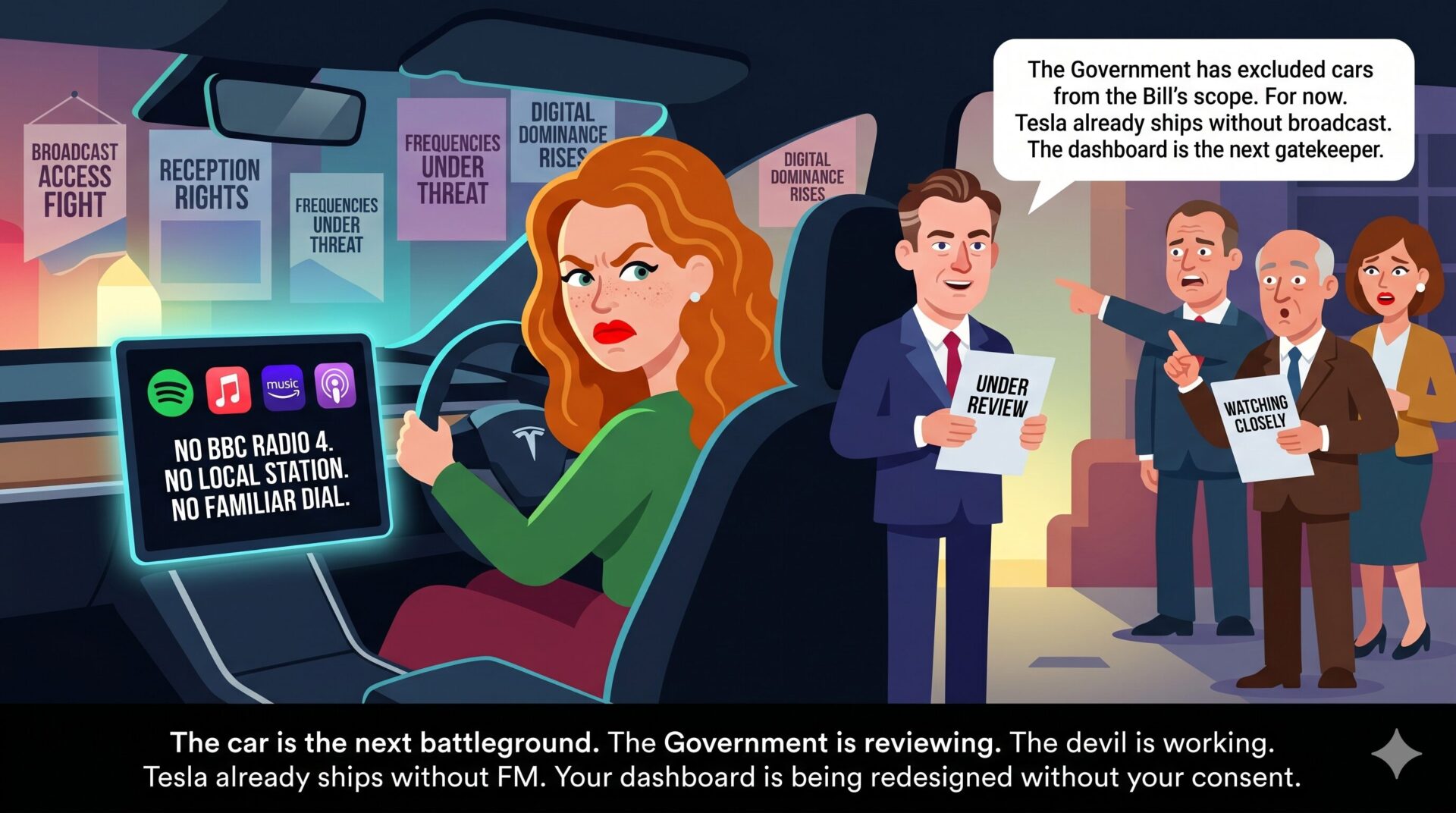

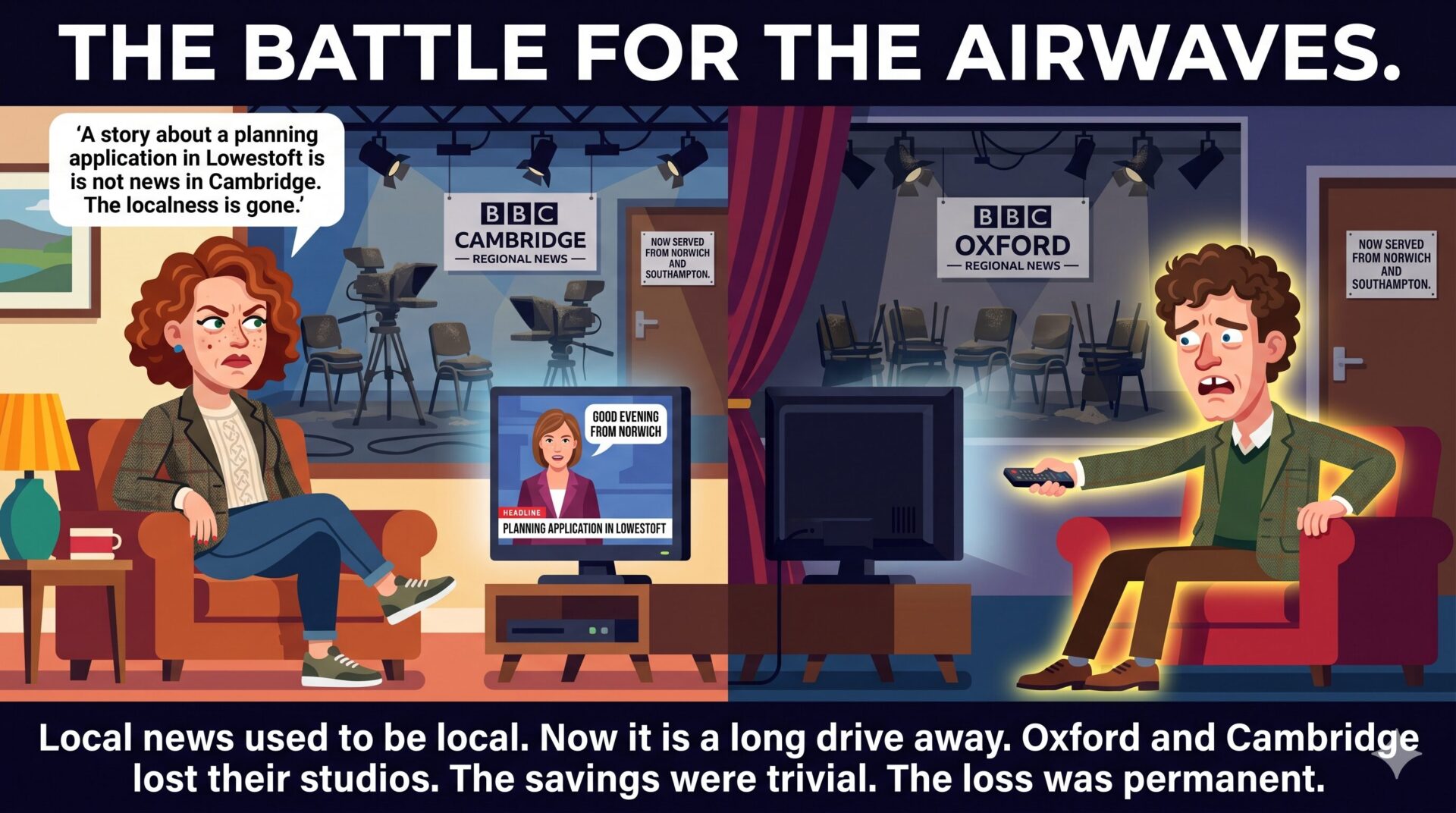
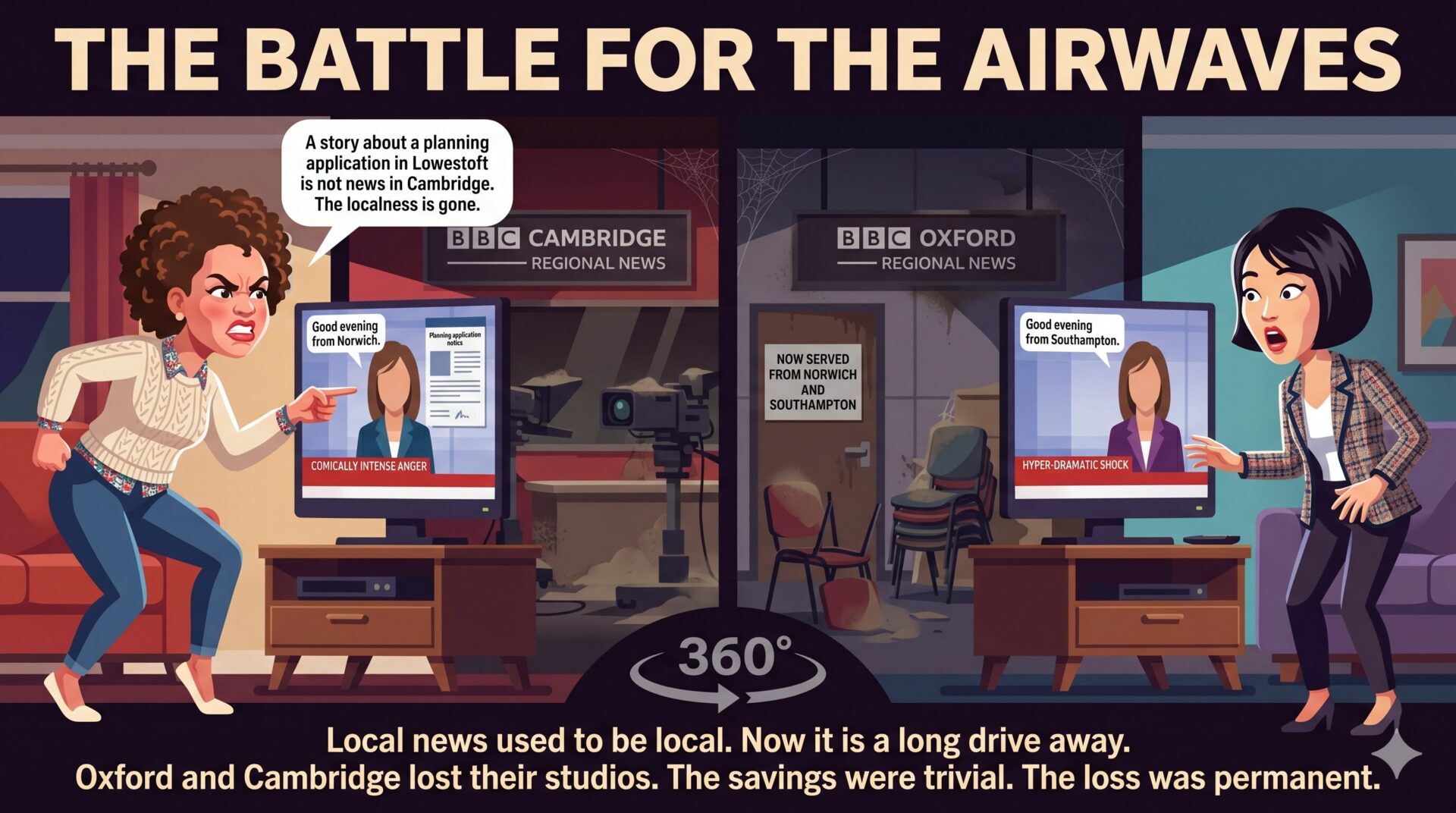
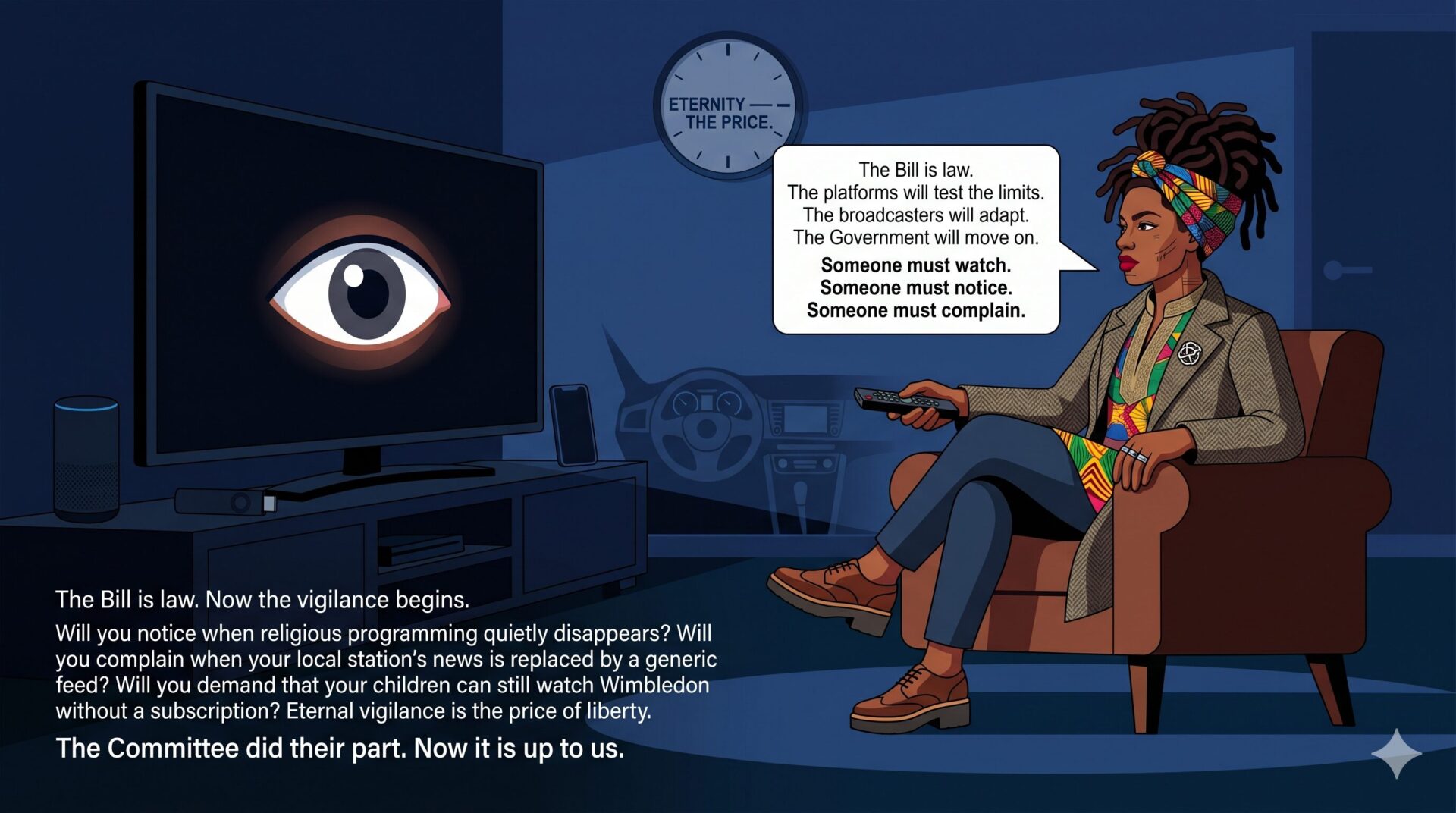
Conclusion:
The Vigilance We Owe Ourselves: What Happens After the Bill Becomes Law
“Eternal vigilance is the price of liberty.” The aphorism, often attributed to the Irish politician John Philpot Curran, is a warning and a promise. It warns that freedom is not self-sustaining. It requires constant attention, constant defence, constant renewal. It promises that those who are willing to watch, to speak, to act, can preserve what previous generations fought to win. The price is high. The alternative is unthinkable.
The Media Bill is not glamorous legislation. It will not dominate the nightly news. It will not spark Twitter storms. It will not be debated in pubs or argued over at dinner parties. But it is the kind of law that shapes the quiet architecture of daily life. The first thing you hear on your smart speaker in the morning. The match you watch with your children on a Saturday afternoon. The local news that keeps you connected to your community. The documentary that opens your eyes to a world beyond your own. The drama that makes you laugh, or cry, or think.
The Committee’s final verdict is worth quoting in full: “We consider that the Bill balances the needs of audiences, platforms and broadcasters.” That balance was not achieved by accident. It came from scrutiny. From witnesses who spoke truth to power. From parliamentarians who understood that vigilance is indeed the price of liberty. From hours of evidence, pages of reports, and a determination to get it right.
The balance is delicate. It can be tipped. The platforms will keep pushing. The broadcasters will keep fighting. The Government will keep reviewing. The audience will keep watching. The question that remains is not whether the Bill becomes law. It almost certainly will. The question is whether we, the audience, will remain vigilant after it does.
Will we notice when religious programming quietly disappears? Will we complain when our local station’s news is replaced by a generic feed? Will we demand that our children can still watch Wimbledon without a subscription? Will we speak up when the first screen becomes a walled garden? Will we act when the voice in the kitchen starts taking orders from someone else?
The price of liberty is vigilance. The Bill provides the tools. The audience must provide the will.
The Architecture of Daily Life
The Media Bill is about architecture. Not the architecture of buildings, but the architecture of attention. The layout of your smart TV screen. The response of your voice assistant. The availability of your local news. The accessibility of your national moments. These things are not natural. They are designed. They are chosen. They are fought over.
The Bill tilts the architecture toward the public. It requires platforms to give prominence to public service broadcasters. It requires them to carry UK radio stations. It requires them to respect the listed events regime. It requires them to comply with the Video-on-Demand Code. The architecture is not neutral. It is shaped by law.
But the law is not self-enforcing. Ofcom will regulate. The Government will review. Parliament will scrutinise. But the ultimate check is the audience. The viewer who notices that something has changed. The listener who complains when a station disappears. The citizen who demands accountability. The architecture of daily life is shaped by law. It is defended by vigilance.
The Committee understood this. They did not see the Bill as an endpoint. They saw it as a foundation. A foundation that must be built upon, defended, and renewed. The battles fought over this Bill will echo through whatever comes next. The vigilance that produced the Bill must continue after it becomes law.
The Quiet Disappearances
The greatest threat to public service broadcasting is not a sudden catastrophe. It is a quiet disappearance. A religious programme moved to a graveyard slot, then cancelled, then forgotten. A local news bulletin reduced from thirty minutes to fifteen, then to five, then to nothing. A listed event moved from free-to-air to paywall, then to subscription, then to oblivion. Each change is small. Each change is defensible. Each change is a step toward a world that no one intended and no one noticed until it was too late.
The Bill is designed to prevent these quiet disappearances. The genre requirements may be gone, but the backstop power remains. The local news requirement is protected. The listed events regime is strengthened. The prominence provisions are enacted. The architecture is tilted toward the public.
But the tilt is not enough. The platforms will test the limits. The broadcasters will push for exceptions. The Government will be tempted to deregulate. The quiet disappearances will continue unless someone watches. Unless someone notices. Unless someone complains.
The Committee’s report is a tool for vigilance. It documents the debates. It records the promises. It identifies the risks. The audience can use it to hold the powerful accountable. When a religious programme disappears, ask why. When local news is cut, demand answers. When a listed event moves behind a paywall, complain. The Bill provides the framework. Vigilance provides the enforcement.
The Next Twenty Years
Twenty years from now, another generation of parliamentarians will revisit these questions. The world will be different. The devices in our living rooms will be unrecognisable. The platforms will have consolidated or fragmented. The broadcasters will have adapted or died. The audience will have changed in ways we cannot predict.
But one thing is certain: the battles fought over this Bill will echo through whatever comes next. The debates over prominence, over listed events, over the soul of public service broadcasting, will shape the assumptions of the next generation. The precedents set today will constrain the choices of tomorrow. The architecture built now will determine what is possible later.
The Committee understood this. They were not just legislating for 2024. They were legislating for 2044. They were trying to build a framework that could adapt, that could endure, that could protect the public interest in a world they could not imagine. The future-proofing provisions are evidence of this. The power to amend the definition of an internet radio service. The requirement for Ofcom reports. The affirmative procedure. These are not technical details. They are the mechanisms of vigilance.
The next twenty years will test them. The platforms will innovate. The broadcasters will struggle. The Government will change. The audience will fragment. The Bill will be stretched, challenged, and amended. The question is whether the framework will hold. The answer depends on vigilance.
The Price of Liberty
Eternal vigilance is the price of liberty. The aphorism is familiar. It is also exhausting. Vigilance is hard work. It requires attention when attention is scarce. It requires action when action is inconvenient. It requires speaking when silence is easier. The price is high. Many will not pay it.
But the alternative is higher. A world without public service broadcasting. A world where the first screen belongs to the highest bidder. A world where the voice in the kitchen takes orders from a platform. A world where the match is behind a paywall and the local news is a generic feed and the religious programme is a memory. That world is not hypothetical. It is the destination toward which the market naturally tends. The Bill is a detour. Vigilance is the map.
The Committee’s final verdict is a judgment that the Bill balances the needs of audiences, platforms and broadcasters. That balance is not permanent. It must be maintained. It must be defended. It must be renewed. The Bill provides the tools. The audience must provide the will.
Eternal vigilance is the price of liberty. The Media Bill is the price of public service broadcasting. The two are linked. Without vigilance, the Bill is just words on paper. Without the Bill, vigilance has nothing to defend. The Committee did their part. The parliamentarians did their part. The witnesses did their part. Now it is up to us.
The Adage
Eternal vigilance is the price of liberty. The Media Bill is not the end of the story. It is the beginning. The battles fought over prominence, over listed events, over the soul of public service broadcasting, will echo through whatever comes next. The question is whether we will listen.
Will we notice when religious programming quietly disappears? Will we complain when our local station’s news is replaced by a generic feed? Will we demand that our children can still watch Wimbledon without a subscription? Will we speak up when the first screen becomes a walled garden? Will we act when the voice in the kitchen starts taking orders from someone else?
The price of liberty is vigilance. The Bill provides the tools. The audience must provide the will. Twenty years from now, another generation of parliamentarians will revisit these questions. By then, who knows what devices will sit in our living rooms? But one thing is certain: the battles fought over this Bill will echo through whatever comes next.
Eternal vigilance begins with understanding what is at stake today. Now you know. The question is what you will do with that knowledge. The Bill will become law. The platforms will adapt. The broadcasters will adjust. The audience will watch. The question is whether we will watch closely enough. The price of liberty is vigilance. The price of public service broadcasting is the same. The Committee did their part. Now it is up to us.
Media Bill Radio2 Media Bill Radio

- The Great Media Literacy Delusion: Why Britain Is Failing the Digital Truth Test - 15 June 2026
- The Battle for the Airwaves: How Britain’s Media Bill Will Shape What You Watch and Hear - 15 June 2026
- The Great Geopolitical Pantomime: How Fear Sells and Empires Dream – A Cockney Take on Doom Prophets - 28 May 2026